
A Class for the Residents of Savyon and the Surrounding Area at the Residence of
the Gaon and Tzaddik Rabbi Eliezer Berland shlit"a
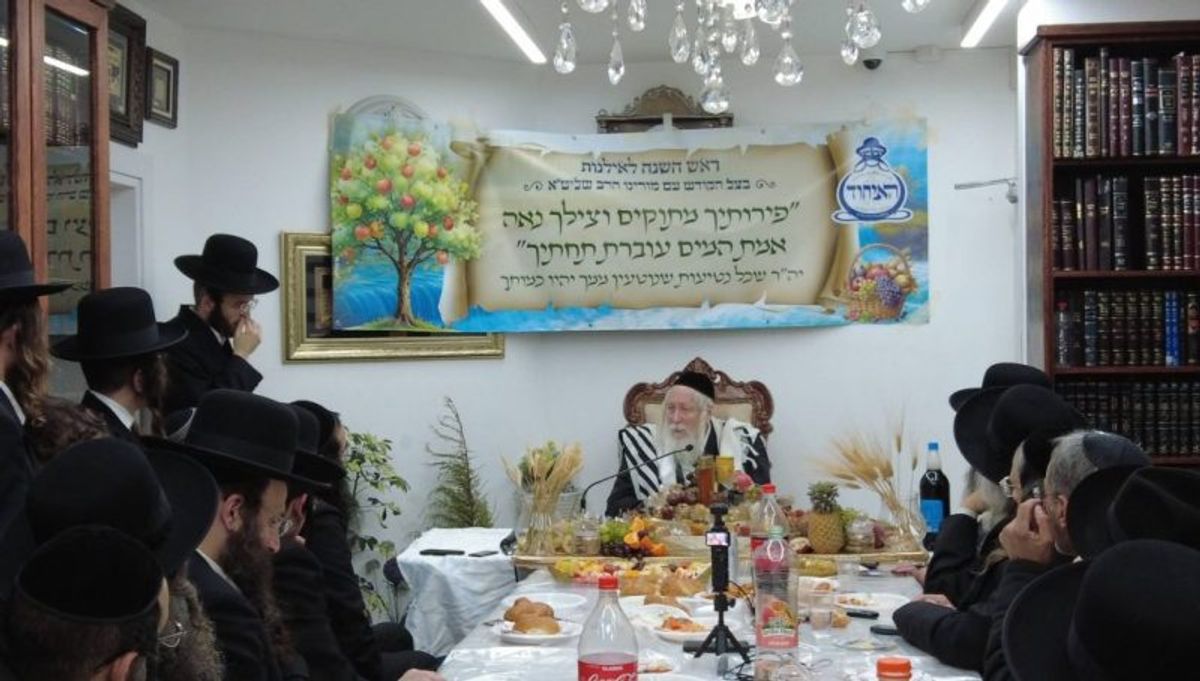
On Monday, Parshas Yitro, the night of the 13th of Shevat, a class was held for the residents of the settlement of Savyon and the surrounding area at the residence of the Gaon and Tzaddik Rabbi Eliezer Berland shlit"a (may he live long and good days). Below is a summary of the topics covered during the class delivered by the Rav shlit"a:
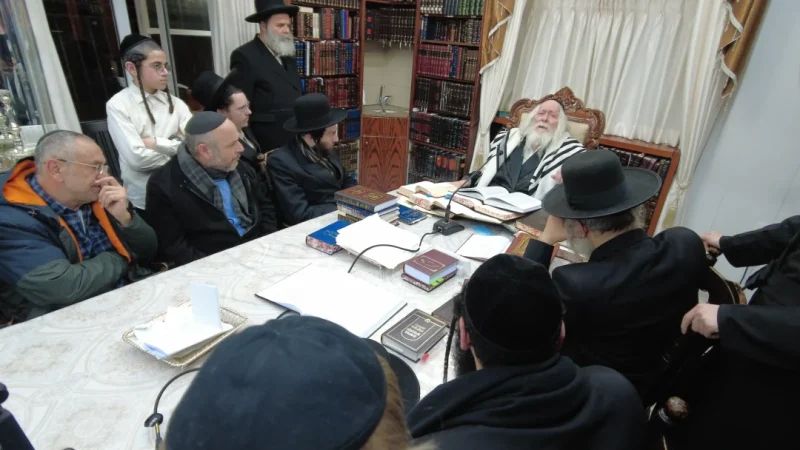
There was an argument between Ahasuerus and Vashti regarding in whose merit they ruled over one hundred and twenty-seven provinces. The Gemara (Talmud) in Megillah calculates the seventy-year period during which the Beis HaMikdash (Holy Temple) was supposed to be rebuilt. Daniel advised Belshazzar to open the treasuries to the Jews as an atonement for his use of the holy vessels [of the Temple]. Everyone needs to read the terrible stories of the Holocaust. Elijah the Prophet killed three hundred of Ahab's soldiers, and afterwards, when he fled, he entered the cleft of the rock. Elijah requested the "mouth" (spiritual level of speech) of Moshe (Moses), and therefore he is sent to every Bris Milah (circumcision ceremony) so that he can be like a baby. A person's entire work is to be like a baby throughout their whole life, just like Moshe Rabbeinu (Moses our Teacher), as it says, "Like a weaned child with its mother, like a weaned child is my soul within me." The Rama (Rabbi Moses Isserles) brings in [Shulchan Aruch] section 299, paragraph 10, that every Motzaei Shabbos (Saturday night) one should draw water, for these are the waters from the Well of Miriam which circulates through all the wells. A person needs to arrive home calm; he should eat a falafel before getting home so that he won't shout at his wife. The Rebbetzin [Tehillah Berland a"h] used to travel all day just to bring everyone back in teshuvah (repentance); in Ahisamach, Or Yehuda. The doctor said we wouldn't have children; I had a broken heart and stood for the Maariv (evening) prayer for an entire hour, and exactly then we received a positive answer [that we would be blessed with children]. Anyone who eats the Melaveh Malkah (post-Shabbos meal) will arise at the Techiyas HaMeisim (Resurrection of the Dead), because the Luz bone is nourished only from this meal, and from it, people will arise during the Resurrection. The tzaddik (righteous person) rules over all the upper and lower realms; the tzaddik controls all the worlds. All the queens used to kill their husbands. On Simchas Torah, all the female lookouts reported that the fence was being breached, but they did not listen to the warnings they sent. Sennacherib saw that everyone was studying Gemara and Torah, and he said, "I will send you horses so that you can fight me." There was an argument between Ahasuerus and Vashti regarding in whose merit they ruled over one hundred and twenty-seven provinces, and they said, "Let us make a feast and see who wins at the end of the feast." They held a feast for 180 days, and no one was hanged. Then they said that because the Jews did not come, they held an additional seven-day feast which ended on the 15th of Nissan. Vashti said she could not come to the feast because that very day was the yahrtzeit (anniversary of passing) of Belshazzar, and truly "that which was decreed upon her" [happened]—a tail grew on her because she used to abuse the women of Israel. Hezekiah had three miracles: 1. Isaiah told him "You shall die and not live," but in the end, he continued to live. 2. Hashem struck the army of Sennacherib. 3. The sun went backwards for him. Hashem told him, "Start to dance," but he didn't want to; he said he was "not from Shuvu Banim." Hashem said to him, "If you are not from Shuvu Banim, you have lost out."
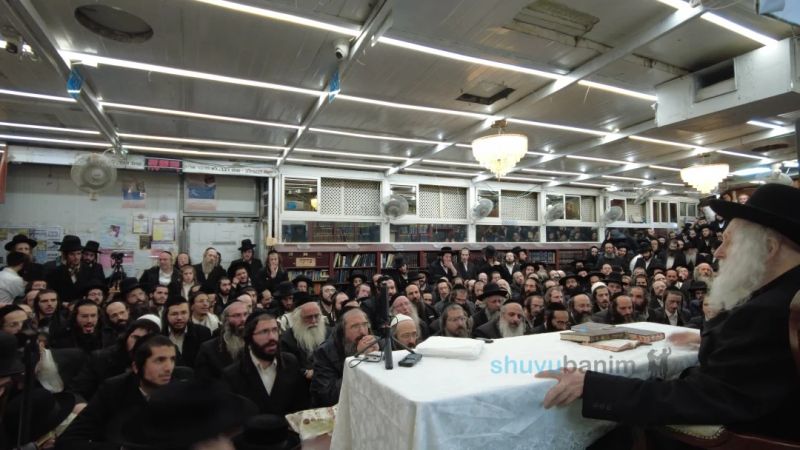
After nearly an hour of the class, the Rav shlit"a concluded the lesson and went out for the Maariv (evening) prayer with a large multitude.
Subscribe to Our Newsletter
Receive Torah articles and inspiration directly in your inbox