
A Lesson at the Home of the Gaon and Tzaddik, Rabbi Eliezer Berland shlit"a
for the Netz (sunrise) Minyan with Melodies from the Netzach Yisrael Community in Modi'in Illit
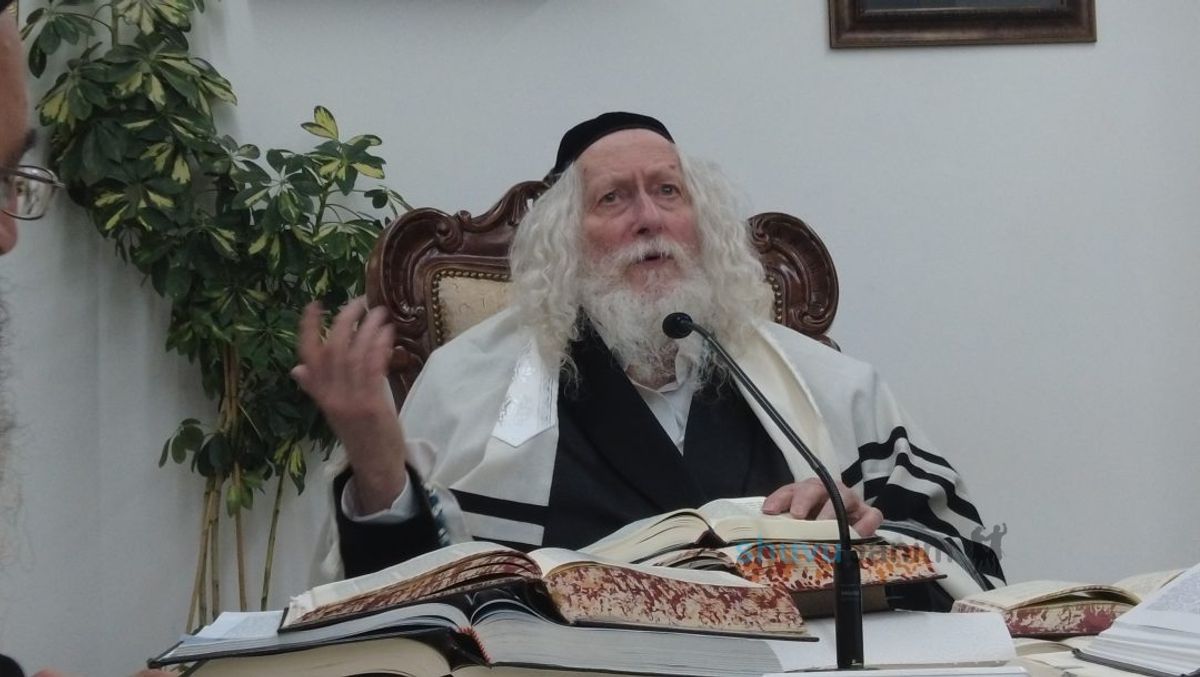
In the past year, within the "Netzach Yisrael" community of yeshiva students in Modi'in Illit, who are close to our teacher, the Rav shlit"a (may he live long and good days), an initiative was established to encourage rising for the Netz (sunrise prayer) through a minyan (prayer quorum) featuring the melodies of our teacher, the Rav shlit"a, every single Shabbat. The Netz prayer begins about an hour before sunrise, starting with the morning Zemirot (songs of praise) and the lengthening of melodies as led by the Rav shlit"a. After the prayer, there is a Kiddush (sanctification over wine and refreshments) with a lesson and a gathering focused on Sippurei Maasiot (Rebbe Nachman’s Stories) and matters of the day.
The avreichim (young married Torah students) participating in the Netz minyan merited to enter for a lesson at the residence of our teacher, the Rav shlit"a, on Monday night, the 27th of Iyar. Here is a summary of the lesson:
The Rav shlit"a began the lesson by discussing the days of the Sefirah (Counting of the Omer) and the new moon of the month of Sivan. Afterward, he spoke about the Ten Commandments and the Giving of the Torah, as well as the self-sacrifice (mesirus nefesh) of Avraham Avinu (our forefather Abraham), who jumped into the furnace of Ur Kasdim and was pained that he was not actually burned for the sanctification of Hashem's Name. He then spoke about the greatness of song and melodies, noting that if King Hezekiah had recited a song of praise, the Geulah (Redemption) would have arrived then. Following this, he spoke about the Nesi'im (the Princes of the Tribes). He also discussed the greatness of traveling to the tomb of Yosef HaTzaddik (Joseph the Righteous) and cited the Jerusalem Talmud regarding Yosef HaTzaddik being found in the cave of Rabbi Hiyya, expanding greatly on this matter.
Additionally, he spoke about the importance of studying the Mishneh Torah of the Rambam (Maimonides). He also recounted the miracle of the rescue of Rabbi Shmuel Horwitz zy"a (may his merit protect us) from the gallows on the day of Netzach shebeNetzach (the 25th day of the Omer).
Later in the lesson, he spoke about Megillat Ruth (the Scroll of Ruth), offering many new insights. He discussed Othniel ben Kenaz and the greatness of traveling to his grave in Hebron, noting that the Cave of the Patriarchs (Ma'arat HaMachpelah) extends until his grave. Moving from one subject to another, he spoke about the verse "and he shall smite the corners of Moab," explaining that Balak feared that one of his descendants—King David—would arise and destroy his people, Moab. He also dealt with the matter of King Solomon and his mother, Bathsheba, who said, "What, my son? and what, the son of my womb?" regarding his marriage to the daughter of Solomon (referring to the Midrashic accounts of his marriages) and all that is brought in the Midrashim and the legends of our Sages of blessed memory on this. He spoke about how everything depends on the mother and the greatness of the women of Israel, stating that the woman is always on a higher level than the man, as the women did not participate in the sins in the desert, as cited by Rashi in Parshat Pinchas.
Furthermore, he spoke about the miracles that occurred for the infants in Egypt, saying that the mothers in Egypt were divided into three groups: There were those who went to give birth in the forest and merited the miracle where the babies were swallowed by the earth to protect them, as it is written that afterward "they shall sprout from the city like the grass of the earth," when millions of Jewish children emerged from the ground. The second group, who ran to give birth by the Nile, merited a miracle where angels would transport the babies to the other side of the river, where milk, honey, and oil emerged for them from the stones. Regarding this, it is written, "He made him suck honey out of the rock, and oil out of the flinty rock." The third group consisted of the weak mothers who did not have the strength to run, and the Egyptians placed their children into the walls in place of bricks; then the prayers of the mothers pierced the heavens, the wall broke, and the children emerged, and regarding this, it is written, "The snare is broken, and we are escaped."
Subscribe to Our Newsletter
Receive Torah articles and inspiration directly in your inbox