A Lesson for Shuvu Banim Netanya from the Gaon HaTzaddik Rabbi Eliezer Berland
shlit"a in His Home
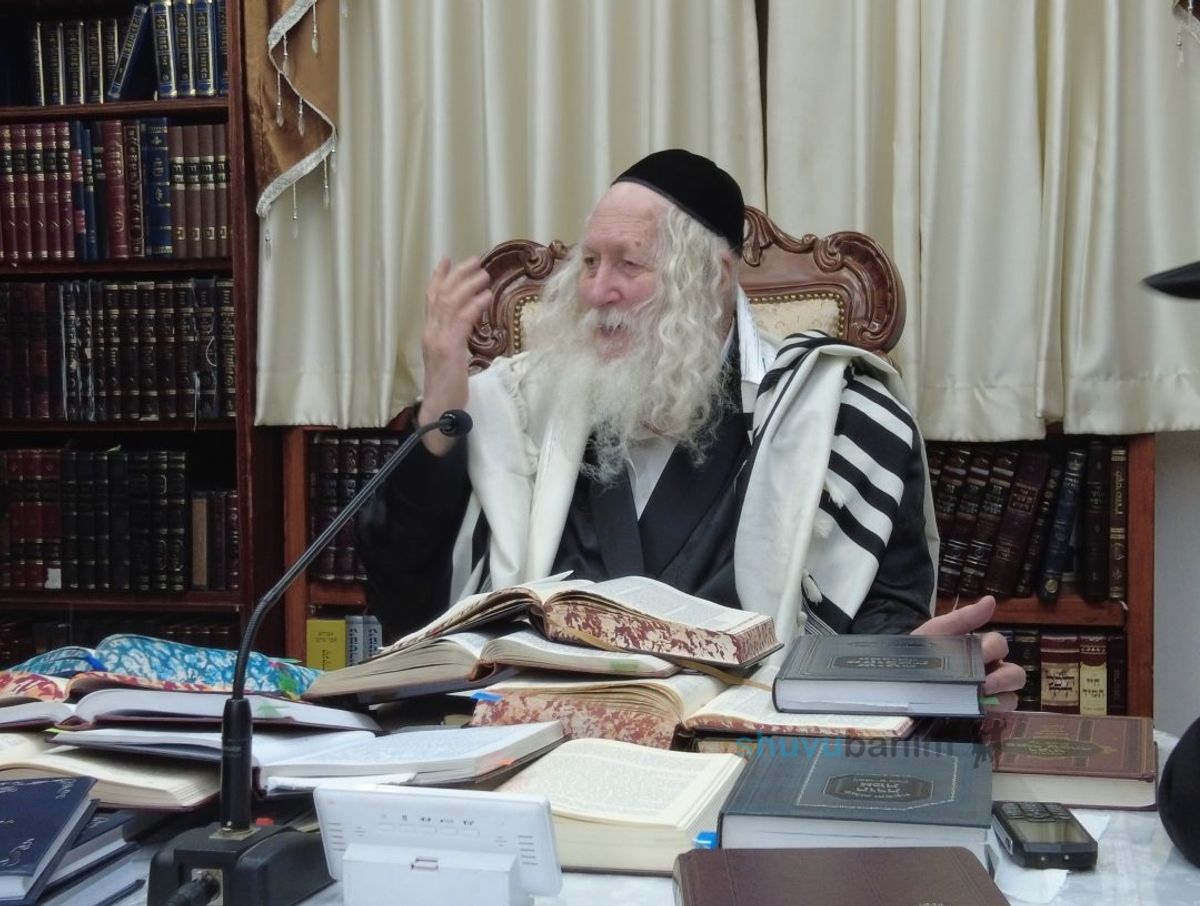
Last Wednesday night, the night of the 11th of MarCheshvan—the yahrtzeit of Rachel Imeinu—a group from the Shuvu Banim Netanya community entered for a lesson in the home of the gaon haTzaddik Rabbi Eliezer Berland shlit"a.
Here are the topics The Rav shlit"a spoke about during the lesson:
The Rav shlit"a opened the lesson with a question: How could it be that Avraham said, “She is my sister…” about his wife? Is there anyone in the world who would be willing to say “She is my sister” when he knows they will take her?
Afterwards, he strengthened everyone in honor of the yahrtzeit at Rachel’s tomb and the journey there. He also spoke about the greatness of Rachel Imeinu, who accepted humiliations, and likewise about her son Binyamin—who was suspected of stealing the goblet, and because of this was beaten by the brothers.
In the course of these words, The Rav shlit"a mentioned the caution required in every single word a person speaks—not to say, “I swear by my mother… by my son,” because such words can be fulfilled even generations later.
After that, he brought the Gemara about the story of the rescue of the daughter of Nechunya the well-digger. He also discussed the words of the Ramban, who said that if Avraham Avinu had not gone down to Egypt because of the famine, then the Jewish people would not have been enslaved in Egypt.
He also spoke about the greatness of Otniel ben Kenaz, and brought the Gemara in Temurah: they said to Achsah, “A man to whom the upper and lower worlds are revealed—do you want him to worry about providing you with livelihood?!” He said that the Cave of Machpelah extends all the way to the grave of Otniel in Chevron, and that the feet of Adam HaRishon extend to the grave of Avner ben Ner—because he did not “return” to Yoav ben Tzeruyah. He said that the place closest to the graves of the Avos is on the seventh level. The Rav testified about himself that he remembers the holy places even from before they were captured by the Arabs in the War of Independence.
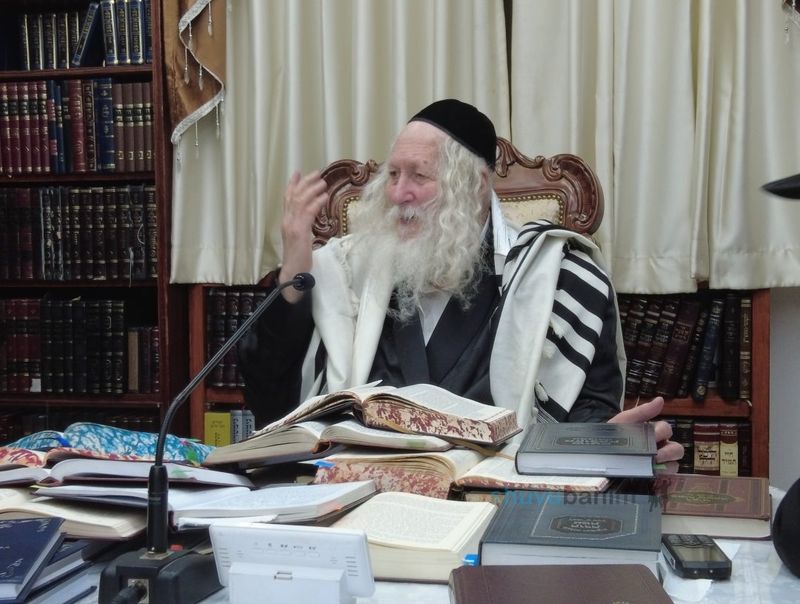
In the middle of the lesson, he spoke about how every Tzaddik in his generation can—and must—stop calamities. This is what Yechezkel said to Chananya, Mishael, and Azarya: the wisdom is not to jump into the fire; rather, it is to bring the entire generation back in teshuvah so they will not bow to idolatry.
The Rav shlit"a also spoke about the matter of the day: the lofty level of those holy and pure souls who were murdered during the “Swords of Iron” war, and that now they are all in the Heichal of Kiddush Hashem. He also addressed the issue of the captives and hostages, and brought the words of the Radbaz that being held captive is worse than death. He said that today we redeem for more than their value, because they abuse the captives and the hostages.
The Rav shlit"a warned not to look at the terrible calamity that occurred on Simchas Torah. After these words, The Rav shlit"a returned to the point that the Tzaddik of the generation draws down a great light. He said that when Moshe Rabbeinu was born, such a great light descended that Basya converted.
Toward the end of the lesson, he laughed at the “researchers” and the nations who keep inventing a new date for the end of the world—and nothing happens. But on the side of holiness, he brought the words of the Or LaMeir that the year 5784 is the year of the Geulah.
With these words, The Rav shlit"a concluded the fascinating lesson after an hour and twenty minutes of Torah words—burning like a flame of fire. Fortunate is the one who merited!
Subscribe to Our Newsletter
Receive Torah articles and inspiration directly in your inbox