
A Lesson for the 'Chut Shel Chessed' Kollel at the Residence of the Gaon and
Tzaddik, Rabbi Eliezer Berland shlit"a
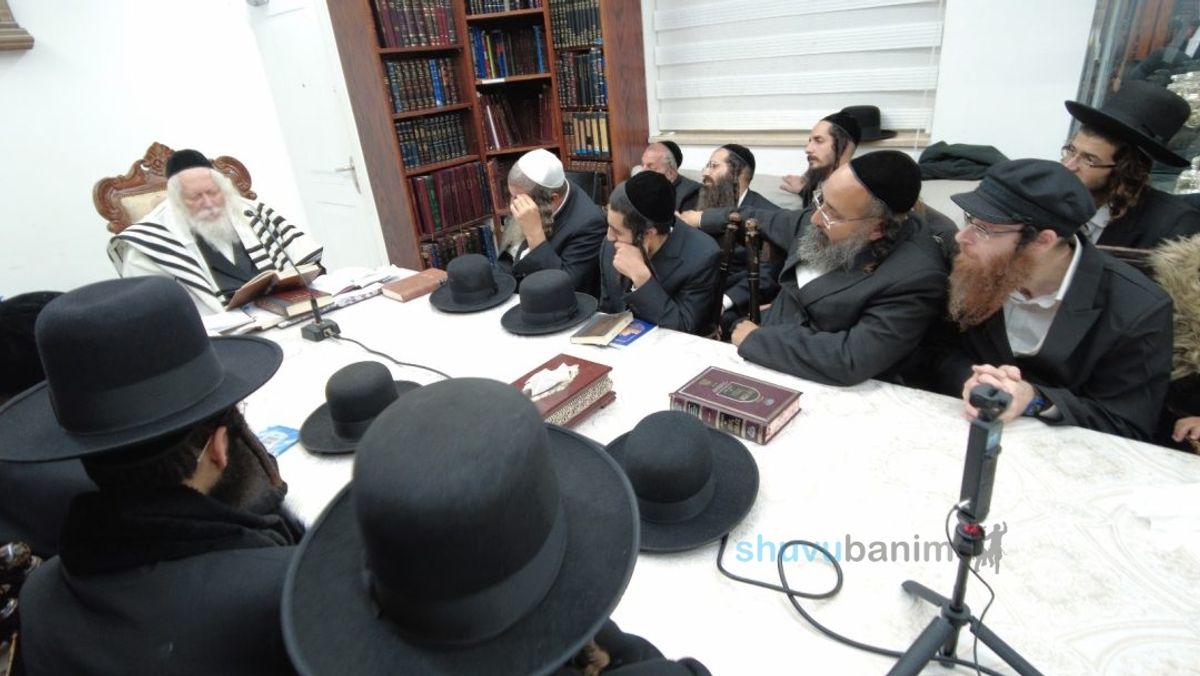
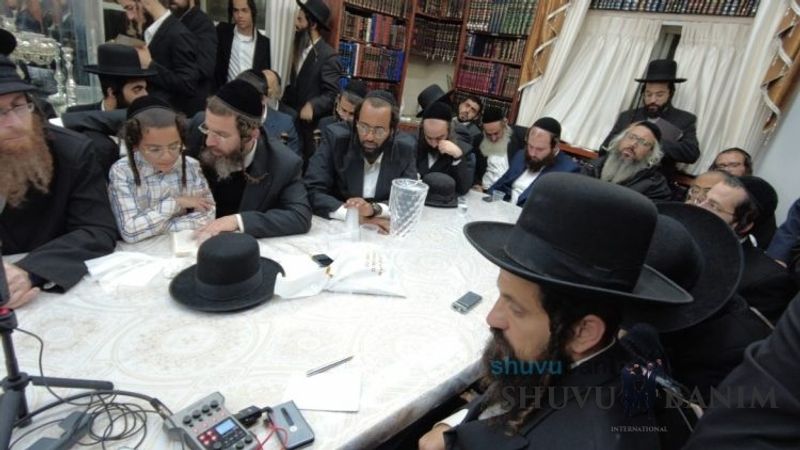
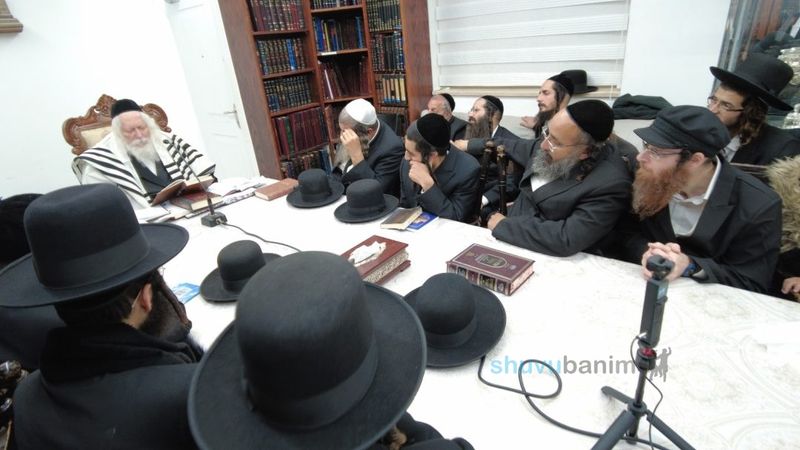
On Monday night, the 11th of Marheshvan, Parshas Vayeira—the yahrtzeit (anniversary of passing) of Rachel Imeinu (our mother Rachel)—a lesson was held at the residence of our teacher, the Rav, Rabbi Eliezer Berland shlit"a, for the young men of the 'Chut Shel Chessed' Kollel (institute for advanced Torah study). Here is a summary of the lesson:
Our teacher, the Rav shlit"a, began the lesson by discussing the weekly Torah portions. He first started with Parshas Lech Lecha, focusing on the verse, "Oh that Ishmael might live before You" (Genesis 17:18). He cited the Zohar (the foundational work of Kabbalah) on this verse, noting that Rabbi Shimon bar Yochai wept and said that all the troubles and murders that the People of Israel would endure at the hands of the Ishmaelites until the coming of the Redeemer are all because of this formidable verse.
Afterward, he returned to Parshas Vayeira and discussed the prophecy of the angels, "At this time next year, Sarah shall have a son." In this context, he spoke about the actions of Shimon and Levi in Shechem. He also mentioned the first covenant made with Aner and Eshkol in Hebron, who died because they did not believe in Avraham Avinu (our father Abraham).
The Rav then returned to the matter of the tidings given to Sarah Imeinu (our mother Sarah) and cited the Heichal HaBracha (a Chassidic commentary), which asks why Sarah laughed—did she not believe? The answer is that Sarah Imeinu did not laugh; rather, she cried, saying: "I do not want this ta'avah (physical desire) again; I want only holiness!" He spoke with fiery passion about the holiness of a person, citing Chayei Moharan (the biography of Rebbe Nachman) regarding how Rebbe Nachman loathed this desire. He also cited the Rambam (Maimonides), who states that a "Chassid" (pious person) is one who has no such desire at all. The Rav added that the reason we came into this world is to fight the Yetzer Hara (Evil Inclination), and if a person closes his eyes [to guard his purity], then another ten thousand people will perform teshuvah (repentance)! Every movement a person makes turns into good! This is the reason Yitzchak (Isaac) was born specifically when Sarah returned to her youth—so that from this, Yitzchak would teach all of Israel to fight the Yetzer Hara and perform teshuvah.
Toward the end of the lesson, he discussed the greatness of dwelling in Eretz Yisrael (the Land of Israel) and the severity of living in Chutz La'aretz (outside the Land). He cited the words of the Or Sameach and the Sifrei regarding the gravity of the matter, stating that it is forbidden to live outside the Land of Israel. At the conclusion of the lesson, he explained that there are three "Pasek" (stop) marks in the cantillation notes of the verse. This contains the secret of what she said first—that she did not laugh but cried. The second mark explains "for she was afraid"—meaning she was afraid of physical desires. And the third mark, "No, but you did laugh"—Hashem replied to her that this is our purpose in this world: to have desires and to fight against them!
The crowd before the lesson
Our teacher, the Rav shlit"a, delivering the lesson
Subscribe to Our Newsletter
Receive Torah articles and inspiration directly in your inbox