A Lesson for the Examinees of 'Mifal HaTorah' at the Residence of the Gaon and
Tzaddik, Rabbi Eliezer Berland shlit"a
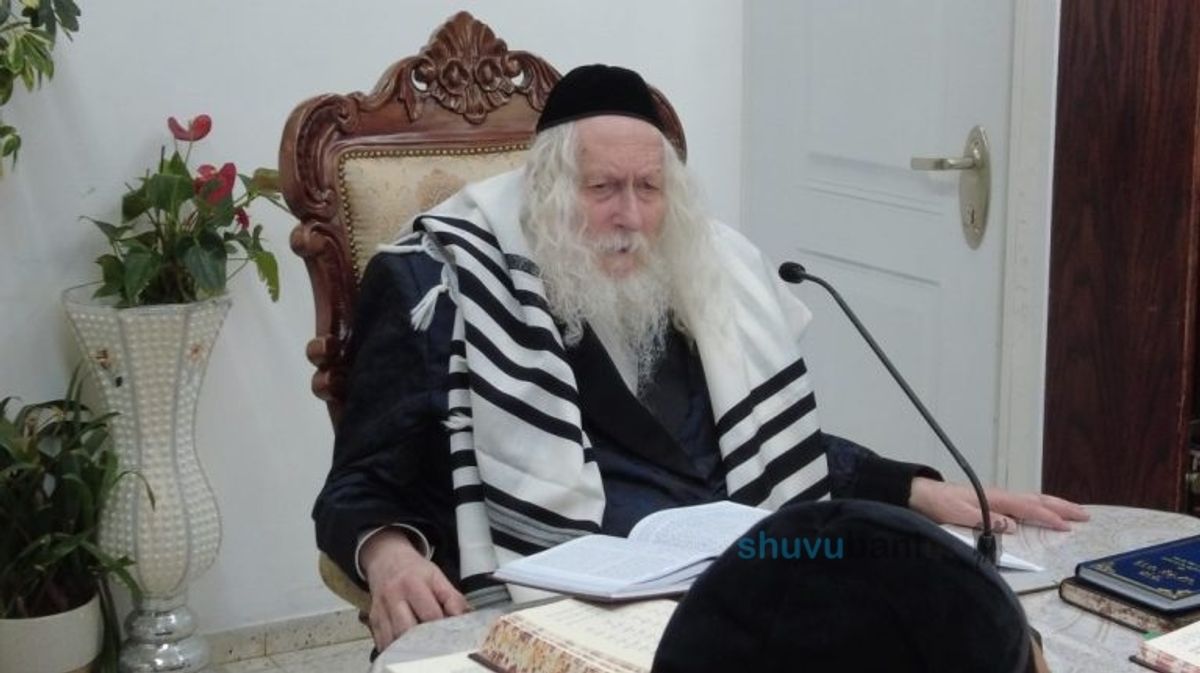
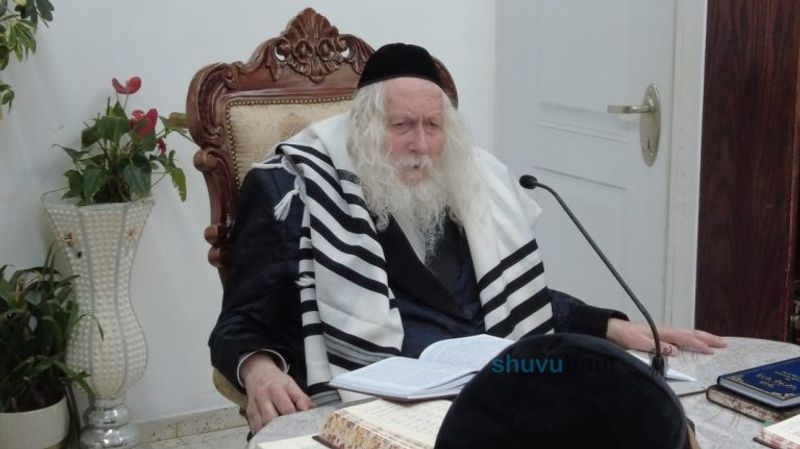
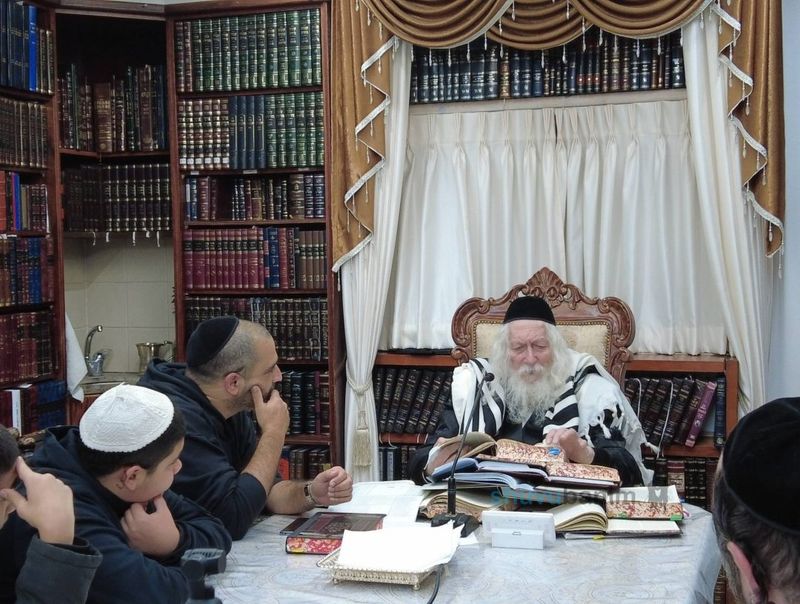
On Wednesday, the night of the 3rd of Iyar, Parshas Tazria-Metzora, a lesson was held at the home of our teacher, the Rav, Rabbi Eliezer Berland shlit"a, for those being tested in the various tracks of the 'Mifal HaTorah' organization of the Shuvu Banim community.
Once, everyone knew the Explicit Name of Hashem. "When the morning stars sang together"—the birds sing every morning, and one must wake up and sing with them. The bird represents returning the 370,000 lights (spiritual illuminations) and returning peace to the world. Hod shebeHod (Splendor within Splendor) represents katnus (spiritual constriction). On the eve of the seventh day of Pesach, it was the greatest state of katnus possible; they did not understand why Moshe Rabbeinu told them to jump into the water. In the desert, they said to him, "We remember the fish that we ate for free"—did they really eat fish for free? Rather, when the mothers would draw water, fish would jump into the water. The mothers would run to the fields, and this is the meaning of "Under the apple tree I aroused you," and the children would be swallowed by the earth (to hide from the Egyptians). There were mothers who would run to the Nile, and Hashem would urge the angels to run quickly and take these babies before the Egyptians arrived. The Rebbe (Nachman) says that when Mashiach comes, only Shuvu Banim will receive him calmly because they practice Hisbodedus (secluded prayer). And streams of honey and streams of milk would come out of the rocks—"He suckled him with honey from the rock and oil from the flinty stone." And the third type: the Egyptians would put the children inside the walls as bricks, and the mothers would say seven Tikkun HaKlalis (The General Rectification) and the wall would break—"The snare is broken and we have escaped." Once, every woman knew the Explicit Name of Hashem, like Yael who went "stealthily" (ba-lat)—this refers to the Name of 42 letters (Mem-Bet) with which she drove the stake into Sisera's temple. Rabbi Avraham Elimelech of Karlin shouted for six hours at the tomb of Rabbi Shimon bar Yochai. The attendant who served him hot milk said to him, "Rebbe, you are fainting! Drink a little." Rabbi Avraham Elimelech said to them, "Let me faint! I haven't succeeded in accomplishing the spiritual salvation!" The Chofetz Chaim said that whoever is in the Land of Israel will be saved from the war. All the Tzaddikim knew that they were going to destroy all the Jews. Therefore, when Rabbi Avraham Elimelech got off the ship, he told all the Chassidim who were dancing in honor of his arrival, "Stop singing! I didn't come to make visits; start screaming! We came to nullify the terrible decree so they won't destroy all the Jews in Europe." Adam HaRishon (the first man) did not stop the destruction, and he sat for seven days of mourning because he knew there was going to be a Flood, for all his descendants were idol worshippers. "My harp is turned to mourning, and my flute to the voice of those who weep." Iyov (Job) was a reincarnation of Yuval, and everything he suffered was because he did not play music and sing. The Vilna Gaon says that the main thing is song and melodies. The Midrash says that they told Noach, "A flood (mabul) will be upon you, the flood." For he said there would be a flood on the 10th of Cheshvan and it didn't happen, because it was delayed due to the seven days of mourning for Methuselah. During Bein HaZmanim (the intersession between yeshiva terms), one can study all of history—how much Hitler hated the Jews because he didn't succeed and was jealous of them because they did succeed. There is the story of Rabbi Lau, how he was saved from Buchenwald. And how, when they immigrated to Israel, they cut off everyone's peyos (sidelocks), and how they would walk on foot from Ponevezh to the kibbutzim to save the souls that the Zionists tried to defile. And how the Klausenburger Rebbe emerged from the inferno and sang, "From Your place, our King, appear..." and merited to rebuild the kingdom. Every midnight (Chatzos), King David would fill a cup with tears and drink them—"I melt (amsah) my couch with my tears." Amsah is an acronym for the generations of Enosh, the Mabul (Flood), Sodom, and the Haflagah (the Dispersion) where they cut people into pieces, just like on Simchas Torah when there was another Holocaust eighty years after the first Holocaust. Chananiah, Mishael, and Azariah wanted to jump into the fire, and Yechezkel (Ezekiel) told them, "It is forbidden under any circumstances, run away!" And yet they jumped into the fire. Rabbi David Grossman is a Breslover in his soul; he was not willing to give up on Uman. Our Rebbe's father, Reb Simcha, the son of Reb Nachman of Horodenka, fled immediately after the chuppah (wedding canopy). One of our followers (Anash) struck a gentile in Odessa, and the man's son was a Ukrainian policeman who said, "I will make sure you go to prison for life." He gave a pidyon (redemption money), and exactly after that, a lawyer arrived and said, "Bring me 45,000 dollars and I will release him." I sent S.H.R. to Manchester and they donated, and then he was released immediately. In the time of Rabbi Yonatan Eybeschutz, there was someone who needed to be released, and one person gave twenty thousand zlotys. A gentile came and deposited with him all the money he had stolen from the churches and then drowned in the river; then the Jew cried because he said, "Why did Hashem throw the mitzvah back in my face?" For a person always needs to be given bizyonos (humiliations). Every scream that a wife screams at a man, he merits a billion dollars.
Subscribe to Our Newsletter
Receive Torah articles and inspiration directly in your inbox