
A Lesson for the Residents of Netivot at the Home of The Rav
Rabbi Eliezer Berland shlit"a
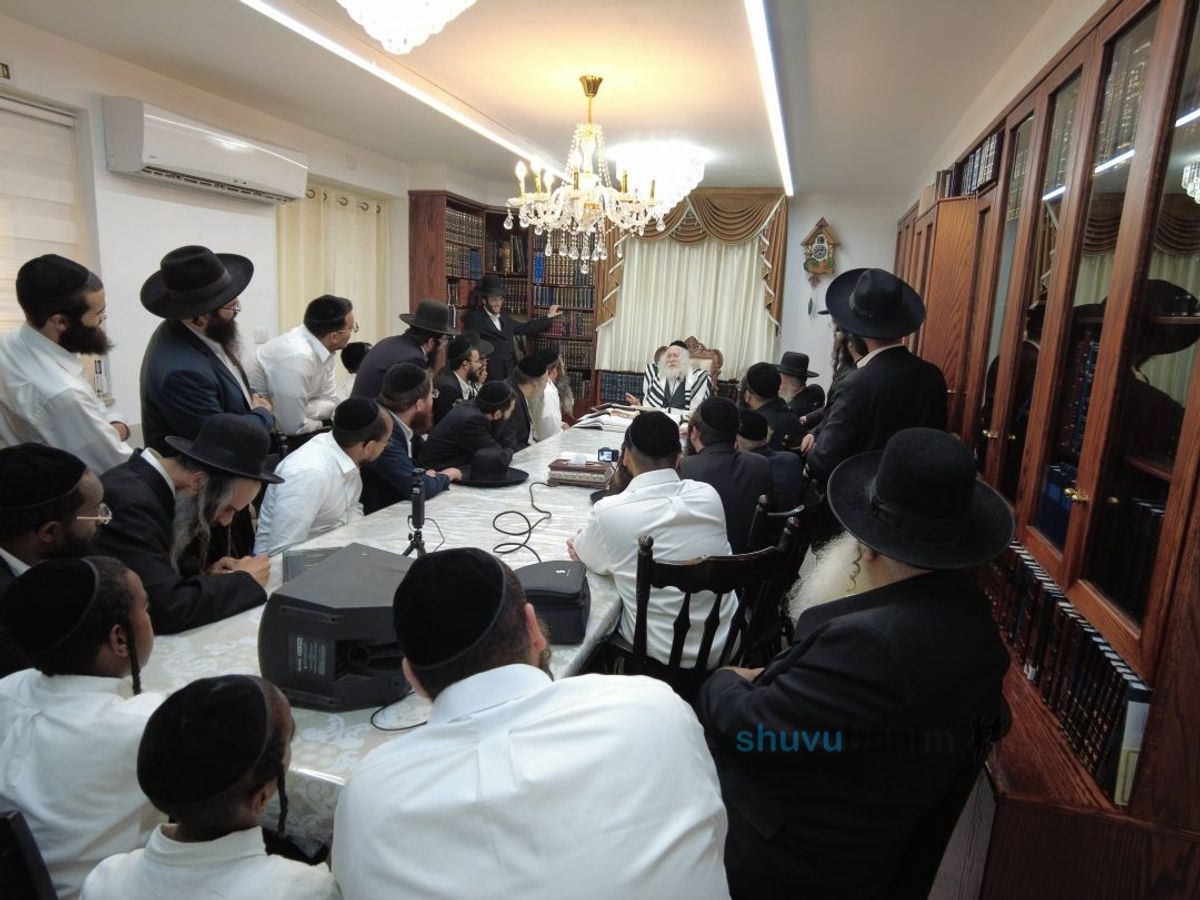
Shuvu Banim Netivot ○ Summary from the Lesson
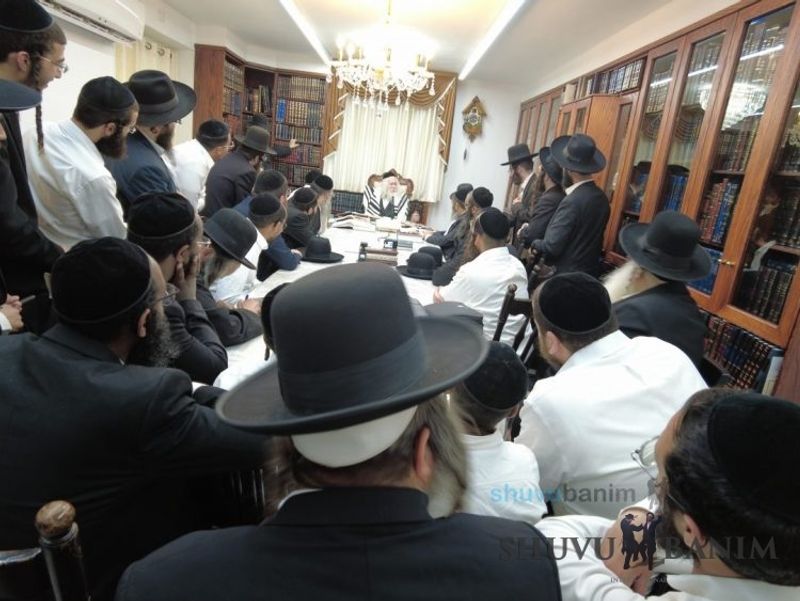
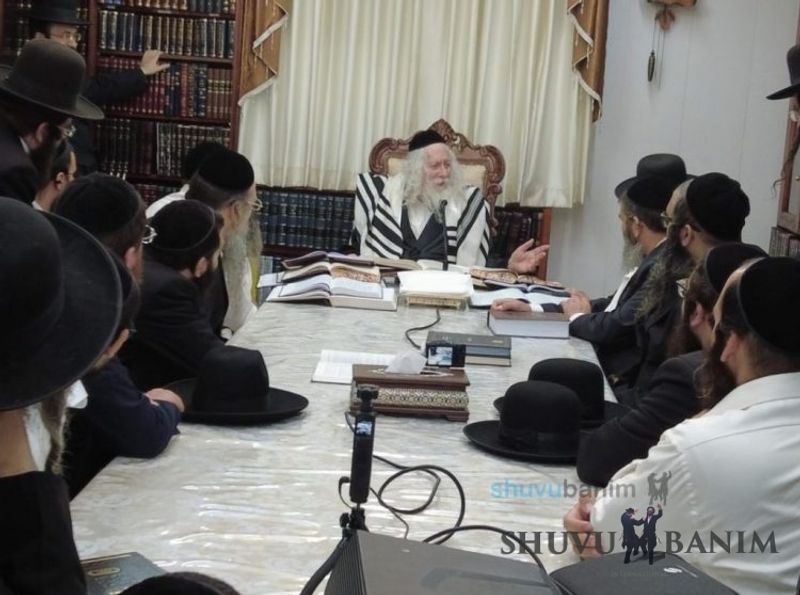
The Shuvu Banim community in the city of Netivot merited to enter and hear words of the Living G-d from The Rav, Rabbi Eliezer Berland shlit"a, last night—Monday night, the eve of 9 Tammuz—before the Ma’ariv prayer. In the lesson, The Rav, Rabbi Eliezer Berland shlit"a spoke about many topics, strengthening and awakening the listeners in the service of Hashem according to the path of drawing close to Rebbe Nachman, along with additional new insights in halachah and aggadah from all the depths of the holy Torah. Below is a summary of some of the topics The Rav shlit"a spoke about:
At the beginning of the lesson, The Rav spoke about On ben Peles, whose wife gave him wine to drink so that he would fall asleep. When he asked her, “What will be with the prayers and with tefillin?” she told him that if a person argues with the Tzaddik, he is exempt from tefillin. In the course of these words, he said that now we recite Tikkun Rachel, and the whole matter is that in Tikkun Rachel one must cry—because Leah has already completed her rectification. And because she cried constantly, as it is written, “Leah’s eyes were tender,” she merited to bring Moshiach into the world.
He also said that the Nasi of the tribe of Yehudah did not want the title “Nasi” written with his name—just as Moshe did not want to write “Vayikra,” because he said there is no difference between himself and Bilaam. And he said: the difference between Bilaam and Moshe Rabbeinu is that Bilaam thinks he is Moshe, while Moshe, in his humility, thinks he is Bilaam.
After that, he spoke about the greatness of the women of Israel, who merited not to die in the desert. He said that the reason they remained widows was because they allowed their husbands to go and dance in the sin of the Golden Calf. From this he spoke about the greatness of holy dancing, and he brought the Rambam who says that it is “fitting to exact payment” from someone who sees people dancing and does not dance because he thinks he is important—such a person is “a sinner and a fool.”
The Rav spoke about the greatness of enduring ביזיונות (humiliations), as brought in Torah 170—that through distress, form is fashioned. He said that without humiliations, a person is considered as though he eats a limb from a living animal. And he said that when people throw stones at a person, they are throwing at him stones from Gan Eden!
Afterward he returned to the matter of dancing and said that Yosef HaTzaddik danced all twelve years, and about David it is written, “And David danced with all his might.” He spoke about how Michal cried out at David and told him how much he had disgraced himself and the kingship by not being careful that people should not see the soles of his feet. She told him: “In my father’s house—Shaul—no one would see the soles of his feet, and he was the most modest person in the world.” The Rav said that David answered her that he did everything for the honor of Hashem—because a person must dance only for the honor of Hashem, not so that people should say he is a dancer…
After that, he spoke about the matter of the tribe of Menashe, and the question of why Yaakov crossed his hands. He answered that each one has his own unique strengths, but he began with Menashe, because from Menashe the Geulah will begin.
After that, he spoke about the tribe of Asher, who merited wondrous holiness in the merit of Serach bat Asher, who was under a ban for two hundred years, because they thought that Asher had revealed the secret of the sale. They feared that if Yaakov would find out about the sale, he would be strict with the brothers, and then no trace of any of the brothers would remain. The Rav said, “If the Tzaddik is strict with someone, he is not in the world.”
And for this reason, Yosef did not meet with his father from the day of the sale—except for two times: on the day Yaakov arrived in Egypt, and on the day of his passing—lest Yaakov be strict with the brothers and they would be nullified from the world.
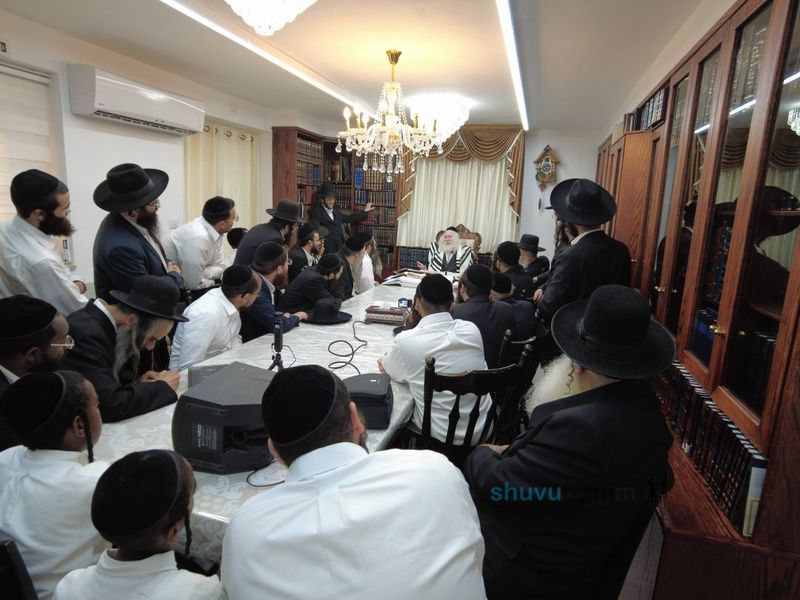
With this, The Rav shlit"a concluded the lesson after about forty minutes, and went out to the Ma’ariv prayer as on every evening, with a great crowd, from the balcony of his home toward the courtyard of our Beis Midrash on Ido HaNavi Street in Jerusalem, may it be rebuilt and established.
Below is documentation from the lesson for the residents of Netivot, inside the holy inner chambers:
Subscribe to Our Newsletter
Receive Torah articles and inspiration directly in your inbox