
A Lesson for the Worshippers of the Synagogue “Heichal HaGvanim HaMishtanim” in
Beitar Illit, at the Home of the Holy Tzaddik Rabbi Eliezer Berland shlit"a
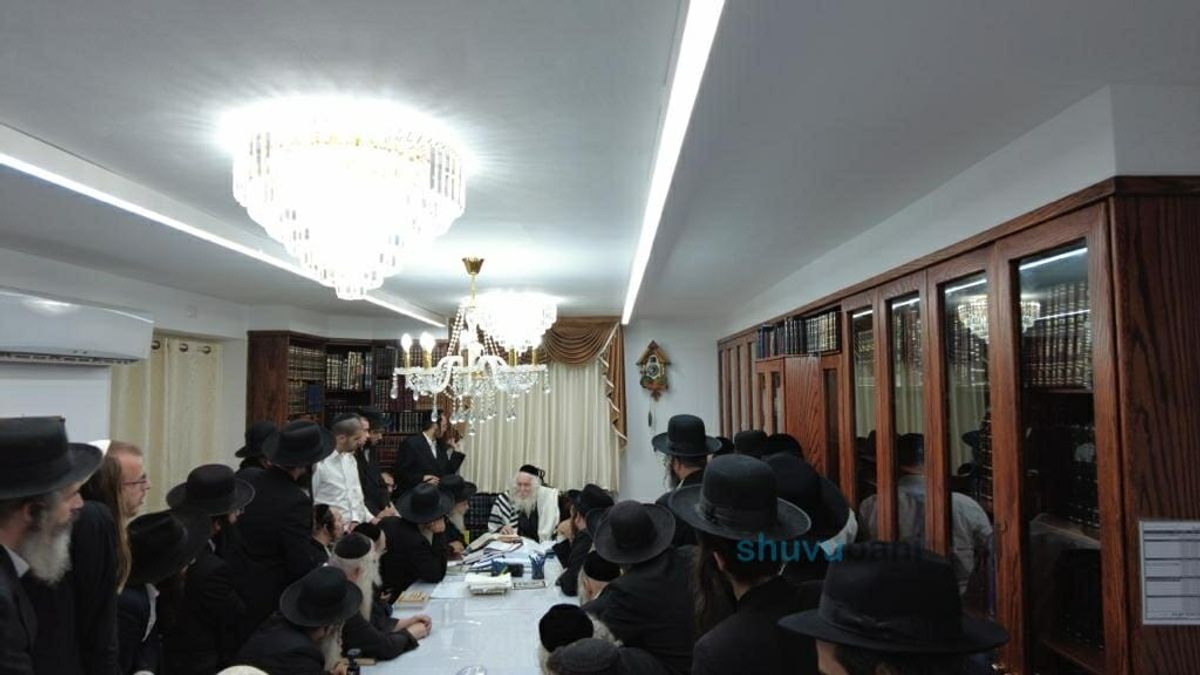
'Heichal HaGvanim HaMishtanim' Synagogue ○ Summary of the Lesson
In the city of Chassidut, Beitar Illit, where our teacher Rav Berland shlit"a once resided, there is a 'Shuvu Banim' community whose heart beats with a burning flame. In the 'Heichal HaGvanim HaMishtanim' synagogue, every congregant knows that if he wishes to revive his soul at the start of each day, he should come through the gates of the Beit Midrash and be among those who awaken the dawn with prayers and melodies of our teacher Rav Berland shlit"a.
Furthermore, from time to time, great mashpi'im (spiritual mentors) of Anash, students of our teacher Rabbi Eliezer Berland shlit"a, arrive to influence the city of Chassidut from the 'flowing stream.' As its name suggests, 'Heichal HaGvanim HaMishtanim' (Hall of Changing Hues) is a magnet; while the veterans merit to persevere in their prayers, there are quite a few new individuals drawing close to our holy Rebbe Nachman of Breslov, of blessed memory, through the path of our teacher Rav Berland shlit"a.
Some of those synagogue congregants merited to enter into the inner sanctum for a lesson last night, Wednesday, the eve of the 15th of Tammuz. In the lesson, our teacher Rav Berland shlit"a spoke on several topics, including hitbodedut, the virtue of melodies and songs, and honoring one's father and mother. He also mentioned the Gemara in Kiddushin, which states that the nations of the world said that if Hashem included the commandment of honoring one's father and mother, it is a sign that the Torah is true. Our teacher explained that this is the greatness—to say that a Jew performs kindness. He also recounted several stories of miracles that occurred during the Holocaust.
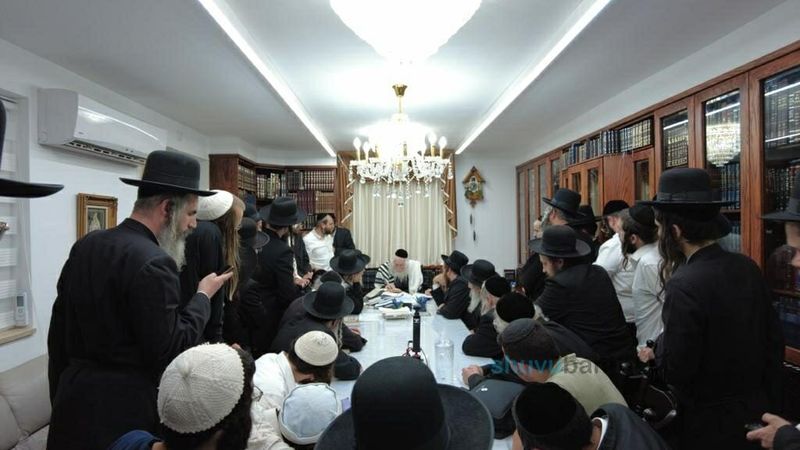
Before you is a short excerpt from the lesson:
"For the main thing is the melody, by playing/singing for ten minutes after Maariv, and ten minutes before Maariv—this is the main thing, the main thing is the melody. 'And He saw in their distress when He heard their song' (Psalms 106:44). Regarding 'in their distress,' the Rebbe says in Torah 51 that the main thing is 'when He heard their song,' that a person sings the prayer, melodies the prayer. Just as R' Menachem Mendel of Rimanov would sing the prayer; he would dance, he would see two people and dance with them. He would say the entire prayer with dances, for several hours—with dances. For the main thing is the song and the melody. He says that when a person sees that the song and melody, he is nullified with all the longing of the soul. The intensity of the wonderful pleasure, all the pleasures, to see Torah with its melody and its dance... The Rebbe says when I say Torah, I say it with the melody, with the dance [Chayei Moharan 340]."
After the conclusion of the lesson, which lasted over an hour, our teacher Rav shlit"a blessed the congregants and strengthened them. The participants of the lesson then went out, as they do every evening, for Maariv prayer with a large crowd, in melodies and songs in the courtyard of the prayer hall, together with our teacher Rabbi Eliezer Berland shlit"a.
Subscribe to Our Newsletter
Receive Torah articles and inspiration directly in your inbox