
A Lesson from Rabbi Eliezer Berland shlit"a to the Group of His Son
Rabbi Nachman Berland shlit"a
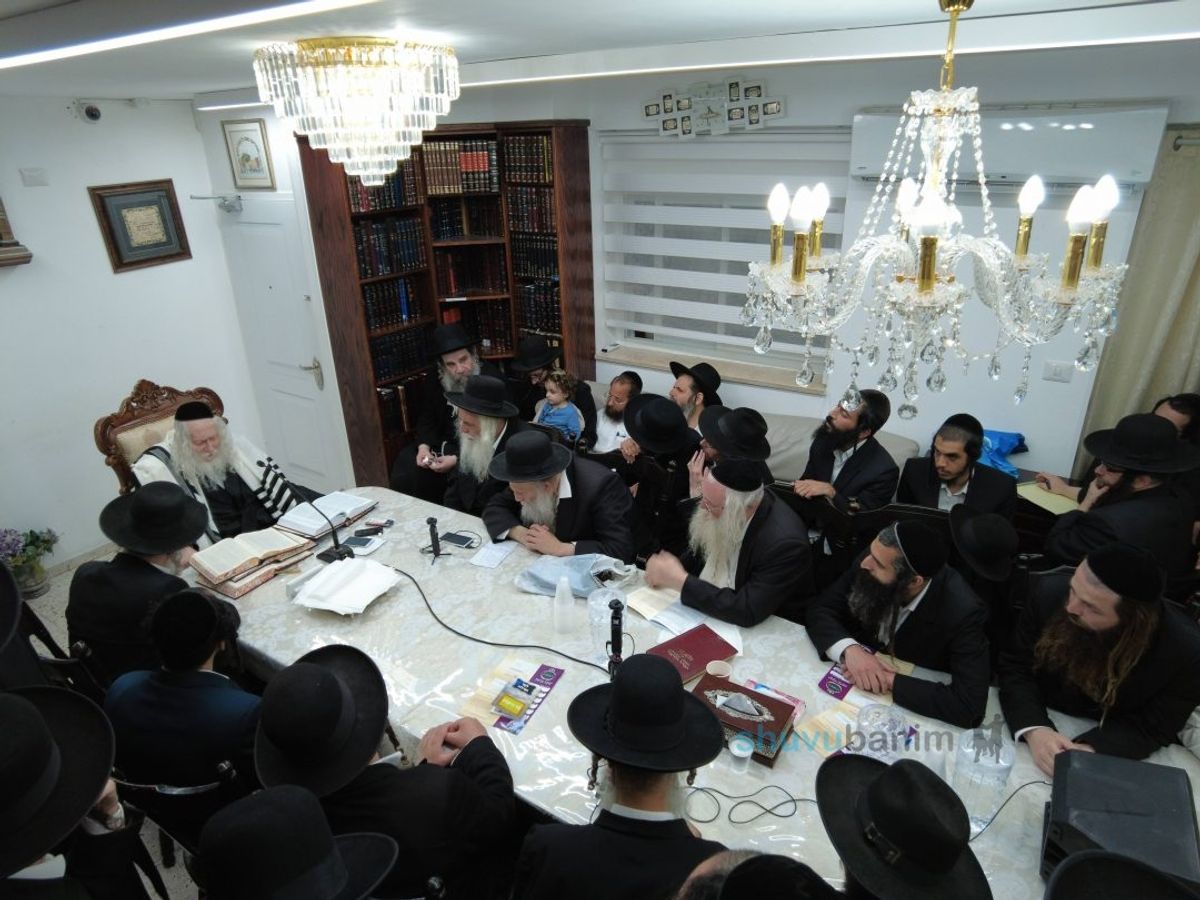
On Wednesday night, the eve of the 26th of Sivan—marked as the yahrtzeit of Yonasan ben Uziel—a lesson took place in the home of The Rav, Rabbi Eliezer Berland shlit"a, for a group connected to his son of The Rav shlit"a—Rabbi Nachman Berland shlit"a. The lesson was held before the Ma’ariv prayer. Below is a summary of The Rav shlit"a’s words from the lesson:
The Rav opened the lesson with the subject of the ביזיונות (humiliations) that Binyamin endured, and how—had he merited to receive just one more stone—he would have received the entire Beis HaMikdash. Afterwards, in honor of the yahrtzeit of the world-renowned chazzan, R’ Yossele Rosenblatt zt"l, The Rav shlit"a spoke in his praise: about his firm stand against the great temptations that were offered to him, and also about how he merited to be in Uman at the holy tziyun of Rebbe Nachman.
Later in the lesson, The Rav spoke about R’ Avraham Doak zt"l, who passed away a few weeks ago. The Rav related how he donated the yeshivah building in the Old City to Shuvu Banim. Afterwards, The Rav spoke about Mount Carmel and Mount Tabor, which wanted the Torah to be given upon them; and in the end, because of their desire, they merited that Hashem’s revelation was shown upon them.
In honor of the hilula of Yonasan ben Uziel, The Rav addressed the topic of the hilula day and said that in truth, we do not know with absolute certainty that this is the day of the hilula, but this is how it has been accepted. The Rav also spoke about the greatness of this Tanna—so great that any bird that flew over him would be burned—and about the greatness of those who pray at his holy tziyun in Amuka. The Rav mentioned that in the past he would travel every morning to pray Shacharis at his tziyun, and afterwards they would go from there to Choni HaMe’agel.
Later in the lesson, The Rav spoke about self-nullification and Emunah in the Tzaddik: that when one follows the Tzaddik, one must go “without heart and without mind,” as it is written about the tribe of Zevulun that they would go “without heart and heart.” He also mentioned Yehoshua bin Nun, who knew that the spies were going to kill him, and nevertheless nullified himself to Moshe Rabbeinu and went with the spies to Eretz Yisrael. Through this, he merited the yud of Sarah—this is “Moshe saw the humility of Yehoshua.” Within this, The Rav spoke about how the spies erred when they believed the prophecy of Eldad and Meidad that “Moshe will die and Yehoshua will bring [the people] in,” because in truth the Tzaddik cannot die. The Rav expressed it and said: “The Tzaddik sees us every second, and he is alive and enduring!”
Later in the lesson, he mentioned the story of Rabbi Elazar ben Arach at the end of Maseches Shabbos on daf 147: how he went to Deyomset, and after some time his learning was forgotten from him, and he read “החרש היה לבם” instead of “החֹדש היה לבם,” and the letters became confused for him. About this, The Rav shlit"a said that if a person separates from his friends and does not learn with a chavrusa, he forgets everything; and that is why Rabbi Elazar ben Arach’s letters became mixed up.
The Rav connected the end of the lesson back to its beginning, regarding the humiliations that the tribe of Binyamin received because they nullified themselves to Moshe Rabbeinu at the shore of the Sea of Suf. The tribe of Yehudah said: it is true that we must enter the sea, but we can build rafts, and so on—so why is the tribe of Binyamin suddenly jumping into the water? Therefore they threw stones at them, as it is written: “שם בנימן צעיר רֹדם שרי יהודה רגמתם”—and this is the meaning of “רגמתם,” that they pelted them with stones. But the tribe of Binyamin said: if Moshe said “ויסעו” (“and they traveled”), then we travel—there is no sea! The Rav concluded that Yehudah represents the path of nature, while Binyamin represents above nature. Therefore Binyamin merited the entire Beis HaMikdash, whereas Yehudah merited only the amah of the foundation.
Below is documentation from the lesson:
Subscribe to Our Newsletter
Receive Torah articles and inspiration directly in your inbox