A Lesson in the Home of the Gaon HaTzaddik Rabbi Eliezer Berland shlit"a for
Community Leaders Across the Land
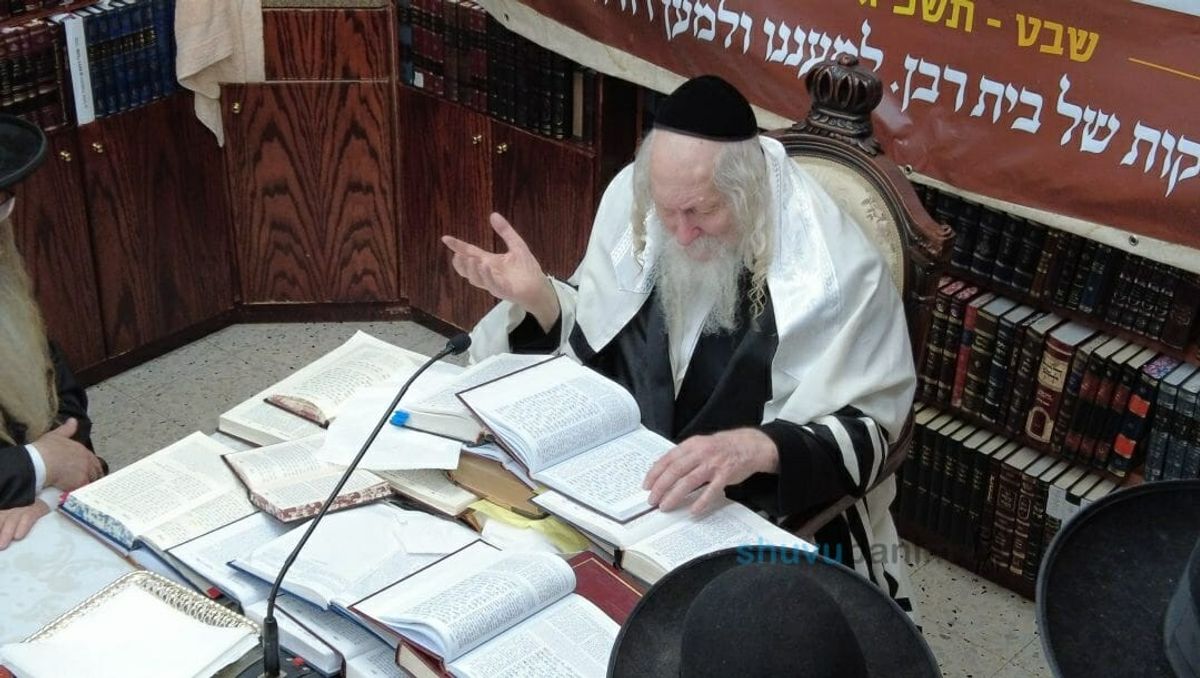
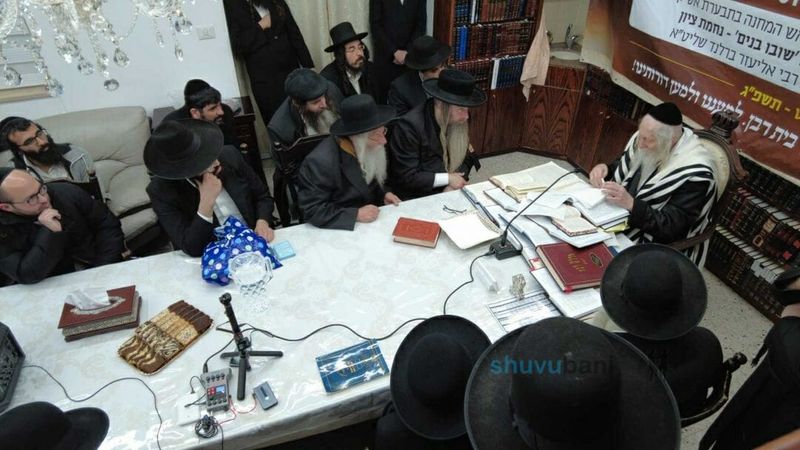
This past Tuesday night, on the eve of Rosh Chodesh—1 Adar—a lesson was held in the home of The Rav, Rabbi Eliezer Berland shlit"a, for an additional group of community leaders from across the country.
The Rav shlit"a opened the lesson with the topic of “Who, and who, are going?”—the words Pharaoh said to Moshe—explaining that only Kalev and Bin Nun (whose gematria equals “who, and who, are going”) are the only ones who would enter Eretz HaKodesh. After that, he spoke about the burdens of Egypt, when the Jewish people said to Moshe, “You have made our scent foul,” because their skin peeled and an unpleasant odor came from their skin. He also spoke about the forty years in the desert, when they faced a real test of Emunah in Moshe Rabbeinu. And since they did not believe in Moshe, the snakes came. Then The Rav shlit"a began to sing, with sweetness, the well-known melody: “Is it Moshe’s hands that make war…? Is it a snake that kills, or a snake that gives life?” for five minutes.
After that, he spoke about the manna, which contained every delicacy in the world. Even so, those who argued against Moshe had to grind the manna, and therefore they craved the meat of the quail.
Later in the lesson, he spoke about Miriam’s well, and afterward he spoke from the Zohar, which says that there were two women in the world whom no man reached their level—Devorah and Chana. He expanded on the war of Sisera and Barak ben Avinoam in Devorah’s song. He also spoke from Chana’s prophecy, “Those who were full have hired themselves out for bread”—referring to the seventy sons of Haman—and that she merited to prophesy about Chanukah and Purim. Toward the end of the lesson, he also spoke about Eliezer, who guarded his eyes and did not look at Rivkah directly, only at her reflection in the water, and that all the Avos guarded their eyes with the utmost holiness.
At the end of the lesson, he spoke about Eliezer, who had questions about Avraham Avinu, because he saw Esav within Rivkah, and he raised a number of questions. Afterward, he answered them in the name of Rabbi Meir of Dzikov regarding the word “macharish” (“silent”), whose gematria is “Yaakov Esav”—meaning that he saw Yaakov together with Esav. Then he understood that Esav is the kelipah, and Yaakov is the Tzaddik. He also spoke from Torah 46 in Likkutei Moharan: that if a person has a question about the Tzaddik, he should cry out to Hashem, “Hear, Hashem, my voice as I call.”
Subscribe to Our Newsletter
Receive Torah articles and inspiration directly in your inbox