
"A Person Wants to Serve Hashem Without Humiliation
This is Like Eating a Limb from a Living Animal" - Words of the Esteemed Tzaddik Rabbi Eliezer Berland shlit"a from Givat Olga
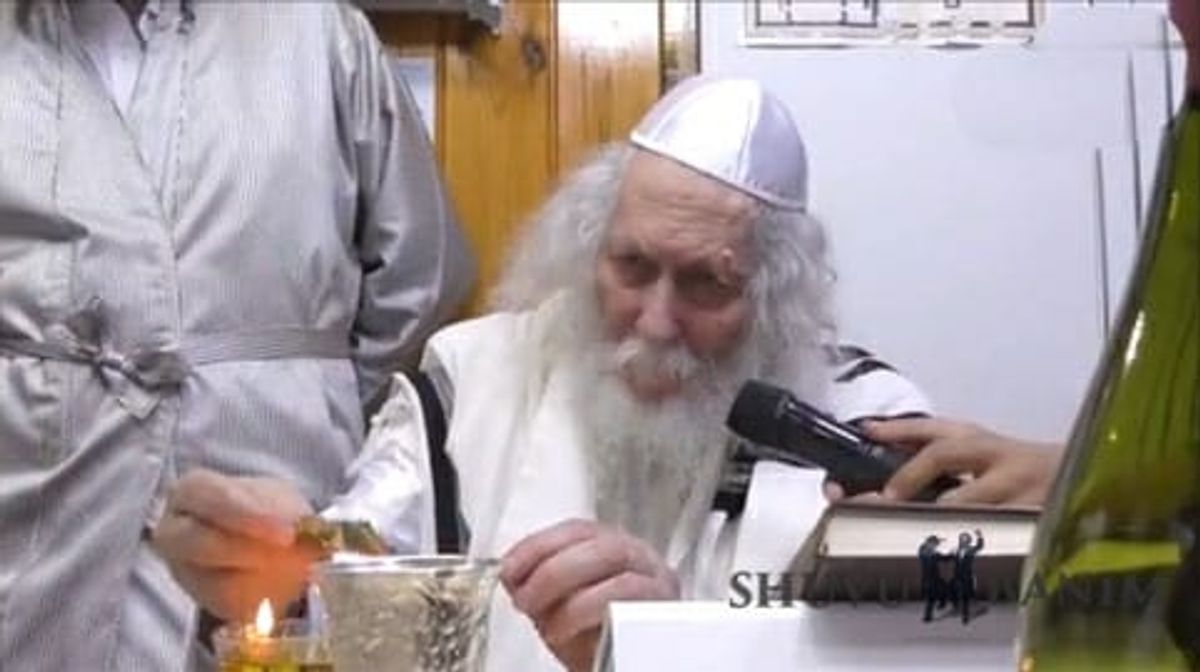
Words of the holy Gaon and Tzaddik Rabbi Eliezer Berland shlit"a as delivered in a shiur in Givat Olga on the first night of Chol HaMoed Sukkot 5779.
"The Luz bone, the secret of the resurrection of the dead, 'And the name of the city was Luz at the first' (Genesis 28:19). 'Luz, which Sennacherib came to and did not confuse, Nebuchadnezzar did not destroy, and even the Angel of Death has no permission to pass through it' (Beraita in Tractate Sotah). Anyone who lives in this city will live forever, and anyone who came now to the shiur will live until the age of 200."
"Through the Luz bone, one lives forever, and therefore one must eat Melaveh Malkah, because only the Luz bone benefits from this meal. 'And love covers all transgressions' (Proverbs 10:12), because through the Luz bone one merits shame; through shame, one's blood is spilled... and through the covering of the blood, everything is covered automatically. Therefore, it is forbidden to eat a limb from a living creature (ever min hachai). This is what Yitzchak said to Esav, 'And make me savory foods as I have loved' (Genesis 27:4) — savory foods that do not contain a limb from a living creature. A person who wants to serve without humiliations is like one eating a limb from a living creature. When Hashem wants the service of the Jewish person who is a tzaddik, He sends him humiliations. A limb from a living creature—it is forbidden to eat a limb from a living creature (the mitzvah of the Jewish person does not ascend to Heaven without first accepting humiliations)."
"As long as a person experiences shame, this is the spilling of blood from the slaughtering, which purifies the limb from the living creature. Yitzchak pleaded with Esav to agree to accept humiliations, and then he would do teshuvah (repentance). A person does not do teshuvah because he does not accept humiliations; without teshuvah, it is a limb from a living creature. In order for it not to be a limb from a living creature, one must accept endless humiliations, then Hashem can 'taste' the mitzvot."
"Avraham Avinu did not perform the 'periah' (uncovering) when he circumcised, therefore they did not perform periah during the Exodus from Egypt. Lavan did not perform periah because he was chesed (kindness); Yitzchak is chesed within gevurah (strength). All the service is in chesed within gevurah. 'Nachamu, Nachamu' (Comfort, comfort) is Yitzchak; 'twice' refers to Yitzchak. Therefore, we came to Givat Olga, because here is the illumination of Yitzchak (the second night of Chol HaMoed Sukkot). Then, one merits teshuvah out of love, and intentional sins are transformed into merits."
"Rebbe Nachman reveals all of this in Torah 52, the Torah of the 'Burned Book'; this is the greatest of all the Torahs of Rebbe Nachman. This is teshuvah out of love, so that Hashem can taste all of our mitzvot, both positive and negative commandments. Because Avraham did not need to perform periah, he is chesed within chesed. And after the humiliations, a person merits the 'covering of the blood.' The covering of the blood is so that a person does not fall into pride, because after humiliations are brought upon a person, he might fall into pride and say that they are humiliating him because he is a tzaddik. However, all the humiliations are so that a person will have humility, which is the covering of the blood—that a person receives humiliation and says, 'This is coming to me'—he does not allow the 'external forces' to come and draw sustenance from the mitzvah."
Subscribe to Our Newsletter
Receive Torah articles and inspiration directly in your inbox