A Shiur for the Group of “Mekoravim” Bochurim from Chassidic Yeshivos in the
Home of the Holy Gaon and Tzaddik Rabbi Eliezer Berland shlit"a
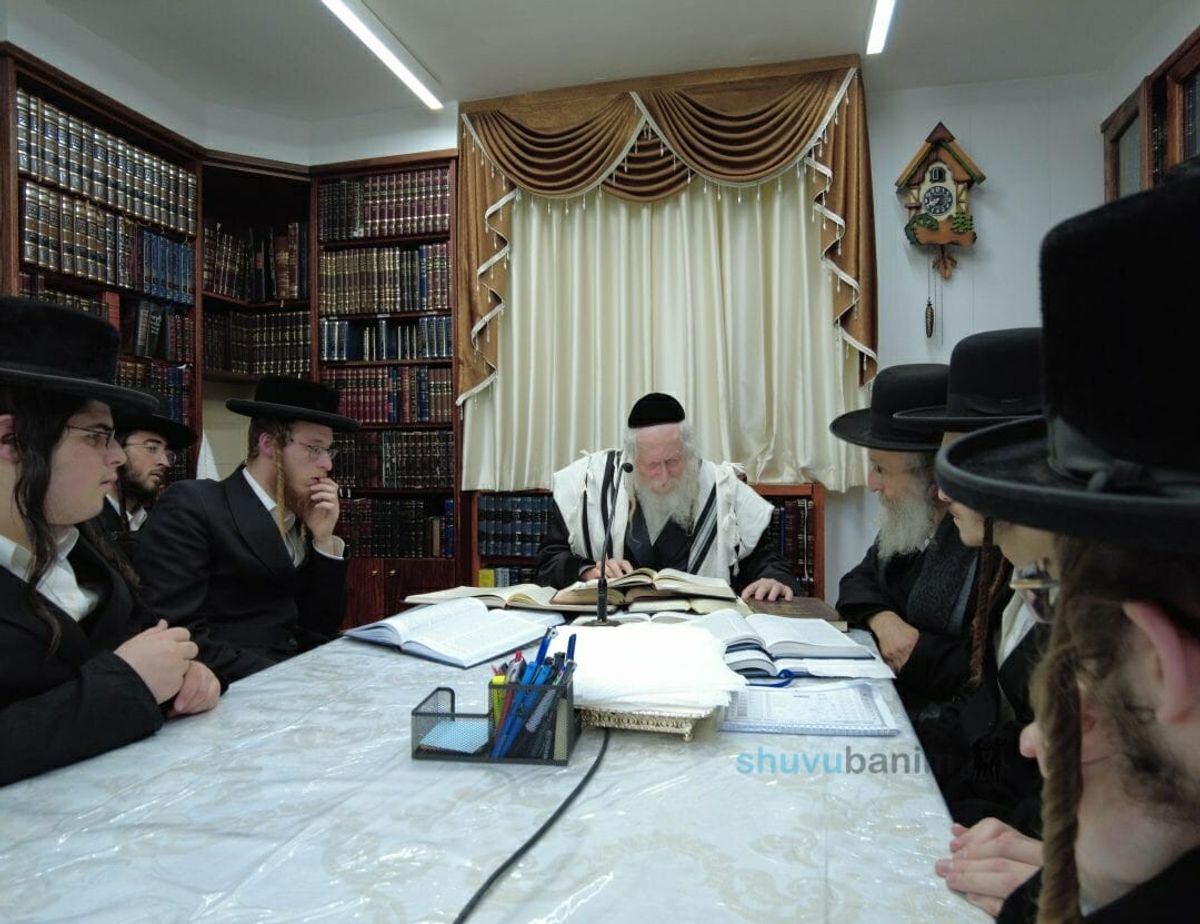
The Group of “Mekoravim” from Chassidic Yeshivos ○ A Summary from the Shiur for the Precious Bochurim
Many of the finest bochurim in the world of Chassidic yeshivos have merited to draw close to the great light—to The Rav, the holy Gaon and Tzaddik Rabbi Eliezer Berland shlit"a. In order to unite them all, a special group was established for bochurim from Chassidic yeshivos. The bochurim of the group gather once a week for a friends’ talk, for singing together, and for strengthening themselves in the great light of The Rav Rabbi Eliezer Berland shlit"a.
Some of these yeshiva bochurim merited, this past Wednesday night—Leil 30 Marcheshvan, the first day of Rosh Chodesh Kislev—to enter further inward, into the holy place, for a special shiur from The Rav Rabbi Eliezer Berland shlit"a. As preparation for the shiur, the bochurim sang sweetly for more than half an hour before the shiur began—songs of feeling and awakening, including stirring Breslov melodies, as well as niggunim composed by The Rav Rabbi Eliezer Berland shlit"a.
Afterward, The Rav shlit"a opened his words by speaking about the greatness of the time of the molad that would be in a few hours, and about the great yeshuos one can bring about at this auspicious time. He then spoke about how Chana, in her tefillah, saw all the miracles of Chanukah—when she said, “The bow of the mighty is broken,” for she saw that the miracles of Chanukah would be under the sign of the bow (keshet). He then spoke about how one must get up early, even before the sky turns blue, and he mentioned the words of Rechavam, who said he would chastise the people with “scorpions.” He then spoke from the weekly parshiyos: that Eliezer had questions about Avraham—Hashem told him, “Lech lecha, from your land,” and suddenly Avraham tells him, “Go only to my land”? And he explained based on Torah 46 in Likkutei Moharan that “kushya” (a question) is an acronym for: “Shema Hashem koli ekra” (“Hear, Hashem, my voice when I call”). When one has questions about the Tzaddik, one must simply cry out to Hashem.
Afterward he spoke about the holiness of the home, and that a person marries only in order to bring Moshiach—not, Heaven forbid, for desires. He then told a story of the rescue of a grandson of someone who had helped R’ Yeshay’le of Kerestir, and how he was saved in that merit.
Afterward he returned to the topic of Chanukah and Chana’s tefillah as mentioned above, and he also mentioned that to this very day we suffer at the hands of the nations of the world because Yaakov bowed to Eisav. He also recounted the entire unfolding of the Chashmonaim monarchy. He then connected these matters to the current events—the victory of those who guard Torah and mitzvos in the most recent elections—and he said that this too was something Chana accomplished through her tefillah: that under the sign of the bow—Kislev—all the wicked fall, and the government of the tzaddikim rises.
Subscribe to Our Newsletter
Receive Torah articles and inspiration directly in your inbox