
And May All the Awesome Holy Ones, Who Were Killed, Burned, and Buried Alive
Be Righteous Intercessors for Us • The Fast Day of the 20th of Sivan from the Gaon and Tzaddik Rabbi Eliezer Berland shlit"a
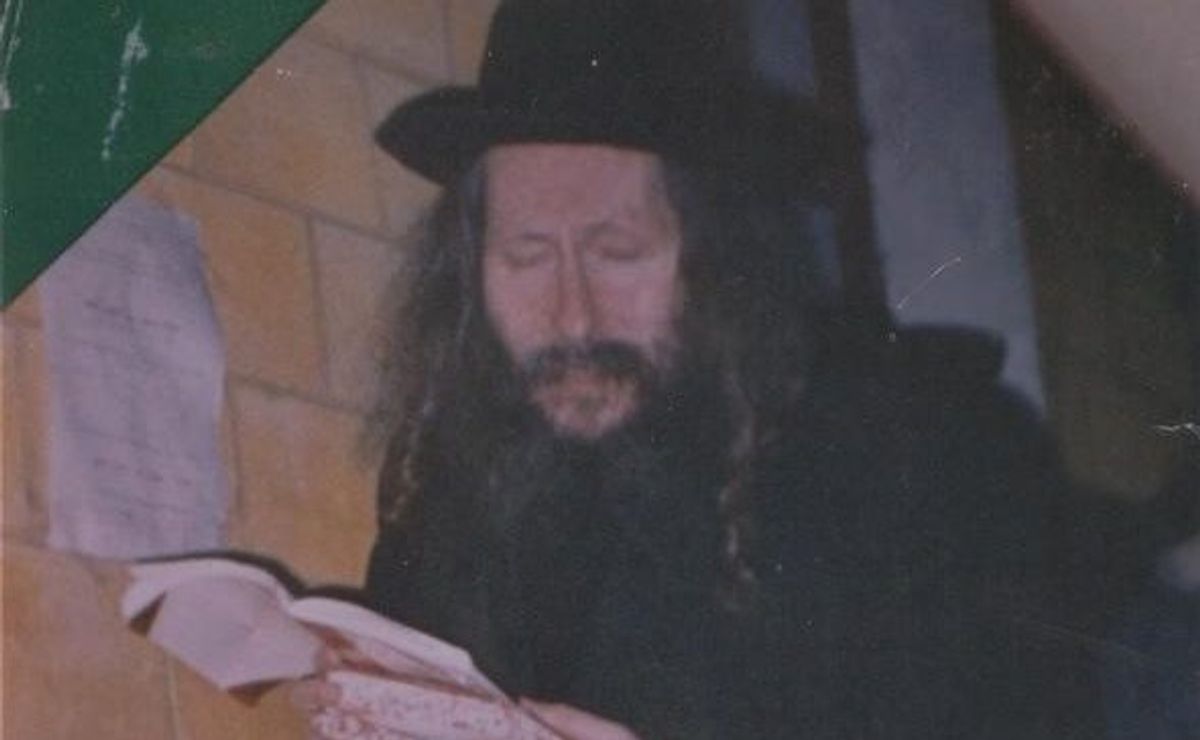
Today is the 20th of Sivan, a day on which several tragic events occurred for the Jews of the Diaspora throughout the years. It was first established as a fast day in the year 4931 (1171 CE) by Rabbeinu Tam after approximately thirty Jews were burned at the stake following a blood libel that never happened. Secondly, this date was set as the beginning of the 'Rindfleisch massacres' in which over 5,000 Jews of Hungary and Austria were killed. For future generations, this date was established as the primary day of calamity for the decrees of Tach veTat (the massacres of 1648-1649), as on that day, the illustrious community of Nemirov was destroyed. This was in addition to the destruction of entire, magnificent communities in European Jewry by the Cossack murderer Bogdan Chmielnicki in Ukraine, Belarus, and Poland. Our teacher, the Rav, Rabbi Eliezer Berland shlit"a (may he live long and good days), speaks extensively in his lessons about this awesome day. Before you are several segments and quotes regarding the awesome day of the 20th of Sivan:
The name is the soul; "a living soul" is its name, and the world stands only upon those who sacrifice their lives for Kiddush Hashem (sanctification of God's Name). "And Hashem smelled the pleasing aroma"—this refers to generations of religious persecution and those who sacrifice their lives for the sake of the unification of the Holy One, Blessed be He, and His Shechinah (Divine Presence). They sacrifice their lives to unify the Name of Hashem, the unification of the Holy One, Blessed be He, and His Shechinah, for the greatest unification is achieved by those who jump into the fire or allow themselves to be cut into pieces. They perform the greatest Kiddush Hashem. This is what we must intend when saying "Shema Yisrael, Hashem Elokeinu, Hashem Echad"—to be prepared for Kiddush Hashem through the four types of capital punishment of the Beis Din (Rabbinical Court). Those generations saw that the decrees of slaughter were likely to continue for many more years. For example, Vilna was destroyed in the year 5415 (1655); although the main massacres were in 5408 and 5409 (1648-1649), the killings continued until 5426 (1666). The slaughter persisted for another 18 years. In Vilna, which was destroyed in 5415, all the Jews were killed immediately. After the destruction of the Beis HaMikdash (Holy Temple) and the destruction of Betar, it was decreed that the persecutions would last for decades. The Tzaddikim (righteous ones) wanted to sweeten this. In Heaven, they asked Rabbi Shimshon of Ostropoli zt"l (of blessed memory), Rabbi Yechiel Michel of Nemirov zt"l, and the Shach (Rabbi Shabbatai HaKohen zt"l) if they were willing to be killed for Kiddush Hashem to save the Jewish people. Even then, a third of the nation was wiped out. Rabbi Shimshon of Ostropoli agreed to be killed for Kiddush Hashem, and he saved a third of the nation. Rabbi Yechiel Michel of Nemirov—this is why it is called the 20th of Sivan, because the community of Nemirov was destroyed then—he agreed to die for Kiddush Hashem and saved another third. The Shach was supposed to save the final third. Some say that when it was time for him to go, his mother stopped him and said, "I do not agree to you being killed for Kiddush Hashem." Others say he said he wanted to compose the "Shach" (his commentary on the Shulchan Aruch) and that this had a special importance, so he could not yet be killed for Kiddush Hashem. Thus, a third of the nation was indeed wiped out then. So, the Tzaddikim who are willing to go completely for Kiddush Hashem are the ones who save the Jewish people from all the killings and decrees.
Today we are at the 20th of Sivan. The 20th of Sivan was the beginning of the Geulah (Redemption). It is written that on the 20th of Sivan, the actual beginning of the Geulah occurred. The only reason Mashiach ben David (the Messiah from the Davidic line) did not come was that the Jewish people did not believe in the Arizal (Rabbi Isaac Luria). The Arizal had lived just before then, but they lost everything because no one wanted to believe in him. Today we believe in the Arizal, but in those generations, they did not believe such a great light existed. It is written that the Maharshal (Rabbi Solomon Luria) disagreed with the Arizal. The Maharshal himself said, "This is a man of imagination; can he really heal all the sick in the world?" So the Arizal sent him two messengers from Safed on the Sabbath with warm challahs from Safed. They arrived in Krakow and knocked on the Maharshal's door, saying, "We have just arrived from Safed; here are the warm challahs the Arizal sent you." When he saw they had come from Safed [miraculously fast], he realized how great the Arizal was and said, "I am stopping the dispute," because the Arizal did not want the Maharshal to oppose him, as this has a great impact in Heaven. In the meantime, if common people oppose him, that is fine—simple people. King David said, "Those who sit at the gate talk about me; I am the song of the drunkards." When everyone talks about me, it is good. But when great Tzaddikim disagree, it can, Heaven forbid, cause harm. So he did not want that. This is what we are explaining here: now, in Parshas Shelach Lecha, this is the portion through which one can heal all the illnesses in the world. There is no illness in the world that cannot be healed in this Torah portion. "Shelach" (send) is related to "Methuselah"—it means death. In the "Pri Etz Chaim," it is written that in Parshas Shelach Lecha, one can be healed from all the illnesses in the world. There is no illness that cannot be healed, because this portion speaks of "a land flowing with milk and honey." Now, these are all the healings in the Land of Israel. So what results is that the cure for all illnesses is just water alone, because "we took no gain of money" (Judges 5:19). For 40,000 of Israel, they took no gain of money. For every illness in the world, water alone—a person drinks a cup of water. The Rebbe (Rebbe Nachman) says, "Bless your bread"—from a cup of water alone, one can be healed from all illnesses the moment a person accepts with love what is being said. This means that everyone loves; the true lovers of a person are those who talk about him [criticize him], not those who come [to flatter]—those are the greatest enemies.
Our Rebbe (Rebbe Nachman) vomited bowls of blood to sweeten the decrees. The Tzaddik sheds blood so that all the decrees will be annulled. Today is the 20th of Sivan; it is literally like Yom Kippur (Day of Atonement), an atonement for sins. Yom Kippur represents the second Tablets of the Law. Therefore, the Tzaddik had to empty his entire body so that there would be a receiving of the Torah anew. Anyone who connects to the Rav is with him at Mount Sinai; the Rav is at Mount Sinai.
Before you is a prayer written by our teacher, the Rav, Rabbi Eliezer Berland shlit"a, for the 20th of Sivan
Master of the Universe, Almighty One, in the merit of the 20th of Sivan—for this day is auspicious for the coming of Melech HaMashiach (the King Messiah) and for the Resurrection of the Dead—forgive me and pardon me for all my iniquities, all my sins, and all my transgressions that I have sinned, erred, and transgressed in this incarnation and in all incarnations, and in the root of my soul that was impregnated within Adam HaRishon (the first man). May I merit on this holy and awesome day, and in the merit of the million Jews who were bound as offerings, burned, cut into pieces, bound alive, and buried alive by the cursed wicked ones who in every generation and every day rise against us to destroy us. But in the merit of the awesome Tzaddikim, Rabbi Shimshon of Ostropoli and Rabbi Yechiel Michel of Nemirov, and in the merit of all the awesome Tzaddikim in every generation, and in the merit of our holy and awesome Rebbe (Rebbe Nachman), pardon and forgive all our sins—whether we blemished intentionally, unintentionally, under duress, or willingly. Grant us the merit on this holy and awesome day to finish the entire Shas (Talmud), and to guard our eyes with all vigilance, and let us not sin, Heaven forbid, ever again with any sin or iniquity, or even the slightest trace of a sin—"crushed until thin until it cannot be examined, and His greatness is unsearchable." May we merit from this day forward until the end of all generations to guard our eyes with all vigilance, and not to sin even the slightest bit, whether in speech or in action. And may all the awesome holy ones who were killed, burned, and buried alive be righteous intercessors for us, and save us from all sins and all blemishes, whether in speech, thought, or action. In the merit of this holy and awesome day, may we merit to know the entire Shas and all the holy books: Zohar, Etz Chaim, Sha'ar HaGilgulim, Pri Etz Chaim, Sha'ar Tevunos, and all the holy books in the world that have been printed or will be printed—all the Rishonim (early commentators) and Acharonim (later commentators), all the books of Mussar (ethics) in the world, and all the books of Kabbalah in the world, they and their commentaries and the commentaries on their commentaries, and all the books of the holy and awesome Rambam (Maimonides) with all his commentators, and all the books of the Tur and the Shulchan Aruch with all the commentators and the commentators of their commentators. Let there not be a holy book in the world that we do not know by heart, word for word, letter for letter, forwards and backwards, with proficiency and depth. And may we know "that You are Hashem, He is Hashem the God, there is none else besides You, and there is none but You, in the heavens above and on the earth below, and in the waters beneath the earth." In this merit, may we merit to see the coming of Melech HaMashiach and the complete Geulah (Redemption) in the blink of an eye, and the building of our Beis HaMikdash (Holy Temple), which will atone for all our iniquities, and may we merit new mentalities (mochin) of the Resurrection of the Dead.
Subscribe to Our Newsletter
Receive Torah articles and inspiration directly in your inbox