“And They Believed in Hashem and in Moshe His Servant” • Extensive Coverage of
the Seventh Day of Passover in the Presence of the Gaon and Tzaddik Rabbi Eliezer Berland shlit"a
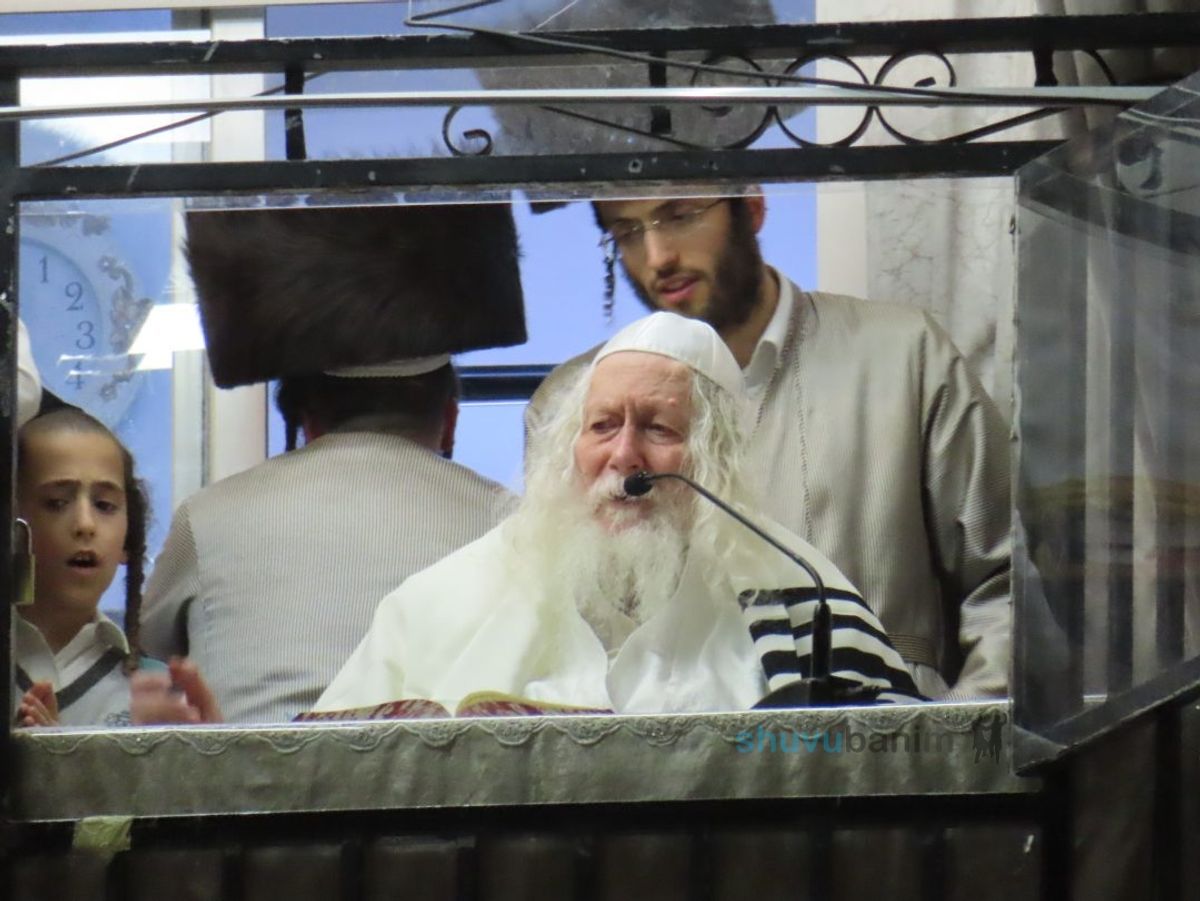
Even during the holiday of the Seventh Day of Passover, the final day of Passover, we merited to stay in the presence of the Gaon and Tzaddik Rabbi Eliezer Berland shlit"a (may he live long and good days). We merited an uplifted and wonderful holiday, a Splitting of the Red Sea in our time through the Tzaddik of the generation. Before you is an extensive report from the holiday:
On the night the final holiday became sanctified, The Rav shlit"a came out to the balcony of his home at 7:07 PM, about fifteen minutes before sunset. After 17 minutes of singing 'Or Zarua LaTzaddik' (Light is sown for the Tzaddik), The Rav shlit"a began the Mincha (afternoon) prayer of the eve of the holiday at sunset. After the prayer, The Rav said the Seder HaHisksherus (the order of connecting to the Tzaddikim) together with the public. Upon the conclusion of the Hisksherus, The Rav shlit"a began the Maariv (evening) prayer of the holiday night with special vitality. A unique excitement was felt during the melody of 'V'Emunah Kol Zos' (And all this is true and certain), and particularly at the words 'HaMaavir Banav Bein Gizrei Yam Suf' (Who passes His children between the pieces of the Red Sea). It is impossible to describe the power felt when thousands of people sang together about the miracles of the Splitting of the Red Sea from within 'V'Emunah Kol Zos!'. After the conclusion of the Shmoneh Esrei (the standing prayer) and the Kaddish, The Rav began singing 'BeTzes Yisrael' (When Israel went out of Egypt) for about ten minutes. Afterward, the prayer concluded with Kaddish and Aleinu Leshabeach. At the end of Aleinu Leshabeach, the Rav began Sefiras HaOmer (the Counting of the Omer), the high counting of 'Yesod shebeChesed (Foundation within Loving-kindness) — six days to the Omer.' The Sefiras HaOmer lasted about forty minutes, all with special lengthiness, melodies, and the specific order as we described in the report on the Shabbat of Chol HaMoed Passover. Everything was done with melodies, word by word, letter by letter. The Rav shlit"a entered his home while singing 'HaMaavir Banav' at 8:55 PM, after a prayer service of one hour and forty-eight minutes on the night the holiday was sanctified.
In the early hours of the morning of the Seventh Day of Passover, The Rav shlit"a entered at 4:30 AM for the Shacharis (morning) prayer of the holiday and began saying the verses recited on Shabbat and holidays from the Chatzos (midnight/early morning prayer) liturgy. After Chatzos, The Rav began the Shacharis prayer — the morning songs of 'Odeh L'E-l' (I will thank G-d) with special vitality. Afterward, he continued with the Korbanos (sacrificial readings) and Pesukei D'Zimra (Verses of Praise) with melodies and special vitality. A great awakening was felt by the public during 'Az Yashir' (Then Moshe sang) with shouts of the Song of the Sea in the life-giving melody with which the Tzaddik phrases 'Az Yashir.'
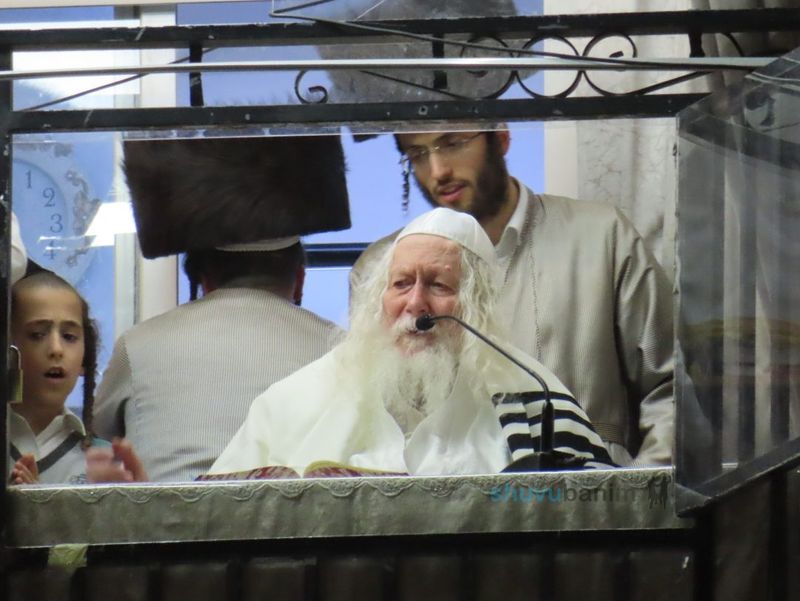
Something very special occurred during the morning prayer of the Seventh Day of Passover: The Rav shlit"a stood for the Shmoneh Esrei prayer of the Shalosh Regalim (the three pilgrimage festivals) at 5:55 AM, exactly at the seconds of Netz HaChama (sunrise). This is a matter of note because, due to the lengthiness with which The Rav shlit"a usually prays on Shabbat and holidays, it is very rare for him to stand exactly at the second of sunrise. However, it should be noted that as is customary in Chassidic circles, this is one of the five early risings that the Baal Shem Tov said one should be careful to pray at sunrise. Immediately after the Chazaras HaShatz (the cantor's repetition of the Amidah), the Rav recited the blessing over Hallel (psalms of praise), while the entire public, with immense enthusiasm, played, sang, and jumped during the singing of Hallel. Who can estimate the 'voices and lightnings' and the immense joy during Hallel? For 'BeTzes Yisrael' alone, he repeated it seven times, over and over, with a vitality that soared and uplifted at every moment anew. The melody that revives every soul during 'Hodu L'Hashem Ki Tov' (Give thanks to Hashem for He is good) was powerful, and if that weren't enough, at the end of Hallel came the deeply stirring melody between the verses of 'Ana Hashem Hoshia Na...' (Please, Hashem, save us now). Thus, the singing of Hallel with immense vitality lasted over half an hour (32 minutes).
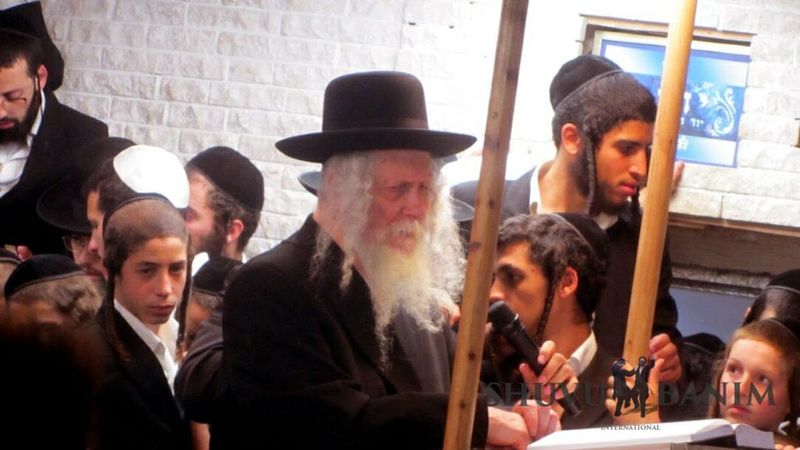
It should be noted parenthetically that the crowding was very intense; over a thousand people were squeezed into the prayer hall, which was too narrow to contain them, and the 'waves' created by the pressure of the crowd were many. It was impossible even to put a hand in one's pocket due to the density and the load. It should also be noted that the crowding was not only in the front rows—where there is a permanent density of The Rav shlit"a's students wanting to get as close as possible to the Tzaddik—but even at the back of the Beis Medrash (study hall).
After the conclusion of Hallel, The Rav shlit"a delivered a very long lesson of about 18 minutes, in which he told the story of Moshe Grohman and how he managed to move to the Land of Israel after the war. All his friends told him there was no chance in the world he would succeed in getting a certificate (entry permit) because he didn't belong to the 'Aguda' (Agudat Yisrael) and certainly not to the 'Mizrachi' and 'he had no pull,' in the Rav's colorful language. But he insisted on going and told them, "I am a Breslover!" To his great surprise, they told him, "If you are a Breslover, then you go up first!" And so, in the merit of Rebbe Nachman, he succeeded in moving to the Holy Land. At the end of the lesson, the Rav recited the order for 'Taking out the Torah scroll for the three festivals' with the Thirteen Attributes of Mercy during the opening of the Ark, and began the Torah reading for the Seventh Day of Passover. About twenty people were called up for the reading of "Vayehi Beshalach Paroh" (And it was when Pharaoh sent), the Splitting of the Red Sea, and the Song of the Sea. The Rav shlit"a, of course, was called up for the Song of the Sea, which he sang in a clear voice and with wonderful vitality. Additionally, the Rav called up one of the grandsons of Rabbi Shmuel Shapira zy"a (may his merit protect us) in honor of his yahrtzeit (anniversary of passing). After the Torah reading, for the blessings of the Haftarah (prophetic reading), the attendant Reb Shimon Rubinstein was called up and read the Haftarah loudly. After the conclusion of the Torah reading, the song "Ya E-li V'Goali" (G-d, my Strength and my Redeemer) was sung with the life-giving melody of The Rav, which he is accustomed to saying on every holiday.
For the Musaf (additional) prayer, the Rav stood at 7:30 AM with special awakening and vitality, with all the melodies that revive one anew every time they are sung on each festival together with The Rav: "V'Kabetz Pizureinu..." (And gather our dispersed), "V'Havienu L'Tzion Ircha..." (And bring us to Zion Your city). Thus, for every melody, the entire congregation sang with bren (burning enthusiasm) and immense joy. After the Chazaras HaShatz, The Rav concluded the prayer, made Kiddush (sanctification over wine), and delivered a lesson of about three minutes. After the lesson, he said Kaddish and returned to his holy home at 7:48 AM, after more than three and a quarter hours of the morning prayer of the Seventh Day of Passover.
At 7:42 PM, the Rav came out to the balcony, said Kaddish, and immediately began the Shmoneh Esrei of the Mincha prayer for the three festivals. After the Chazaras HaShatz, The Rav shlit"a began singing 'BeTzes Yisrael Mimitzrayim' for about ten minutes. Afterward, The Rav shlit"a said 'Aleinu Leshabeach.' Even before the story of the Baal Shem Tov, the Rav began singing 'Karev Yom Asher Hu Lo Yom V'Lo Layla' (Bring near the day which is neither day nor night) with immense vitality for fifteen minutes, over and over. After the singing, The Rav shlit"a sat on the balcony and began the story of the Baal Shem Tov's journey to the Holy Land in great detail and in such a life-giving way; the Rav recounted every single detail at length. The story lasted about forty minutes. During this, of course, The Rav shlit"a sang 'L'Oseh Niflaos Gedolos Levado Ki L'Olam Chasdo...' (To Him who alone does great wonders, for His kindness is eternal). After forty minutes, the Rav began singing 'Lamnatzeach Binginos Mizmor Shir' (To the Chief Musician on Neginoth, a Psalm or Song) for twenty minutes. After twenty minutes, the Rav added a short segment of the story of his own accord. Afterward, The Rav shlit"a said 'Barchu' for the Maariv prayer of the conclusion of the holiday with vitality and melodies. After the Shmoneh Esrei of Maariv, The Rav shlit"a said 'Shir HaMaalos' (A Song of Ascents). He concluded the prayer with 'Aleinu Leshabeach.' Afterward, he began Sefiras HaOmer, which lasted nearly an hour. The Rav lengthened mainly during the singing of 'V'al Yedei Zeh Yushpa Shefa Rav B'Chol HaOlamos...' (And through this, great abundance will be influenced in all the worlds) for half an hour!! After Kaddish, the Rav performed Havdalah (separation ceremony) and returned to his holy home. This was at 10:37 PM, after more than three hours (3:05) that we merited. Throughout the entire holiday, we merited eight hours and eleven minutes in his holy presence!
The Shuvu Banim website wishes you, the readers, a healthy and happy summer!!
Subscribe to Our Newsletter
Receive Torah articles and inspiration directly in your inbox