"And You Shall Rejoice in Your Festival"
This is a Biblical Commandment to Rejoice for Seven Days Without Ceasing – Words of the Gaon and Tzaddik Rabbi Eliezer Berland shlit"a for the Holiday of Sukkot and Parshat Zot HaBeracha
"And You Shall Rejoice in Your Festival"
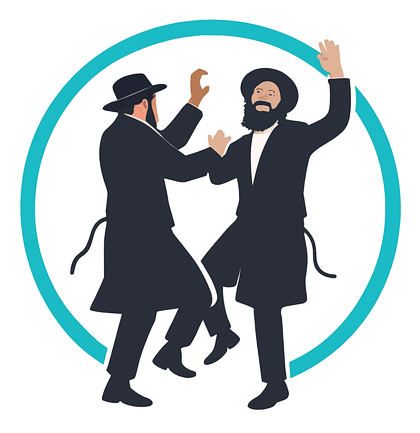
"Even though it is a mitzvah to rejoice on all the festivals, on the holiday of Sukkot, joy is a mitzvah in its own right. In the Temple, there was exceeding joy during Sukkot. Chazal (The Sages) established the holiday of Sukkot for double and redoubled joy. We need to dance and rejoice the entire holiday without stopping. Certainly, one must also learn Torah in between, because if one does not learn, it is impossible to dance. As the Rebbe (Rebbe Nachman) brings (Likutey Moharan I, 31): 'Through melody, it is recognized if a person has accepted upon himself the yoke of Torah. The sign is: "They shall bear it upon the shoulder" (Numbers 7). And Chazal interpreted (Arachin 11): "Bearing" refers only to song, as it is said, "Raise a song and sound the timbrel." This verse was said regarding the burden of the sons of Kehat who carried the Ark on their shoulders, which corresponds to the aspect of the yoke of Torah.' Whoever bears the yoke of Torah can play music, sing, and dance."
"In the Beis HaMikdash (The Holy Temple), there was great joy, as it is said, 'And you shall rejoice.' For the Torah itself says, 'And you shall rejoice before Hashem your God for seven days.' This is a mitzvah D'oraita (a Biblical commandment); this is not written regarding Pesach, nor Shavuot, but is stated only regarding the holiday of Sukkot. It is a Biblical commandment to rejoice for seven days without ceasing. The Torah commanded us to rejoice and dance without stopping, day and night, for seven days. And how would they perform this rejoicing? They would bring all the musical instruments—playing on the violin, harps, and cymbals—each person with the instrument he knew how to play. However, the powerful, stormy dances, the dances with juggling acts—these were done only by the great Tzaddikim. For the moment the dancing began, only the great Tzaddikim, the holy ones of the Most High, would dance, leap, and whirl, just as King David leaped and whirled. Only men of deed who occupied themselves greatly with Torah, mitzvos, and communal needs with emunah (faith), who did not sleep by day or by night with mesirus nefesh (self-sacrifice)—only they would dance, clap, and strike their hands together in the Temple."
"Therefore, everyone must dance and rejoice during these holy days and know that dancing and joy are a very great tikkun (rectification). A person does not know what terrible judgments await him in the coming year. The Rebbe says (Likutey Moharan I, 206): A person committed sins and blemishes; at first, they start with him in a good way. Hashem begins to call him with a hint, afterwards with a call, until He kicks him, strikes him, and afflicts him with suffering. You committed sins? Do teshuvah (repentance)! And if you do not do teshuvah, perhaps through suffering you will grasp something, you will begin to do teshuvah, you will begin to cry over your blemishes and be shaken a little. If not, the wife will become ill, chas v'shalom (Heaven forbid), and if not the wife, then the children, chas v'shalom."
"The Rebbe promised that he would rectify everything, but the question is: how will he rectify it? With what suffering will he rectify it? We are Jews; nothing is atoned for free. Among the Christians, one does not need to do anything, only to go to the priest and confess once a year, and he says 'forgiven, forgiven,' and afterwards they continue in their ways. But among Jews, there are no such things! One pays for a transgression! One pays for every sin! And if a person does not do teshuvah and does not awaken, then they begin to strike him and afflict him with suffering, as it is written, 'There is no suffering without iniquity.'"
"We have 22 days from Rosh Hashanah until Simchat Torah. From Rosh Hashanah until Yom Kippur, we sweetened the Gevurot (severities); we sweetened our Yetzer Hara (Evil Inclination) so that it would not rule over us. And now, from Yom Kippur until Simchat Torah, we are given 12 days for the sweetening of judgments and for the forgiveness of sins. Now we are building the new year. Until now, we were only sealed; it was only the seals—the sealing on Rosh Hashanah for the completely righteous, the sealing on Yom Kippur for the intermediates. Now, start building!"
"The building takes place on Sukkot through joy, through dances, through songs, through prayers with kavanah (intent), through guarding one's eyes. According to how a person dances and sings during these days, so he builds the new year. Through the dances, the songs, and the circles, sins are forgiven. What is the meaning of 'Machol' (dance)? That all the sins are nimchalim (forgiven)—it is an expression of mechilah (forgiveness). Through the dances, no transgression and no judgment remains. The Arizal says that whoever rejoices and dances also on the night following Simchat Torah until the morning will merit that all his transgressions are nullified. The dances and the joy create the new year; through the dances, one draws down the health of the new year, the mochin (consciousness), and the heart of the new year. And with the help of Hashem, may we merit through the joy, the songs, and the dances, to achieve forgiveness of sins, the sweetening of judgments, and the complete Geulah (Redemption) speedily in our days, Amen.
Courtesy of the "Tzam'ah Nafshi" leaflet 0527639126
Subscribe to Our Newsletter
Receive Torah articles and inspiration directly in your inbox