
Appreciation Gathering and Lesson for the Supporters of Our Beis Midrash
from the Gaon HaTzaddik Rabbi Eliezer Berland shlit"a
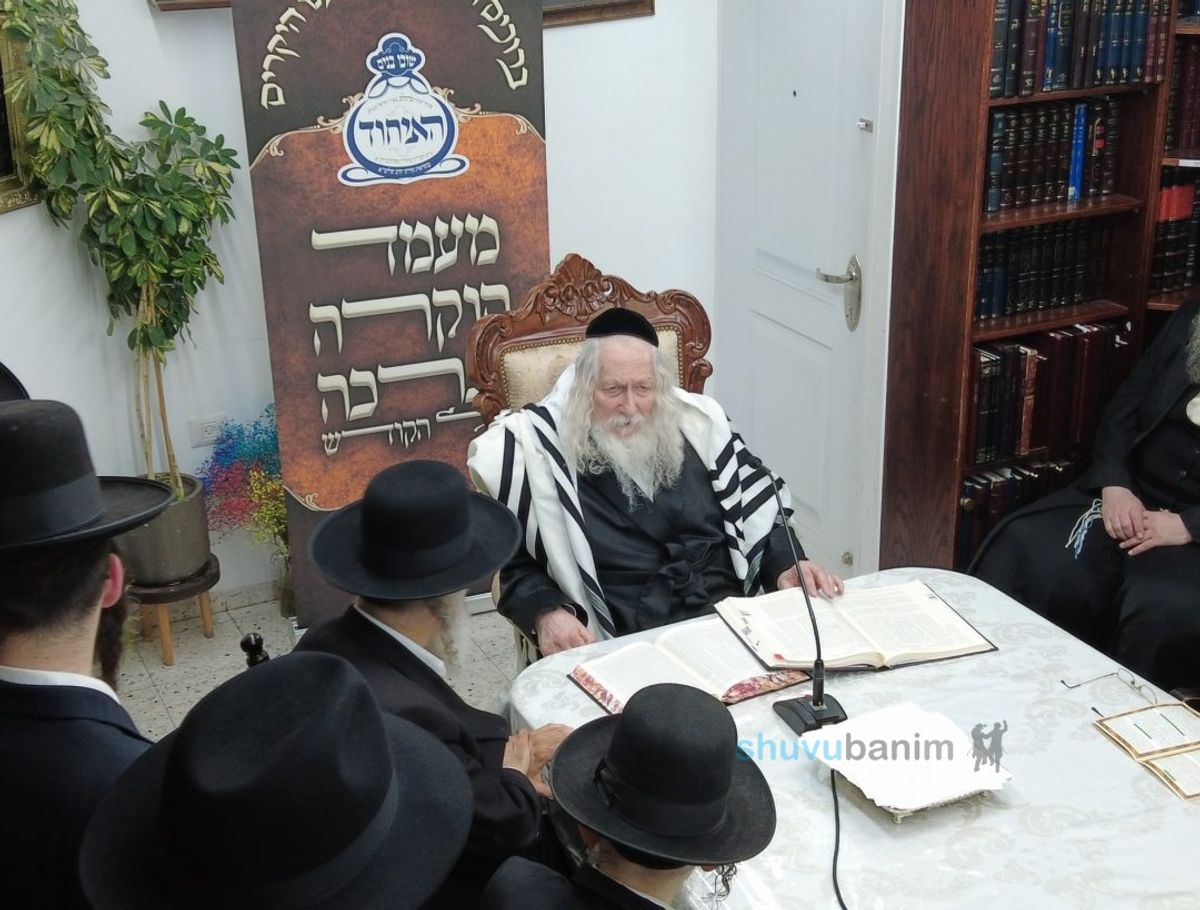
On Wednesday night, the eve of 7 Elul, a group of supporters of our Beis Midrash entered the inner sanctum for an appreciation gathering hosted by our Beis Midrash
First, the gabbaim of the Beis Midrash thanked the donors and presented the broad, ongoing activity made possible through contributions to the Beis Midrash. After that, The Rav, Rabbi Eliezer Berland shlit"a, entered his holy residence and began delivering a devoted, thirty-five-minute lesson—fiery and aflame. Below is a summary of the lesson:
He began by speaking about Rivkah’s shidduch, the first shidduch in history. Then, for most of the lesson, he spoke about the Haftarah of the second day of Rosh Hashanah, where it says, “You will yet adorn yourself with your tambourines and go out in the dance of those who rejoice,” and he elaborated at length on the greatness of dancing. He also strengthened everyone regarding singing the zemiros on Shabbos. Later, he spoke about how Chanah prayed seven hundred and forty-seven years before the miracle of Chanukah, for the miracles that would be, and he explained this calculation in detail. He also spoke about Shmuel and Chanah’s prayer.
After that, he addressed the concept of “shoes” for the Shechinah, bringing the Gemara in Shabbos (129): “A person should always sell the beams of his house and buy shoes for his feet.” He connected the idea of shoes to the Shechinah—how they are “made” through dancing—and he brought the words of Rebbe Nachman in Torah 169 on “And it shall be, because (eikev),” that one must lift and spring the heels.
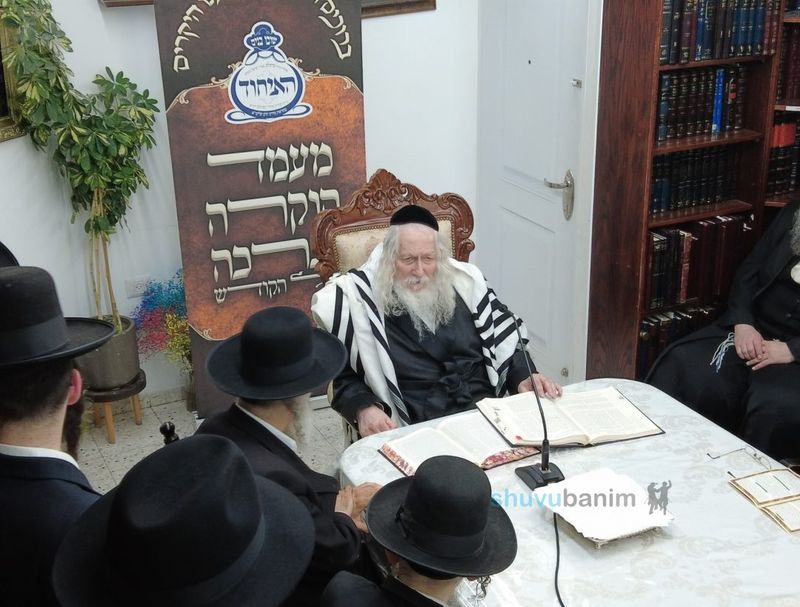
Toward the end of the lesson, he related in detail the miracle of the rescue of his son, the chassid R’ Nachman Berland shlit"a, when he was one year old, and how only through the power of The Rav’s Emunah shlit"a and the Rebbetzin’s Emunah could his son be taken out of danger and recover.
At the end of the lesson, he returned again to the theme of dancing, bringing the Rambam that one who does not dance at the Simchas Beis HaSho’eivah is called a sinner and a fool. And that a person must humble himself and make his body light, like King David in his time, who “danced with all his might” before Hashem.
Below is documentation from the lesson in the inner sanctum:
Subscribe to Our Newsletter
Receive Torah articles and inspiration directly in your inbox