“For He Will Shelter Me in His Sukkah” • A Report on Sukkos in the Shadow of the
Holy Tzaddik Rabbi Eliezer Berland shlit"a
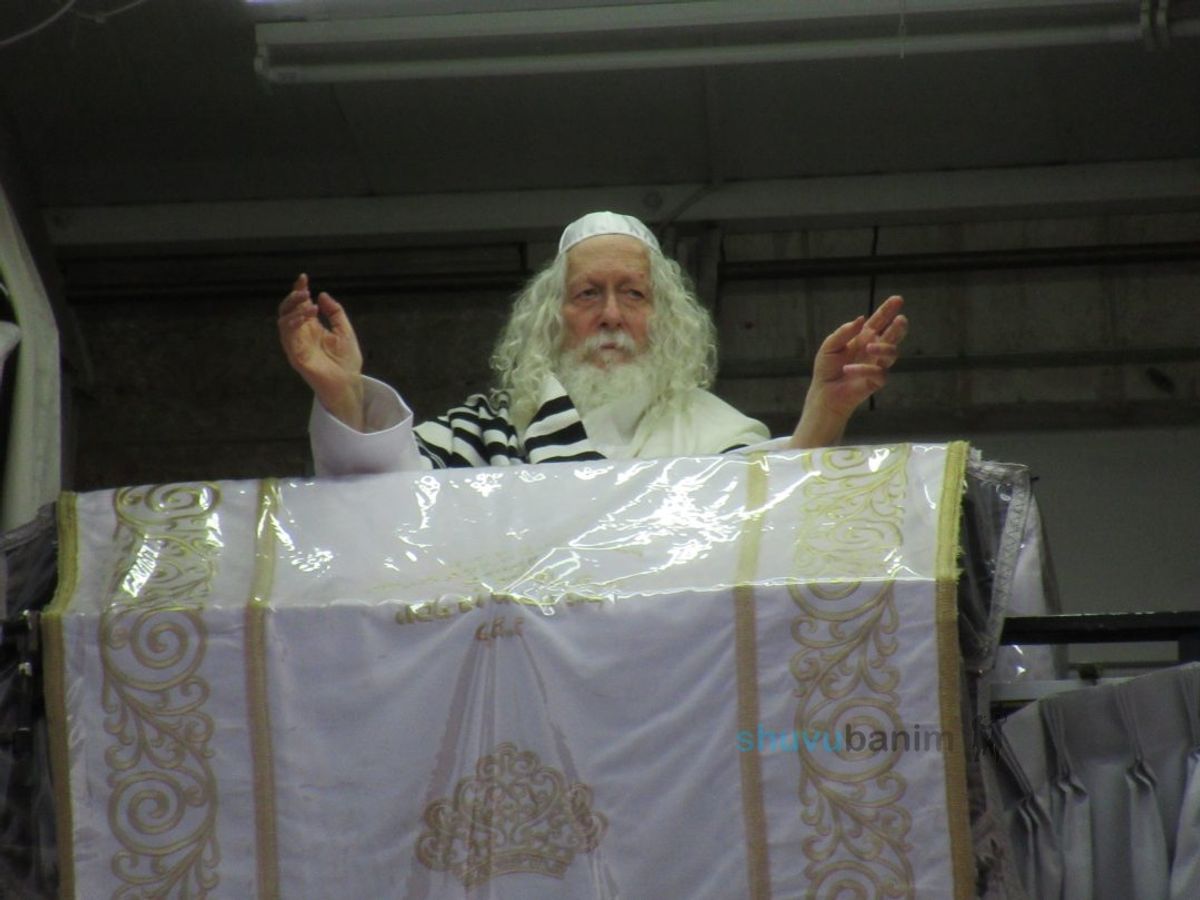
The festival prayers with the participation of The Rav Rabbi Eliezer Berland shlit"a ○ Mussaf that lasted close to an hour with singing and melodies ○ Simchas Beis HaSho’eivah on Motzaei Yom Tov
With Hashem’s help, in His great kindness, on Sukkos we merited to pray in the presence of the holy Tzaddik, The Rav Rabbi Eliezer Berland shlit"a. Below is an expanded report from the prayers of Shabbos and the first day of Sukkos, which took place in our Beis Midrash in Jerusalem:
On Erev Yom Tov, radiant in his splendid clothing and with his face shining with light, The Rav shlit"a came out about ten minutes after candle-lighting—at 18:05—for Minchah of Erev Shabbos and Yom Tov, singing “Or Zarua LaTzaddik,” and he extended the singing for about twenty-five minutes. At the moment of sunset, Minchah began. After Minchah, The Rav shlit"a recited the Seder HaHiskashrus, and began the shortened Kabbalas Shabbos. As is The Rav shlit"a’s custom, they begin from “Mizmor LeDavid, Havu LaHashem Bnei Eilim,” and afterward “Ana B’Koach,” and then sing “Lecha Dodi” for about a quarter of an hour—saying only the first two stanzas and the last one. Yet even with the shortening, there is no diminishing of the vitality in the melodies of Kabbalas Shabbos in the presence of The Rav Rabbi Eliezer Berland shlit"a.
After Kabbalas Shabbos, The Rav shlit"a began Ma’ariv with endless vitality in song and melody, and of course the Shemoneh Esrei—the Amidah of the Three Festivals. After the prayer, The Rav shlit"a sang the Shabbos zemiros: “Shalom Aleichem,” “Ribon Kol HaOlamim,” and “Eishes Chayil.” When they concluded, The Rav shlit"a announced that Shacharis would be at 04:30. At 20:08, after an uplifting prayer of two hours and three minutes, The Rav shlit"a entered his holy home, singing “Vesamachta BeChagecha.”
The Rav shlit"a, who did not rest, already at 4:56 went out to the balcony of his home for Shacharis. As with every Shabbos Shacharis, The Rav shlit"a began with Chatzos, the morning zemiros, and the recitation of the Korbanos. After about three quarters of an hour, The Rav shlit"a came down to our Beis Midrash for Pesukei D’Zimrah with melodies as on every Shabbos—each melody extended by The Rav shlit"a for several minutes. At 7:00 they stood for the Shemoneh Esrei of the Three Festivals.
As is well known, The Rav shlit"a always says that Hallel should take at least an hour. The Rav shlit"a consistently fulfills this in the appointed times of Hallel’s song, and even on the first day of Sukkos, the singing of Hallel lasted about an hour and ten minutes.
The Rav shlit"a stood throughout all of Hallel, his fiery face turned toward the congregation, with great mochin (expanded, illuminated consciousness). Of course, everything was with melodies and tremendous joy. In each and every melody, The Rav extended it for about 20 minutes—“Betzeis Yisrael MiMitzrayim,” and likewise the joyful melody of “Hodu LaHashem Ki Tov” lasted about twenty minutes. And it is impossible not to conclude Hallel with the stirring melody of “Ana Hashem Hoshi’a Na,” which The Rav shlit"a regularly sings to the tune of “Adir Ayom VeNora” from the zemiros of Motzaei Shabbos. After the singing of Hallel, The Rav shlit"a delivered a short talk and began the Hoshanos for the first day of Sukkos, which fell on Shabbos. After the Hoshanos, The Rav shlit"a recited the blessing “Al Mikra Megillah” and began reading Megillas Koheles for about 20 minutes with very great awakening; in some passages, tears of holy arousal could be seen on his sacred face.
After the reading of Megillas Koheles, The Rav shlit"a began Krias HaTorah, which lasted about half an hour. The Rav shlit"a, of course, was honored with the fourth aliyah. At the conclusion of Krias HaTorah, The Rav shlit"a began singing “Zar’a Chaya VeKayama,” and also the piyyut “Y-ah Eili VeGo’ali,” in the Breslov melody customarily sung on the Three Festivals.
Mussaf was the peak of Sukkos: the Chazaras HaShatz lasted more than forty-five minutes! For most of it, The Rav shlit"a sang with vitality and fiery passion together with the entire congregation the melody on “Vekarev Pezureinu MiBein HaGoyim.” The entire congregation, with endless vitality, continued like this for twenty minutes. Then, after twenty minutes, The Rav shlit"a signaled with his holy hand, and immediately they moved into another twenty minutes of singing—no less alive and no less enthusiastic than the first—“VeHavi’einu LeTziyon Ircha Berinah, VeL’Yerushalayim Beis Mikdashecha BeSimchas Olam.” It is impossible to describe the joy, and the pleading and request for the near Geulah, sung with exultant song.
After the Chazaras HaShatz of Mussaf, The Rav shlit"a completed the prayer in its proper order. After the prayer, The Rav shlit"a delivered a talk of about three minutes, mainly explaining the question of why on Pesach we do not say the full Hallel, while on Sukkos we do. In his wondrous way of derash, he connected this matter to the war of Sancheriv that took place on the night of the Seder. After the talk, The Rav shlit"a recited Kaddish and went up to his holy home after a prayer of more than five and a half hours together with the great congregation—true Simchas Yom Tov!
For Minchah of the first day of Yom Tov, we did not merit that The Rav shlit"a come out to the public, and our chaverim prayed with melodies in our Beis Midrash. After the prayer, a large Seudah Shlishis took place in the sukkah of our Beis Midrash with the participation of the great students of The Rav shlit"a, who spoke beautifully about the greatness of the festival of Sukkos.
On Motzaei Yom Tov, The Rav shlit"a came out for Ma’ariv at 20:55, singing “Lamenatze’ach BiNeginos,” extending the singing for about 25 minutes. After the singing, he began Ma’ariv as on every night—with song, melodies, and great vitality. After Ma’ariv, The Rav shlit"a began the “Simchas Beis HaSho’eivah”—the fifteen Shir HaMa’alos in the special melody, and between each chapter they say, “U’she’avtem Mayim BeSason.” After Shir HaMa’alos, The Rav shlit"a announced that everyone should make Havdalah in his own home. He entered his holy home at 22:00, after one hour and five minutes of the Motzaei Shabbos and first day of Sukkos prayers.
At this time, Simchas Beis HaSho’eivah is taking place with musical instruments together with our chaverim in our Beis Midrash. All of Anash are invited to dance and rejoice and to fulfill—
“Vesamachta BeChagecha—VeHayisa Ach Same’ach!!”
Subscribe to Our Newsletter
Receive Torah articles and inspiration directly in your inbox