
Have You Heard of the Tzaddik Mukrat? An Investigation into the Location of His
Grave in Amuka
Regarding the Tzaddik Mukrat and his burial site in Amuka • Traditions regarding his gravesite • The words of Rebbe Natan of Breslov
The grave of the Tzaddik Mukrat in Amuka
Deep within the forest of Amuka, located in the Upper Galilee, historical books note not only the grave of the divine Tanna Yonatan ben Uziel, but also the grave of an unknown Tzaddik whose name was Mukrat.
The Tzaddik Mukrat lived during the era of the Tannaim or Amoraim. Little is known about him, but there are three books that mention his burial site in Amuka. One of these books is the work of our master, Rebbe Natan of Breslov, 'Shemot HaTzaddikim' (Names of the Tzaddikim). In this book, he deviated from his usual practice and wrote about a single Tzaddik—Mukrat—including his burial location. The determination that he lived during the era of the Tannaim or Amoraim stems from the fact that Rebbe Natan lists him in 'Shemot HaTzaddikim' among the names of the Tannaim and Amoraim, rather than in the generations before or after them.
The tradition regarding his gravesite
In the pamphlet 'Gelilot Eretz Yisrael' (manuscript in Yiddish) from the year 1624, it is written: "Amuka - this is the valley called Amuka, and there Yonatan ben Uziel, author of the Targum, is buried. There is another Tzaddik called Daman Mukras, of blessed memory. Over him is a tombstone and a large tree with beautiful, sweet fruits, and it is called Sabrian."
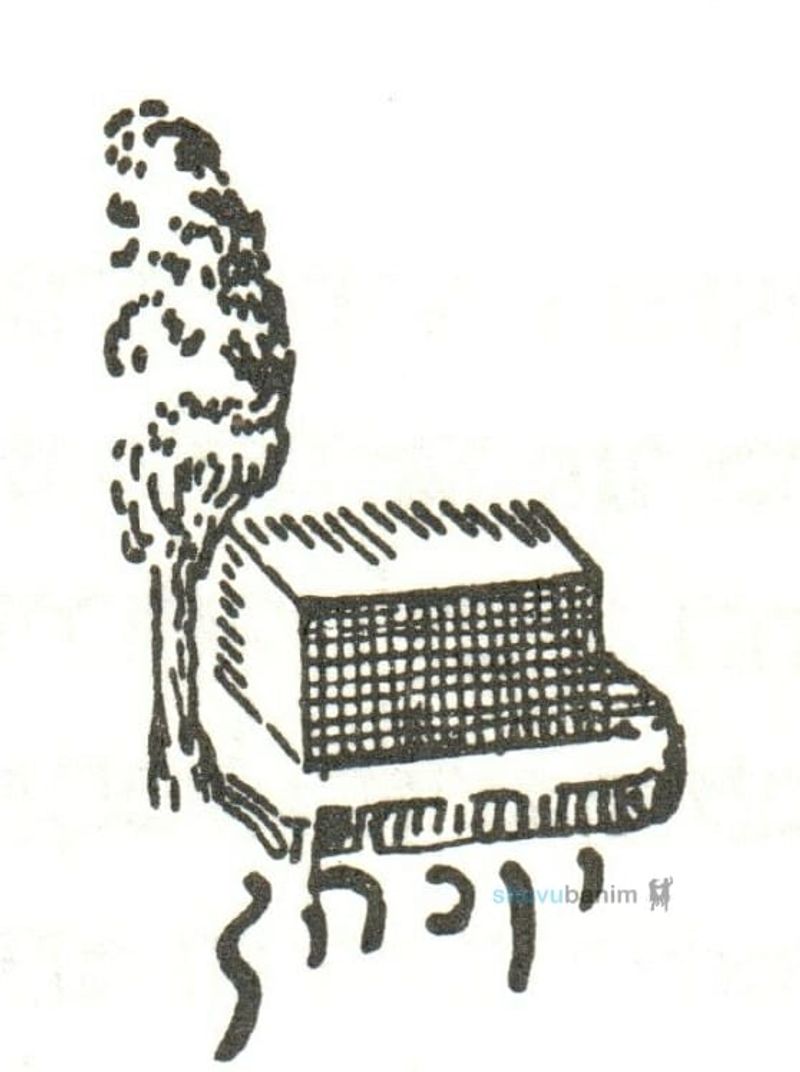
Illustration of the Tziyun of Yonatan ben Uziel and the tree beside it. Sefer Yichus HaAvot from the year 1537
In the year 1700, his burial site is mentioned in the book 'Seder HaDorot': "Yonatan ben Uziel... is buried in the village of Amuka near Safed; see the margin of the Zohar in Parashat Pinchas, 94a, Sulzbach edition. And so it is written in 'Gelilot Eretz Yisrael'. And there is another Tzaddik named Mukrat, and over him is a tombstone," end quote. At the bottom of the page, a gloss was written regarding the name Mukrat, which states: "In 'Gelilot Eretz Yisrael': Daman Mukras."
Rebbe Natan writes in his book 'Shemot HaTzaddikim', at the end of the letter Mem: "Mukrat, who is buried together with Yonatan ben Uziel."
In the book 'Eden Tziyon' from 1949, it is written: "In 'Seder HaDorot' and 'Gelilot Eretz Yisrael', they wrote that another Tzaddik called Daman Mukras, of blessed memory (in 'Seder HaDorot' he wrote Mukrat), is buried there [in Amuka]. In 'Chibat Yerushalayim' this was not copied, and even in our time we did not know of this (the author notes: 'Shemot HaTzaddikim' wrote Mukrat, who is buried together with Yonatan ben Uziel)," end quote.
Studies in the words of Rebbe Natan
One must understand the words of Rebbe Natan:
Why did he write 'Mukrat' and not 'Daman Mukras', as brought in the source—the book 'Gelilot Eretz Yisrael'?
What is the meaning of the words 'together with'—is it literal, or does it mean adjacent and visible?
From the words of Rebbe Natan, it appears:
a. It is possible he knew through his holy spirit that this was the Tzaddik's name. b. It is possible to say that he relied on the text of 'Seder HaDorot' rather than the gloss there that cites the source of the tradition—the book 'Gelilot Eretz Yisrael'. c. Or, perhaps only the book 'Seder HaDorot' was available to Rebbe Natan, and not 'Gelilot Eretz Yisrael', and the gloss was written in later years.
Since Rebbe Natan wrote the phrase 'buried together with' and did not write 'buried next to' or 'buried adjacent to', it implies that Mukrat is buried literally together with Yonatan ben Uziel.
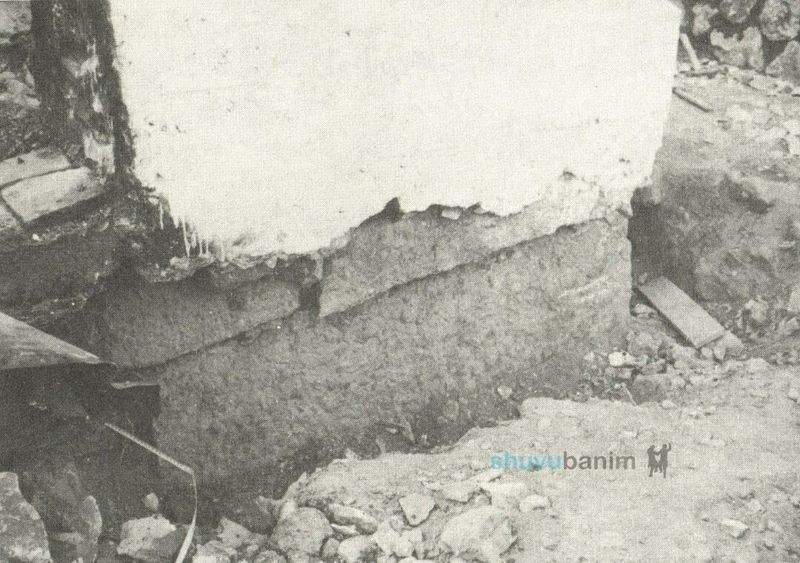
However, in 1979, during the renovation and expansion of the Tziyun of Yonatan ben Uziel, a stone coffin (sarcophagus) was discovered directly beneath the Tziyun—the burial place of Yonatan ben Uziel. It does not appear that they buried both Yonatan ben Uziel and Mukrat in the same coffin, but 'we have not seen' is not proof. This requires further study.
The coffin discovered in 1979 during the renovation of the tombstone, beneath the Tziyun of the Tanna Yonatan ben Uziel
Where is his burial site?
In old maps from about 80 years ago, two sheikhs' graves are marked in Amuka, adjacent and visible to one another. One is the grave of Sheikh Muhammad al-Ajami, and the second is the grave of Sheikh Harab. 'Al-Ajami' means: not of the same people, i.e., not a Muslim. And 'Harab' means: a stranger, who is also not a Muslim. The grave of Yonatan ben Uziel is the exact location of the grave of Sheikh Harab, and from this, it appears that it also refers to a non-Muslim. It is possible that this is a Jewish grave, and it is likely that he was an important person, and it is possible that this is indeed the grave of the Tzaddik Mukrat.
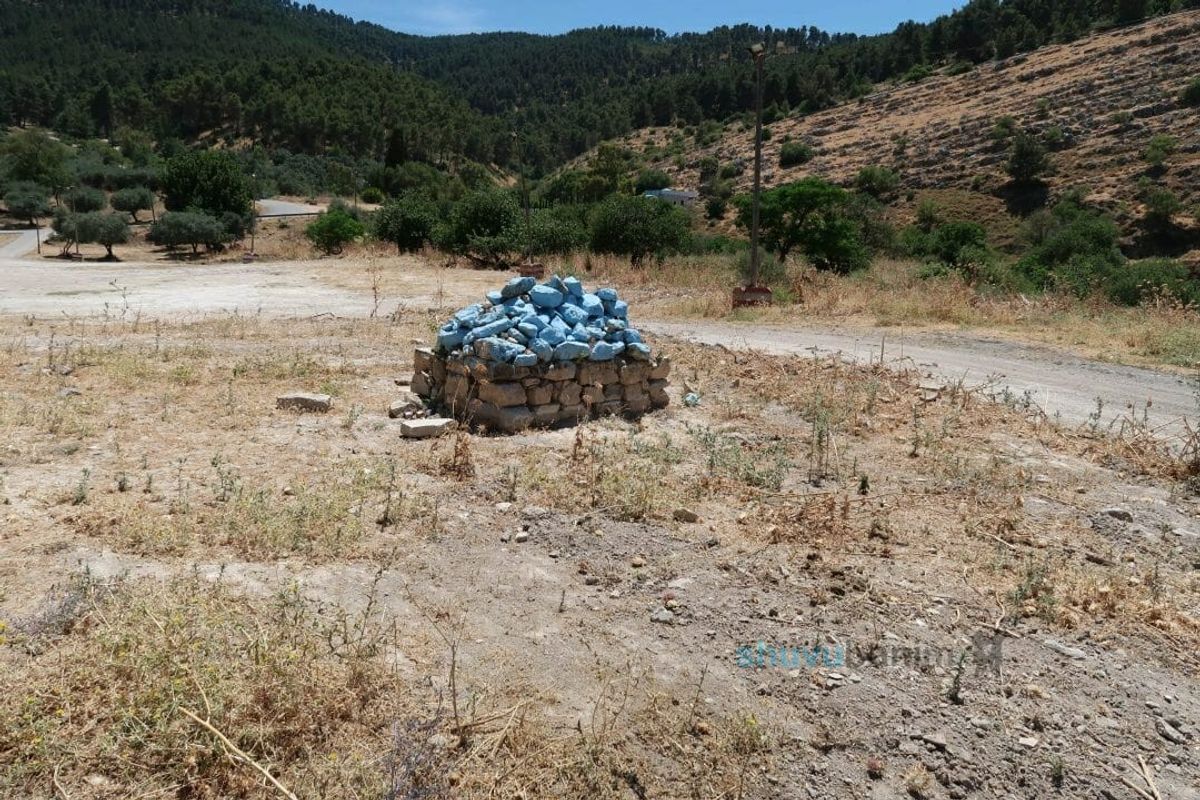
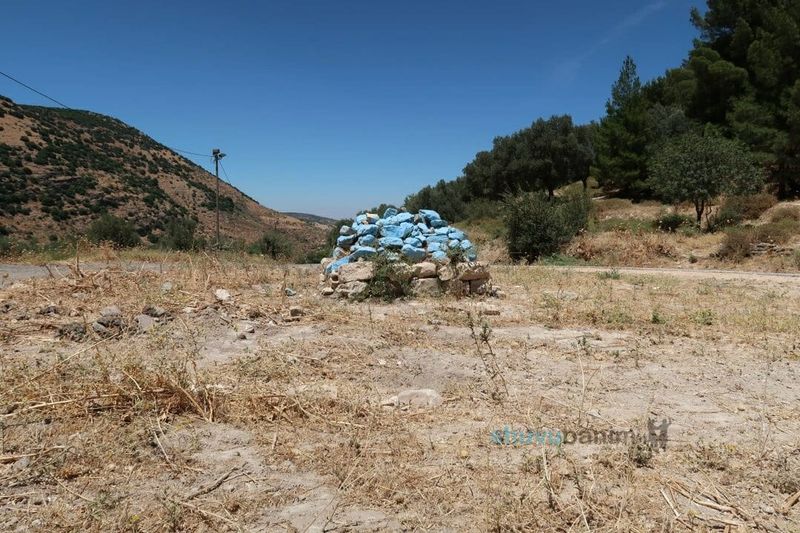
This grave is clearly visible from the road leading to the grave of Yonatan ben Uziel. A little before the entrance to the parking lot of the Tziyun, before the final turn, a blue tombstone is visible adjacent to the road. In the last decade, the 'Ohalei Tzaddikim' organization renovated the site and even placed a sign with the name 'The Tanna Mukrat'.
Grave of the Tzaddik Mukrat, Amuka, Israel
In recent years, several people have seen a cave in Amuka, painted it blue, and wrote on it: 'Grave of Mukrat'. They have nothing to rely upon; a. It is not mentioned that he was buried in a cave. b. The author of 'Seder HaDorot' writes explicitly: 'And over him is a tombstone', which implies a tombstone on the surface of the field, and not inside a cave.
Subscribe to Our Newsletter
Receive Torah articles and inspiration directly in your inbox