
Jews Strengthened Themselves During the Holocaust Inside the Gas Chambers
Parshat Shemini by the Esteemed Rabbi Eliezer Berland shlit"a
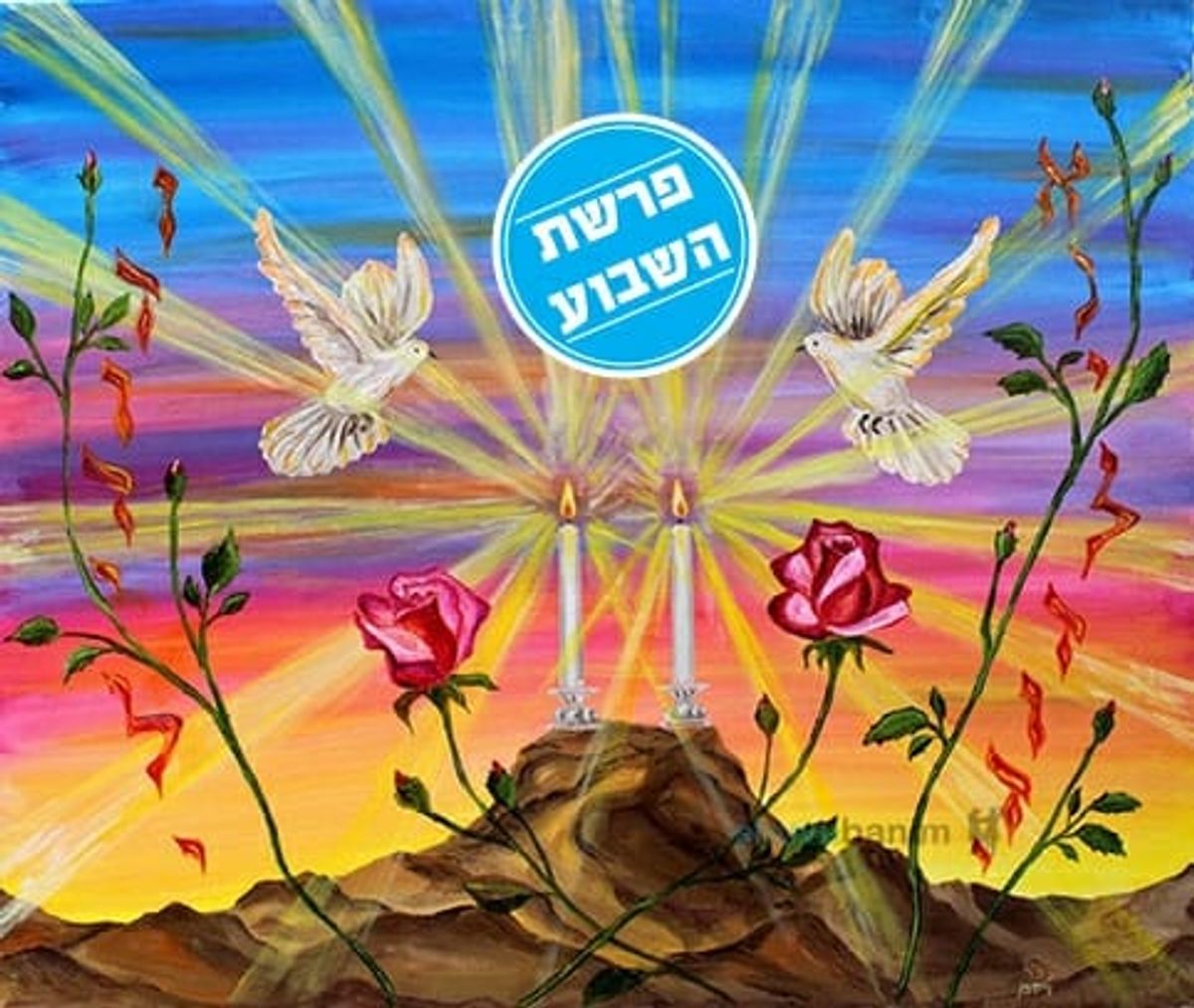
Holy words from our teacher, the Gaon and Tzaddik Rav Eliezer Berland shlit"a, for Parshat Shemini - "Vayidom Aharon" • The level of "So that my glory may sing your praise and not be silent" is higher than "Vayidom Aharon" • Instead of falling into despair, one must strengthen oneself with joy and dancing • Songs and melodies sweeten the judgments
"Vayidom Aharon" (Leviticus 10:3)
Every person must study books of mussar, know the book "Mesillat Yesharim," know the book "Shaarei Teshuvah," know the book "Orchot Tzaddikim," read the chapter on anger in "Orchot Tzaddikim," learn not to be angry, know how to be in a state of joy in every situation, and know that everything is for the best. As it is written about Aharon, "Vayidom Aharon" (And Aharon was silent); Aharon saw the greatest, most terrible tragedy of his life—his two sons, Nadav and Avihu, who were considered equal to Adam HaRishon, were killed and slaughtered before his eyes. He did not fall into despair; he continued on with his service. "Vayidom Aharon"—he was not confused by anything.
The level of "So that my glory may sing your praise and not be silent" is higher than "Vayidom Aharon"
There is a higher level than "Vayidom Aharon," which is called "So that my glory may sing your praise and not be silent" (Psalms 30:13). Just as there are stories from the Holocaust about Jews who would dance and sing inside the furnaces, inside the gas chambers. It is told that one time, the Nazis put 50 Vizhnitzer boys into one of the gas chambers on the night of Simchat Torah. Instead of falling into terrible despair, they began to dance and sing, "Ki MiTzion Tetzei Torah U'Dvar Hashem MiYerushalayim"—they had such joy and such enthusiasm, as if they were dancing right now in Jerusalem, at the Western Wall, singing and dancing there. When the Nazis saw them dancing, they said, "What is this here! What are these dances? What are these songs? This is heresy!" They wanted to hear Jews crying, to hear wailing. "What is this, a dance hall? What is happening here? A dance hall in Auschwitz?!" The Nazis burst through the doors and shouted, "Stop the dancing! Stop this joy! This is not a theater! This is not a dance hall!" But the Chassidim continued to dance and rejoice, "Ki MiTzion Tetzei Torah..." The Nazis told them, "If this is how you behave, if you are mocking us, come outside, and tomorrow at 9:00 AM we will cut you into pieces with all the tortures—not a quick death, not a death by a kiss with gas; tomorrow we will see how you dance." The next morning, a message arrived that 1,000 workers needed to be transferred immediately to another camp, and they were exactly 50 workers short. One said, "Look, there in the barracks are exactly 50 boys who know how to work well; let's take them." They were immediately put on a truck and disappeared from there. In the merit of the songs and dances they performed, they merited to remain alive, and this is the meaning of "On the altar's pyre, we shall go out in a dance." A Jew does not lose faith for even a moment, for even a second; he just dances and sings, even in the most difficult situations in life.
Instead of falling into despair, one must strengthen oneself with joy and dancing
When a person is in some trouble, has some problem, some difficulty in life, and he does not fall into despair and does not lose faith for even a moment, and strengthens himself with songs, dances, and joy, then he is not at the level of "Vayidom Aharon," where he accepts it in silence, but rather he is at a higher level of "not being silent"—"So that my glory may sing your praise and not be silent." He sings, dances, and rejoices within the trouble, within the suffering; he sings to Hashem and thanks Hashem for every single breath. What does it matter what you are going through? You must always thank Hashem for every single breath, as it is written about King David, "For the leader, a psalm of David, a maskil, when the Ziphites came and said to Saul, 'Is David not hiding with us?'"—Saul was pursuing him, everyone was informing on him, the Ziphites were informing on him. When he was in Keilah, the people of Keilah informed on him, and the only way David managed to escape them was through songs, as he would rise at midnight and play until morning. "And the Philistines seized him in Gath"—the Philistines caught him in Gath; he said, "For the leader," and began to sing and play. When Saul entered the cave to catch him, he began to sing and play. "And they watched the house to kill him"—he saw that they were already besieging the house, already surrounding the house, and soon everything would be surrounded by soldiers with arrows and spears. The first thing David did was begin to sing and play. Whenever David was in trouble, he would say a song of victory, a melody, and thus he was saved from all troubles.
Songs and melodies sweeten the judgments
A person feels that he is going through such troubles, such suffering, so the minimum is to rise at the break of dawn and sing the songs, the melodies, and by doing so, sweeten the judgments. All judgments and troubles are sweetened through song, singing, and melody, as it is written, "Let those who desire my righteousness sing and rejoice"—King David said, all those who desire my righteousness will sing and rejoice. What is "my righteousness" (Tzidki)? It is judgments. Through song and joy, the judgments will be sweetened. The Zohar in "Vayishlach" says that King David would sing all night; he would overcome through songs and praises until the morning rose. A person must always praise Hashem, and one who knows how to praise Hashem "constantly as is fitting," then Hashem accepts his prayers and saves him from all accusations, saves him from all tragedies.
When people do not dance, do not sing, do not rejoice, and walk around broken, then they also break everything. A broken person breaks the entire system; he breaks the entire creation. Why are you broken? Is it the Holocaust now? Sing, dance, say a chapter of Psalms, say "For the leader, a psalm of David" seven times; it brings all salvations—shidduchim, healings, it brings everything. It is written in the Ari—whoever says "For the leader" seven times is promised salvations, children, healings, etc. Songs and melodies are the way to sweeten all judgments. Hashem is angry at one who does not awaken to sing, play, and chant; there is no way to sweeten judgments except through joy and dancing. And this is the meaning of "On the altar's pyre, we shall go out in a dance," that a Jew does not lose faith for even a moment, for even a second; he dances, sings, and rejoices in every situation in life, in every place—on the pyre in Auschwitz, it does not matter where, he will always reach song and dance.
A Jew (Yehudi) comes from the word "Hoda'ah" (thanksgiving); he is always thanking, always singing. What Hashem does is good; Hashem is with us always. Hashem is always walking with us; Hashem will never leave us, not for a moment. We are the people of Hashem, the chosen people, a treasured nation. And what is our treasure? Our treasure is that we dance on the pyre, on the altar; this is our treasure.
Subscribe to Our Newsletter
Receive Torah articles and inspiration directly in your inbox