
Lashon Hara Stems from Lack of Emunah
and Its Rectification is Patience and Waiting - Parshat Tazria-Metzora by Rabbi Menachem Azoulay shlit"a
Lashon Hara Stems from a Lack of Emunah, and Its Tikkun is Patience and Waiting
Parashat HaShavua Tazria-Metzora, by Rav Menachem Azulay shlit"a - "This shall be the law of the leper on the day of his cleansing, and he shall be brought to the Kohen" (14:2)
There is a story about Rabban Gamliel who said to his servant Tavi, "Go and buy me something good from the market." He went and bought him a tongue. Later, he said to him, "Go and buy me something not good." He went and bought him a tongue. He asked him, "What is this? When I told you to buy something good, you bought me a tongue, and when I told you to buy something not good, you again bought me a tongue." He replied: "My master, from the tongue comes both the good and the not good. When it is good, there is nothing better than it, and when it is bad, there is nothing worse than it—and regarding this it is said, 'Death and life are in the power of the tongue.'"
"This shall be the law of the leper" (14:2). Even the leper has a Torah. Even he has a tikkun. Everything that is damaged can be repaired. It is always possible to do teshuvah, to lift one's head upward and speak from the heart: "Ribono shel Olam, forgive me for failing like this, for not standing up to the test. Truly, truly, I want only You, I want only holiness, I want to do only Your will. Help me, Father, because it is so difficult. Because on my own, I have no chance. Help me so that this does not happen again." The gates of Heaven are never locked. Hashem waits for us every single moment; Hashem rejoices to receive every thought of teshuvah we have.
Have you hurt someone? Here too, teshuvah is effective: "Forgive me for causing you such pain; I was wrong. I feel such sorrow for what happened, please forgive me." And when words come from the heart, they enter the heart; a Jew by nature does not hold a grudge. And when a person makes peace with another, what peace Hashem makes within him! Even the leper has a tikkun, one only needs to wait. "And he shall count seven days for his cleansing, and he shall wash in water and be clean" (15:13). There is a concept of "waiting" in life. Not everything is received immediately. There are things in life that require time and prayers. Rebbe Nachman says that one must be very stubborn in the service of Hashem (Likutey Torah 48), and the essence of this stubbornness is in prayer. You want to rectify a character trait, to overcome a desire—do not stop asking. Do not "miss" any Holy Ark; cling to the curtain and ask. Beg.
The cry of the heart is our secret weapon, and it is also what connects us to Hashem. And this connection is so sweet that sometimes one forgets the lack. You must remember that the One who is delaying your salvation is Hashem Himself, who loves you with an immense love, and only He truly knows what is good for you. Only He truly knows how to bring you closer to Him. Rebbe Nachman says that the preparation for a mitzvah is even more important than the mitzvah itself, because the preparation builds the vessels. Without preparation, without desires, without prayers, how would we know how to appreciate what we have received? How would we merit to thank Hashem for all the kindnesses He does for us? Because without waiting and without preparation, it would all turn into one big ego.
The essence of the work is to toil, to desire, to pray; it is impossible to receive immediately what one wants, it is impossible to immediately draw close to Hashem Yitbarach. Sometimes, not only do they not open a door for you, but they seemingly push you away, distance you, and drop you into such a low place. But you must not despair. This all happens so that you will strengthen yourself in prayers, strengthen yourself in desires: "Ribono shel Olam, until when? Ribono shel Olam, I cannot take it anymore! Save me!" Even the leper has hope. He only needs to strengthen himself. It is impossible to reach the fruit without passing through the peel. It is impossible to reach the morning except through the evening that precedes it. It is precisely from the most difficult periods in our lives that the greatest salvations have grown.
Have you received a blow? Know that the One who gave you the blow created the healing first; Hashem precedes the healing to the blow. To be a Jew is to struggle for the connection with Hashem within the routine, within the endless race of a thousand and one things that need to be done. Constantly trying to rise, trying to reach a higher reality than the one I am currently in. There are times when nothing works out for us. The parnassah, the education of the children, the shalom bayit. Or a person does not get along with himself; it is hard for him to have kavanah in prayer, it is hard for him to be in joy—there are such times and such times. And we do not get confused and we do not despair. "You have hemmed me in behind and before." This is how You created me, that I have both 'behind' and 'before.' The soul wants the 'before'—forward, enough of being behind, we want forward. But it is impossible without 'behind.' What is 'behind'? It is the most important work before Hashem. It is to do things without feeling anything.
One feels nothing, and yet continues and continues and does the work. Once again saying the blessings, and once again saying the prayers, and once again Tikkun HaKlali, and once again reading Shema before bed with eyes almost closed—all of this is the work of 'behind.' First 'behind,' and only after that does one merit the 'before.' A person needs to rejoice in the simple tasks. Even if he feels nothing. Even if everything is dark to him. Because this is what Hashem wants. Hashem wants you to prepare the vessels to receive the light called 'before' through the work of 'behind.' The light of 'before' is a light that warms the person; it is such a wonderful light that then the person bursts into joy and begins to dance, and loves everyone, and does not care about anything because Hashem is smiling at him, Hashem is sending him a hug. But Hashem wants the sweat you sweat in the test. When you do not have it yet, and yet you continue onward.
There is no situation where you will not go through difficulties and crises. Everyone "goes through" them. But you continue onward to desire Hashem. Do not make "a quarrel" with Hashem because He does not give you your request. Do not despair. Do not fall in your mind. Even the leper can discover the light within the darkness. If you only strengthen your emunah. It is important how we look at what we go through. What glasses we use. If we know that everything happens to heal us, to rectify, to refine, to wash, to purify, to bring us closer to Hashem—if we understand that this is the only goal of the suffering we go through, then everything becomes much easier. But if we look at everything that happens to us as if there is no Divine Providence here, then it can truly make one despair and break. There are such difficult tests that people go through, and only through emunah can you get through it all! To hold on through everything that happens! Believe that Hashem knows what He is doing with each and every one! He is doing the best for you! Accept it with emunah! With love! When one believes with complete emunah that Hashem is full of mercy, that He created the world to reveal His mercy, then the questions are nullified. This emunah fills a person with calmness and grants him the resilience to stand in all tests. "I believe in You, Ribono shel Olam, that You are doing only the best for me."
I am too small to understand every time what the good is that is hidden in every concealment of the face, in every test that You test me with, in every trouble I go through. The calculations of Heaven cannot be understood, but I believe that I will yet merit to see the good hidden even in this concealment. We see difficult things in life, and we go through difficult things ourselves, and if we do not prioritize emunah over intellect, the emunah that everything is good and there is no evil, then we will, G-d forbid, fall from emunah. Hashem wants us to make an effort to believe in Him. To make an effort to believe that He does not do anything bad to us in life. The holy emunah takes these gray lives, these difficult ones, these confused ones, where a person cannot find himself, and everything is blocked, and all the difficult things that happen to us—each one and his own matters—and turns them into something good. Into something beautiful.
Whoever has emunah does not break and does not despair; he knows that there is no situation in the world from which Hashem cannot save him. He constantly remembers that Hashem is all-powerful. And the essence of emunah is in a place where the intellect shows us that a certain event is not for the best, and we cast aside the intellect and hold only to the emunah that everything is for the best. When does a person know that he has merited complete emunah? When he is constantly saying thank you. In all situations. He lives with the emunah that everything that happens to him is from Hashem, and everything is for his benefit. Just to say thank you. For everything, say thank you. Even for the leprosy, G-d forbid. Parashat Metzora is not intended only for lepers. It has an important message for us as well. Today there is no longer leprosy of the skin, but there is leprosy within the heart. There is coldness and indifference toward things of holiness. When a person runs after the desires of his body, then the spiritual light is closed off to him, and when the spiritual light is closed off to a person, then he is like dead. He has no vitality and no joy. Metzora = Motzi Shem Ra (one who brings out a bad name), speaks lashon hara and gossip, which is a very difficult desire, and as much as we read and study and hear lessons on the matter of guarding the tongue, we still fall. "Ribono shel Olam, help us that we will never hurt people with our tongue and that we will not believe any bad thing that is said about the other. Let us be careful even of the dust of lashon hara." Whoever has a brain in his head will urge himself to fight a war of annihilation against this difficult inclination. Everything can be lost if one falls into gossip and lashon hara.
What holiness will rest upon our prayers, upon our Torah study, when they are said with the same mouth that just a moment ago was defiled by lashon hara and gossip? If a person would look at himself with the eye of truth, at how much he is mired in such flaws and shortcomings, then he would have no desire to look at others, and to talk about their flaws, and to enjoy hearing about their falls. When a person knows his purpose and understands what his work is here in this world, then there will be no room for lashon hara and gossip; he will not have time at all to talk about the other. But a person who is not connected to the true purpose for which he was created, has no purpose that gives him life, so he feels such emptiness inside, such a lack, that when he hears some lashon hara about someone, it literally gives him life; it makes him happy to know that he is better than someone. When a person understands his matter and his purpose in life, then no one in the world will interest him anymore, nor will he have time to deal with anyone because he has so much to accomplish and to do; every moment is precious to him. Our teacher Rav Eliezer Berland: ["When a person speaks lashon hara, idle words, nonsense, then he begins to lose what was allotted to him to speak! And he can die in a shortening of days, G-d forbid; he speaks, speaks, his supply is running out! His life is running out! Everything is leaking, everything is dripping! No words are left for him! No life is left for him!"]
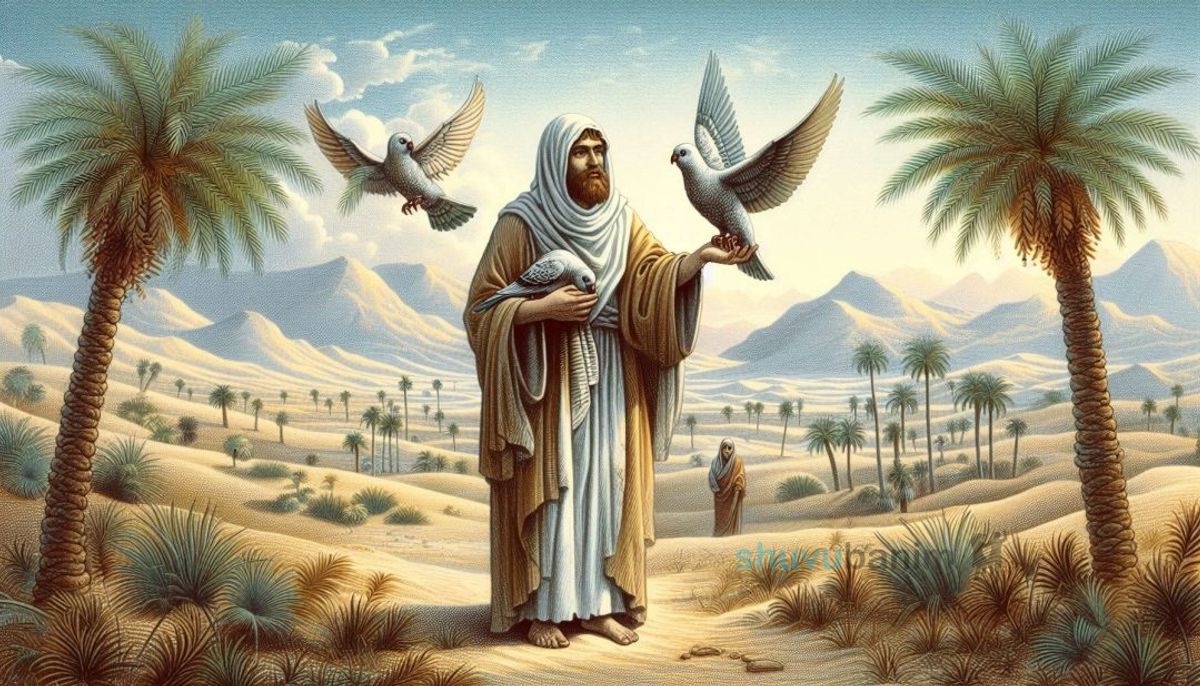
["Because a person lives according to the words that were allotted to him to speak, and conversely, if he speaks all day in words of Torah, in words of holiness, he is constantly receiving more merit to speak! More holy words to speak! And by being given more holy words to speak, he receives more life and more life. One must go with the perspective that I am the worst Jew in the world, there is no one worse than me, every Jew is better than me, more holy than me, wiser than me—how can I talk about the other? How can a Jew reach this? To talk about another Jew? How can he suddenly fall to such low levels! To such terrible levels! The beastliness of an animal is that it bites, kicks, and gores, but the beastliness of a person is to speak lashon hara, to talk about the other; a person cannot receive holiness like that. And what is the tikkun? They bring him two birds, they let him hear a good sound, a soft sound, a sound of pleasantness; through the singing of the birds, they return to him the power of song, the power of melody, the pleasantness, the tranquility, so that all his words will be only songs and praises to Hashem Yitbarach, songs and praises to everyone, to his family members, to his friends, only to praise and glorify them, 'How wonderful you are, how good you are'"] (End of our teacher the Rav).
Every time one hears someone speaking badly about someone else, the yetzer hara immediately inserts into the listener such trust in the one saying the bad thing. "Why would he lie? He is not just saying it, he is not just inventing things, there is no smoke without fire..." One must flee from this like from fire. If a person merits to guard his tongue and his ears from speaking and hearing forbidden things, after a few weeks they will stop telling him; they will take this merchandise to someone else. To someone who is interested in hearing. And this will be for his honor and glory. That everyone will know that one must be careful with the tongue when speaking with him because he is not willing to hear lashon hara and gossip. The mouth is an opening. And like the door of a house, if it is open all the time, nothing will remain in the house; so too the mouth, there is a time to open and a time to close. Therefore, two eyes, two ears, two nostrils, and only one mouth were created in a person. To tell us that we should minimize speech.
"And consider the speech before you bring it out of your mouth," says the Ramban in his famous letter. This is such a high level, but if we want, if we insist, if we do not stop praying for this, we will reach it. Even the leper, despite being in such darkness, in such loneliness, in such shame, even he needs to know that he is not alone. That Hashem has not abandoned him. Hashem never abandons a person. The very knowledge that Hashem is always with you should give you the strength to continue, not to despair, G-d forbid. Not to fall into sadness, G-d forbid. Remember that this is Hashem's way of raising you another level. So many people tell that it was precisely from this great darkness that they reached such attachment, such a connection with Hashem. Do teshuvah, you reach all the way to Hashem, "Return, O Israel, unto Hashem your G-d." A Jew who does teshuvah for the most difficult sin one can imagine should walk around happy and calm. It is a pity that a person sees in suffering, in concealments, and in falls a distancing of the Creator from him, and instead of doing teshuvah and drawing close, he begins to lower fences and distances himself, G-d forbid. It is a pity; this was not at all the intention of Hashem, who loves every person with a love of the soul. The love of the Creator for His children is not grasped by human intellect. With Hashem, there are no punishments in the simple sense; there are tikkunim. When a person, within his suffering, within the terrible sorrow for his sins, when he begins to speak from his pained heart with Hashem, he meets a true friend who hears the prayer of every mouth, who is close to all who call upon Him. In the end, one understands that there are no punishments and vengeances here; from Heaven, they do not push a person away, they do not distance him; on the contrary, the suffering is intended to draw the person closer. The day will come when our eyes will be opened and we will see that in the depth of the judgment lay a depth of mercy and kindness. The day will come when we will see how much one needs to thank Hashem who arranges things for the best."</
Subscribe to Our Newsletter
Receive Torah articles and inspiration directly in your inbox