
"On This Very Day" • A Comprehensive Report of Shabbat Parshat Bo in the
Presence of the Gaon and Tzaddik, Rabbi Eliezer Berland shlit"a
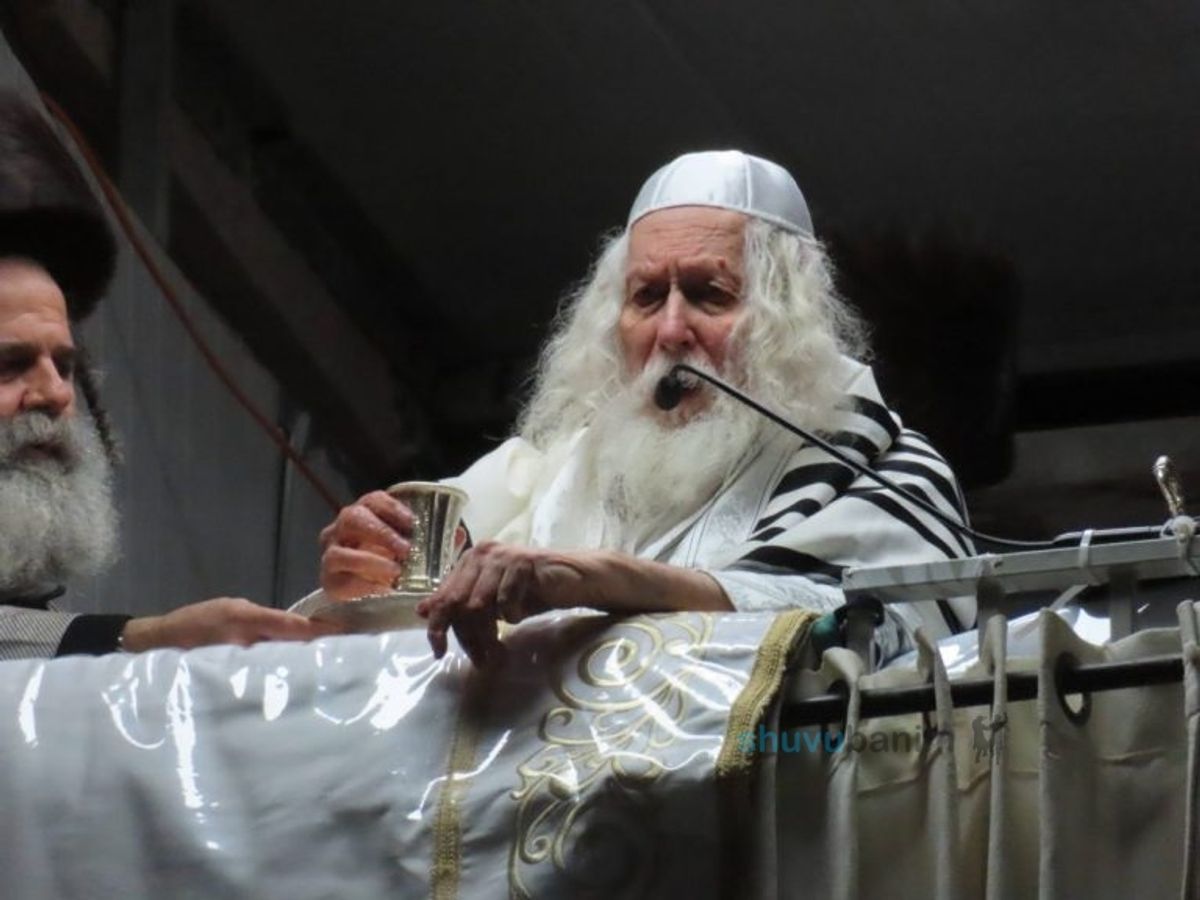
Presented before you is an extensive report of the prayers and Torah lessons (shiurim) that took place on the Holy Shabbat of Parshat Bo - 3 Shevat 5785, in the presence of the Gaon and Tzaddik, Rabbi Eliezer Berland shlit"a (may he live long and good days):
The Eve of the Holy Shabbat
At 16:37—the time for candle lighting—the Rav shlit"a went out to the balcony of his home for the Mincha (afternoon) prayer of the eve of the Shabbat, dressed in majestic Shabbat garments. They sang "Or Zarua LaTzaddik" (Light is sown for the Tzaddik) for 22 minutes. Afterward, the Rav shlit"a stood for the Mincha prayer. Following this, he recited the Seder HaHisksherus (the order of connecting to the Tzaddik) word for word, with the entire congregation repeating after him. Then, the Rav began Kabbalat Shabbat (the service welcoming the Shabbat) with all the psalms, from "Lechu Neranena" to "Mizmor LeDavid." Afterward, he began the singing of "Lecha Dodi," which lasted exactly 32 minutes. This was followed by "Kagauna" and the Maariv (evening) prayer of Shabbat night. After the prayer, the Rav continued with the conclusion of the service as is his custom every Shabbat, with the zemiros (songs) usually recited before Kiddush. Close to 19:00, the Rav shlit"a entered his holy home to the singing of "Savanu MiTuvecha" (Satisfy us from Your goodness) after a prayer service of approximately two and a quarter hours (2.25).
The Shacharit (Morning) Prayer
The Rav shlit"a came out for the Shacharit prayer at 04:51. He began with portions of the verses from Tikkun Chatzos (the midnight lamentation) that are customarily recited on Shabbat and festivals. This was followed by the morning zemiros and Korbanos (the order of the sacrifices). After a 10-minute break, he descended to the hall of our Beis Medrash (study hall). While passing to his podium, the Rav paused and delivered a shiur (Torah lesson) to the young men for about 5 minutes. Afterward, he entered and ascended the podium, beginning with the recitation of "Hodu L'Hashem Kir'u ViShmo" and Pseukei D'Zimra (verses of praise) as he does every Shabbat, with traditional melodies and great fervor. The Rav extended the singing of "Hoshia Es Amecha" (Save Your people) for about 5 minutes after "Hashem Melech." Then, the Rav moved to "Baruch She'amar." Similarly, during the singing of "Ki Chol Peh Lecha Yodeh" (For every mouth shall thank You), he extended it for 23 minutes. The Rav shlit"a stood for the Shemoneh Esrei (silent prayer) at exactly 07:00. Immediately after the Chazarat HaShatz (the Cantor's repetition)—before the Torah reading—the Rav shlit"a spoke with those around him for about 5 minutes, while the song "Yehei Ra'ava" (May it be the will) was sung during the opening of the Ark.
The Torah Reading
After the Hagbah (lifting of the Torah), the Rav began the Torah reading for Parshat Bo, during which many people celebrating special occasions or observing yahrtzeits (anniversaries of passing) were called up. Additionally, as is his holy custom, the Rav shlit"a called up guests from out of town and veteran students. The Haftarah (portion from the Prophets), "When I gather the house of Israel" from Ezekiel, was read by the Bar Mitzvah boy, Yehonatan, may his light shine, son of Rabbi David Porat shlit"a, a Maggid Shiur (Torah lecturer) at the "Chochma V'Daat" Yeshiva. The Torah reading together with the Haftarah lasted about 45 minutes.
The Musaf Prayer and Kiddusha Rabba
At the conclusion of the Haftarah reading, the Rav shlit"a began the singing of "Zera Chaya V'Kayama" (Living and viable offspring) for about 5 minutes. At the end, he recited Kaddish and approached the Musaf prayer at 08:09. After the Chazarat HaShatz, he finished the prayer until after "Aneim Zemiros." He then recited Kiddush over the cup for Kiddusha Rabba (the Shabbat morning Kiddush) and delivered a shiur of about three minutes, in which he spoke regarding the exile in Egypt and the secret of five times the name "Elohim," which equals four hundred and thirty (the number of years of the exile). At 08:21, he entered his holy home after exactly three and a half hours during which we were privileged to experience the Shacharit prayer, Torah reading, Musaf, and Kiddusha Rabba together with the Rav shlit"a.
The Mincha (Afternoon) Prayer
At 17:29, the Rav shlit"a entered for the Mincha prayer of the Holy Shabbat on the balcony of his home, starting with the recitation of Kaddish. He began the recitation of "Brich Shmeih" and the singing of "Yehei Ra'ava" for 8 minutes. Afterward, the Torah was read—Parshat Beshalach—with three people called up. Immediately following this, he stood for the Shemoneh Esrei prayer of the Shabbat Mincha.
Rava D'Ravin (The Third Meal)
At the conclusion of the Shabbat Mincha prayer, which lasted about twenty minutes, the Rav shlit"a performed Netilat Yadayim (ritual hand washing) at his place on the balcony for the Third Meal at 17:55. As is his holy custom, he began with the first Kazayit (portion of bread) and started the Third Meal zemiros for about 23 minutes. Here came the great extension of the Shabbat; at the conclusion of the zemiros, he extended the singing of "Yah Ribbon" for about 50 minutes. Afterward, he continued with the singing of "Koh Amar Hashem Matza Chen BaMidbar" (Thus says Hashem: the people found grace in the wilderness) for 3 minutes, and immediately moved to the singing of "Koh Amar Zacharti Lach Chesed Neurayich" (Thus says Hashem: I remember for you the kindness of your youth) for 2 minutes. Then, he extended the singing of "Ad Heina Azarunu Rachamecha" (Until now Your mercies have helped us) for about 18 minutes. At the end of the singing, the Rav began "Tzur Mishelo Achalnu," "Shir HaMaalos," and led the Zimun (invitation to Grace After Meals) over a cup of wine.
Maariv and Havdalah
At 18:45, the Rav shlit"a began the singing of "Lamnatzeach BiNeginos" for exactly fifty minutes! Afterward, he continued with the Maariv (evening) prayer of the conclusion of Shabbat with melodies of flaming fire. After the Shemoneh Esrei, during the recitation of "Vayehi Noam," the Rav shlit"a sang "Baruch Hu Elokeinu SheBeranu Lichvodo" (Blessed is our God who created us for His glory) and "Hu Yiftach Libenu BeTorato" (May He open our hearts to His Torah) for about 10 minutes. At the conclusion of the prayer, he performed Havdalah (the ceremony marking the end of Shabbat) over the cup with the singing of "LaYehudim" (The Jews had light and joy).
At the Conclusion of the Day of Rest
After Havdalah, the Rav washed his hands for Melaveh Malkah—which is the feast of David, the King Messiah. The Rav shlit"a sang together with the entire public all the zemiros for Melaveh Malkah, which Rebbe Nachman so strongly encouraged us to sing. Before the song "Eliyahu HaNavi," he delivered a shiur for about 10 minutes from the book Chayei Moharan (The Life of Rebbe Nachman). After the shiur, he continued the zemiros of "Eliyahu HaNavi" and "Ribon Kol HaOlamim." Following the zemiros, the Rav led the Zimun over the cup and delivered another shiur for about a minute. He entered his holy home at 21:33. This followed an extension of about four hours (4.04) during which we were privileged to be with him continuously from the Mincha prayer, through the Third Meal, Maariv, and Melaveh Malkah.
In total for the entire Shabbat—about ten hours (9.59) during which we were privileged to take refuge in the holy shadow of the Rav on the Holy Shabbat of Parshat Bo, 3 Shevat 5785.
Subscribe to Our Newsletter
Receive Torah articles and inspiration directly in your inbox