
Parashat Beha'alotcha - The Secret of Traveling and the Power to Inspire Teshuvah (Repentance)
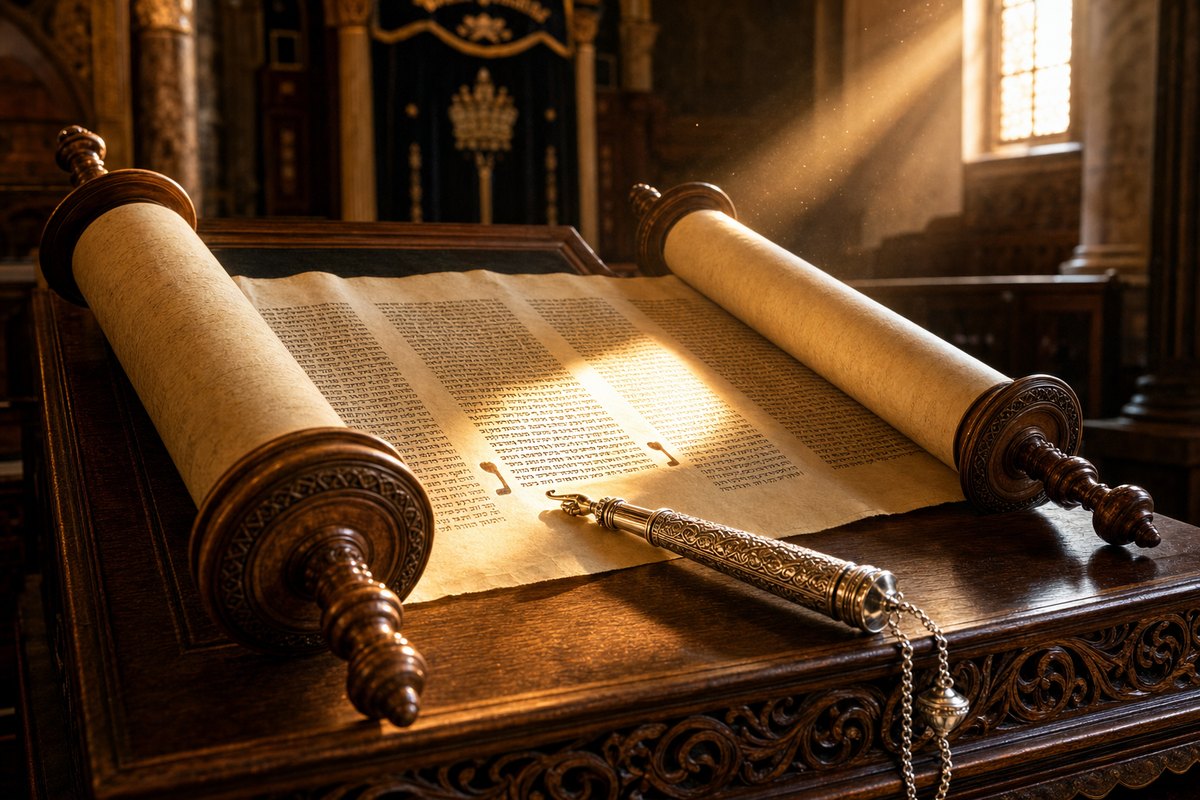
"Vayehi Binsoa HaAron" - A Book in its Own Right
"And it came to pass when the Ark traveled" (Numbers 10:35)
"Vayehi binsoa ha'aron" – this is a parashah in its own right, it is a book in its own right. As the Gemara in Shabbat (116a) says, "She has hewn her seven pillars," meaning that in truth there are seven books of the Torah and not five. The Book of Bamidbar (Numbers) is divided into three books of the Torah; verse 35 "Vayehi binsoa ha'aron" and verse 36 "U'venucho yomar shuvah..." are the middle book of the Chumash of Bamidbar. And indeed, it is a tremendous wonder that such a small parashah, just two verses, is a book in its own right.
The Secret of the Letter Nun and Traveling to Spread Torah
In the parashah of "Vayehi binsoa ha'aron" there are two inverted Nuns – the letter Nun hints at the fiftieth gate. The fiftieth gate (Sha'ar HaNun) is the most hidden gate of holiness, which is received only through "Vayehi binsoa ha'aron," only through traveling.
Therefore, the Zohar in Beha'alotcha (151a) says: "Come and see, the letter Nun is not stated in 'Ashrei yoshvei veitecha' (Psalm 145), because she is in exile."
Everyone knows that in the psalm "Ashrei yoshvei veitecha" there is no letter Nun. So when do we receive the letter Nun? When do we merit the letter Nun? It is specifically through traveling! It is such a great holiness, such a great gate, that it is impossible to receive this gate except through traveling, only when a person truly travels for the sake of Heaven to bring people back in teshuvah (repentance).
The Rebbe [Rebbe Nachman] says – travel, travel, start traveling all over the Land of Israel. There are people living alone in moshavim and kibbutzim, they don't see rabbis, they don't hear Torah classes, they know nothing about Judaism, and the evil inclination is burning! What can the son do and not sin? When a person travels on the roads and brings people to teshuvah (repentance), even if he doesn't know it, he doesn't know how many people returned in teshuvah (repentance) just from seeing him. They see a person with peyot with light on his face, and their heart opens, their heart burns with yearning, their heart awakens. Maybe there is one who laughs, who mocks, but 10,000 people are awakened. People look out the windows and say, "If only, if only we were like him, like this one with the peyot." When they see a religious person, a holy person, the soul soars! It soars and clings and wants to cleave to this Jew.
A person arrives with a shining face, knocks on some dark door, suddenly they see such an angel, and immediately all the members of the household get up and run to him. Like the story that happened in Gush Katif, in a "Meretz" moshav, where avreichim (Torah scholars) went to spread Torah there, and when they finished and wanted to return home, all the children ran to them, children in tank tops and shorts, shouting to them, "Why are you leaving us? Why are you traveling away? Come to our homes." Men also arrived and said, "We want to do teshuvah (repentance)! Help us, we don't know how."
Whoever performs such an important mitzvah and travels from city to city and from moshav to moshav, and also learns of course—beforehand one learns for 8 hours, otherwise there is no reason to go out! One learns Torah for 8 hours and spreads Torah for 8 hours, and one can also learn on the way while traveling. And then, when a person comes full of Torah, he comes with a shining face, they see his shining face and immediately return in teshuvah (repentance). After all, everyone walks around with sour faces, fallen faces, broken faces, and along comes a Torah scholar, they see an angel of God, peyot, a beard, a shining face, and they return in teshuvah (repentance)!
The Chariot of Rabbi Chiya
The Gemara (Bava Metzia 85b) relates that Rav Chaviva bar Surmaki wanted to see the chariot of Rabbi Chiya in Heaven.
He asked Eliyahu HaNavi, begged him, cried before him: "I want to see Rabbi Chiya, I want to see Rabbi Chiya." Eliyahu HaNavi said to him: "Be careful! Your eyes will burn if you see him, you will be burned by his fire!" Eliyahu HaNavi said to him: "You can see me, but Rabbi Chiya is all fire, chariots of fire, angels of fire, be careful! You are asking for too great a request."
But Rav Chaviva could not restrain himself, he did not withstand the test and looked at the chariot of Rabbi Chiya, and immediately his eyes were burned. One spark from Rabbi Chiya burned his eyes and he became blind; he was almost completely burned. The next day he went to the cave of Rabbi Chiya and cried and cried: "Rabbi Chiya, return my eyesight to me," and Rabbi Chiya restored his eyesight.
The holy Arizal says: Who is Rabbi Chiya? What is Rabbi Chiya! He is such a tzaddik that there is no comprehending him. Why? Because he went from city to city, from moshav to moshav, day and night, to disseminate Torah in Israel; he did not sleep, he did not rest for a moment. The Arizal says: One does not merit such levels for nothing. All the Tanna'im, all the Amora'im, angels lift them up, but Rabbi Chiya ascends alone. No angel, no seraph elevates him because the angels cannot ascend so high; Rabbi Chiya ascends higher and higher to a place that cannot be described, to Atika Kadisha (the Ancient of Days).
Revealing the Inner Light in Every Jew
The Zohar says: "Fortunate is the one who grasps the hand of the wicked" (Shemot 128b).
A person who brings others to teshuvah (repentance), there is no gate that will be closed before him; everything is opened for him, he is given all the treasures of the King. Hashem takes him, embraces him, and delights in him more than all the tzaddikim because he brought others to teshuvah (repentance), and they give him all the keys, open all the gates for him, and reveal to him all the secrets of the Torah.
Reb Noson says – if a person does not bring people to teshuvah (repentance), about him it is said, "The sacrifice of the wicked is an abomination." Hashem has no satisfaction from his Torah, even if he is the wisest, most righteous tzaddik. If he does not go and bring people to teshuvah (repentance) and he does not connect with people lesser than him, then his prayer is not accepted. Because there are no wicked people in Israel; even if you see a complete wicked person from head to toe, know that it is only kelipot (spiritual husks) surrounding him.
The Arizal says that the many kelipot that pile up on the wicked are only because of the great light hidden within them. Even those brazen ones, the insolent ones, their kelipot are just a wrapper of a millimeter, a wrapper of millions of millimeters, that in one moment can be shed, and then their inner light is revealed. Because within them is the greatest light, and therefore the kelipot fight against them and cling to them to hide this great light. The moment we succeed in reaching them and bringing them to teshuvah (repentance), the point of light will be revealed and will illuminate the entire world, and then all of the people of Israel will return in teshuvah (repentance).
A person is obligated to bring people to teshuvah (repentance), as Yehuda said, "How shall I go up to my father if the youth is not with me?" Yehuda cried out! How will I go up to my father, how will I go up to Heaven, if the youth is not with me? Who is this youth? This youth is the entire people of Israel, it is all the lost, miserable youths who are far from Hashem. How will we come to Heaven and say that we did not bring them back in teshuvah (repentance)?
Asking for Da'at (Knowledge) in Order to See the Truth
The truth must belong to us, that it is our mission, that it is our role, that it is within our capabilities, that it is what is expected of us in Heaven. It is a very difficult thing to know what we can and cannot do, whether it is a little too much or too little. The absolute truth is constantly moving and shifting, from moment to moment, from hour to hour, from day to day. Every time, we merit a new understanding, a new perspective, a new light, which will allow us to understand the truth with greater clarity. The absolute truth, not the abstract truth, the truth that belongs to us, that we have already acquired, and we know what we need to do with this truth, because otherwise, it is something so distant and abstract.
All that we ask for and all that we need is the first blessing established by the Men of the Great Assembly in the Shemoneh Esrei prayer, after Avot, Gevurot, and Kedushah. And what is it? "Who graciously grants man da'at (knowledge)." Meaning, the first thing a person asks for is da'at. When a person has da'at, he already has everything. When a person has da'at, he understands that when he lacks something, he shouldn't look at someone who has it with an evil eye and envy him, but rather he must turn to Hashem.
An evil eye is a complete lack of da'at. When a person does not nullify himself before Hashem, then he has an evil eye. Because if he doesn't see Hashem, who does he see? Himself. And then he constantly looks to the sides, to see what is in the other person's plate instead of lifting his head upward, to Hashem. Whoever looks to Hashem has a good eye. He understands that everything is from Hashem.
Torah Insights - Holy Stubbornness
"And this was the work of the Menorah, beaten work of gold; unto the base thereof, and unto the flowers thereof, it was beaten work" (Numbers 8:4)
The work of the Menorah represents the totality of the glory (hitpa'arut) with which Hashem glorifies Himself through Israel, for from there comes the main light. Therefore, the lights of the Menorah were a testimony that Hashem loves His people Israel and rests His Shechinah (Divine Presence) among them, as our Sages of blessed memory said regarding the Western Lamp, that it is a testimony to all inhabitants of the world that the Shechinah rests in Israel. This is the aspect of glory, that due to His glory and love for us, He rests His Shechinah within us. Thus, all the work of the Menorah is the aspect of the glory with which Hashem glorifies Himself through Israel.
And this is the aspect of all the wondrous designs that were in the Menorah: cups, knobs, almond blossoms, and flowers, etc. All this hints at the many shades of glory with which Hashem glorifies Himself through Israel, which are comprised of many hues. And all these glories, which are the aspect of the work of the Menorah, can only be merited through great stubbornness, for one must be very stubborn in the service of Hashem.
And this is the aspect of "And this was the work of the Menorah, beaten work (mikshah) of gold." Mikshah is related to the word for stubbornness (akshanut), meaning that one must be bold and firm in the service of Hashem with very great stubbornness. And this is "unto the base thereof, and unto the flowers thereof, it was beaten work (mikshah)," meaning that all the designs and flowers in the Menorah, down to its base and up to its flowers, which represent the totality of the glory of Israel, are all merited specifically through stubbornness. The aspect of "unto the base thereof, and unto the flowers thereof, it was beaten work," means that in all the spiritual work of a Jew, from beginning to end, from all of which Hashem receives glory—which is the aspect of the work of the Menorah—all of this is accomplished only through stubbornness. From beginning to end, one needs great stubbornness and holy boldness. (Likutey Halakhot, Hilkhot Birkat HaMazon 4:12)
The Praise of Aharon That He Did Not Deviate
"Speak to Aharon, and say to him: When you light the lamps... And Aharon did so"
Regarding the words of the verse here, Rashi comments: "'And Aharon did so' – to declare the praise of Aharon, that he did not deviate." The question arises: why does the verse see fit to praise Aharon regarding the lighting of the Menorah, "as Hashem commanded Moshe"? Would it ever cross one's mind that a tzaddik, the foundation of the world, like Aharon HaKohen, would God forbid deviate in any way from the commandment of Hashem?
The tzaddik Rabbi Meir of Premishlan says about this: Even though Aharon was chosen to serve as the Kohen Gadol (High Priest) and to be close to the Shechinah (Divine Presence), his heart did not become haughty, God forbid, and he did not change a thing in his ways with people. He remained all his days "loving peace and pursuing peace, and bringing them closer to the Torah" (Avot 1:12).
This is what Rashi means: "To declare the praise of Aharon, that he did not deviate" – that he did not change himself and his cordial relationships with every person, but rather clung until the end of his days to the trait of humility and modesty, and the crown of the High Priesthood that was placed upon his head did not change him at all. (Bnei Tzion)
Stories for the Parashah - Faith in Parnassah (Livelihood) and Burying Desires
"And Hashem said to Moshe: Is Hashem's hand short?"
A Jew entered the room of Rabbi Meir of Premishlan with a complaint: his neighbor was encroaching on his territory and opened a store next to his own store, selling the exact same things he sells, thereby depriving him of his parnassah (livelihood). Rabbi Meir asked him: "Have you ever noticed how a horse drinks from the water of a river?" The Jew answered in astonishment: "No, I don't know!"
"Well," Rabbi Meir told him, "before the horse drinks from the river water, he tends to kick the water, and only afterward does he drink. And why? Why does the horse have this strange habit? Because when he comes to drink from the water, his reflection appears before him, and he thinks that it is another horse coming to drink his water. Therefore, he raises his legs and kicks the water until it becomes muddy and the image of the horse disappears, and then he drinks happily..."
"But a human being is not a horse, and he must know that the world is guided by Hashem, who sustains and provides parnassah (livelihood) for everything, 'from the eggs of lice to the horns of wild oxen.' He sustains the smallest creature to the largest, and of course, He can give water to all the horses and provide parnassah (livelihood) for all creatures." (Bnei Tzion)
"From Kivrot Hata'avah the people journeyed to Chatzerot"
The tzaddik Rabbi Menachem Mendel of Kotzk, who was one of the greatest Admorim in Poland in the 19th century, became famous throughout Poland for his sharpness of mind and his brilliant sayings. Thousands of Chassidim gathered at his doorstep and drank his words of Torah with thirst. In his old age, Rabbi Mendel secluded himself in his study room and rarely went out to his Chassidim, who crowded the doors of his house day and night, in anticipation of hearing a word of Torah and Chassidut from him.
Once, a group of Chassidim approached his attendant—the rabbi's assistant—with a request that the revered Rebbe would agree to come out to them and bestow his blessing upon them. Rabbi Mendel responded to this with words as hard as iron, and called out to the ears of the Chassidim standing before him: "Why have you gathered and come to me? Do you want me to clean the dirt that has clung to you, and chase away your foreign thoughts and your despicable desires...?"
"However, you must know that I am not a garbage cleaner, and all this you must do yourselves with toil and effort, before you come to me. Is it not an explicit verse in the Torah: 'From Kivrot Hata'avah (the Graves of Lust) the people journeyed to Chatzerot (Courtyards)'? First, a Jew must 'bury' the lust that nests within him—and only afterward can he travel to the courtyards of tzaddikim..." (Bnei Tzion)
A Prayer to Merit Spreading Torah
Master of the Universe, Omnipotent One, from whom no purpose can be withheld, grant me the merit to pour out my heart like water before You, and may I merit that upon my setting out on the road, from every single footstep a holy angel will be created. And may all my travels be solely and truly for the sake of Heaven, to spread the light of the holy Torah and the light of our awesome Rebbe [Rebbe Nachman] throughout the entire world.
As it is written: "And it came to pass when the Ark traveled, that Moshe said: Arise, Hashem, and let Your enemies be scattered, and let them that hate You flee before You. For out of Zion shall go forth the Torah, and the word of Hashem from Jerusalem."
Subscribe to Our Newsletter
Receive Torah articles and inspiration directly in your inbox