
Parshat Mishpatim by the Esteemed Rabbi Eliezer Berland shlit"a
"When the Holy Shabbat Arrives, There is a Wedding in Heaven"
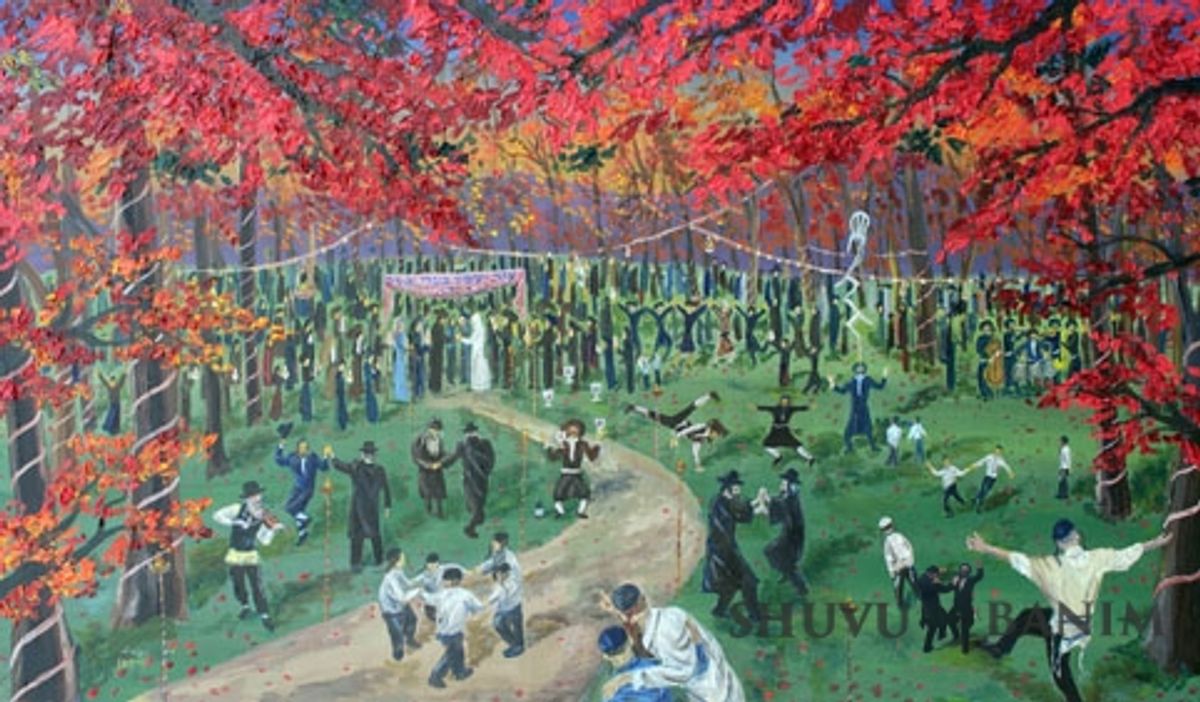
"Six days you shall labor and do all your work, but the seventh day is a Sabbath to Hashem."
Sing on Shabbat and your child will not remove his peyot
"A person wants his child not to remove his peyot! Why shouldn't he remove his peyot? What does he see from his father? The father sleeps on Shabbat, eats, and eats and sleeps again, and so on. If he saw that his father was singing with enthusiasm, dancing with the children, and inspiring them, no child would remove his peyot, and no child would go off the path, because the children also want to serve Hashem!"
"A child who sees his father sitting at ease, singing and chanting at the Shabbat table, feels such goodness in his heart, such tranquility; this is his whole life, this is his whole joy."
When holy Shabbat arrives, there is a wedding in Heaven
"Rebbe Nachman said that Shabbat is like a very great wedding, where they are rejoicing and dancing with great joy and gladness. Someone stands there, dresses himself in his finest clothes, and runs quickly, wanting to enter and rejoice there. But one needs merit to be able to see it through the lattices, through a small crack (which they call 'shparine')" (Sichot HaRan 254)."
"When holy Shabbat arrives, there is a wedding in Heaven. It is a 26-hour wedding, from Kabbalat Shabbat until Havdalah, and everyone must participate in this wedding, in these melodies, in these dances that take place in Heaven. Immediately at Kabbalat Shabbat, when we say 'Lecha Dodi,' Hashem enters the Garden of Eden to dance with the tzaddikim. All of Shabbat, it is as if Hashem is dancing with all the tzaddikim, with all the angels in the Garden of Eden, and everyone dances around Hashem and says, 'This is Hashem for whom we hoped; let us rejoice and be glad in His salvation.' Everyone sees Hashem face to face, and everyone is nourished by the light of the illuminating mirror. Everything we have on Shabbat, all the joy on Shabbat, comes from the joy that is drawn from the dances and melodies of Hashem with the tzaddikim in the Garden of Eden; from this joy, joy descends to this world."
The problem is that not everyone manages to enter the wedding
"The Rebbe says - Shabbat is like a literal wedding, it is simply a wedding! It is like a great and important wedding that everyone goes to and dances at, but the problem is that not everyone manages to enter the hall; the hall cannot contain everyone. Just like at a wedding of Admorim where 30,000, 40,000, 50,000 chassidim come; some climb on the windows, some stand on the roofs with binoculars to see the chuppah, the great joy, the dances of the groom, to look through some lattice, some crack, some roof, perhaps they will merit to see some joy at the wedding, perhaps they will see some dance from the wedding."
Holy Shabbat is only endless joy
"The Rebbe says - Shabbat is like a wedding, but who knows who will merit to see the joy that is on Shabbat? Who will merit to see the infinite joy that is on Shabbat?! 'But one needs great merit to be able to see through the lattices.' Because Shabbat is only for dancing, for songs, for melodies; when holy Shabbat arrives, one must rejoice, dance, and sing."
"Holy Shabbat is only endless joy, joy that has no end; it is forbidden to have any thought of sadness! Any thought of worry! The essence of Judaism depends on this! The more a person rejoices on Shabbat, the more he dances on Shabbat, the more he can merit Divine light for the entire week. The Divine light shines for a person through the joy he has on Shabbat; there is no permission for a person to have sorrow or sighing on holy Shabbat! Without any worry! 'As if all your work is done' (Rashi, Exodus 20:8); thank Hashem, no one is in prison, no one is in captivity, everyone, thank Hashem, has two challahs and a cup of wine for Kiddush."
"When we say 'Vayechulu,' we say the 'Ten Utterances'; 'Vayechulu' - then one finishes everything, all the calculations, all the worries, all the plans."
On Shabbat, there are no plans for the coming week
"When holy Shabbat arrives, a person must not have any plan of what to do next week, no thought of what will be on the weekdays. Shabbat arrives, let Hashem plan everything; if a person thinks on Shabbat about what will be, then they say in Heaven, 'Nu, it will be as he thinks.'"
"Why are you making calculations for Hashem? You are ruining all of Hashem's plans! Hashem has infinite plans, infinitely better than yours! Everything they want to give you! Everything they want to bestow upon you! Hashem wants to give a person all the abundance in the world, Hashem wants to give a person infinite good, and if a person thinks on Shabbat, 'What will we eat, what will we drink? What will we eat on Sunday, what will be on Monday, what will we eat on Tuesday?' Then they say to him, 'Okay, what you think, we will give you - we will give you according to your perception, but if you do not think and do not ask what will be, what will be on Sunday, on Monday, but rather you strengthen yourself in joy, then you will have such abundance, such salvations that you never even hoped for! You didn't think of them! You didn't dream of them! You cannot imagine what abundance Hashem can give you.'"
"One must rejoice on holy Shabbat, rejoice truly without end or limit, joy that has no boundaries, and of course, remain with a settled mind. Because it is impossible to draw down the holiness of Shabbat, the Divine light of Shabbat, except through the vessel called joy."
The Shabbat table is the key to all salvations
"Shabbat comes - everyone sings, everyone dances with the children, everyone! Admorim, Rabbis, Yeshiva heads, everyone sits for 3 hours, 4 hours at the Shabbat table and sings with the children. The children say words of Torah, insights, the children feel the pleasure of Shabbat, feel desire, feel the desire to be Charedi, the desire to be G-d-fearing."
"The Shabbat table is the key to all things in the world, to all salvations; a person sits with his children and sings with them, then his children receive desire! Desire for Torah, desire for prayer, desire for fear of Heaven, love for father and mother."
"You don't sing? That's not Shabbat! A person doesn't sing zemiros, what will he do so the son won't sin, G-d forbid? A family that doesn't sing zemiros, then later the children wander around, they have nothing to do, so they go outside, hear ugly things, meet bad friends, corrupt other friends. The child sees that the father doesn't pray, doesn't rejoice, doesn't sing zemiros, so he goes and commits sins."
The child sees the father sitting at ease and singing, and it becomes so good in his heart
"When Shabbat arrives, a child needs to see that his father is singing, yearning, longing, and delighting in Shabbat, and then he too will receive a taste of Shabbat, a taste of life. Now is the time for zemiros, songs; when they sing zemiros, the children receive vitality, they laugh and are happy. If the child sings with the father on Shabbat, then in the merit of this hour, he can hold on until the next week. If he meets a bad friend, he will say to him, 'Leave me alone, what do you want to ruin me for?' The child sees the father sitting at ease, singing, chanting, and it becomes so good in his heart, such tranquility; this is his whole life, this is his whole joy, and then he is not interested in what is on the street, he is not interested in the vanities that are on the street. What does a child need more than this?! The minimum for a Jew is Shabbat zemiros; without this, he doesn't even start."
"They asked the father of Rebbe Dovid of Lelov, 'How did you merit such a son?' - He said that when he would arrive to sing during the Shabbat zemiros the melody 'And may they merit to see children and children's children occupied with Torah and mitzvot,' he would say it with such weeping, with such deveikut (cleaving) for at least half an hour, that he would merit to see children and children's children."
Courtesy of 'Tzama Nafshi'
Subscribe to Our Newsletter
Receive Torah articles and inspiration directly in your inbox