
Rav Michael Shmuel Ravia shlit"a
"How Could They Dispute the Tzaddik Like This?"
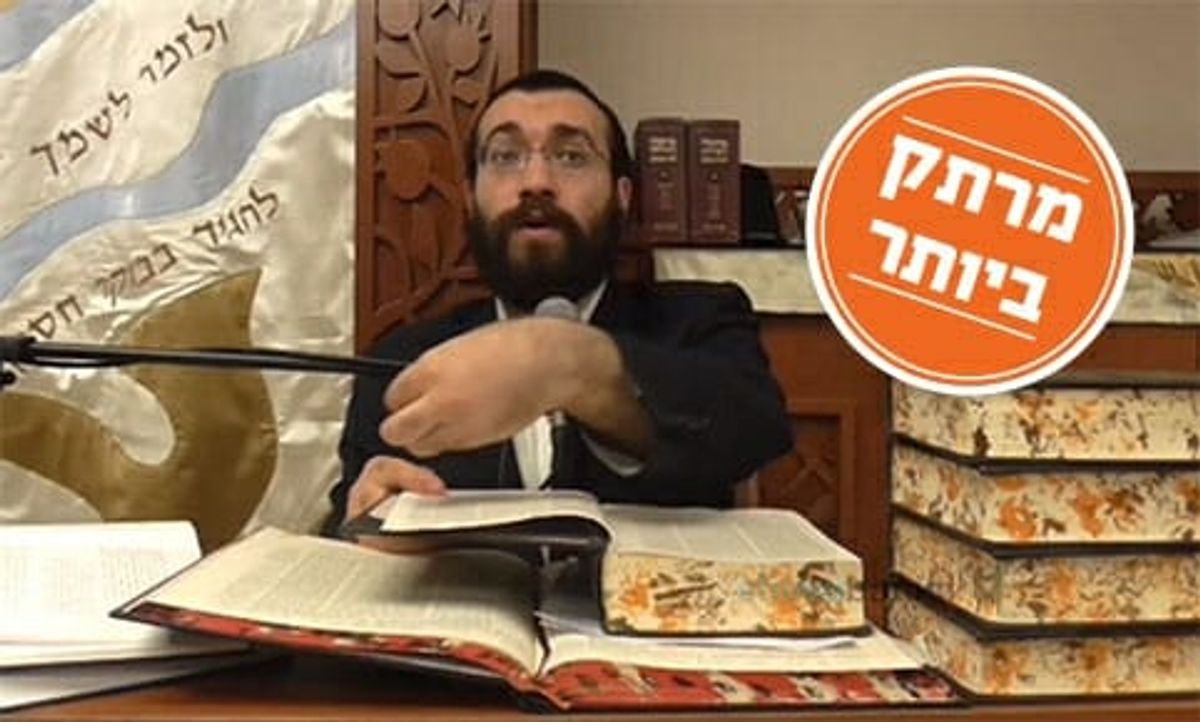
Rabbi Michael Shmuel Ravie shlit"a explains in a clear and painful way the evil consequences of the dispute against the tzaddik - how could Korach rise up and dispute Moshe, the leader of Israel? How could Korach accuse Moshe, who was separated from all physicality and materiality, with filthy claims that even the greatest of the wicked would have been distanced from?!
These are his words:
"Parshat Korach teaches us what it means, 'And all your children shall be taught of Hashem, and great shall be the peace of your children' (Isaiah 54:13), what it means to be Torah scholars who increase peace. We will learn in the lesson about the wisdom and nobility of Moshe Rabbeinu, how much he is careful to walk between the raindrops even when they hurt him. How he respects and gives Korach honor in an unbelievable way; it is precise from the verses."
On Moshe Rabbeinu, the most important people of the generation disputed
"'And they rose up before Moshe, with certain of the children of Israel, two hundred and fifty princes of the congregation, called to the assembly, men of renown' (Numbers 16:2), public representatives, the most important people. 'Men of renown', 'A good name is better than precious oil' (Ecclesiastes 7:1), famous people."
"'And they assembled themselves together against Moshe and against Aharon, and said unto them, You take too much upon you, seeing all the congregation are holy, every one of them, and Hashem is among them; why then do you lift yourselves up above the assembly of Hashem?' (Numbers 16:3), they gathered against them, they came to them with complaints - what greatness have you taken for yourselves? You, Aharon, have become the High Priest, you, Moshe, have become the King of Israel! You took the tribe of Levi for yourself, what about us?"
"They said about Moshe Rabbeinu, seemingly, 'all the congregation are holy' (ibid), why do you act with arrogance? At a time when we learned about Moshe Rabbeinu, 'Now the man Moshe was very humble, more than any man who was upon the face of the earth' (Numbers 12:3). The Torah itself testifies about Moshe Rabbeinu in Parshat Beha'alotcha, 'And there has not arisen a prophet since in Israel like Moshe, whom Hashem knew face to face' (Deuteronomy 34:10), no one has arisen like Moshe in all things, in prophecy, no one has arisen like him in humility."
Moshe was chosen by Hashem
"Hashem chose Moshe, 'Not so with My servant Moshe; he is trusted in all My house' (Numbers 12:7). After all, the Gemara says that Hashem appoints even the water drawer, and here Korach and his congregation begin with their lashon hara (evil speech) that supposedly Moshe took the greatness for himself. Korach sees a tzaddik, a servant of Hashem, but says about Moshe that he acts this way because he is putting on a show."
They suspected Moshe of adultery
"'And when Moshe heard it, he fell upon his face' (Numbers 16:4), 'This teaches that they suspected him of adultery, as it is said (Psalms 106:16): And they envied Moshe in the camp. That each one envied him regarding his wife' (Sanhedrin 110). No less and no more, they say about Moshe Rabbeinu, 'What have we heard about you?'"
"Master of the Universe, is this what you suspect Moshe of? After all, three things did Moshe Rabbeinu do on his own initiative and did not ask Hashem, and the Heavenly opinion agreed to it. One of them is that he separated from Tziporah his wife; Moshe was separated from all this matter. 'Mouth to mouth do I speak with him, even manifestly, and not in dark speeches; and the similitude of Hashem does he behold; why then were you not afraid to speak against My servant, against Moshe?' (Numbers 12:8). Moshe speaks with Hashem whenever he wants; he cannot be connected to material things."
"The Gemara tells (Bava Metzia, Chapter HaPoalim) that Rabbi Elazar ben Rabbi Shimon passed away, his colleague Rabbi Yehuda HaNasi sent a letter to his daughter and asked to marry his wife. The Prince of Israel, the compiler of the Mishnah, from the seed of King David, son after son, of noble lineage back to King David, and she answers him: 'A vessel that was used for holy purposes, shall it be used for mundane purposes?'"
"Terrible, the wife of R' Elazar says about someone whom Chazal testify is holy, 'I was a vessel for Rabbi Elazar bar Rabbi Shimon, this is holy, how can I now use a mundane vessel?' Terrible, because after all, it is said about few that they are 'holy', and Rabbi Yehuda HaNasi is one of them - but, Rabbi Elazar suffered the suffering of the cave, that is something else."
"See what they suspected Moshe of, who was holy of holies! They talk to him about adultery, the thing he is most separated from. May Hashem protect us, a person who was with a married woman, that is the punishment of strangulation."
They thought they disputed Moshe, but - they disputed Hashem
"'And put fire in them, and put incense upon them before Hashem tomorrow; and it shall be that the man whom Hashem chooses, he shall be the holy one; you take too much upon you, you sons of Levi' (Numbers 16:7). Rashi explains: 'You take too much upon you' - a great thing you have taken upon yourselves to dispute Hashem. Rashi explains that although not everything is detailed in the Torah, Moshe spoke to their hearts about many things, and tried to convince them in all ways and forms."
"Moshe Rabbeinu wants the good of Israel, after all, after the sin of the Golden Calf, Hashem wanted to wipe out, Heaven forbid, Israel and start over with Moshe, but Moshe answered, 'Yet now, if You will forgive their sin; and if not, blot me, I pray You, out of Your book which You have written' (Exodus 32:32). Moshe Rabbeinu is the most compassionate of the compassionate, he cares for the fingernail of a Jew, it is not for nothing that he was chosen to be the leader of Israel. 'You take too much upon you, you sons of Levi' - Moshe is begging them that he does not want a dispute."
"Moshe says to them, I am here in order to lead you, I did not choose this mission for myself at all. After all, he said to Hashem, 'And he said, O Hashem, send, I pray You, by the hand of him whom You will send' (Exodus 4:13), I am not worthy. But Hashem says, 'Not worthy? You are the most worthy.'"
Moshe knows what the results of the dispute against him will be and does everything to prevent it
"Moshe spoke to them with wisdom, but they did not stand firm and were influenced by the incitement against Moshe. And the Torah testifies about them that they are responsible for their own death, and therefore they will also be punished for this. Not only did they dispute Moshe Rabbeinu, and 'Rav Chisda said: Whoever disputes his teacher is like one who disputes the Shechinah' (Sanhedrin 110a), and they will also be punished for the fact that they caused their own death."
"Rashi asks: 'Korach, who was wise, what did he see to do this foolishness?' After all, he was one of the carriers of the Ark and a great man in Israel, he was not a fool, so how did he say to Moshe Rabbeinu: 'Why then do you lift yourselves up above the assembly of Hashem?' (Numbers 16:3)?"
"Rashi answers in the name of the Midrash Tanchuma, Korach's 'eye misled him', he had a spirit of holiness that misled him, he saw that Shmuel was going to come out from him, who is equal to Moshe and Aharon. And furthermore, Korach saw that 14 priestly watches out of 24 were destined to come out from him, who would serve in the Holy Temple on the platform."
"Korach said to himself, if I die then all these descendants of mine will not be born, so there is no chance that I will die. But Rashi explains that he did not see correctly, because his sons did teshuvah and from there his descendants came out, but 'Moshe saw'. Moshe had a correct vision of the clear looking glass."
"And the question is, if the spirit of holiness misled Korach to dispute Moshe, then why did Hashem even give him the spirit of holiness? But, Hashem leaves the choice to the human being."
"Korach should have reacted exactly the opposite and said, on the contrary, because such righteous descendants are destined to come out from me, I need to strengthen myself and be more humble. Rashi explains that Korach disputed the Sabbath, because the role of the Sabbath is to bring peace, and Korach created a dispute and separation."
Subscribe to Our Newsletter
Receive Torah articles and inspiration directly in your inbox