
She Touched Moshe’s Ark and Was Healed
The Daily Chizuk from the Gaon HaTzaddik Rabbi Eliezer Berland shlit"a
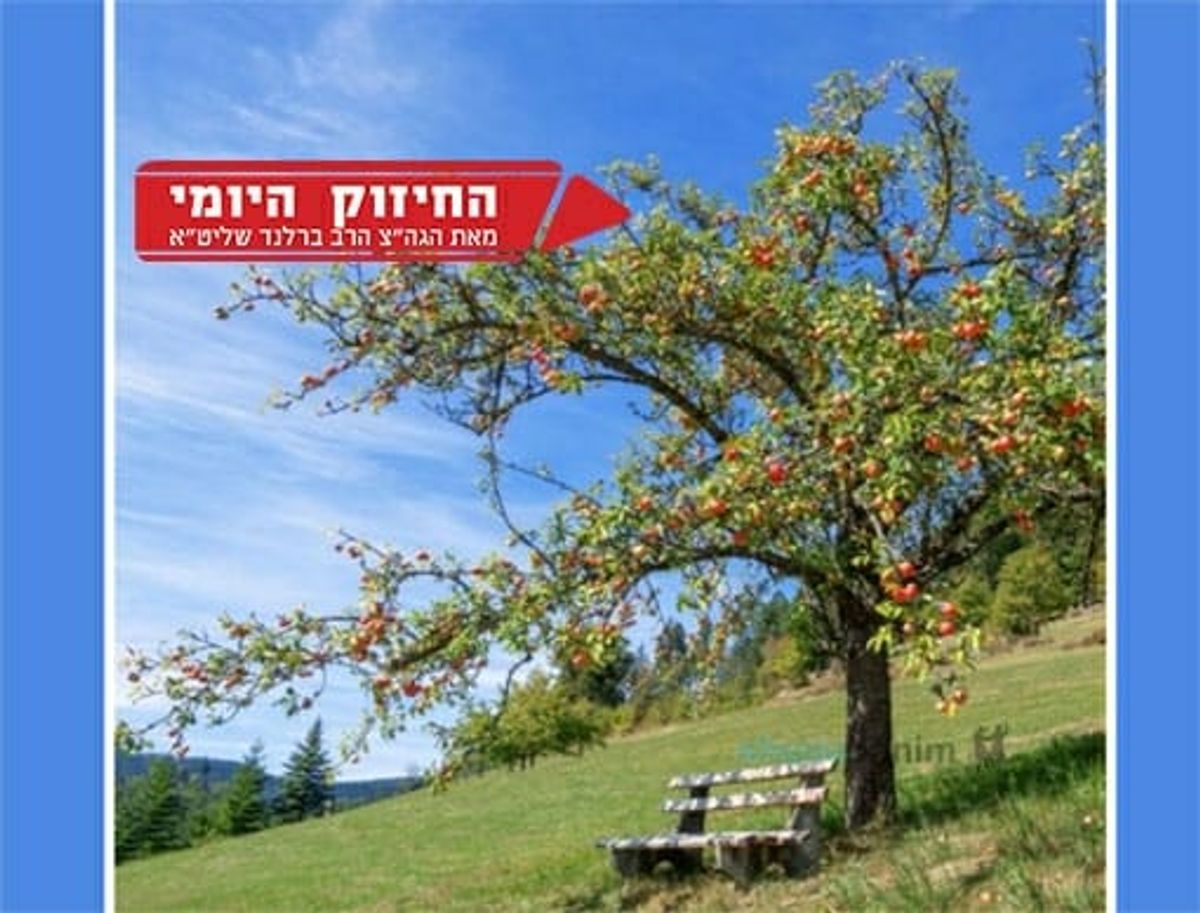
Why Specifically an Apple in Charoset?When we dip the maror into the charoset, we are telling a story. Not a story of sweetness, but a story of blood, of clay, of torture, and of birth. The story of the women of Israel who gave birth in hiding, in the fields, and among the furrows of mortar, as the pain of childbirth mingled with the clay and the blood soaked into the earth. Between the mortar of the bricks and the "brick of sapphire," between the depths of the Nile and the shadow of an apple, hides an ancient secret—the secret of the Geulah that sprouted from the depths of degradation.
The Daily Chizuk of our teacher, the Gaon and Tzaddik Rav Eliezer Berland shlit"a - Wednesday, 22 Sivan 5785
Edited from the lesson given by our teacher, the Rav shlit"a, on the 25th of Nissan. These are his holy words:
What does the apple have to do with charoset? After all, charoset is clay; it must contain clay, for they sank into the clay, for they descended into the clay.
Like Rachel, the daughter of the son of Shutalach (Pirkei DeRabbi Eliezer 48 - "Rabbi Akiva says: Pharaoh's taskmasters would beat the Israelites to make the count of bricks double, as it is said, 'And the quota of bricks which they were making yesterday and the day before...' and the Egyptians would not give straw to the Israelites, as it is said, 'No straw is given to your servants,' and the Israelites would gather stubble in the wilderness and load it onto their donkeys, their wives, their children, their grandchildren, and their daughters. The stubble of the wilderness would pierce their heels, and the blood would flow and mingle with the mortar. Rachel, the daughter of the son of Shutalach, was pregnant and was treading the mortar with her husband, and the child emerged from her womb and became mixed into the mortar. Her cry ascended before the Throne of Glory, and that night, the angel Michael descended and brought it before the Throne of Glory, and that night Hashem descended and struck the firstborn of Egypt, as it is said, 'And it came to pass at midnight, and Hashem struck every firstborn.'") at the time she was treading in the clay, the baby became mixed in the clay.
And this is the "brick of sapphire," "And under His feet was like the work of a brick of sapphire" (Exodus 24:10). The brick of sapphire was a fortress of friendship, but the apple is "Under the apple tree I aroused you" (Song of Songs 8:5).
It is written in Hagahot Maimoniyot, "Under the apple tree" - that there was no barren woman, 'There shall not be a male or female barren among you, or among your livestock' (Deuteronomy 7:14) - no barren woman existed in all the land of Egypt; all the women were blessed with children.
"All the women were blessed with children; they would run to the fields. The Egyptians placed guards over every woman giving birth; the second the baby would jump out, the commando, the patrol, the navy seals would immediately arrive. They would snatch the child and throw him into the Nile, or bring him to Pharaoh to slaughter him."
"Like the seven maidens of Batya, they saw a Jewish child in the middle of the Nile and said, 'How fun! How wonderful, we will bring him to Pharaoh so he can slaughter him, so he can bathe in his blood.'"
"Rashi says that the angel Gavriel came, and what did he do to the maidens? He sent them to the Garden of Eden or to Gehenom—it is not yet known exactly. The moment they wanted to take the baby—Moshe—they wanted to throw him into the Nile. They said to her, the daughter of Pharaoh, 'What about honoring your father and mother?'"
"Why did she not listen to the voice of her father? Because she had mercy on him, she took him, she saved him; instead of strangling him, she saved him."
"What kind of daughter is this? A rebellious and wayward daughter! She does not listen to the voice of her father."
That same day, Batya converted and was entirely covered in leprosy; as soon as she touched the ark of Moshe, the leprosy disappeared.
They were 'under the apple tree,' they hid under the bushes, and there the baby was born - 'On the day you were born, your navel was not cut' (Ezekiel 16), there is a dagesh in both the first Resh and the second Resh. To indicate that the angels descended, cut the umbilical cord, and swaddled the babies.
"Honey from the rock and oil from the flinty rock" (Deuteronomy 32:13), everyone swam in a sea of oil, in a sea of honey.
Subscribe to Our Newsletter
Receive Torah articles and inspiration directly in your inbox