
The Beis HaMikdash Beyond Place and Time
Rabbi Ofer Erez shlit"a in a Special Pesach Shiur
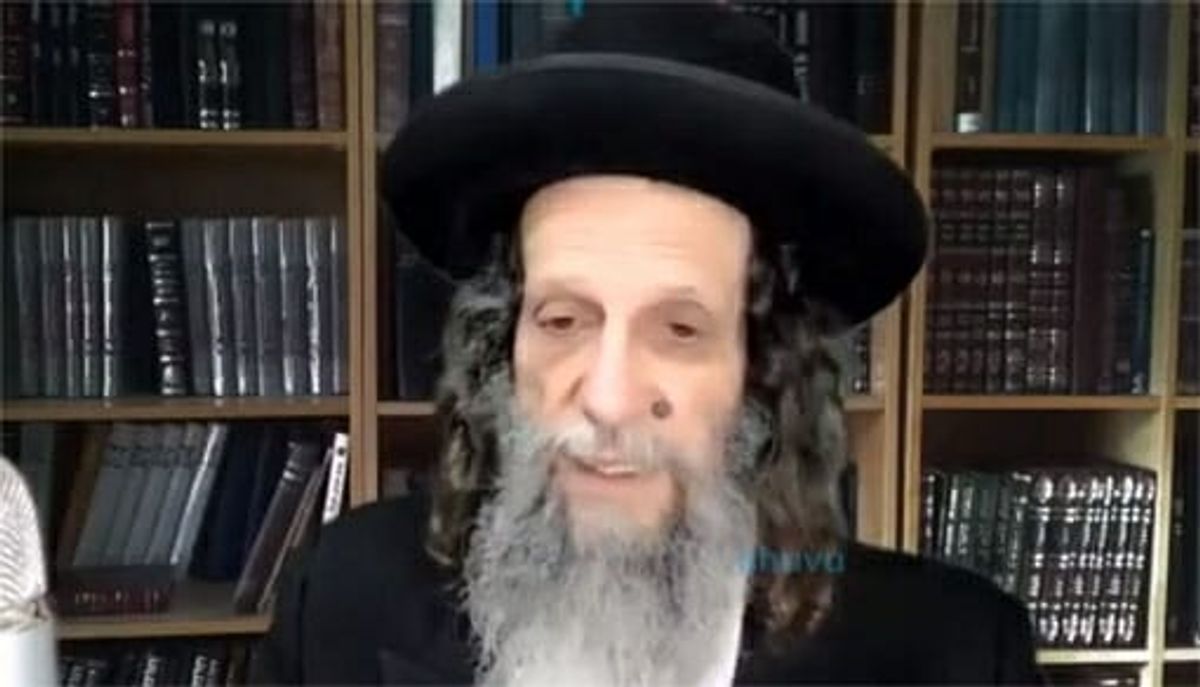
A special Passover lesson delivered by Rav Ofer Erez shlit"a to the Shuvu Banim Kollel in Miami in the past - Is it necessary to remove chametz from the courtyard? How did King Solomon reach South America? How many Passover sacrifices were offered and what did they learn from this about the size of the population?
The esteemed Rabbi Ofer Erez shlit"a shares holy words regarding the holiday of Passover, but before that, he opens our hearts with insights regarding the Holy Temple
These are his holy words:
A young Torah scholar asked a halachic question to Rabbi Yitzchak Zilberstein shlit"a: Is it necessary to remove chametz from the courtyard?
Rabbi Zilberstein answered: In places where birds are found, one does not need to remove the chametz, because they eat it!
The scholar continued to challenge: It is written in the Gemara Sotah that birds do not eat from a stingy person, and I know about myself that I am stingy.
Rabbi Zilberstein answered: This is true for the whole year, but it is ruled in the Shulchan Aruch that during the days of Passover, birds eat the chametz in the courtyards. The birds hear a Heavenly Voice (Bat Kol) that tells them to go and eat the chametz in the courtyards of Israel, and they have no possibility to choose between a stingy person and one who is not stingy.
Why two birds are needed for the leper
In Parshat Metzora, it is written about the leper that the moment he finishes his purification process, he must bring two birds. One of the birds is slaughtered, while the other is sent away. And one asks, while the slaughtered bird is a sacrifice for the leper, why is the sent-away bird needed?
And the commentators explain: That leper who was healed received his leprosy because of the lashon hara (evil speech) he spoke, but it is possible that he will return to his old ways and speak lashon hara again. It is written in the Targum Yonatan ben Uziel a wonderful insight that the living bird flies to its place, but if he returns to speak lashon hara, the living bird will return to him to warn him!
What did King Solomon do in South America?A young man approached me after one of the lessons in Tel Aviv, and told me that during his trip to Central and South America, he reached a tribe of Indians in the Amazon. There, they gave him to drink Ayahuasca tea (an entheogenic, psychoactive potion from the Amazon basin in South America), he asked the Indian shamans (the Rabbi of the kelipah) how they know to prepare this tea specifically from these plants out of tens of thousands of plants in the area?
They answered that it is a tradition among them from generation to generation that King Solomon was there and he revealed to them this secret of the Ayahuasca tea.
And the question is, how did King Solomon reach them?
I found 5 different sources, among them 'Seder HaDorot' and 'Sefer Otzar HaChaim' written by the Rabbi of Portugal 100 years ago. And in these sources, it is brought that King Solomon was in America and he arrived carried on a carpet.
An interesting question: How many Passover sacrifices were offered?
The Gemara in Pesachim tells of King Agrippa who checked in one year how many sacrifices were offered in Jerusalem during Passover. He asked the Kohanim to count the Passover sacrifices, but how is it possible to count the Passover sacrifices? After all, the work of offering the sacrifices was carried out at high speed.
Agrippa told them to place a kidney aside from every sacrifice they offered, and by counting them, they would know how many Passover sacrifices were offered. It turned out that in that year, 1.2 million Passover sacrifices were offered, while the Gemara says that at least ten people were counted on each Passover sacrifice. From here, in that year there were at least 12 million people in Jerusalem, and one must remember that the size of Jerusalem then was a little more than the Old City of today.
If one calculates the needs of the crowd that arrived in Jerusalem, it turns out that they needed to prepare about 24 million liters of wine for the benefit of the pilgrims, because there is no joy except with meat and wine (as it is said "And you shall rejoice in your festival," with what does he make them rejoice? With wine, Pesachim 109a). And similarly, about 30 million kilos of matzah, and the same is true regarding the festival sacrifices and other festival needs. If one contemplates the description of the quantities of sacrifices and the people who arrived to offer them in a small and limited area, one understands that the Holy Temple was above space and above time.
Subscribe to Our Newsletter
Receive Torah articles and inspiration directly in your inbox