
The Entire Purpose of Drinking Wine is to Reach Dvekus (attachment) to Hashem
and to See Hashem Face to Face! A Fiery Lesson for the Holiday of Purim from the Gaon and Tzaddik Rabbi Eliezer Berland shlit"a
How are the dinim (judgments) nullified on Purim? When is the illumination of Yesod Abba (the foundation of the Father/Wisdom) revealed? What is the meaning of "livsumei b'Puria" (becoming joyful/inebriated on Purim)? How is a person's inner self revealed through drinking wine? The dances that nullify pride! The illumination of "Face to Face" that is revealed on Purim!
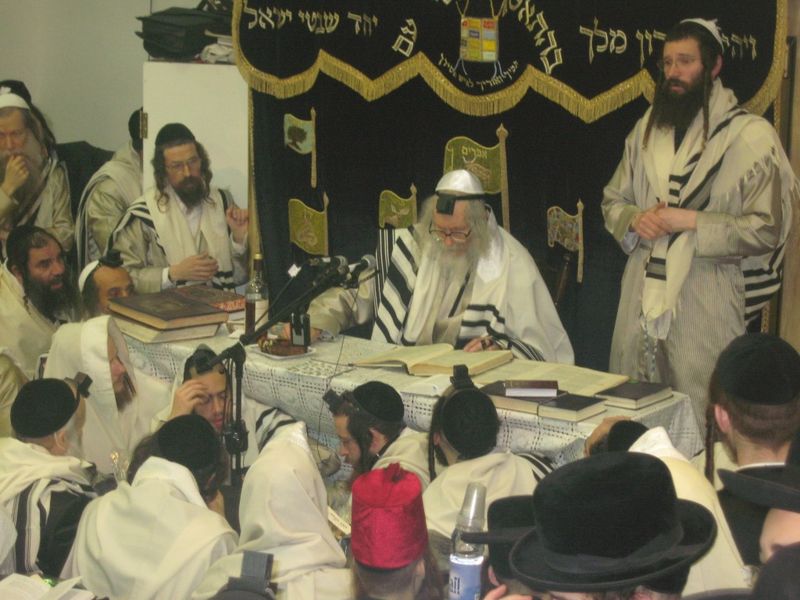
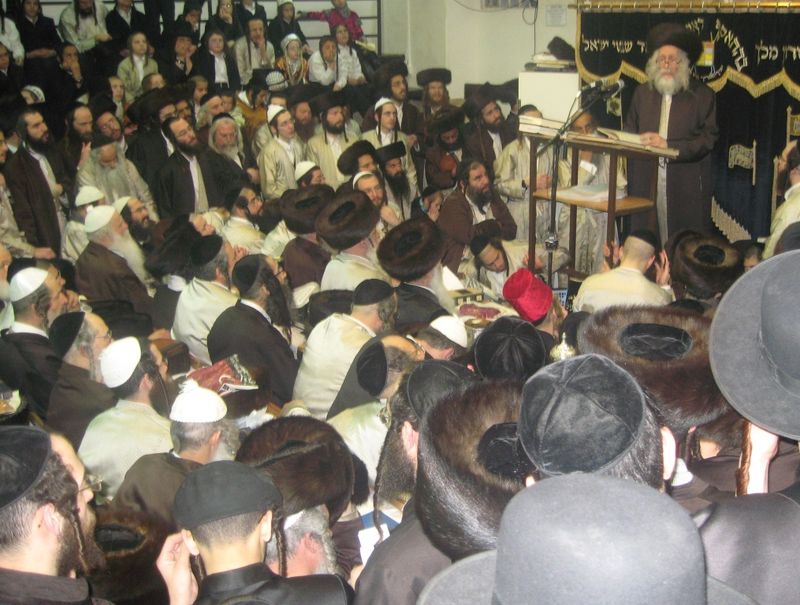
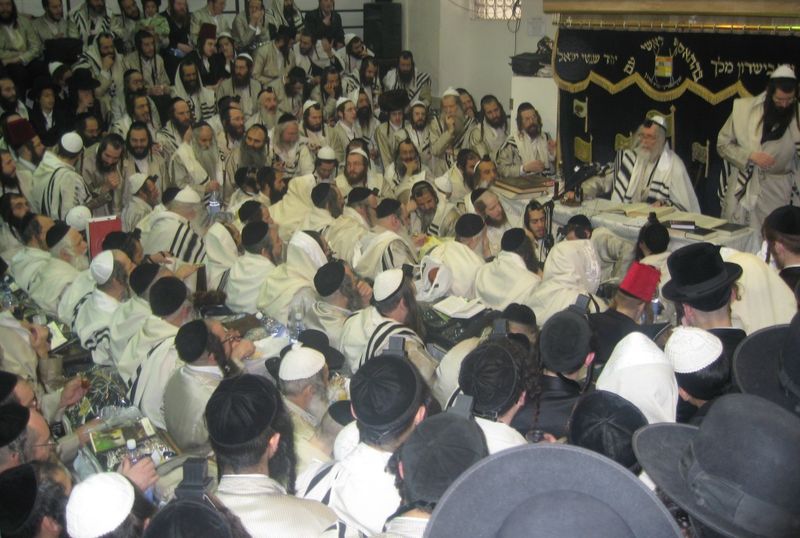
Before you is a fiery lesson delivered on the night of Shushan Purim in the year 5759 (1999) before the reading of the Megillah, by our teacher, the holy Gaon and Tzaddik Rabbi Eliezer Berland shlit"a:
Nullifying the Judgments on Purim
In the beginning, it is a Pur (lot). The entire purpose of Purim is to nullify all the dinim (judgments) that are upon the People of Israel, and upon each individual specifically. Since Purim is named after the Pur, it is also related to the word Par (bull/judgment). The letters of Par [numerical value 280] correspond to the Mantzepach (the five final letters of the Hebrew alphabet). Until Mashiach comes, the Mantzepach—which are the final letters—are still the source from which all the judgments in the world are drawn. This is the secret of Ne'ar and Ne'arah (youth and maiden—referring to how the word is written in the Torah as 'youth' but read as 'maiden'). "Hashem, open my lips, and my mouth shall declare Your praise"—in order to declare Your praise, which is the Sefirah (Divine emanation) of Binah (Understanding). This is achieved by sweetening the Mantzepach, which is called Ne'ar (youth), and the Ne'ar receives the letter Heh. Similarly, the Par (judgment) must receive the letter Heh. Just as Ne'ar represents judgments and must receive the Heh, so too Par represents judgments, which are the Mantzepach. The word Ne'ar (youth) has the gematria (numerical value) of 320, representing the Shach (320) judgments. "And the King's wrath subsided (shachacha)"—when did the King's wrath subside? When the letter Heh was added to the Shach (320). When the Heh was added to the Shach, then the King's wrath subsided.
Our entire work throughout the year is how to sweeten the judgments in both a general and specific sense. A man is sick, a woman is sick—meanwhile, it is impossible to punish the man or the woman because their children are punished—but everyone has infinite judgments throughout the year. In their children, in their wife, in themselves. He wants to know how to add the letter Heh.
Therefore, Purim is the Pur. "He cast the Pur (lot)." For Haman thought that this was already the end of the Jewish people, because "their G-d is asleep." For Ahasuerus made the feast eleven years before the time, because the exile of Jehoiachin was eleven years before the exile of Zedekiah (Megillah 11b). And now, after nine years, Haman saw that in another two years the Holy Temple would be built, so he decided to try and seize the final moments. [And the war was after one year. It was already ten years, and after one year the Holy Temple was built].
It is named after the Pur, and afterward it becomes Parah (cow/red heifer). All our work is to add the letter Heh to the Par, and to add the Heh to the Shach. This is "the King's wrath subsided (shachacha)." And this is the Pur, for the Pur was overturned upon him. He did not understand that now, on the contrary, after such a long sleep, the Jewish people reach the lowest possible level, below which there is nothing. They married foreign women and "the city of Shushan was perplexed." [Because] everyone saw that his wife was being killed (see later in the lesson for the explanation of this matter). And specifically at those moments, there was the greatest illumination, for Hashem sent the greatest Tzaddikim that ever existed throughout the generations—since the time of Moshe Rabbeinu there were no such Tzaddikim—Mordechai and Esther—who renewed the giving of the Torah. "They established and they accepted." And they drew down the Heh that sweetened the Par judgments, and the Heh that sweetened the Shach judgments. "The King's wrath subsided," the wrath of the King of the Universe. After we merit the Pur, that Haman cast a 'Pur' and it became 'HaPur' (the lot), in memory of the Pur we call it Purim, after the Pur. Specifically the Pur. This was sweetened from Par to Pur to HaPur; the moment they drew down the Heh, which is the five Alephs of the five names of Ekyeh [E-H-Y-H], then it became Parah. Because of this, all sweetenings are enacted on Shabbat Parah. Some say that Parah is truly a Torah obligation (Shulchan Aruch 685:7), and then all the sweetenings occur.
Purim is the Root of Miracles
Furthermore, Purim is certainly a path and a way toward Pesach (Passover). For Purim occurred during Pesach; the miracle of Purim happened during Pesach. This is the aspect of "His lips are like Shoshannim (roses/lilies) dripping with flowing myrrh (mor over)." "His lips" refers to what we said, "Hashem, open my lips," which are Netzach and Hod, to sweeten the Bride, to sweeten the 'Ne'arah' (maiden), to sweeten the Malchus (Kingship). "His lips" (Sfatav) is Pesach—Pe-Sach (a mouth that speaks)—these are the lips, and the Shoshana (rose) is Esther. For Esther is hinted at twice. Esther is hinted at regarding Purim in the word Shoshana, which has the gematria of 661, the same as Esther. And Esther is also hinted at in the matter of Pesach: "This is the statute of the Pesach (Zos Chukas HaPesach)." "Chukas HaPesach" is exactly the gematria of Esther.
Chukas (statute) = 508, HaPesach (the Passover) = 153. 508 + 153 equals exactly 661, the gematria of Esther. Thus, Esther actually includes everything.
In fact, Chanukah is also drawn from Esther; therefore, "These candles that we light (HaNerot Halalu)" is also exactly Esther. "HaNerot" (The candles) is exactly 661, the same as Esther. For truly, "Mattathias and his sons" is exactly the gematria of "Mordechai and Esther." For Mordechai and Esther were reincarnated again in Mattathias and his sons, as they descend in every single generation anew, and they bring about all the miracles for us. Therefore, Mordechai and Esther = 935. Mattathias = 861 and his sons (u'vanav) = 74. This is exactly 935, the gematria of Mordechai and Esther. Mattathias and his sons is exactly that.
It turns out that all the holidays are actually drawn from Mordechai and Esther. "This is the statute of the Pesach" is exactly Esther, "Shoshana" is exactly Esther. "The candles" (HaNerot) that we light, the candles is exactly Esther. "Mattathias and his sons" is exactly Mordechai and Esther. In reality, all the holidays and all the festivals and all the lights, from Purim onward, are all drawn from the power of Mordechai and Esther.
The Revelation of the Illumination of Yesod Abba
"His lips" is the Pesach; the Shoshana is Esther. The Arizal says: Shoshana is the gematria of Esther. "Dripping with flowing myrrh (mor over)" is the aspect of Mordechai. "Mor over" is Mordechai, "Mor Dror" (pure myrrh) is "Mara Dachia" (pure lord). He is "Mor Over," he is "Yesod Abba" (the foundation of the Father/Wisdom). For Saul was "Yesod Abba," and Mordechai came from Saul. And Saul, as the verse says: "Saul from Rechovot of the River (Saul MeRechovot HaNahar)," the first letters of which spell Moshe (Moses). Just as Moshe was "Yesod Abba," Saul was also "Yesod Abba." From this is drawn Mordechai, who was also "Yesod Abba," which is "Mor Over" that passes through all the Sefiros. Therefore, the Megillah of Esther is where the light of "Yesod Abba" resides.
Every Purim, "Yesod Abba" shines for us, which never shines for us otherwise. "Yesod Abba" is always covered; it is always in concealment. Now, this is the Megillah of Esther (the revelation of the hidden), now there is a revelation of "Yesod Abba," lights so great that everyone can return in true Teshuvah (repentance). The entire purpose of Purim is to return in Teshuvah. It is not to act wildly, it is not to break things, it is not to cause damage—it is truly to do Teshuvah that is real, real, real. As was seen among all our people (Anash) in all generations, that rivers upon rivers of tears would flow! Rivers of tears would descend during the dances. They did not get truly drunk; it was "livsumei" (becoming joyful/inebriated). "Livsumei" is not to get drunk; it is red faces, it is enthusiasm, it is Dvekus (attachment). As we will now read the Halacha (law), what is "livsumei"? We will learn from the Shulchan Aruch. For many simply do not know the Halacha. They don't know what "livsumei" is; they simply don't know the law.
Shoshana is Esther, Shoshana is the gematria of Esther, "dripping with flowing myrrh" is Mordechai. This is "Yesod Abba" which passes through all the Sefiros. It even passes through "Yesod Rachel," pierces through "Yesod Zeir Anpin," pierces through "Yesod Rachel," and is revealed in all its glory. For "Yesod Abba" is miracles and wonders. "Yesod Abba" is the Sefirah of Bitachon (trust), it is the Sefirah of Emunah (faith), that "there is none besides Him"—there is nothing! There can be an Ahasuerus, there can be a Haman, he can make decrees. They have nothing! They do not exist!! It is a fog! All their words—it is only to awaken us to Teshuvah.
"Mor Dror" (pure myrrh) is an expression of freedom (cherut), the freedom of Pesach. Therefore, Esther [gematria] is "This is the statute of the Pesach," Esther is "Shoshana," Esther is "these candles," Mattathias and his sons is Mordechai and Esther. "Mor Dror" is an expression of freedom, the freedom of Pesach.
Therefore, the combination of Purim is hinted at in the verse of Pesach: "Seven days you shall eat matzos as I commanded you at the appointed time of the month of spring, for in it you went out from Egypt, and they shall not appear before My face empty-handed (Mitzrayim V'lo Yera'u Panai Reikam)." The first letters of "Mitzrayim V'lo Yera'u Panai Reikam" spell "Purim," because Purim is a path to Pesach. Through the joy of Purim, the Arizal says, the more we truly rejoice, sing, and dance, the more we will be protected from Chametz (leaven) on Pesach. For in the beginning, all beginnings were from Pesach, and therefore all the Mitzvos are a memory of the Exodus from Egypt, and now... now--- the Rebbe revealed to us, that now a completely new beginning starts---
What is "Livsumei"?
Now let us learn the Halacha: what is "livsumei"? "A person is obligated to become joyful (livsumei) on Purim." How much livsumei? Ten hours? Twenty hours? Twenty-four hours? Purim can be thirty-six hours {from now, from six o'clock until the end of Purim at six in the morning, it can be thirty-six hours}. So for thirty-six hours can a person be drunk so that he
does not know what he is saying, does not know what he is praying? As the Kitzur Shulchan Aruch says, [drunkenness is] on the condition that he does not disparage even a single blessing, that he does not come to say a blessing without intention. The Kitzur Shulchan Aruch brings in the Laws of Purim, Chapter 142, Section 6: "Since the entire miracle was through wine—Vashti was removed during a wine feast and Esther came in her place, and similarly the matter of Haman and his downfall was through wine—therefore our Sages of blessed memory obligated us to become intoxicated with wine. And they said, 'A person is obligated to become joyful (livsumei) on Purim until he does not know the difference between cursed is Haman and blessed is Mordechai.' At the very least, he should drink more than his habit in order to remember the great miracle. And he should sleep, and while he sleeps, he does not know the difference between cursed is Haman and blessed is Mordechai. However, one who is weak in nature, and similarly one who knows about himself that through this he will, G-d forbid, disparage some Mitzvah [if a person knows he will disparage some Mitzvah], a blessing or a prayer, or that he will come to lightheadedness, it is better that he not get drunk." It is even forbidden to come to lightheadedness. This is only on the condition that he does not disparage even a single blessing, that he does not disparage even a single custom, that he does not disparage even any detail. On this, the Kitzur Shulchan Aruch says, G-d forbid that a person should think that at the expense of drinking he should not say Grace After Meals, or miss Mincha (afternoon prayer), or miss Maariv (evening prayer) G-d forbid, or not pray with intention. Now I ask: how much is "livsumei," how much are we obligated to "livsumei"? Two hours? Three? An hour? Half an hour? Five minutes? The Shulchan Aruch does not say how much "livsumei"...
Livsumei is not lightheadedness! People think it is permitted to come to lightheadedness—no lightheadedness is allowed on Purim! Purim is like Yom Kippur, and one must keep their head—says Rabbi Nathan—even more than on Yom Kippur!! In 'Siach Sarfei Kodesh' [Part 3, 139], Rabbi Nathan says that on Purim one must keep their head even more than on Yom Kippur. He brings that one must keep their head even more than on Yom Kippur. On Yom Kippur we are in the synagogue, whereas on Purim we must pray to Hashem through dancing, through songs, through drinking wine, and be attached (davek) to Hashem. The entire drinking of wine is to reach the level of Dvekus (attachment) to Hashem, to see Hashem face to face. For Purim is the making of "Face to Face," [and if not] "it is better not to get drunk, and all his deeds should be for the sake of Heaven" (conclusion of the Kitzur Shulchan Aruch's language).
The Vision of the Yad Ephraim
Let us read the 'Yad Ephraim.' The Yad Ephraim explains what "livsumei" is. A person cannot interpret what "livsumei" is on his own according to his own perception or understanding. What is "livsumei"? The Yad Ephraim says: "It was revealed to me, the young one—who am I and what am I? I am young—it was revealed to me in a night vision that the intention was that the main obligation is for a person to be in joy—this is the meaning of 'livsumei.' Truly, the Shulchan Aruch does not say to get drunk; it only says 'livsumei,' and the Rama immediately says that there is no need to get drunk. 'Livsumei' does not mean to get drunk; there is no need to get so drunk, but rather that he should drink more than his habit and sleep a little, and while he sleeps he does not know the difference between 'cursed is Haman' and 'blessed is Mordechai.'
The Yad Ephraim says: It was revealed to me in a night vision that G-d forbid one should interpret it literally, that 'livsumei' means to get drunk, for that is not Purim. A Jew does not get drunk. That is the custom of the gentiles; their holidays are for getting drunk. That is the 'statute of the nations,' the custom of the gentiles. The intention of 'livsumei' was that at the feast one should be steeped in joy and gladness, that a person should reach the peak of joy. One is happy when he eats a good cake, one is happy when he eats a popsicle... and one is happy when he drinks a glass of wine. The main thing is to reach joy but not to lose one's sanity, not to lose one's mind G-d forbid. So the main Mitzvah is to be steeped in joy, and it is written, "And wine gladdens the heart of man." Wine makes a person ferment (effervesce), for in wine there is—as the Yad Ephraim says: It was revealed to me in a night vision that G-d forbid one should interpret it literally, that 'livsumei' means to get drunk, for that is not Purim. A Jew does not get drunk. That is the custom of the gentiles; their holidays are for getting drunk. That is the 'statute of the nations,' the custom of the gentiles. The intention of 'livsumei' was that at the feast one should be steeped in joy and gladness, that a person should reach the peak of joy. One is happy when he eats a good cake, one is happy when he eats a popsicle... and one is happy when he drinks a glass of wine. The main thing is to reach joy but not to lose one's sanity, not to lose one's mind G-d forbid. So the main Mitzvah is to be steeped in joy, and it is written, "And wine gladdens the heart of man." Wine makes a person ferment, for wine has power and it makes the blood ferment, and when a person is fermenting it is easier for him to dance, easier to jump, easier for him to rejoice, easier for him to sing; it facilitates the joy. It increases the joy. "Wine gladdens the heart of man." And because he is steeped in joy, then it will truly be "the joy of Hashem is his strength."
Through Drinking Wine, Man's Inner Self is Revealed
Purim is a thanksgiving for the whole year, the joy of Hashem is his strength, "for the joy of Hashem is your strength." A person needs to be happy all year round, but a person cannot be happy all year round with a joy that goes beyond the normal bounds, because he needs to be sane, because he needs to be within the bounds of discipline. The intellect limits the person, and wine nullifies all the barriers of the intellect. Wine has the power to nullify all the barriers of the intellect, the barriers of the mind, and then: "Wine enters, secrets emerge." So if a person is full of love for Hashem, Dvekus (attachment) to Hashem, he dances out of great Dvekus. But if a person is the opposite, far from Dvekus, attached to evil desires, to bad character traits, to disparaging others, to lightheadedness, [when he drinks wine] then his lightheadedness bursts forth. For now the barriers of the intellect are burned, they disappear through the wine. Every person has barriers for the intellect that maintain proper behavior, conducts that are equal for all, so that he knows how to integrate with everyone together.
On Purim, we want the opposite! To burn all the barriers of the intellect. "Wine enters, secrets emerge." So that truly the love of Hashem will be revealed. But the love of Hashem and not other things. For the joy of Hashem is his strength. For all year round the love of Hashem burns within a person, and he has no time to show it. Purim arrives, and he can spend twenty-four hours just showing his love for Hashem. "To me, the young one, it was explained in a night vision that the meaning of the obligation of 'livsumei' is the aspect of being in immense joy, for wine gladdens the heart of man, that he should be steeped in joy, that the joy of Hashem is his strength, and he should give thanks and praise to Hashem, and can thank and sing and dance from an expansion of the heart.
The Flaw of Pride and the Pursuit of Honor
The Gemara in Sanhedrin (38a) tells us about Rabbi Yehuda HaNasi, that the sons of Rabbi Hiyya sat before him, who were able to resurrect the dead, as we know from the Gemara in Bava Metzia. He wanted them to say some word of jest (milta d'bdichuta), so he said: "Give the children more wine." Two sons of Rabbi Hiyya sat there who could resurrect the dead, Rabbi Yehuda and Rabbi Hezekiah; they sat and said nothing. Rabbi said: "Give the children more wine so they will say something. Once they became joyful (ibsum)"—they began to speak the truth—they said that because of pride Mashiach does not come, because of the pursuit of honor Mashiach does not come. Once they opened up, they said as the Rebbe brings in Torah 11 in Likutey Moharan, "where the waters are swift (radifi maya)," that the only reason Mashiach has not come is because people pursue honor. If we stop pursuing honor—Mashiach will come today. Our Rebbe brings to us in Torah 11 [the story of Rabbah bar bar Chana] who sees a bird whose head is in the heavens and its ankles are in the water, in the sea. They (Rabbah bar bar Chana) wanted to descend, because they thought that if the ankles are in the water, it means there is no water. A Heavenly Voice went out and said, "Do not descend here, for [a carpenter's axe fell] seven years ago, and it still has not reached the ground." "And not because the water is deep, but because the water is swift (radifi maya)." For as long as a person seeks honor, has thoughts of honor, sensitivity to honor, Mashiach cannot come. Once they became joyful (ibsum) they spoke the truth. They said to the Exilarch of Babylon that Mashiach will not come until the two patriarchal houses of Israel cease.
For as long as a person pursues honor, wants honor, he himself is the reason for the delay of Mashiach. Mashiach cannot come until the Exilarch in Babylon and the Prince in the Land of Israel are nullified, who are: "And He shall be for a sanctuary, but for a stone of stumbling and for a rock of offense to both houses of Israel." So that a person will stop pursuing honor.
The Dances Nullify Pride
And this is Purim, that a person exits every moment of honor, every search for honor. And this is: "because the water is swift (radifi maya)." Therefore the Rebbe says that it is impossible to escape from honor except through dancing. The Rebbe wrote in Torah 10—an earlier Torah—that this is the secret of Purim, Mordechai and Esther, that a person cannot escape from honor except through dancing. Only then does he merit to escape from honor. The fact that a person does not dance—is because he is still immersed in honor. "Dancing and hand-clapping," says our Rebbe, "is the aspect of Mordechai and Esther." The clapping of hands, the movements with the hands, is the illumination of Mordechai, and the movements with the feet is the illumination of Esther. For a person who dances is illuminated by, and becomes a vehicle for, Mordechai and Esther—Mordechai in the hands and Esther in the feet. And this is dancing, that through the Tzaddik pride is nullified. A person cannot escape his pride except through dancing and hand-clapping. Then he can escape pride.
"Let not the foot of pride come upon me," for if a person has a thought of pride, then he himself is a delay to Mashiach, bringing Divine wrath upon the world. [In the merit of the dancing] all the judgments, pride, and idolatry are nullified, and consequently all the judgments are sweetened. When Purim arrives, we dance and sing; through a person dancing and singing, his pride is automatically nullified. A person who is in pride cannot sing and dance; he cannot bear that others are dancing.
The Tzaddik Draws Down Humility
Through dancing, heresy and idolatry, sectarianism and denials are nullified. Everything is nullified through the dancing, through the hand-clapping, through the spirit of the illumination of the hands, for the spirit of Mordechai is in the hands, and the spirit of Esther is in the feet, then all idolatry is nullified. Also, the spirit of the Tzaddik blows in the 'six joints of the hands and the six joints of the feet.' That is, it is written: "And his hands were faith (emunah)," these are the hands of Moshe. When Moshe raised his hand, Israel prevailed. The hand of Moshe is the faith of Moshe, the humility of Moshe. When Moshe raises his hand, [he raises] his humility. As the 'Yismach Yisrael' explains regarding Eliezer, "he draws and gives to drink." What does he draw and give to drink? "I am but dust and ashes!" What was the aspect of Abraham? "I am but dust and ashes." The Yismach Yisrael says: this is what he would draw and give to drink, the aspect of "dust and ashes," that is what he would draw and give to drink.
The aspect of Moshe is: "The man Moshe was very humble," and "his hands were faith," "and Israel prevailed." Because there is the point of Moshe, the humility of Moshe, then Israel automatically prevailed. Through the Tzaddik, which is the spirit in the heart, [we merit] the illumination of the hands and feet, and then: "Through the dancing and hand-clapping—the more we dance and clap hands—pride is nullified," heresy will be nullified. If I think I am something, then I am a barrier between Hashem and the Jewish people. When I know I am nothing, it is easier for the Jewish people to prevail. "Israel prevailed," faith prevailed. "My foot stands on level ground." [Likutey Moharan there]: "For heresy is the aspect of 'my feet almost slipped,' for his heart led him to heresy." Through a person starting to dance, it indicates faith; his heresy is nullified. For a person is entirely pride; he cannot dance because of his great pride.
Not to Lose One's Intellect and Mind on Purim
The 'Yad Ephraim' says: Therefore he should not get drunk, for if he gets drunk he will lose his intellect, and that is not Purim. Purim is not to lose the intellect; it is to reach the intellect of the Fiftieth Gate, "until he does not know (ad d'lo yada)," an intellect that is not revealed all year round. 'He should not get too drunk so that his mind becomes confused.' The intention is not, says the Yad Ephraim, that a person should drink on Purim so that he becomes confused and loses his mind. Even for an hour, even for half an hour, it is forbidden to lose one's mind. One must never lose it. A person can reach enthusiasm, all kinds of Dvekus (attachment), but not lose his intellect. G-d forbid that we should interpret that drunkenness is simply confusion, the loss of intellect G-d forbid; that is the custom of the gentiles to lose the intellect in drunkenness, but not the custom of Israel. "Do not follow the statutes of the gentiles," even if it is a holiday, it is forbidden to follow the statutes of the gentiles, it is forbidden to lose the intellect. The Yad Ephraim is a commentary on the Shulchan Aruch. This is Halacha (law). These are the vessels of the Shulchan Aruch. Whoever has a different Shulchan Aruch, fine, he can be... the Yad Ephraim interprets the Shulchan Aruch for us. And anyone who has other interpretations, that is his own private Shulchan Aruch.
It is forbidden for a person to reach confusion of the mind and not recognize the intensity of the miracle; he will simply forget that it is Purim. He will get drunk, lie down, fall asleep, and not recognize the intensity of the miracle, not recognize the intensity of the miracle at all. He won't know at all what Purim is, he won't know what miracles are, what wonders are, what Hashem is, what the Tzaddik is, nothing! All the dancing is to verses and liturgical poems. We sing verses and poems [so] that slowly but surely one receives a feeling of what Mordechai is, what Esther is, what the Tzaddik is, what Hashem is. To recognize the intensity of the miracle from an expansion of the heart. And this is the meaning of "A person is obligated to become joyful (livsumei) on Purim until he does not know," until but not including. The intensity of the drinking is this: to become joyful up to the limit of 'not knowing'; from this limit onward, the obligation ceases.
To lose the intellect—the Sages never intended such things. Rabbi Levi Yitzchak did not lose his intellect, Rabbi Nathan did not lose his intellect, no one lost their intellect. Rabbi Abraham Sternhartz could drink from twelve noon until after sunset, until after the stars came out, and he did not lose his intellect by even a hair's breadth, not by a hair's breadth!! Jews came from Russia; in Russia they knew how to drink, they were used to drinking. Here, a person drinks one glass, or a whole bottle, and he sleeps until after Maariv... What the Sages obligated as 'livsumei' is not that the obligation is to lose the intellect G-d forbid. That is not the intention of the Halacha. It does not say to lose the intellect; it says "livsumei," it does not say to lose the intellect.
"But rather so that he may give praise and thanksgiving." The obligation is only that a person should be a bit effervescent, that a person should feel a bit of joy, that he should make the heavy body jump so that it nullifies the pride a bit, and so that he can give praise and thanksgiving, praise and thanksgiving, since his mind will be confused. But if his mind is confused literally, and he truly does not know between 'cursed is Haman' and 'blessed is Mordechai,' that was not the intention, that he should have no mind or understanding. To turn into an animal—is that Purim? Is that Yom Kippur? Purim is like Yom Kippur; to turn into an animal that has no mind or understanding? He won't be able to be satisfied, he won't be able to dance, he won't be able to sing, just lying there like a dead body, like some golem to distinguish, rolling in his vomit and spit Hashem have mercy, and it is forbidden to say a blessing near him because he has no mind or understanding at all—that is not the intention of the Holy Torah, that is not the intention of the Halacha when Rava said a person is obligated to 'livsumei.' Did Rava say to get drunk [like one] who has no mind or understanding? Rava said 'livsumei.'
Not that a person should G-d forbid lose his mind, lose his understanding, to praise and glorify. The whole of Purim is twenty-four hours to praise and glorify the greatness of the miracle, the intensity of the miracle. And [the Yad Ephraim] says: "All this was revealed to me in a night vision, and I contemplated it in the morning, and behold I saw that it is correct." According to this, the entire passage in Megillah 7b will be understood, that truly the intention is only 'livsumei,' only 'livsumei.'
The Illumination of Face to Face
And now we will move to the matter of the days of Purim and the Megillah and Mordechai and the Purim funds and the feast and joy. Behold, one must know as we said, that every Purim we reach the illumination of "Face to Face." The whole of Purim is to reach the illumination of "Face to Face" because then "Yesod Abba" is revealed, since both of them [Abba and Imma - the Father and Mother aspects] want to return "Face to Face," so there had to be a massive sleep, a deep sleep called the 'Dormita' (slumber). "There is one nation asleep"—their G-d is asleep. Haman said they are sleeping... And just as after a very, very deep sleep there is a massive awakening! The more a person has fallen into a deeper sleep, he only merits a greater awakening—if he truly seeks Hashem during the time of sleep. And this was the work of Mordechai and Esther at the end of the seventy years of the Babylonian exile, that everything was in order to return to "Face to Face."
The Shuvu Banim website wishes all our people, the students of the Tzaddik, on Purim of the walled cities
and all the House of Israel wherever they may be, the blessing of
HAPPY PURIM! A FREILICHEN PURIM!!!
Subscribe to Our Newsletter
Receive Torah articles and inspiration directly in your inbox