
The Great Printer — Yahrtzeit of the Chassid Rabbi Avraham Weitzhandler zt"l
Founder of the Meshech HaNachal Association (24 Adar 5774)
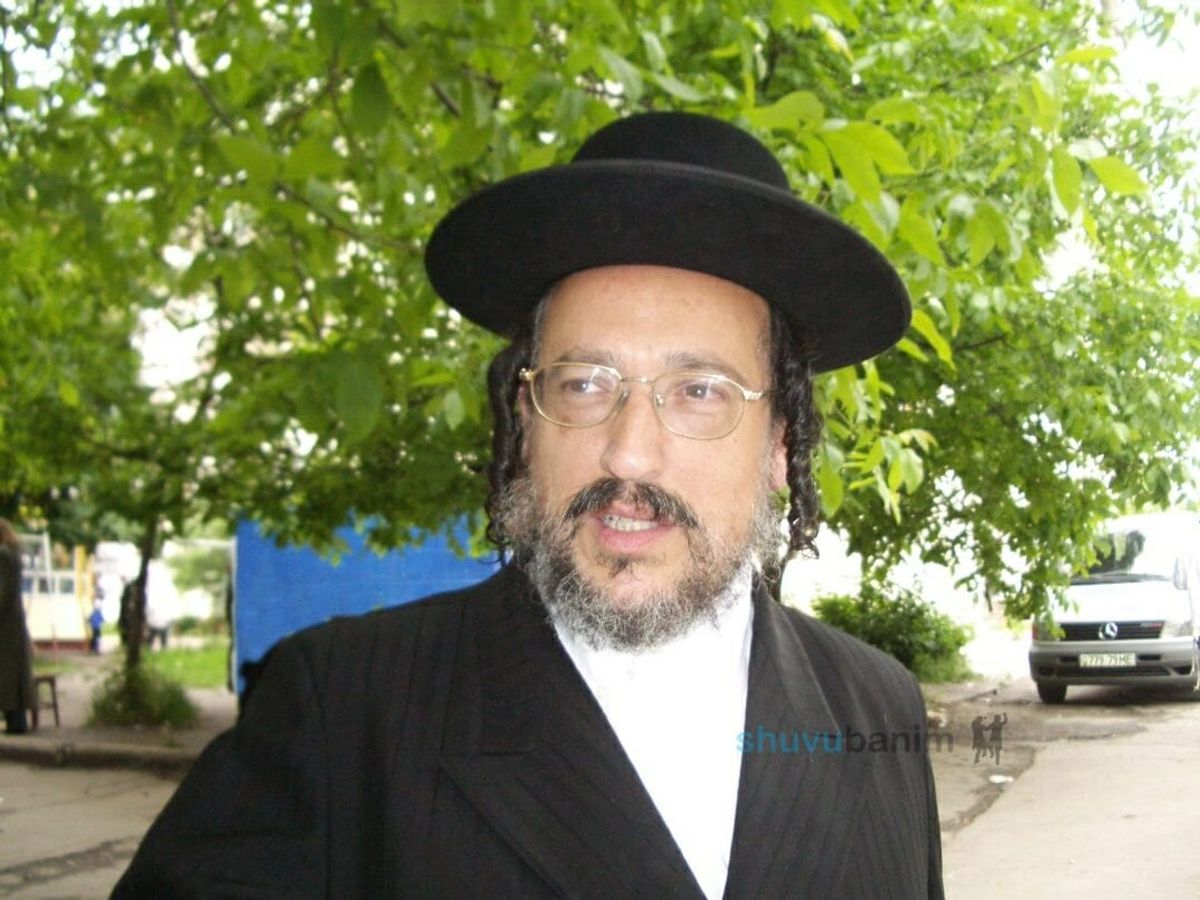
The Great Printer
His Life ■ Serving the Great Chassidim of Breslov ■ His Books ■ Spreading Torah and Chassidut on a Global Scale ■ His Connection with our Teacher Rav Berland shlit"a ■ Avraham Was One
On the 24th of Adar, we mark the day of the passing of the Chassid Rabbi Avraham Nachman Simcha Weitzhandler z"l. He was one of the individuals who contributed the most in recent decades to Breslov Chassidut and to glorifying the Torah and the mission of our holy Rebbe zya"a in the world. His great enterprise was the establishment of the "Meshech HaNachal" publishing house for printing Breslov Chassidut books, as he was a pioneer in many areas such as editing, translation, creating indexes and annotations, and making the study of the holy books accessible by adding vowels, expanding abbreviations, translating words, and more.
Rabbi Avraham was born in 5717 to his father, Rabbi Elazar Weitzhandler z"l, who was a student of the Gaon and Chassid Rabbi Avraham Sternhartz z"l, the grandson of Reb Noson, through whom he drew close to the light of our holy Rebbe. When a son was born to him after the passing of his teacher, he named him after him—this is Rabbi Avraham Weitzhandler, who was named after Rabbi Avraham Sternhartz.
Rabbi Avraham initially studied at the renowned "Liflagot Reuven" Yeshiva, but following his trip to Uman during the famous Kishinev journey, Rabbi Avraham moved to the Breslov Yeshiva in Bnei Brak, where he grew and ascended in Torah and the service of Hashem. It was there that he also began the project of printing the Rebbe's books.
Meshech HaNachal Association
Rabbi Avraham, together with his brother, may he live a long and good life, Rabbi Yitzchak, established the Meshech HaNachal Association, the first publisher to break through and print the Rebbe's books in large quantities. From then until today, they have edited and printed countless books. As part of the distribution project, books were distributed for free in various places, and in this way, they merited to draw many Jews to the light of our Rebbe.
Our teacher Rav Berland shlit"a was among the first to sign a public call, together with the elders of Anash, Rabbi Levi Yitzchak Bender, Rabbi Shmuel Shapiro, and Rabbi Binyamin Zev Chashin z"l, for the Meshech HaNachal Association and its world-encompassing activities.
Books from His Teachings
Beyond the books of our Rebbe, which he printed by the tens of thousands, Rabbi Avraham produced other works that caused great wonder among those who saw them. Such is the book 'Archei HaKodesh', a five-volume series on all the values of the Holy Tongue—a series that received tremendous admiration from the public.
Being committed to the Rebbe's instruction to engage deeply in Halacha and the importance of studying the Shulchan Aruch, Rabbi Avraham authored a work on purity called "Mishnah VeHalacha Berurah," in which he summarized in clear language the opinions of the Shulchan Aruch, the Rema, and the Mishnah Berurah. This work was also received with appreciation by Torah scholars, and the Gaon Rabbi Moshe Yadler, the famous Posek on the laws of Shabbat, said that it was the best summary and condensation of the laws of Shabbat that had ever been produced, even in comparison to what had been written by great scholars. In addition to the volume that was already printed, there are several more volumes in manuscript form that he did not manage to print in his lifetime.
Beyond these works, he wrote a great and wonderful composition, "Maadanei Melech," on Likutey Moharan, containing thousands of insights and wonderful explanations on the teachings of our holy Rebbe. The core of the work is the fruit of Rabbi Avraham's own mind, and he also quotes there insights he heard and received from the elders of our community.
His books are adorned with enthusiastic approbations from the greatest of the generation from all circles, who never cease to praise the quality of his books.
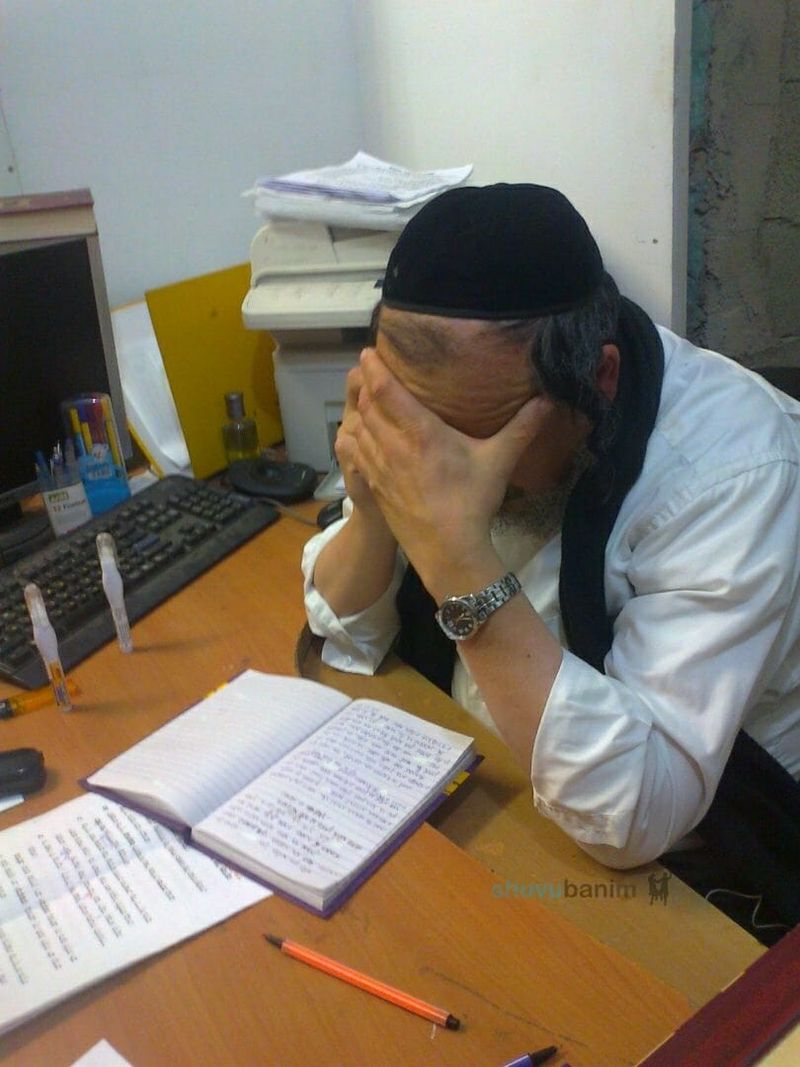
Greatness in Torah
Rabbi Avraham would utilize every single moment for constant action. The concept of wasting time did not exist for him. Indeed, Rabbi Avraham was well-versed in all areas of Torah. There was nothing he did not know. This can also be seen in his books, 'Archei Lashon HaKodesh'. These are books he edited manually, not by computer.
His son, R' David, may he live and be well, adds that in addition to all the works he printed, thirty more compositions remained that he had already prepared! Such a large Torah output is rare for a single person, if it exists at all.
Among the Great Elders of Anash
Rabbi Avraham served the elders of Anash directly, meriting to sit daily with Rabbi Levi Yitzchak in personal study and recording all his conversations, from which he printed many wonderful books. His connection with R' Levi Yitzchak was a personal one, with R' Levi Yitzchak often expressing his appreciation for Rabbi Avraham and giving him approbations for his books. Rabbi Levi Yitzchak also served as the Sandek for his children.
The Recommendation of the Rav
Rabbi Levi Yitzchak possessed a hidden treasure of conversations and precise stories from Anash in Uman, but he was afraid to entrust the material to someone who was not sufficiently responsible. It was our teacher Rav Berland shlit"a who suggested Rabbi Avraham Weitzhandler to Rabbi Levi Yitzchak as a suitable person for writing and editing the conversations in a responsible manner. The Chassid R' Nachman Burshteyn z"l also joined in this, and thanks to their recommendation, Rabbi Levi Yitzchak indeed took Rabbi Avraham to edit the conversations that were published in the magnificent eight-volume series, 'Siach Sarfei Kodesh'.
Likewise, Rabbi Avraham sat with other elders of Anash to record or write down their holy conversations and stories, including Rabbi Naftali Galant, Rabbi Yochanan Galant, Rabbi Hirsch Leib, and others.
Rabbi Avraham carried out a special project of distributing tapes of Rabbi Levi Yitzchak's lessons. This project was called 'Kol HaNachal', and it distributed many hundreds of tapes of the great Anash, led by Rabbi Levi Yitzchak Bender.
With Our Teacher Rav Berland shlit"a
Rabbi Avraham was very connected to our teacher the Rav shlit"a, and his appreciation for the Rav was immense. He would come from time to time, especially on the days of the Hilula of our holy Rebbe, to hear the Rav's lessons, and in all matters of book publishing, he was greatly assisted by our teacher the Rav.
Also in the 'Siach Sarfei Kodesh' series, he received many corrections from the Rav, and he always expressed praise for the Rav's knowledge of all the precise conversations and stories of Breslov.
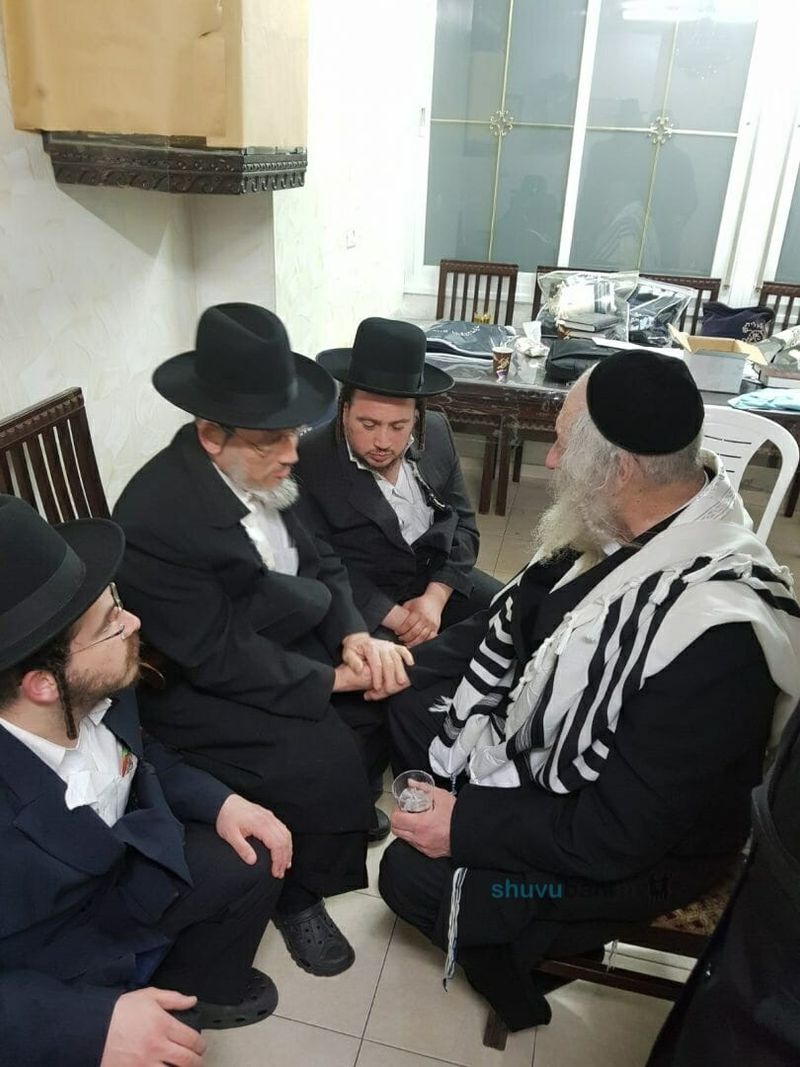
Once, he said to Rabbi Shmuel Stern, head of the Nachalei Netzach Yeshiva and a student of our teacher the Rav shlit"a, regarding the 'Siach Sarfei Kodesh' book series he had published: "Rav Berland is more proficient in 'Siach Sarfei Kodesh' than I am."
His son related that on one occasion, when he spoke with our teacher the Rav shlit"a about distribution business, our teacher the Rav shlit"a took out the sum of $5,000—a huge amount in those days—and gave it to him. Our teacher the Rav always stood by his side in the printing business.
Illuminating the Light of the Tzaddik in the World
R' Avraham would increase his efforts for the honor of the Rebbe's name. Tens of thousands of the Rebbe's books were distributed by him for free to private individuals or to synagogues, where he would usually donate a set of books. His car was always full of books, and wherever he went, he had the books with him, and he would distribute them with great generosity.
He also drew many to the light of our Rebbe. Dozens of Breslov Chassidim from our community today are people he brought close to the Rebbe. He had a method in outreach: he would not state his own opinions, but would study the Rebbe's Torah with the person, saying: "The Rebbe will already do the work, and we should not interfere with that." The radiance of his face would make people want to draw close to him. His character traits were miraculous. He guarded his mouth and tongue in a special way, and even regarding those who did him wrong, he would not speak a word.
R' Avraham would travel to many places in Israel and the world to give lessons on the Rebbe's teachings. He did not make any calculations of honor or anything else, only to draw people close and illuminate. He would also give lessons in prisons and revive souls.
And She Shall Laugh at the Last Day
"This teaches that the Holy One, Blessed be He, sits and fills the years of the righteous from day to day and from month to month, as it is said: 'I will fulfill the number of your days'" (Kiddushin 38a).
Rabbi Avraham Weitzhandler merited that Heaven testified to his righteousness, as his passing also occurred on the date he was born—the 24th of Adar.
On the afternoon of his passing, he prayed Mincha Gedolah at the Shul, where he also said Tachanun (confession), having started the day with a Mikvah. After the prayer, he set out to the Chassid Rabbi Shalom Arush and asked him to take upon himself the funding for a new edition of 'Siach Sarfei Kodesh', and Rabbi Arush indeed accepted it upon himself.
Afterward, he traveled to the Yahrtzeit of his father-in-law. In the middle of the trip, he suffered a heart attack. R' Avraham asked to be taken immediately to the nearby 'Bikur Cholim' hospital, but a cruel policeman prevented him from accessing it. The words of the Hatzalah member and man of kindness, R' Tzachi Kessler (who was recently taken from us), that he absolutely had to be taken to the hospital, were of no avail. A short time later, he returned his pure soul to its Creator at the age of fifty-seven, and at midnight he was buried in a burial plot he had purchased during his lifetime next to his son, the young Shmuel z"l.
May his soul be bound in the bond of life.
Subscribe to Our Newsletter
Receive Torah articles and inspiration directly in your inbox