The Secret of Spiritual Victory: The Power of the Tzaddik to Subdue Armies
Class No. 286 | Thursday, Parashas Toldos, the eve of 4 Kislev 5761 - Engagement at the home of Rabbi Berland shlit"a in the Old City walls (Continued from No. 285)
How did Shmuel HaNavi and the Hasmoneans manage to defeat mighty armies without any weapons? A fascinating article from the class of Rabbi Berland shlit"a, explaining the immense power of the tzaddik standing at the battlefront—a power capable of awakening thunder, driving away elephants, and deciding the fate of entire military campaigns.
When there are terrifying sounds and lightning strikes, fear falls upon the world. Everyone flees, abandoning the mountains and the fortresses. This is exactly what happened in the days of Shmuel HaNavi, when the Philistines approached to wage war against Israel. Hashem thundered with a great noise on that day against the Philistines and threw them into a panic, and they fled before the Children of Israel.
The Philistines abandoned all the mountains, including Kiryat Gat, and fled without a battle and without weapons. Simply from the thunderous sounds and lightning, they were struck with such terror that they abandoned their cities. As it is written:
"And Hashem thundered with a great noise on that day upon the Philistines and confused them, and they were smitten before Israel" (I Shmuel 7:10).
Shmuel took a single stone and placed it between Mitzpah and Shen, and he named it "Eben HaEzer," saying: "Until here Hashem has helped us." The Philistines were subdued and did not continue to enter the borders of Israel all the days of Shmuel. The true tzaddik, who possesses the word of Hashem, can accomplish everything with a single prayer. With one prayer, lightning and thunder are unleashed, everyone flees, and the mountains are returned to Israel.
The Secret of Shmuel HaNavi's Name
The sefer "Megaleh Amukos" explains that the name Shmuel shares the Divine Name of E-l ("Shmo E-l" - His name is E-l). Through the power of this holy Name, he would accomplish all his actions. The verse states, "Who shall live when He imposes these things (misumo E-l)"—these are the exact letters of 'Shmuel'. When Shmuel arrives, no one will be able to stand against him.
Moshe Rabbeinu saw through his ruach hakodesh (Divine inspiration) the immense power of Shmuel, and he too wanted to operate in this same manner. Moshe wanted to do what Shmuel would later do—to offer a single prayer and cause everyone to flee. One prayer, and all the Philistines and all the Amorites would run for their lives.
Moshe wanted to accomplish what Shmuel and the Hasmoneans would do in the future, subduing the enemies through pure spiritual power. However, he was told, "Rav lach" (It is too much for you)—these actions would be carried out by Yehoshua, Shmuel, and the Hasmoneans, each in their own generation and time.
The War of the Hasmoneans and the Miracle of the Elephants
In order to bring down to the world such a lofty soul as Shmuel's, his mother Chana had to ascend to extremely high spiritual realms. This is also the light of Chanukah—to receive such a tremendous light, where the Maccabees did not act through their own power alone, but through a Higher Power.
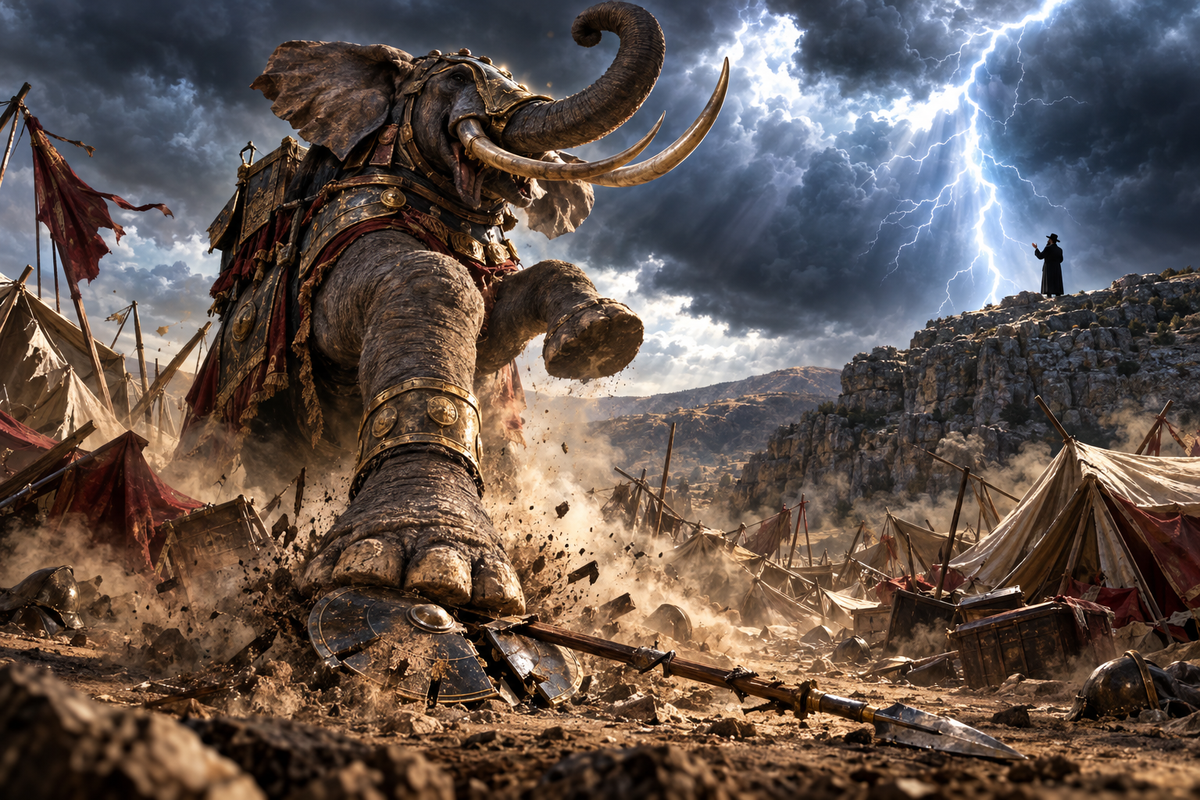
When the Greeks arrived for battle, they brought massive elephants with them. An army of three thousand Jews stood against tens of thousands of Greek soldiers. When they saw the elephants, fear fell upon everyone and many fled. The situation seemed hopeless, exactly like the war of Shaul and Yehonasan against the Philistines, about which it is said:
"And it came to pass on the day of battle, that there was neither sword nor spear found in the hand of any of the people" (I Shmuel 13:22).
They had neither swords nor spears, no physical weapons whatsoever. They stood facing a mighty army equipped with terrifying elephants. But then, when the situation seemed lost, the tzaddik began to pray. And the moment he began to pray—the elephants started to run wild.
The power of prayer took effect with tremendous force. The elephants turned around, trampling and destroying the entire enemy camp. They trampled the tents and the Greek soldiers themselves, until not a remnant was left of them. The enemy was completely defeated, not through the power of weaponry, but through the power of a single prayer that pierced the heavens.
Awakening the Supernal Prayer
Reb Nosson of Breslov explains that on Chanukah, a very great light descends—the light of prayer. This is the highest supernal prayer, the aspect of the "Prayer of Hashem" Himself.
When a Jew prays with mesiras nefesh (self-sacrifice), even when he has no physical "sword or spear" in his hand, he awakens Hashem Himself, so to speak, to pray, and merits to draw down tremendous salvations and revealed miracles.
Part 2 of 2 — Class No. 286
All parts: Part 1 | Part 2 (current)
Subscribe to Our Newsletter
Receive Torah articles and inspiration directly in your inbox