
The Thirty-Day Memorial Gathering for the Late Chassid, Rabbi Moshe Tzanani zt"l
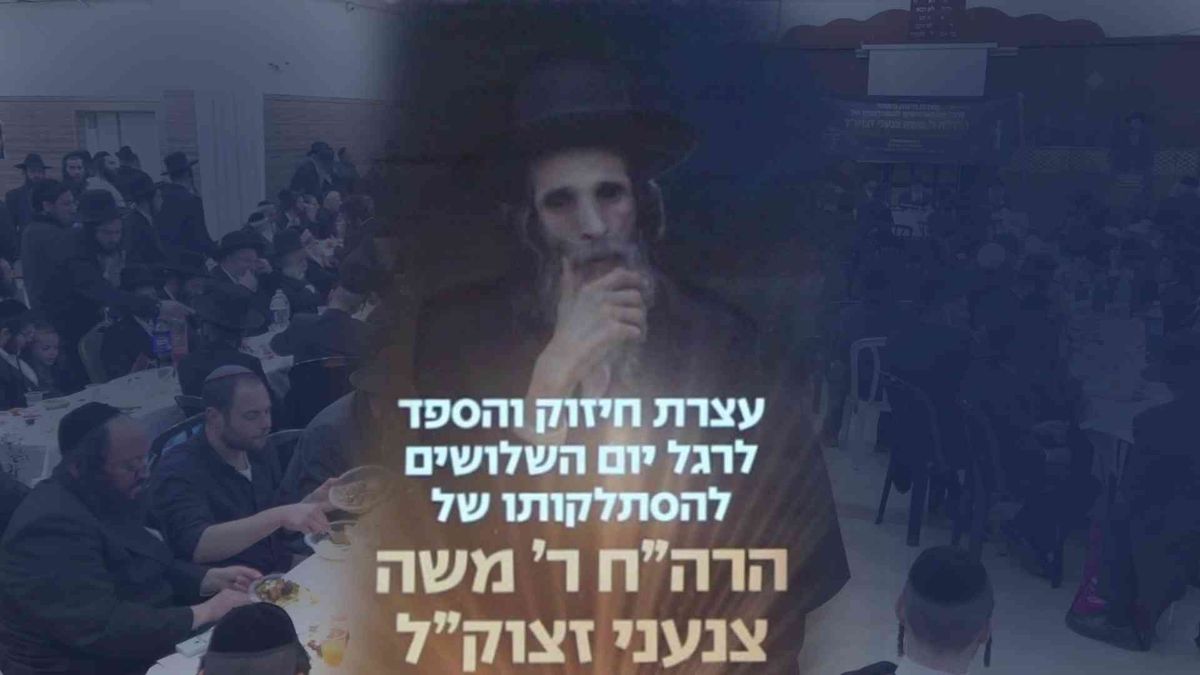
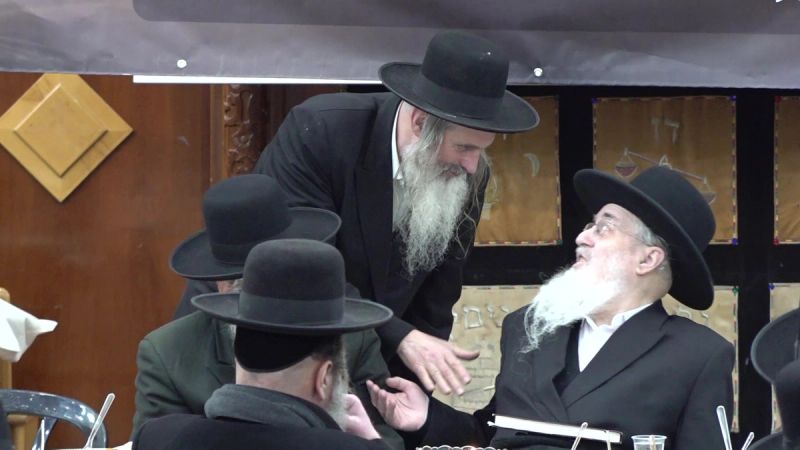
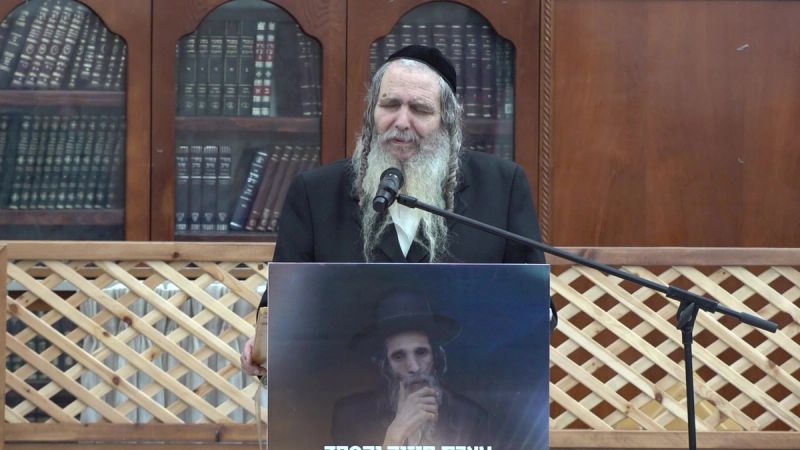
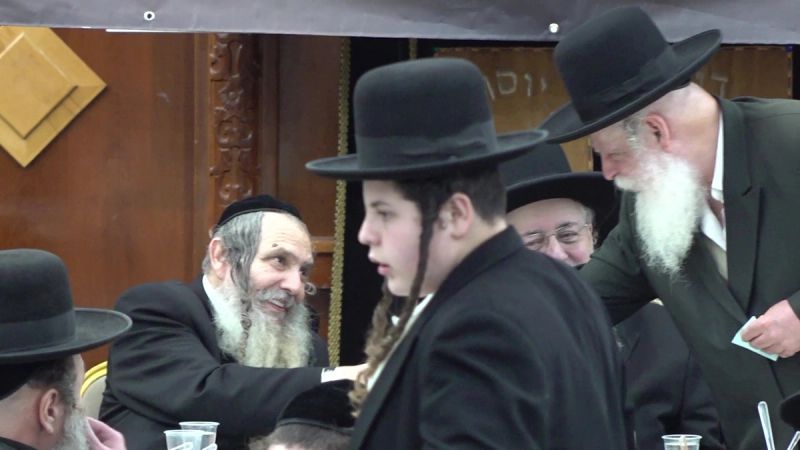
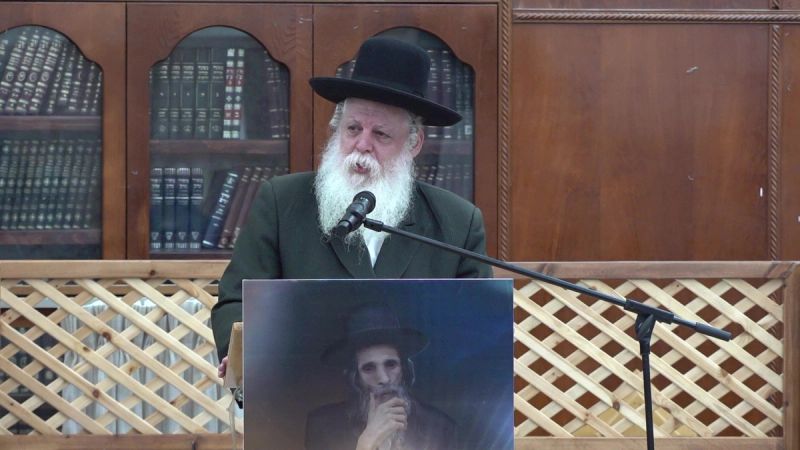
With the completion of the thirty days since the histalkus (passing away) of the greatest of the students of Morinu v’Rabbeinu shlit"a— the holy tzaddik, Rabbi Moshe Tzanani zt"l—this past Sunday night, the eve of 22 Shevat, a memorial gathering was held in his memory, with the participation of hundreds of our community members and prominent rabbanim shlit"a.
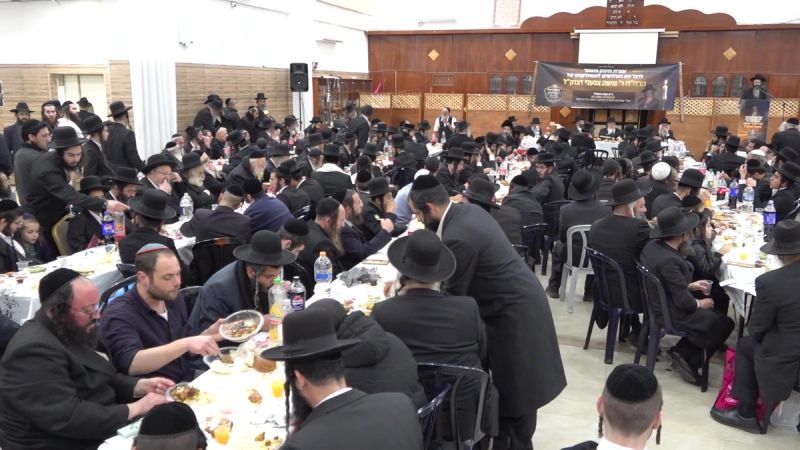
The gathering took place in the “Vayomer Yitzchak” halls on Shimon HaTzaddik Street in Jerusalem. Even before the program began, the hall was filled from wall to wall: avreichim (married Torah scholars), community members, veteran students together with younger ones, rabbanim, and family members.
The event was moderated by Rabbi Itamar Raphael, who opened with words of strengthening about the magnitude of the loss. He cited the Chazon Ish, who taught that knowing the character traits of the sages of the generation is itself Torah, and he emphasized that the public is obligated to preserve the path—not only the memory.
Rabbi Menachem Azulai: “Sparks of Fire”
Opening the lineup of speakers was the mashpia (spiritual mentor), the chassid Rabbi Menachem Azulai shlit"a, with words that came straight from the heart. He described the days of shivah (the seven days of mourning) as days of a special light—a light that illuminates the soul and compels a person to stop and ask himself where he is going.
In his remarks, he shared how a powerful desire awakened within him “to be like Rabbi Tzanani,” to the point that he wrote himself a note in the middle of prayer. But immediately the true accounting arrived: it is not simple; it demands avodah (inner spiritual work), and one must choose a single point.
And here, Rabbi Azulai said, lies a great foundation in Rabbi Tzanani’s path:
What you are able to do—into that, invest all your strength.
And about everything else—pray.
Rabbi Azulai expanded on those “sparks” that Rabbi Tzanani would leave behind—one sentence, one practice, one glance—each of which could become material for weeks of inner work. He spoke about a spirit of life, about the sweetness of Hashem’s Name, about Hisbodedus (personal secluded prayer), about a good eye (ayin tovah—seeing others favorably), and about the ability to truly feel the pain and the joy of another Jew.
Hisbodedus as the Foundation of Life
When Rabbi Menachem Azulai concluded, Rabbi Itamar Raphael returned to invite his son, Rabbi Natan David Tzanani (Hashem yishmereihu v’yichyeihu—may Hashem protect him and grant him life).
But before that, Rabbi Itamar added on his own and emphasized that if there is one key that explains Rabbi Tzanani’s entire path—it is Hisbodedus. Every difficulty, every question, every pain of a Jew—everything was directed to Hashem.
Rabbi Tzanani not only prayed for people; he taught them how to turn to Hashem on their own—how to speak, how to ask, and how not to give up even when it is hard.
The Son’s Words—An Inside View
Rabbi Natan David Tzanani, the Rav’s son, spoke with an inward and precise perspective. In his words, Rabbi Natan David described a life of absolute self-sacrifice: complete bittul (self-nullification) to Hashem.
He told of the route of Hisbodedus in the fields, of real dangers, of simple faith, and of a clear awareness of when to continue and when to stop according to halachah. He described the perseverance in Torah study, the prayer word by word, guarding the eyes (shemiras einayim), minimizing eating and sleep—not as external “stringencies,” but as the natural outcome of a life of holiness.
And above all—he described a father. A father available for his children; a father who encourages; a father who does not hurt; a father who educates through personal example, with love and derech eretz (basic decency and respect).
Rabbi Yehoshua Cohen: “Greatness in Every Situation”
After him, the gaon Rabbi Yehoshua Cohen shlit"a spoke. Having merited to see Rabbi Tzanani up close for many years, he focused on one point: the ability to remain great—in every situation.
Even in times of weakness, even in times of health challenges, even when another person would already have broken—Rabbi Tzanani remained with the same sharpness, the same yiras Shamayim (awe of Heaven), the same humility.
“We saw it with our own eyes,” he said. “We did not hear stories.”
Rabbi Shalom Arush: “He Was a Hidden Tzaddik”
The gathering was concluded by the chassid Rabbi Shalom Arush shlit"a, Rosh Yeshivah of “Chut Shel Chessed.”
Rabbi Arush opened by saying that he came with deep hakaras hatov (gratitude):
“I am deeply grateful to Rabbi Moshe Tzanani. The entire world owes him gratitude.”
He described how, in Rabbi Tzanani’s merit, the holy yeshivah—Yeshivas Shuvu Banim—came into actual existence, and how he himself was prepared to leave an orderly situation—an apartment and a job—just to be in a place where there is true Torah and a yeshivah.
Rabbi Arush defined Rabbi Tzanani as truly humble, and said that in his opinion he was a “hidden tzaddik” (a righteous person who conceals his greatness). A man who did not seek leadership, did not seek publicity—only to learn, to toil in Torah, and to help others quietly.
He emphasized especially the point of bittul to Morinu HaRav Rabbi Eliezer Berland shlit"a—complete, pure bittul, without calculations. “It’s impossible to be like him,” he said, “but it is possible to take his path.”
In conclusion, Rabbi Arush connected the words to the approaching days of Purim:
On Purim—whoever stretches out a hand is given. Even someone who does not know how to pray properly, even someone who did not manage to repair what needed fixing throughout the year—on Purim there is a special power to prayer.
“May we all merit to lift our hands in prayer,” he concluded, “and especially on Purim, that we should merit that Moshiach ben David will come with mercy, speedily in our days, amen.”
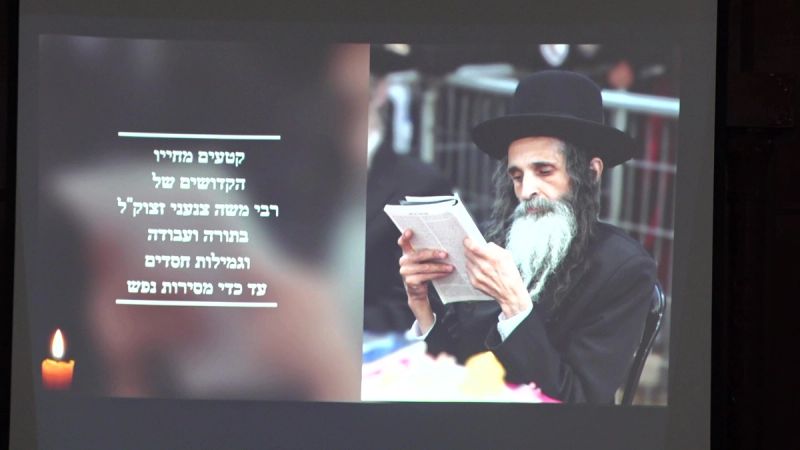
Seventy-Two Full Years: A Presentation of the Life-Story of Rabbi Moshe Tzanani zt"l
At the conclusion of the words of the chassid Rabbi Shalom Arush shlit"a, the grandson of Morinu HaRav shlit"a—Rabbi Shmuel Aizik Rubinstein (Hashem yishmereihu v’yichyeihu—may Hashem protect him and grant him life)—spoke. He is the chairman of the “Association of Avreichim” of the Breslov Nachamas Tzion—Shuvu Banim institutions. In his remarks, he spoke about his personal connection with Rabbi Tzanani, and he also thanked the director of the institutions, Rabbi Natan Chananya shlit"a.
At the end of his remarks, a video was screened presenting the life-story of Rabbi Moshe Tzanani, featuring rare documentation collected and recorded over the years by the “Hischadshus” team.
At the conclusion of the gathering, the moderator Rabbi Itamar Raphael announced the opening of a fundraising campaign to publish the writings of Rabbi Moshe Tzanani zt"l.
Watch the full gathering:
[VIDEO: https://youtu.be/yVMZMsBuEto]
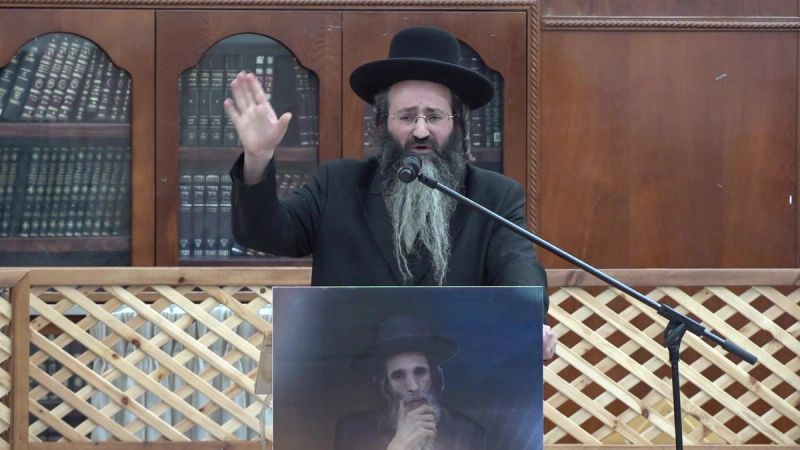
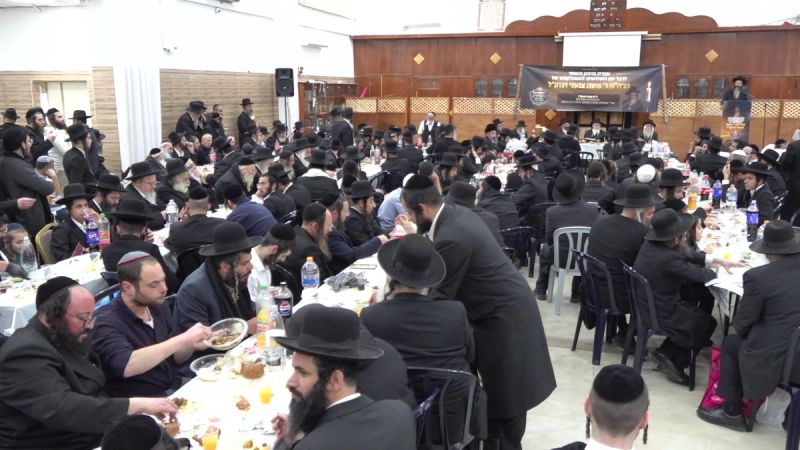
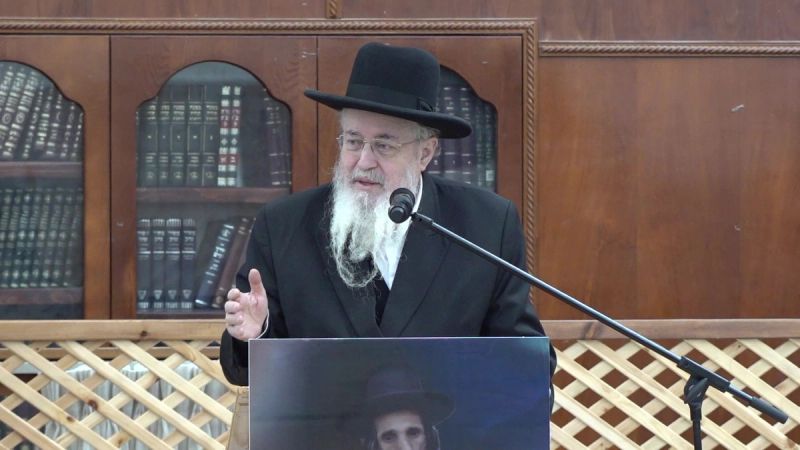
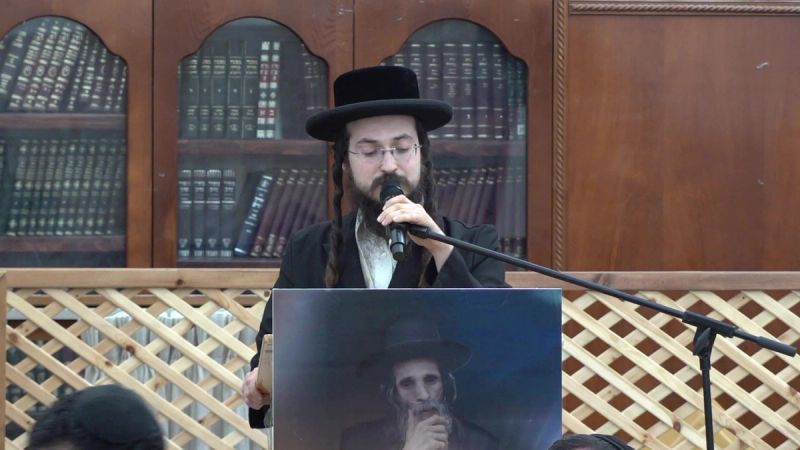
Below is a photo gallery from the thirty-day memorial gathering, courtesy of “The Stage of Breslov Chassidim Shuvu Banim”:
Subscribe to Our Newsletter
Receive Torah articles and inspiration directly in your inbox