
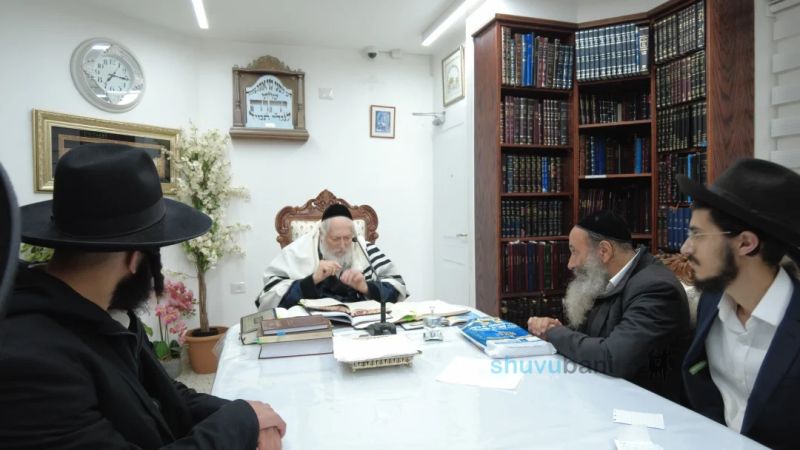
Torah Lesson for the Kollel Students of 'Pardes Katz' at the Residence of the
Gaon and Tzaddik Rabbi Eliezer Berland shlit"a
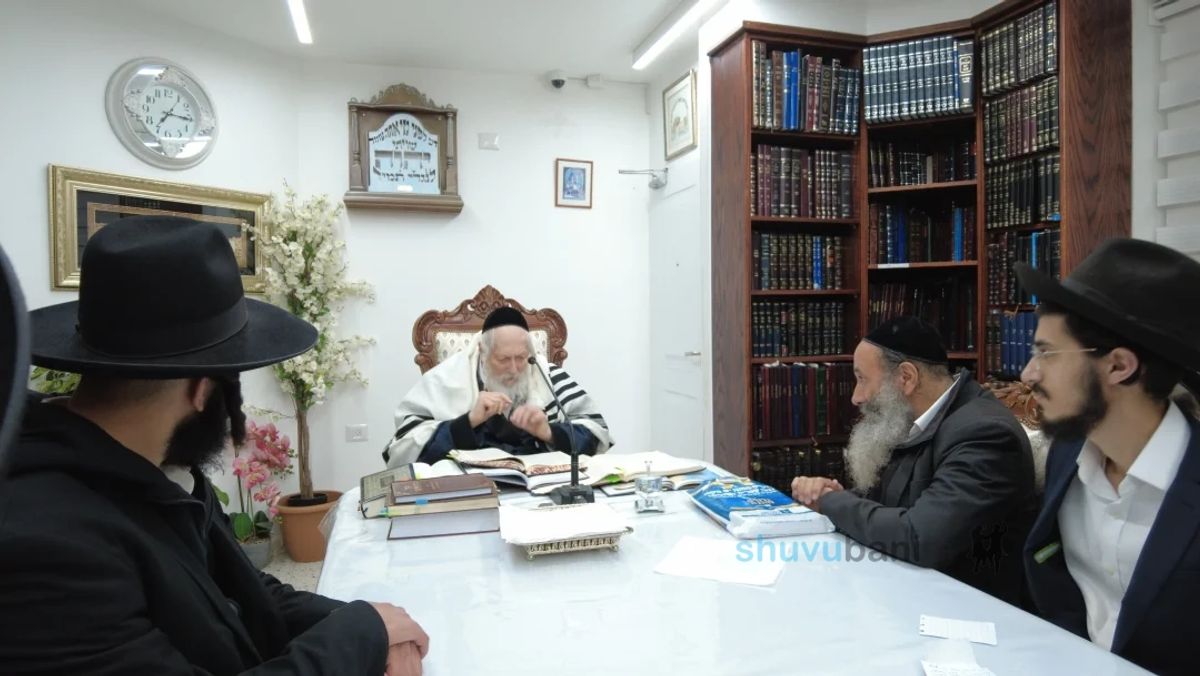
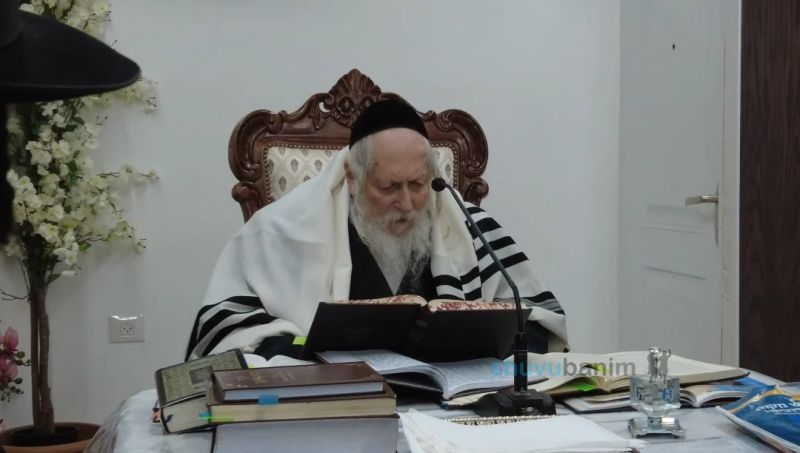
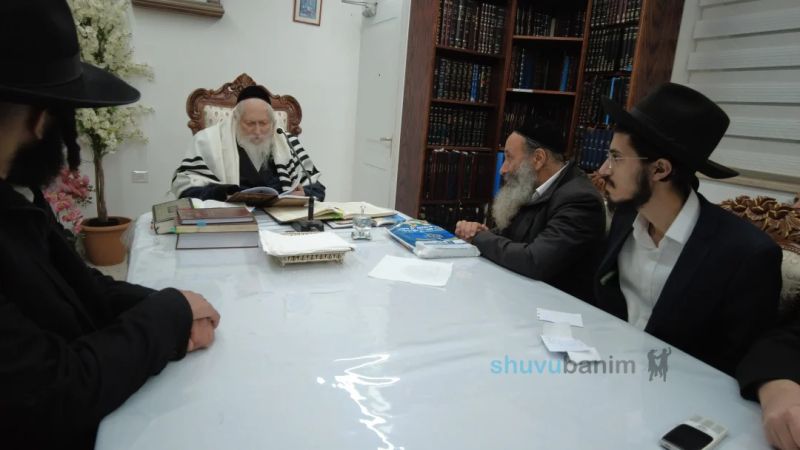
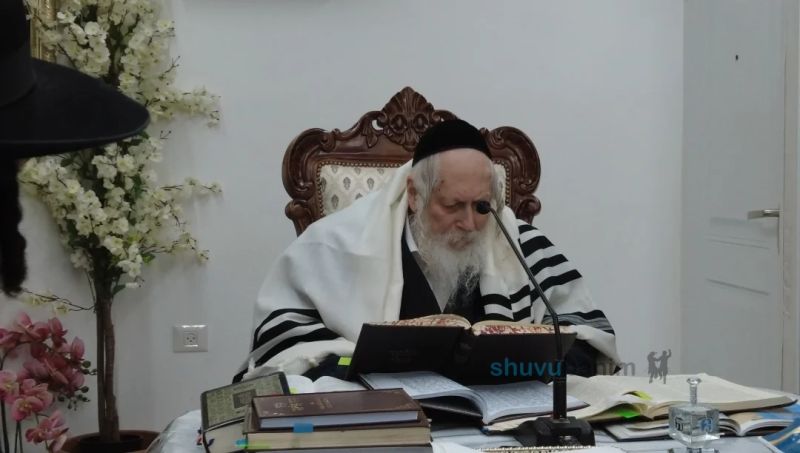
On Wednesday, the night of the 21st of Kislev, Parshas Vayishev, a Torah lesson took place at the holy residence of our teacher, the Rav, Rabbi Eliezer Berland shlit"a (may he live long and good days), for the Kollel (institute for advanced Torah study) students of the 'Pardes Katz' neighborhood in Bnei Brak.
The lesson lasted for over forty minutes. Before you is a summary of the topics mentioned by our teacher, the Rav shlit"a, during the lesson:
- A difficult verse in Bereishis (Genesis): Rashi's commentary on "Adah and Zillah" and Adam HaRishon's (the first man) decision to stop having children after Cain killed Abel, until he was comforted by the birth of Seth and his righteous descendants – Methuselah, Enoch, and Noah.
- The dispute between Beis Shammai and Beis Hillel regarding whether it was worthy for the world to have been created – Gemara (Talmud) Eruvin.
- The story of the harp in the Beis HaMikdash (Holy Temple) and the discussion of whether it is permitted to repair a broken string on Shabbos (the Sabbath) due to the principle of "shvus d'shvus" (a double rabbinic prohibition), and how this relates to the matter of shalom bayis (marital harmony).
- A story of a husband and wife who did not speak for twenty years until her will was revealed through the way she served the food – the entire matter of shalom bayis in Gemara Eruvin.
- The concept of the niggun (spiritual melody): David's harp, eight verses in Tehillim (Psalms), the number of verses in the Torah (5,845) compared to various traditions regarding the unification of verses.
- The number of letters in the Torah (304,000) and the multiples (the letters Mantzepach - final forms of letters) and their relationship to the count of "six hundred thousand" (the souls of Israel).
- The discussion of whether the snake is pure or impure, and the matter of a mouse gnawing on a garment compared to the damage caused by a snake.
- Every member of Bnei Yisrael (the Children of Israel) can conquer ten nations – the power of Yehuda (Judah) son of Yaakov (Jacob) and the standing of the Shevatim (Tribes).
- Naphtali the leaper – the power of the tribe of Naphtali to leap, to bring a minyan (quorum of ten), and to perform miracles.
- The Beis HaMikdash (Holy Temple): The real one ascended to heaven; what was burned was only the stones and the lime.
- Yaakov bowed seven times before Esau – corresponding to the seven heads of the snake that Rav Acha bar Yaakov subdued.
- "Remember me – and mention me": Yosef (Joseph) asks the Chief Cupbearer to mention him, and therefore receives two additional years in prison.
- The difficulty of the double verses in the Torah and the lesson that there are verses read only once.
- The signs of the moon, calculations of distances (4,000–8,000 km), and the reason why everyone must desecrate Shabbos to testify for the Kiddush HaChodesh (sanctification of the new month).
- "Crowned with his manners": The Ben Ish Chai – what angered Haman regarding Mordechai were his thick and coarse peyos (sidelocks).
- The story of the rescue of the Jews in Algiers in the merit of the verse "When you pass through the waters."
- “Him, with him, to him”: The secret brought by Rashi regarding the dispute between the brothers and Yosef – the dispute between the angels and the angel Metat whether to create the world.
- Esau planned to kill Yitzchak (Isaac) and Yaakov through his marriage to Mahalath daughter of Ishmael – so that Ishmael would kill Yitzchak, and then he (Esau) would kill Yaakov.
- The sign of the Bris Milah (circumcision) is not proof among nations that practice circumcision – only peyos (sidelocks) are a true Jewish sign.
- The law of the sword: A gentile who lent a sword and it turned out to be gold – the dispute between the Brisker Rav and the Ketzos HaChoshen whether he must pay for it as gold or as tin.
- Esau's fear of Yaakov – because Yaakov has the power to decide the fate of the entire world and subdue all the nations.
- Parshas Vayigash: "Father or brother" – Yosef asks about the method of lighting Chanukah candles, whether according to the order of the alphabet (increasing) or like Beis Shammai (decreasing).
- Rabbi Shimon writes: If Abraham had slaughtered Ishmael during "your only son" – we would not be suffering today from the thousands of troubles caused by Ishmael.
Subscribe to Our Newsletter
Receive Torah articles and inspiration directly in your inbox