
What Did Yochanan Kohen Gadol Pray For in the Holy of Holies? • The Daily Lesson from Rabbi Eliezer Berland shlit"a
"Yissachar is a strong-boned donkey" (Bereishis 49:14) — only if a person is willing to bear the yoke and suffer like a donkey can he truly learn Torah, rather than seeking to be indulged with worldly delights.
"Rejoice, Zevulun, in your going out" (Devarim 33:18) — this means that he follows the tzaddik wholeheartedly, without any doubts in his heart.
The Rambam (Maimonides) in Hilchos Yesodei HaTorah says that if a righteous, kosher person tells you something he received through prophecy, you are obligated to believe him. If one does not, he transgresses the commandment to heed the words of the prophets.
Who can move the sun? It is written that Nakdimon ben Gurion moved the sun.
Everyone in Shuvu Banim must know how to move the sun.
When we were in the Old City, we would pray almost the entire Shabbos continuously. We would start the prayer at three in the morning and finish at 4:00 PM. Reb Yehoshua Ber Rubinstein would arrive home, and there would be nothing left to eat from the cholent. Then, at 5:00 PM, he already had to return immediately for Mincha. After that, we would have Seudah Shlishit (the third Shabbos meal) all night, Maariv (evening prayer) at dawn, followed by Seudah Revi'is (the fourth meal). And then Shacharis (morning prayer) of Sunday — everything was continuous.
The Bnei Yissachar asks: Why did Yaakov cross his hands [when blessing Menashe and Ephraim]? Because it is impossible to move Menashe, who is the firstborn, from his place. And the tribe of Menashe will merit the Geulah (Redemption) first, because they took down and buried the body of King Shaul.
"And He called to Moshe" (Vayikra 1:1) — why isn't it written who called him? Because this was originally meant to be two separate verses: "And He called to Moshe," and then, "And Hashem spoke to him from the Tent of Meeting." There were originally more verses in the Torah than what we have today. Tehillim (Psalms) also had more chapters than it does today, but it was shortened so that people would be able to learn it. However, Rebbe Natan explains this spiritually: it is hidden and concealed, because the true tzaddik has no name.
Why don't we say "Baruch Shem Kevod Malchuso Le'Olam Va'ed" (Blessed is the Name of His glorious kingdom for all eternity) aloud, and why isn't it written explicitly in the Torah? Because the Mishnah explains that "Baruch Shem" is only recited during a time of concealment.
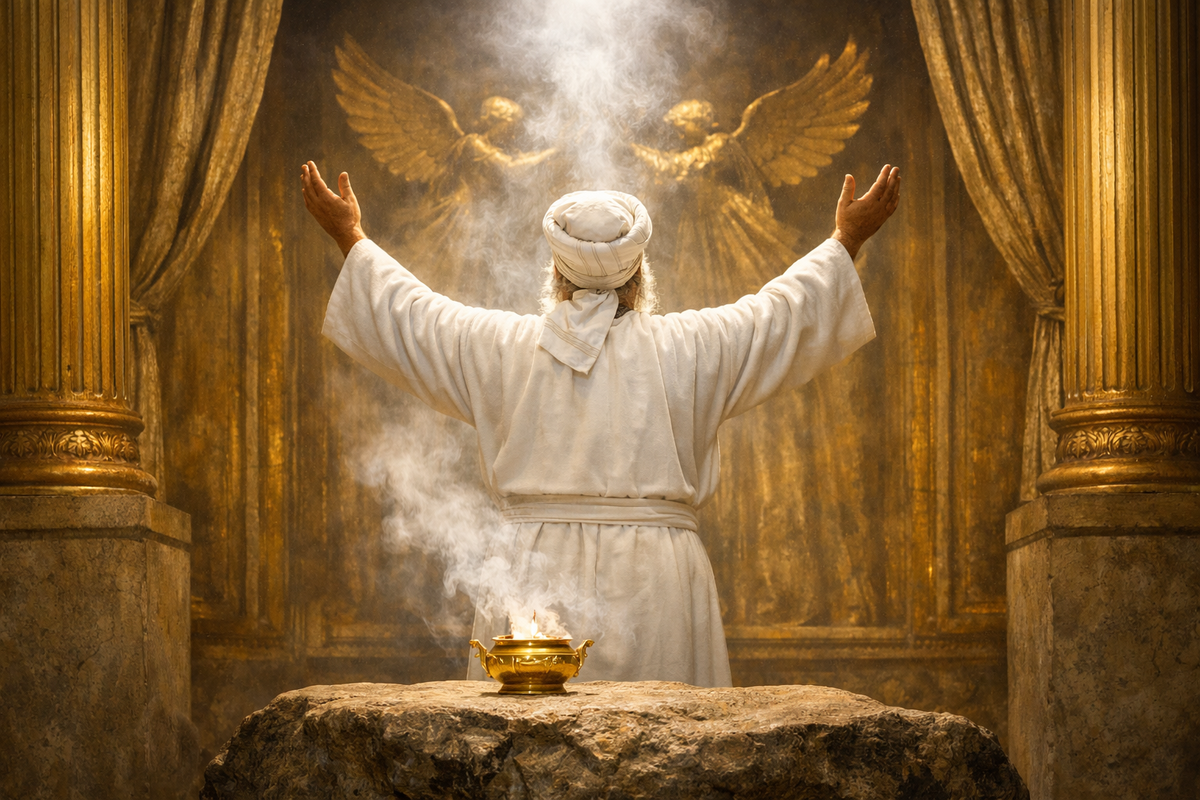
When Yochanan Kohen Gadol was in the Kodesh HaKodashim (Holy of Holies), he would pray for the Hasmonean warriors who were fighting in Antioch. Then, a Bas Kol (Heavenly voice) emerged and announced in Aramaic: "Nitzchu talya d'azlu l'agacha kraba l'Antiochia" ("The youths who went to wage war in Antioch have been victorious").
The Gemara in Sotah asks: How is it possible that the Bas Kol spoke in Aramaic? After all, it is stated that "the ministering angels do not understand the Aramaic language"?
A person's entire life is nothing but wars. Zevulun listens to the voice of the tzaddik, and that is why he is victorious.
Subscribe to Our Newsletter
Receive Torah articles and inspiration directly in your inbox