What is the Difference Between the Wicked Bilaam and Moshe Rabbeinu? • The Daily Shiur from Rabbi Eliezer Berland shlit"a
"That they did not recite the blessing over the Torah first" means that they did not have the intention to bring the entire Jewish people back in teshuvah.
For 25 years, we would travel every day to Shechem from Bnei Brak, going through Qalqilya in an Arab taxi until reaching the tziyun (holy gravesite).
It is forbidden to come to the yeshiva with an electric bicycle.
How is it possible that at one point it is written that Shaul said about David, "And he loved him greatly," and afterward he asked, "Whose son is this youth?" and even swore that he did not know him, saying, "By your life"? Rather, the Gemara says that he wanted to know whose son he was. And on this, they ask: What didn't he know? After all, Yishai, his father, would go out among the multitudes; he had six hundred thousand soldiers! Rather, his question was whether he descended from Peretz—who merits kingship—or from Zerach—who merits wealth. Then Doeg said to him, "Before you ask whether he is from Peretz or Zerach, ask if he is even fit to enter the congregation, because it is written, 'An Ammonite or a Moabite shall not enter the congregation of Hashem.'"
Yoav asked Avner, "Why did you kill my brother?" Avner told him, "I did not intend to kill him." Yoav replied, "How did you know to stab him exactly in the fifth rib, which is a fatal blow?" Yoav avenged the blood of his brother, Asahel, by stabbing Avner. Avner could have killed Yoav in return while he was dying, but the Jewish people pleaded, saying that there would be no more Chiefs of Staff left, so Avner left Yoav alone.
"And Moshe went out from Pharaoh in hot anger." It is brought in the Midrash that Moshe Rabbeinu gave Pharaoh a slap. This was because Pharaoh had sent to kill him sixty years earlier when he killed the Egyptian. By the tzaddikim, their neck turns to marble (a miraculous protection). Rebbe Natan explains in Hilchos Milah that everyone can have a neck of marble.
Now that there are no yeshivas (referring to a break or disruption), one needs to learn double. By the Rebbe (Rebbe Nachman), one needs to know when to learn and when to sleep, and the main thing is not to sleep during the time of learning.
A person needs to learn about Ruth, who had a bed of gold and left everything to search for stalks of grain in the field.
"And He called to Moshe." It does not say who called him. Because the Arizal says that the tzaddik is above all the Names; it is hidden and concealed.
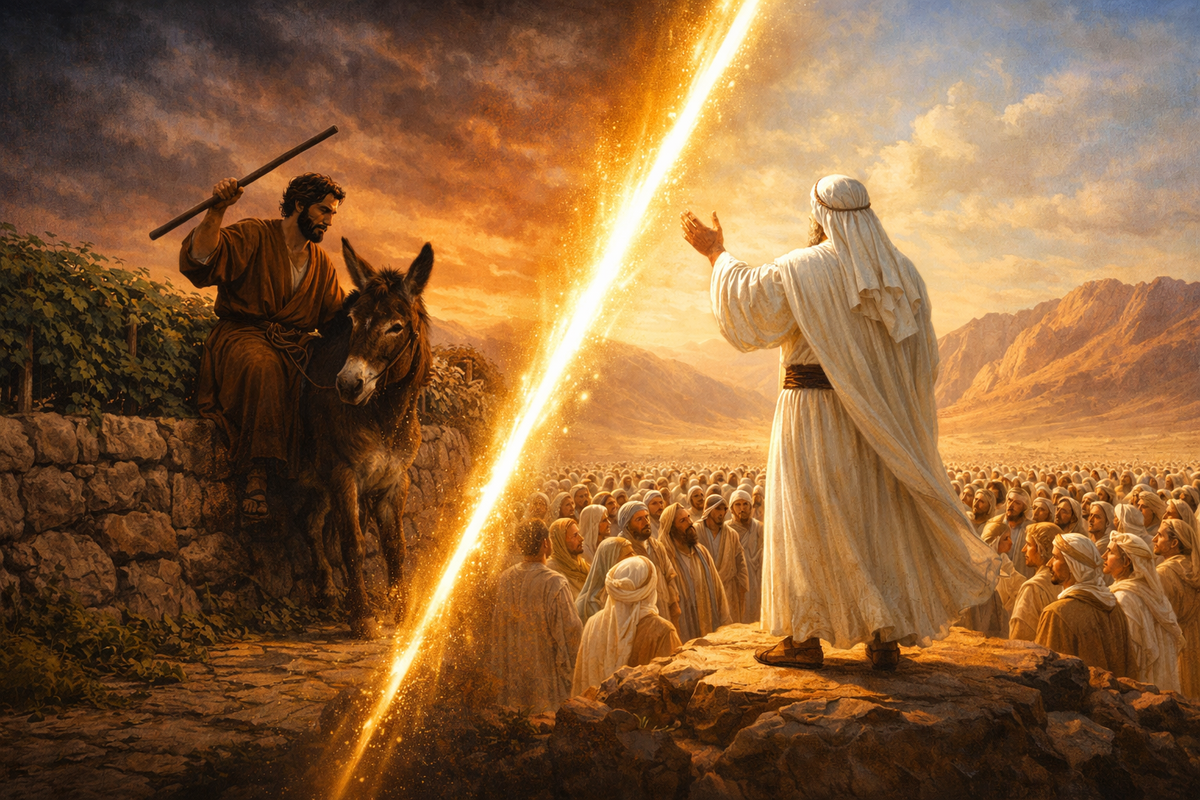
Moshe did not want to write the Aleph of "Vayikra" (And He called), and therefore there is a small Aleph. Because Moshe said, "I am no greater than Bilaam, by whom it is written 'Vayikar' (And He happened to meet)."
Subscribe to Our Newsletter
Receive Torah articles and inspiration directly in your inbox