What is the Plain Meaning of the War Against the Blind and the Lame? • The Daily
Lesson from Rabbi Eliezer Berland shlit"a
Presented before you is a summary of the topics from the daily lesson as delivered by our teacher, Rabbi Eliezer Berland shlit"a (may he live long and good days) – yesterday after the Maariv (evening) prayer, Sunday night, the 6th of Adar 5786, Parshat Tetzaveh:
1. From the 1st of Adar until the 1st of Nissan, one merits to be in the Fiftieth Gate (Sha'ar HaChamishim).
2. Haman made a gallows fifty cubits high so that the People of Israel would not merit the Fiftieth Gate.
3. Mordechai merited reaching the Fiftieth Gate. The People of Israel were almost in the fiftieth gate of tumah (impurity), and from there it was transformed to kedushah (holiness). Only Moshe (Moses) truly merited the Fiftieth Gate.
4. Only Rebbe Natan can explain what Purim is; Likutey Halachot is the most interesting book in the world. A person should study Likutey Halachot with his wife every day.
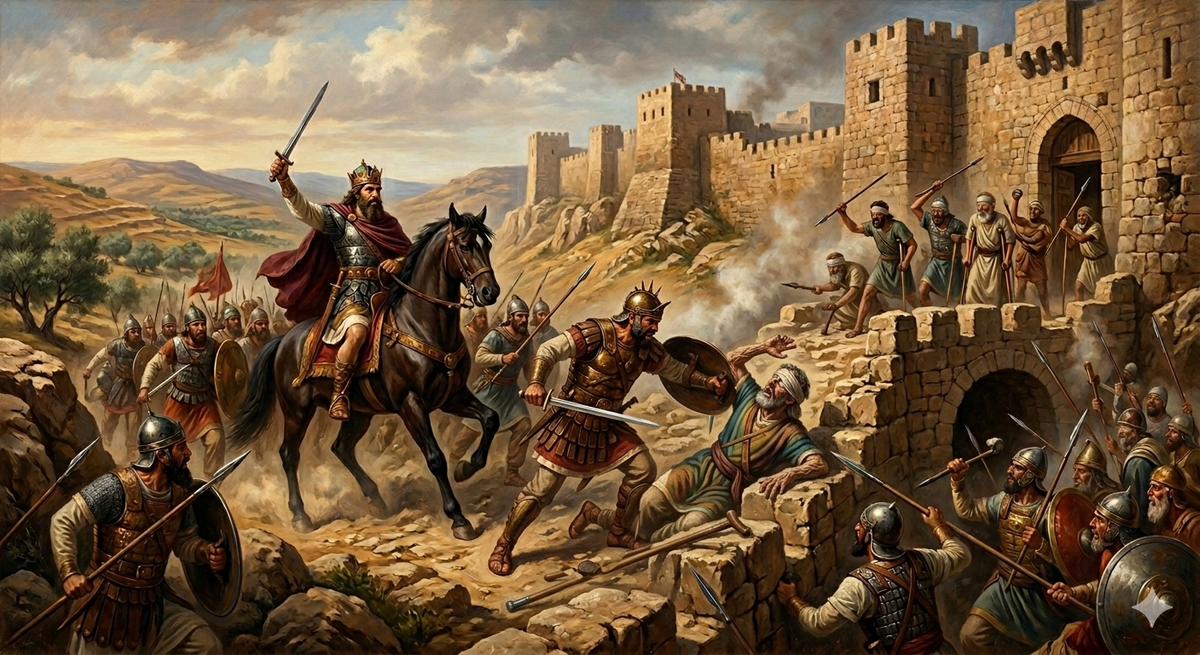
5. Only Yoav (Joab) merited conquering Jerusalem from the hands of the Jebusites because he would distribute tzedakah (charity). David said whoever fights the blind and the lame will merit receiving Jerusalem. Does one really need to fight the blind and the lame? Rather, the explanation is that one needs to fight their idols and avodah zarah (idolatry). And only Yoav ben Zeruiah merited this, as mentioned above.
6. And this is the secret to breaking the channel of evil that Haman sought to establish.
7. Every verse has a billion questions on it. Like "And He called to Moshe and Hashem spoke to him"—why is there a duplication? On this, Rebbe Natan explains that the secret of "Vayikra" (And He called) is "Stima d'chol Stimin v'Atika d'chol Atikin" (the most hidden of all hidden things and the most ancient of all ancient things).
8. The Gemara (Talmud) asks in Yevamot how at first it is written regarding Saul and David: "And he loved him very much," and afterwards he asks him, "Whose son is this youth?" Did he not know his father—Yishai (Jesse), who would go out with an uchlosa raba (a great multitude) of sixty thousand people? Rather, his real question was whether he descends from Perez or Zerah. Whether he is from Perez—who is worthy of kingship, or Zerah—who is worthy of wealth.
9. Rebbe Natan asks why "Baruch Shem Kavod Malchuto L'olam Va'ed" (Blessed be the name of His glorious kingdom forever and ever) is not written in the Torah? And he explains that this verse is only said during a time of hestara (concealment).
Subscribe to Our Newsletter
Receive Torah articles and inspiration directly in your inbox