Who is the Grandson of Balak Who Conquered Moab? • The Daily Shiur from Rabbi Eliezer Berland shlit"a
And then, when he reached the word "Vayikra" (And He called), Hashem told him to write the letters Vav, Yud, Kuf, Reish. When he reached the letter Aleph, Moshe did not want to write it. He said, "I am no greater than Bilaam [whose prophecy is described with the word 'Vayikar', without an Aleph]."
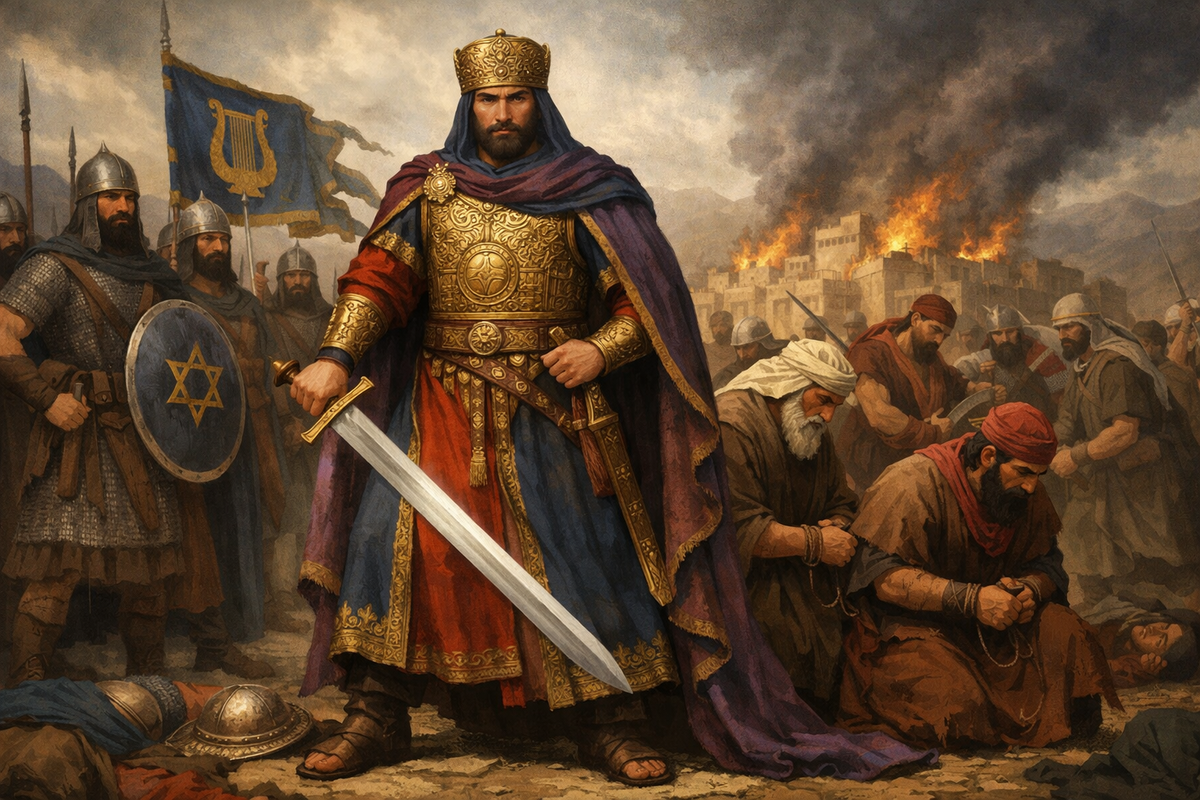
Bilaam claimed that he was on the level of Moshe, "knowing the knowledge of the Supreme One." The verse says, "And he shall smash the corners of Moab and destroy all the children of Shes." Bilaam prophesied that King David, who descends from Balak, the king of Moab, would ultimately conquer Moab.
The Psalms we sing during Kabbalas Shabbos are the very same songs sung by the cows that transported the Ark of the Covenant, as the verse hints, "And the cows sang" (a Midrashic interpretation of "Vayisharna haparos").
"And He called to Moshe" — why isn't it explicitly written who called him? Because originally, this was meant to be two separate verses: "And He called to Moshe," and then, "And Hashem spoke to him from the Tent of Meeting." There are actually more verses in the Torah than what we currently have. The Book of Tehillim (Psalms) was also originally much longer than it is today, but it was shortened so that people would be able to learn it. However, Reb Noson explains this spiritually: it is hidden and concealed, because the true Tzaddik has no name.
Why don't we recite "Baruch Shem Kevod Malchuso L'Olam Va'ed" (Blessed is the Name of His glorious kingdom for all eternity) out loud, and why isn't it written explicitly in the Torah? Because the Mishnah explains that "Baruch Shem" is only meant to be said in concealment. But when the nations of the world kill us—during the Holocaust, and now when they killed us on Simchas Torah—now the time has come for us to say "Baruch Shem" out loud, because everything will soon be revealed openly.
It is written that on Rosh Chodesh (the New Month), one must add an extra festive meal. On Rosh Chodesh, it is permitted to eat everything.
The verse says, "If her father had but spit in her face" (Bamidbar 12:14). Miriam's father metaphorically "spit in her face." This happened because the men in Egypt did not want to have children [due to Pharaoh's decree]. Miriam then said to her father, Amram, "Your decree is worse than Pharaoh's!" Following her rebuke, everyone arose and took back their wives. But then the Egyptians came and threw the newborn babies into the Nile River. Amram then said to Miriam, "Do you see what came out of your words?" But immediately after, Pharaoh's daughter arrived and saved Moshe.
The Gemara in Sanhedrin (95a) relates how Avishai ben Tzeruyah miraculously flew through the air to save King David. His brother, Asael, was so swift and light that he would hover over the tops of the grain stalks. Indeed, all the sons of Tzeruyah had the ability to fly through the air.
Subscribe to Our Newsletter
Receive Torah articles and inspiration directly in your inbox