
Why Do We Learn the Laws of Kiddushin from Ephron? And What Is the Greatness of
the Cave of Machpelah? Parshas Chayei Sarah — from Rabbi Eliezer Berland shlit"a
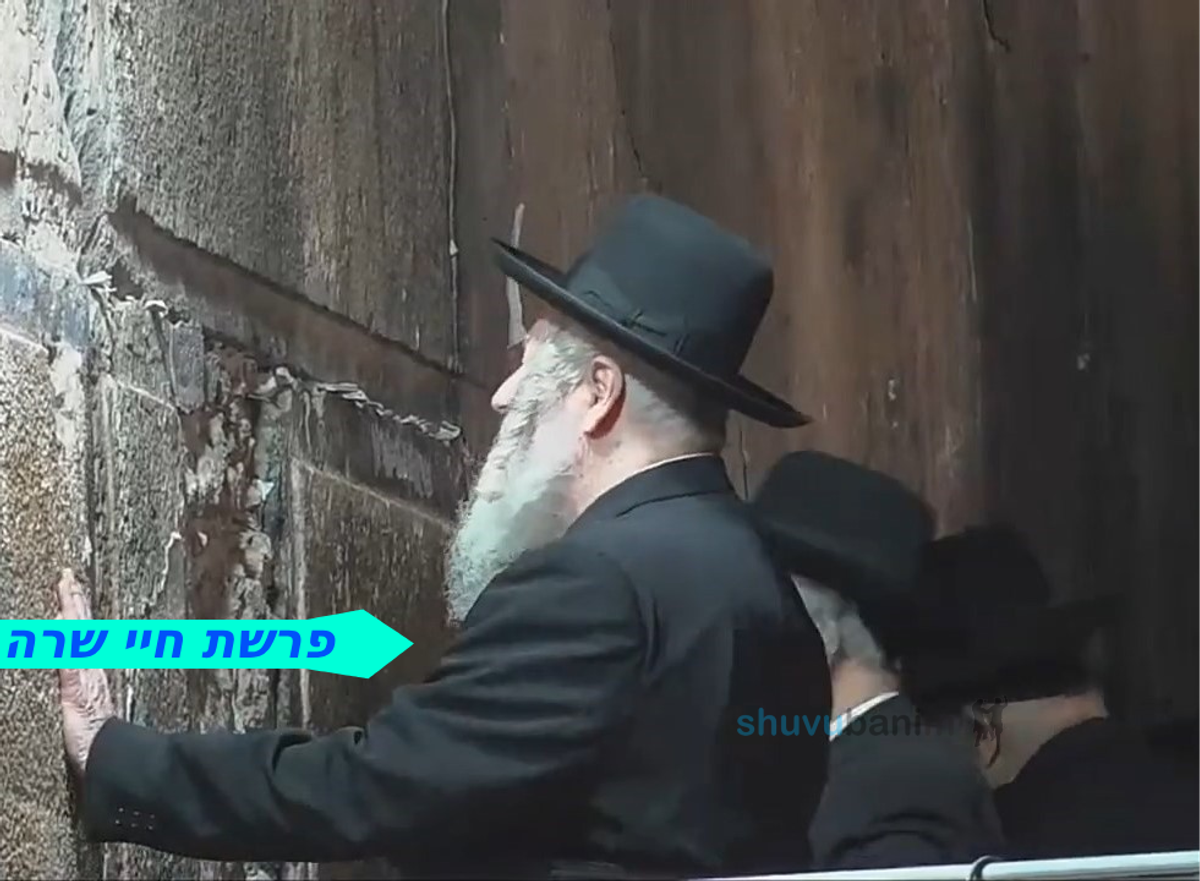
Before you is a lesson from Rabbi Eliezer Berland shlit"a on Parshas Chayei Sarah. With sweet, flowing words, he explains why we learn the act of Kiddushin specifically from Ephron, and how Ephron thought he was “setting up” Avraham Avinu.
Treats for the Shabbos table!
Kiddushin is learned from Ephron—what does Kiddushin have to do with Ephron? “With money” we learn Kiddushin from Ephron, because it says, “Take the money of the field from me.” So they ask: what was going on with Ephron?
Ephron was certain he was deceiving Avraham Avinu. Ephron was sure he was now trapping Avraham—he tells him: give me 400 shekels of silver; it’s really worth only two and a half pennies. What is it worth—some dark cave, demons and spirits. It’s nothing—just some side of a mountain; nobody wants this place. It was the darkest spot in Chevron, and people were afraid to go near it. You would have had to pay money just to get someone to agree to take it, to be rid of that terrible place.
And it was frightening to approach, because Adam and Chavah were buried there—so there was fear. So Hashem arranged such imaginations, a mirage—such terrible fears about coming close to that place. And they were already looking for who would take this place—who would agree to buy it?
So Ephron was sure he was trapping Avraham. Such a huge trap—demons and spirits; the spirits there would finish him off. But Avraham, in the merit of the hospitality he practiced, the fear fled. He entered. He knew there were demons and spirits, but he went in; he wasn’t afraid. He went deep, deep into the cave, and he discovered Adam and Chavah. He found Adam and Chavah lying there, and he spread his hands over their heads—and they were shining with a precious light.
So Avraham already planned: how will he take this from Ephron with wisdom?
He arrived, and everyone tells him: “Bury your dead.” What do you mean, bury your dead? You’re going to bury Sarah in a dark, gloomy place? A place of demons and spirits—what do you mean? Why did you marry Sarah—are you angry at Sarah? Do you want to take revenge on Sarah? You got married, and at the end of your lives—what is it, at age one hundred—you suddenly started fighting with your wife? Now you want to bury her there, in some pit, some hole—some foggy, remote, rejected place—darkness, gloom, pitch-black.
What, you have nothing else to do? Some black hole that swallows everything? The people of Chevron didn’t understand. They said to him: what’s your problem? You don’t have money? You’re stingy? It’s a shame to waste money on some dark cave. You can buy a grave on Har Chevron—on one of the mountains—with a beautiful grove, beautiful niches, beautiful monuments. They’ll give you the most magnificent place for Sarah.
And Avimelech came; Og king of Bashan came; even Shechem came. Shechem came to Sarah’s home—he lived long and outlived Avraham. Avraham was 137; Avraham lived another 38 years, and after Avraham’s passing he lived another 35 years—altogether he lived exactly another 73 years. Seventy-three years—he saw the Yom Tov with letters; he lived exactly another seventy-three years. In the merit that he had been the “master of the house” of Sarah, he lived seventy-three years.
And after that, Avimelech king of the Philistines arrived; Og king of Bashan arrived—who didn’t come to this funeral? So why are you burying her now in such a dark place? Such a niche—dark, frightening, pitch-black? They offered him a beautiful hilltop, a beautiful grove, a beautiful view.
Avraham said no. So they asked: but why not? What did Sarah do wrong that you are burying her in such a dark and gloomy place?
And Hashem made a miracle: and exactly one hour earlier, Ephron became the mayor. He said: you know what? Sarah’s honor is specifically to be buried in the mayor’s plot—that is Sarah’s honor. Not like you think—some place belonging to some simple Jew, some wealthy porter, who happens to have a nice plot. The main thing is to be buried in the mayor’s plot. Let people say: the mayor agreed to bury her in his plot.
But that plot was the most disgraced, the most remote—he said: I don’t care how much money he wants.
And in this way, the Zohar and the Midrash say, he managed to outsmart the people of Chevron so they would agree at all that Sarah should be buried in that plot—in that place of darkness, which in their eyes was darkness and gloom.
So Ephron was the mayor, and because of that he merited that Sarah would be buried in that plot.
Ephron was sure he was deceiving Avraham—he was causing Avraham to stumble; he was now bringing Avraham into such a trap—and maybe Avraham himself would be finished there inside that cave.
But Avraham knew the deepest truth: all the wealth in the world is not worth this! Adam and Chavah are there! If Ephron had known what was there, he would not have sold it for all the wealth in the world!
That is why they say we learn a match from Ephron—because in a match, each side thinks he is “working” the other side; each one only hears about the other side. In matches, each one hides his… his… There it was the opposite: Avraham knew the treasures that were there.
So this is the deepest truth in a match: that in truth, there are treasures in every person—there are treasures in every man, treasures in every woman. We only need to remove the dustiness.
Rebbe Nachman says in Torah 8, Part II: one must remove the dustiness from the eyes. A person sees shortcomings—a wife in her husband, a husband in his wife—only shortcomings. Therefore there is fire in the home.
But if a person sees the treasures, the inner essence—what is truly in the Cave of Machpelah, what treasures are there! What treasures! So too, in every match, in every son, in every daughter, in every Jewish soul—there are endless treasures!
For the Rebbe says: every Jewish soul burns for Hashem and blazes for Hashem; every Jewish neshamah wants to do teshuvah! And every Jewish soul—aside from a few Nimrods and such people who incite the nation through the media and their newspapers, stuffing them with endless impurity—Hashem should have mercy—everyone would have returned in teshuvah long ago!
Because the soul burns—the neshamah of every Jew. Every Jew wants purity, holiness, goodness—the choicest good, the choicest truth.
Subscribe to Our Newsletter
Receive Torah articles and inspiration directly in your inbox