
Words of the Righteous Rabbi Eliezer Berland shlit"a for Parshat Tzav
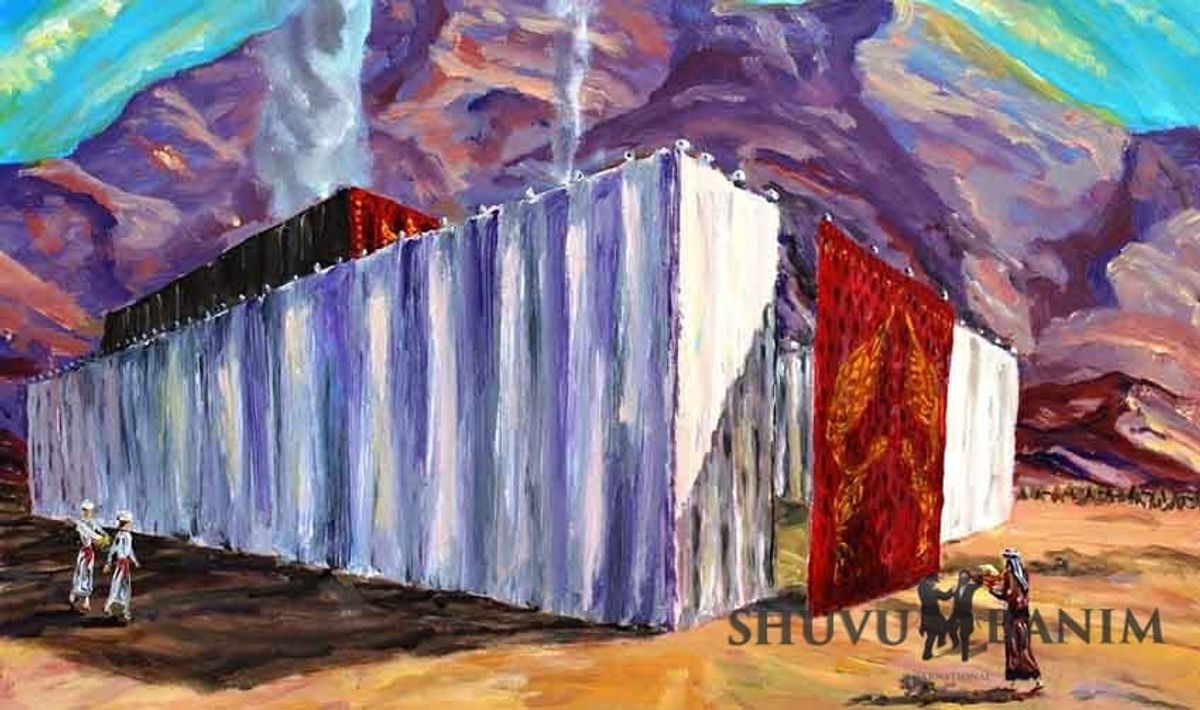
"The fire on the altar shall be kept burning on it; it shall not be extinguished" (Parshat Tzav, Leviticus 6:5)
Rebbe Nathan says (Likutey Halachot, Yoreh Deah), "The sacrifice of the wicked is an abomination"; if we do not bring the wicked back in teshuvah (repentance), then prayer is not accepted. If you do not bring the wicked back in teshuvah, Hashem does not accept your prayer. What are you, privileged? Are you praying because your father taught you to pray? Teach someone else to pray! Take another Jew, teach him to say Birkat Hamazon, tell him that there is a Hashem in the world, tell him to pray and he will have all that is good. Let us see you take another Jew and pray; otherwise, it is called "the sacrifice of the wicked is an abomination"—his prayer is simply an abomination. Because who are you at all that you are praying? What makes you more privileged than that person just because you had a father and he does not?
So Rebbe Nathan brings on page 102, "The conquest is good." Therefore, if Yitro had not drawn close, there would have been no receiving of the Torah, because you all had fathers. There were three hundred and sixty million—that is three hundred and sixty billion people who were there—all of them children of Abraham, Isaac, and Jacob; all of them already generations upon generations of tzaddikim. I want to see you bring one of the nations of the world closer. So, Yitro drew close exactly when he was a high priest; it is written that when Yitro drew close, everyone drew close. Everyone wanted to go to Bilaam, but Bilaam did not find favor in their eyes, so they decided to follow Yitro. That is what the Zohar says regarding Yitro; at that moment, the whole world returned in teshuvah. They heard the voices of the giving of the Torah, and everyone returned in teshuvah.
Let us see you bring one person like Yitro closer; bring another soul. Rebbe Nathan says, without Yitro, there could not have been a giving of the Torah. This is the language of Rebbe Nathan: "And without converts and ba'alei teshuvah (those who return to the faith), prayer is not accepted." Baruch Hashem, you are a tzaddik, your father is a tzaddik, you will have a tzaddik son, a tzaddik grandson—it does not ascend on high. It is all just a rote performance of human commandments; it is all because that is how you were educated. You are, baruch Hashem, a good boy; you are not rebellious, you have not done anything, you are not wicked, but your prayer is not accepted. Your prayer is simply an abomination.
Rebbe Nathan says, "You have established a foundation of a great congregation." King David would walk in the path of "You have established a foundation of a great congregation," and through this, the tikkun (rectification) of the altar was achieved. Rebbe Nachman says in Torah 17, the tikkun of the altar is only through making converts and ba'alei teshuvah. I wrote in Megillat Sefer, "It is written about me to do Your will." The will of Hashem is that you pray, and you have prayed well—you prayed for five hours, ten hours—it is nothing. Esau also prayed for ten hours. You read in books that one must pray for ten hours, but let us see you bring one new soul who does not even know what prayer is, who even ate on Yom Kippur.
If you bring people back in teshuvah, then the intellect is completed; you receive a completely new intellect. The Rebbe says in Torah 53 that only when one brings people back in teshuvah does one receive the 'Aleph', the Da'at (knowledge). You bring people back in teshuvah, so Hashem gives you intellect in exchange, just as you complete their intellect. Because the fact that he does not know there is a Shabbat is because he lacks intellect; you complete his intellect, and it turns out that you complete your own intellect as well. It is hard for you to study Gemara, it is hard for you to study Etz Chaim, it is hard for you to study Choshen Mishpat—bring people back in teshuvah, go for an hour or two to bring people back in teshuvah, and you, too, will have your intellect completed. All of this, our Rebbe brings in Torah 17 and Torah 53.
The Zohar says in Pinchas, at the time Solomon built the Temple, a Temple of fire descended for him. Every time, Hashem waited to bring down a Temple of fire, but every time it was postponed. King David had a lot of work; he would go out with a great congregation, and in his time it was said, "Our sons are like plants grown tall in their youth," because in the time of David there was no evil thought. Until Rabbi Yochanan ben Yochanan, there was no evil thought. Rabbi Yochanan says in Bava Batra 91b that there was no evil thought, there were no thoughts at all. As long as the Holy Temple dwelt, they were in the state of "our sons are like plants grown tall in their youth"; they were like trees, like stones, there were no evil inclinations, there were no thoughts about such things at all; they did not even know that such things existed.
(Edited by Shuvu Banim Int'l)
Subscribe to Our Newsletter
Receive Torah articles and inspiration directly in your inbox