
"You Brought Us This Far—You Will Bring Us to Uman" • Third Article in the
Series
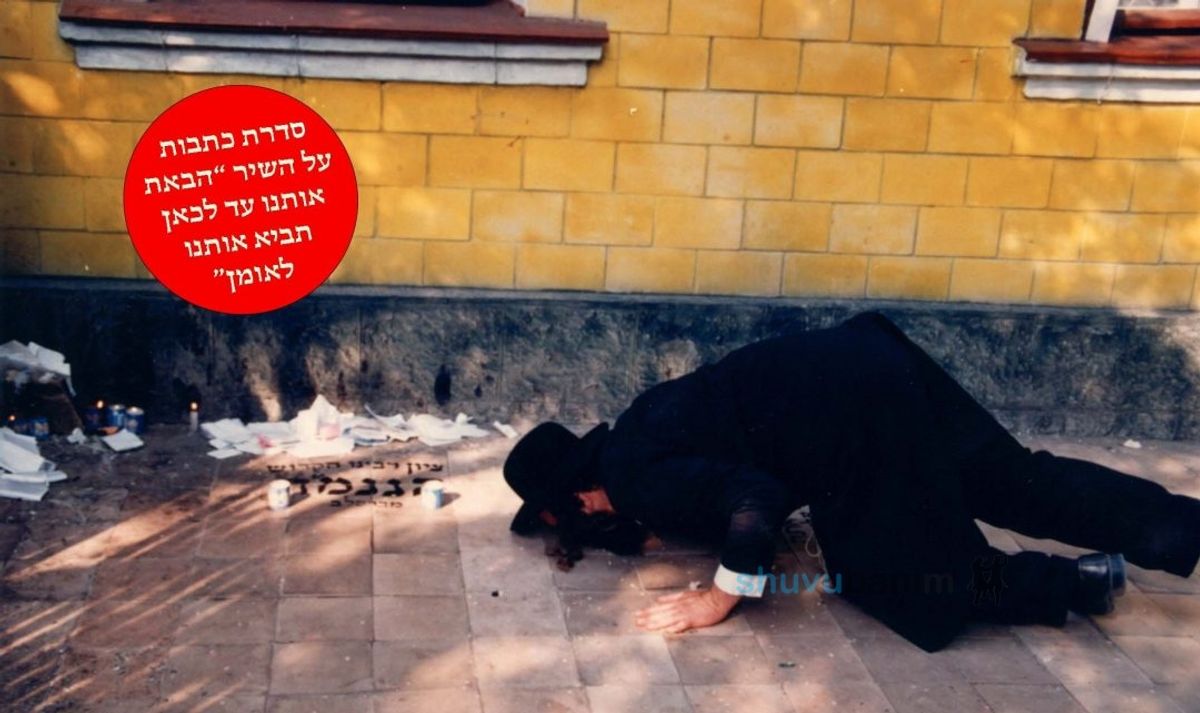
On the continuation of the verses of the song of longing for Uman, composed by our teacher Rav Berland during the Iron Curtain era.
“Without shopping and purchases, for every second is a waste”
Regarding the moment this verse, whose style sounds slightly unique, was connected, Rabbi Yosef Marian recounts to Hitchadshut: “It was during a trip to Uman in the month of Cheshvan 5745. From the hotel, Anash (members of the community) received special permission to travel for a few hours to the tziyun (gravesite) of our holy Rebbe, accompanied by an Intourist representative, of course. In the middle of the journey, the bus stopped near a huge supermarket, and they allowed the passengers—tourists from their perspective—to get off for shopping. Perhaps they wanted to show them that in Russia there is everything, unlike what is claimed against them in the West. The people went down to the store and bought some gifts and souvenirs from the trip.
There were people who took advantage of the stop to buy cigarettes cheaply. Either way, this preoccupation interrupted the continuity in which all the members of the group, traveling with true self-sacrifice to the holy tziyun in Uman, had been immersed until then.
Rav Berland shlit"a, of course, did not get off the bus. It seemed that this matter was uncomfortable for him, but the Rav shlit"a did not say a word. After Anash returned to the bus and continued the journey to Uman, the Rav shlit"a began to sing the song ‘You brought us this far’ with an additional verse: ‘Without shopping and purchases, for every second is a waste.’ The message was well understood by the traveling public.
“Without missiles and masks, only Tehillim and Masechtot”
Veteran members of Anash remember well the Gulf War, in which the oppressor from Baghdad rained thirty-nine missiles upon our holy land, with the fear that these missiles carried non-conventional weapons. Our teacher the Rav shlit"a then added to the song the famous verse: “Without missiles and masks, only Tehillim and Masechtot,” and instructed all the students of the holy Yeshiva that there was no need to enter sealed rooms. Instead, our teacher the Rav shlit"a instructed that when an alarm is heard, they should go up to the roof of the Yeshiva and perform dances to sweeten the judgments. And as we all know, these missiles did not succeed in sowing the expected destruction, as the Creator of the world watches over His children with His compassion.
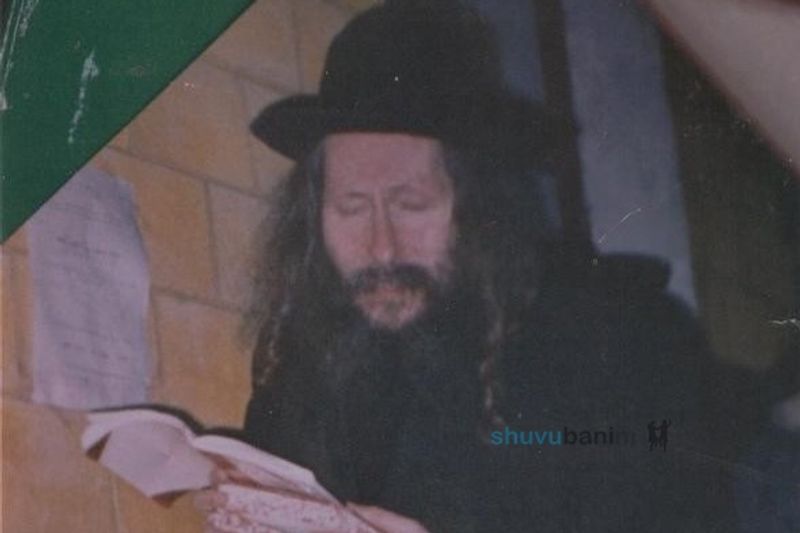
“I remember,” one of the veteran students told me years later, “when Rav Berland instructed us to go up to the roof of the Yeshiva and dance, the Arab neighbors thought we had lost our minds... On one of the occasions when we were dancing on the roof to sweeten the judgments, a Scud missile passed over our heads. It was a terrifying sight.”
Our teacher the Rav shlit"a in prayer at the holy tziyun in the nineties:
“We will establish yeshivot and hotels, around our holy Rebbe”
The verse in the song, “We will establish yeshivot and hotels, around our holy Rebbe,” was supposed to be fully realized even then. One of the plans of our teacher the Rav shlit"a was to establish a large area in Uman that would be under full Jewish control. An area that was supposed to include the tziyun, the tall buildings adjacent to it, a huge Kloiz, and additional holy structures alongside hotels for the comfort of those coming to the holy tziyun in Uman. All this was in an agreement between our teacher the Rav shlit"a and the Communist regime, which was already in the stages of disintegration. This agreement was also supposed to include the nearby airport, the main subject of the article before you. However, various people made sure to sabotage the plans of our teacher the Rav shlit"a and bring everything to naught.
As Anash testify, when they built the current Kloiz, our teacher the Rav shlit"a asked those in charge to build a synagogue with tens of thousands of seats that could accommodate all the multitudes who would come with the help of Hashem. The Rav’s words were met with mockery: Do you think that in a few years so many people will come? How could that be? Now that Uman is open and people are excited, crowds are coming, but in the future, if only there will be a few thousand each year. That is how they responded, and they firmly rejected the “delusional” idea, from their perspective, of building a huge and unnecessary building.
This misguided approach is what also stood behind the idea of those activists who refused to buy the buildings around the tziyun and also opposed the other things our teacher the Rav shlit"a wanted to build in Uman, and they settled for building the Shaarei Tzion hotel (which, by the way, even for it, those who brought the investors for its construction were the students of our teacher the Rav shlit"a, a fact that did not prevent the people in charge later from preventing the sale of beds in the building to the students of our teacher the Rav shlit"a. It is no wonder, then, what happened to the fate of the hotel...). But over the years, everyone understood the mistake in this, when the apartments around our holy Rebbe remained in the hands of uncircumcised gentiles with all that it implies: price hikes, modesty issues, shatnez, and more.
“By guarding our eyes on the roads, we will merit the surrounding lights”
This song, which has become for many a cornerstone song that strengthens and awakens all year round and in every situation regarding the guarding of the eyes, was composed by our teacher Rav Berland shlit"a in Kiev, and as Rabbi Yosef Marian recounts regarding it:
“A certain hotel in Kiev where we stayed was opposite the local university, in which, of course, modesty did not prevail, according to the best of Russian fashion. We, who arrived in the terrifying Russia, wanted to see and try to understand what Russia is. Our teacher the Rav shlit"a, for whom the subject of guarding the eyes was in his very bones, and who would in any case awaken us about it all year round in general and on trips in particular, added this important verse. A prayer song to Hashem that He should help a person overcome his curiosity, which can cause a deficiency in the holiness of the eyes.”
As has been told many times, on those trips where Anash walked with absolute guarding of the eyes, the gentiles would stand and watch them, some in astonishment or mockery and some in open admiration, when not once did this cause a tremendous sanctification of Hashem’s name, as Rabbi Yalon Yitzchaki recounts.
Even in later years, when our teacher Rav Berland shlit"a established the travel company ‘Maayanot HaChaim’, he did not rest or remain silent until he succeeded in arranging that the landings in Uman would be into a separate terminal, when in the first stage, passport control and luggage collection were in special tents built for this purpose. So that the passengers could merit absolute guarding of the eyes on their way to our holy Rebbe, both upon arriving in Kiev and upon leaving it. Large sums were paid until they reached this situation.
In his generosity, and because our teacher the Rav shlit"a wanted more Jews to merit guarding their eyes, he allowed other travel companies to use this unique terminal, to increase holiness in Israel.
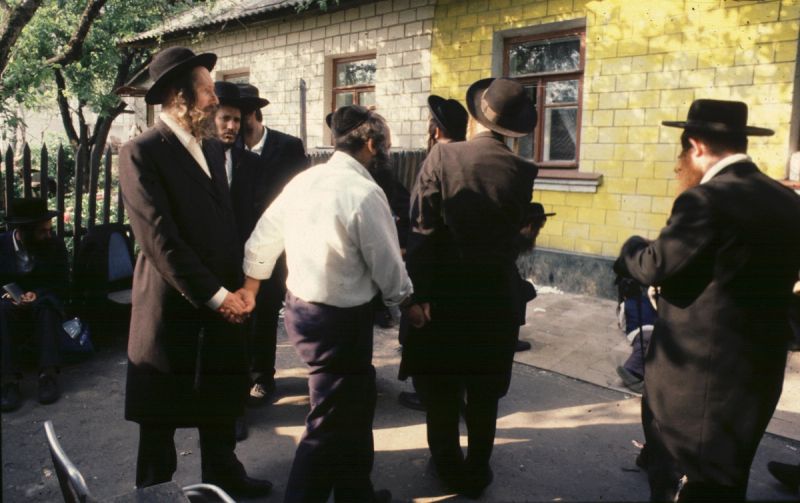
Our teacher Rabbi Eliezer Berland shlit"a dancing at the holy tziyun in the nineties:
Subscribe to Our Newsletter
Receive Torah articles and inspiration directly in your inbox