
A Lesson for Shuvu Banim Yerucham in the Home of The Rav
the Gaon and Tzaddik Rabbi Eliezer Berland shlit"a
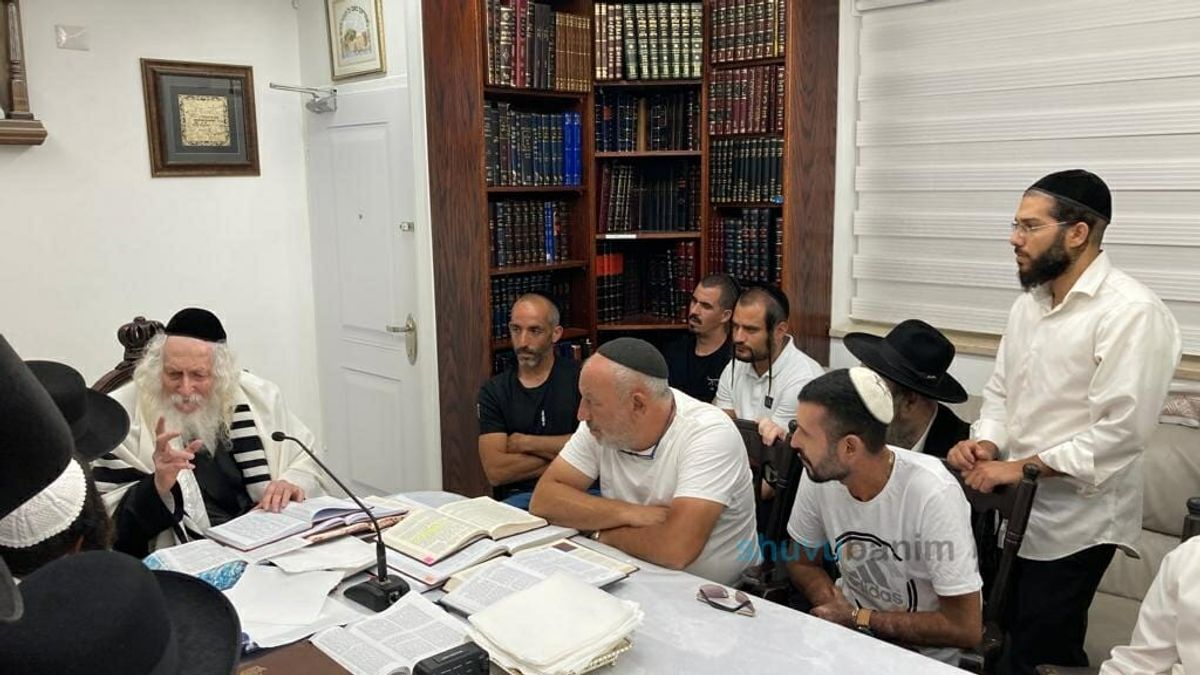
'Shuvu Banim Yeruham' Activity ○ Summary of the lesson at the home of Rav Berland shlit"a
The residents of Yeruham were privileged that over ten years ago, the 'Shuvu Banim' synagogue was established in their southern city. Although the synagogue is housed in a public shelter, it is a magnet for young people, especially due to the prayers with melodies held there. Furthermore, students of our teacher, Rav Berland shlit"a, who arrive from time to time to deliver lessons at the synagogue, add content and holiness to the many young people growing up in the southern city whose souls have been longing for the word of Hashem...
The 'Shuvu Banim Yeruham' community was privileged to enter the holy presence last week, on Wednesday night, the 28th of Av, for a special lesson. In the lesson, our teacher, Rav Berland shlit"a, spoke about the matter of 'Mount Gerizim and Mount Ebal' in Parshat Re'eh, and spoke about the matter of Shimon and Levi who killed all of Shechem. Afterwards, he spoke about the importance of the Tribe of Dan, which is the rearguard for all the camps, and which merits judging all of the people of Israel favorably, just like Hashem.
Following this, he spoke about the importance of the woman, and how much one must honor his wife with beautiful words. Before you is a portion of the lesson:
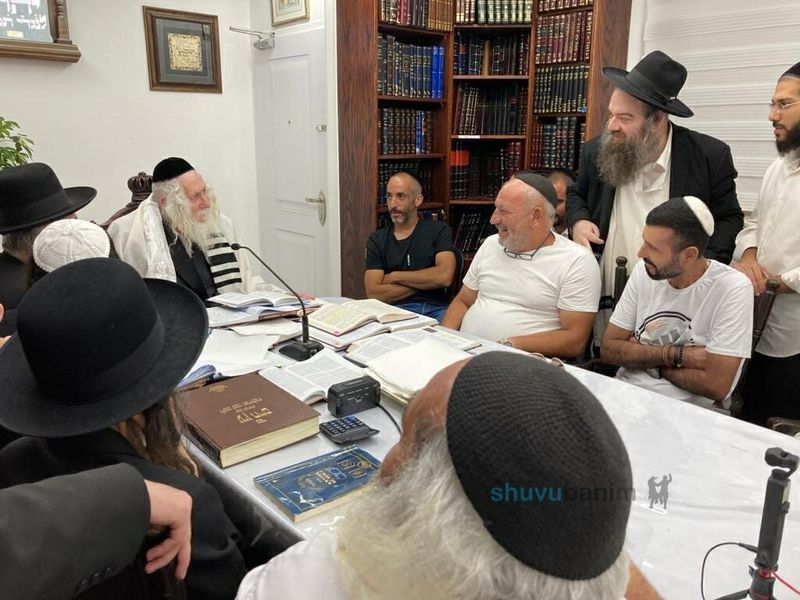
'It is written, "Your iniquity, O daughter of Zion, has come to an end" (Lamentations 4:22). After Tisha B'Av, we go out in dance; "Your iniquity, O daughter of Zion, has come to an end"—there is no iniquity; for a woman, there is no iniquity. A man has evil inclinations, not a woman. A woman is only what she is tempted into, what she is led into sin by, but if she finds her own path, she has no evil inclination. Therefore, she is exempt from tefillin, because tefillin come to atone for sins; tefillin come to atone for everything a person does. I just saw now in the book of R' Levi Yitzchak, the father of R' Menachem Mendel [the last Lubavitcher Rebbe], that he says that the tefillin, the tzitzit, and the tallit come to atone for the evil thoughts that a person sins with every night. He has thoughts about women, thoughts about this... He does not know how to get rid of them. So he must know that only his wife—my wife is exactly a "pillar of fire, a pillar of cloud." The woman is both a pillar of fire and a pillar of cloud.'
Afterwards, he spoke about the matter of Miriam and Aaron who spoke against Moses, and he further spoke about the matter of peace in the home. Following this, he spoke in depth about the Torah laws of inheritance, and spoke about the incident of the concubine in Gibeah, and the matter of Samson's strength against the Philistines. At the conclusion of the lesson, he spoke about the matter of the division of the land and how every lot would declare its own place, and that if it had not been written regarding the place of the Holy Temple "the place that Hashem will choose..." but rather it had been written "Jerusalem," no tribe would have agreed to the division. For the Geulah will come only from Jerusalem!
After the lesson, our teacher, the Rav shlit"a, concluded with Kaddish accompanied by melodies, and went out for the Maariv prayer, as he does every evening, in the prayer hall courtyard with a large crowd.
Subscribe to Our Newsletter
Receive Torah articles and inspiration directly in your inbox