A Lesson for the 'Afuyim Belibo' Group
For the Study of the Books of Our Holy Rebbe zy"a – At the Home of the Gaon and Tzaddik Rabbi Eliezer Berland shlit"a
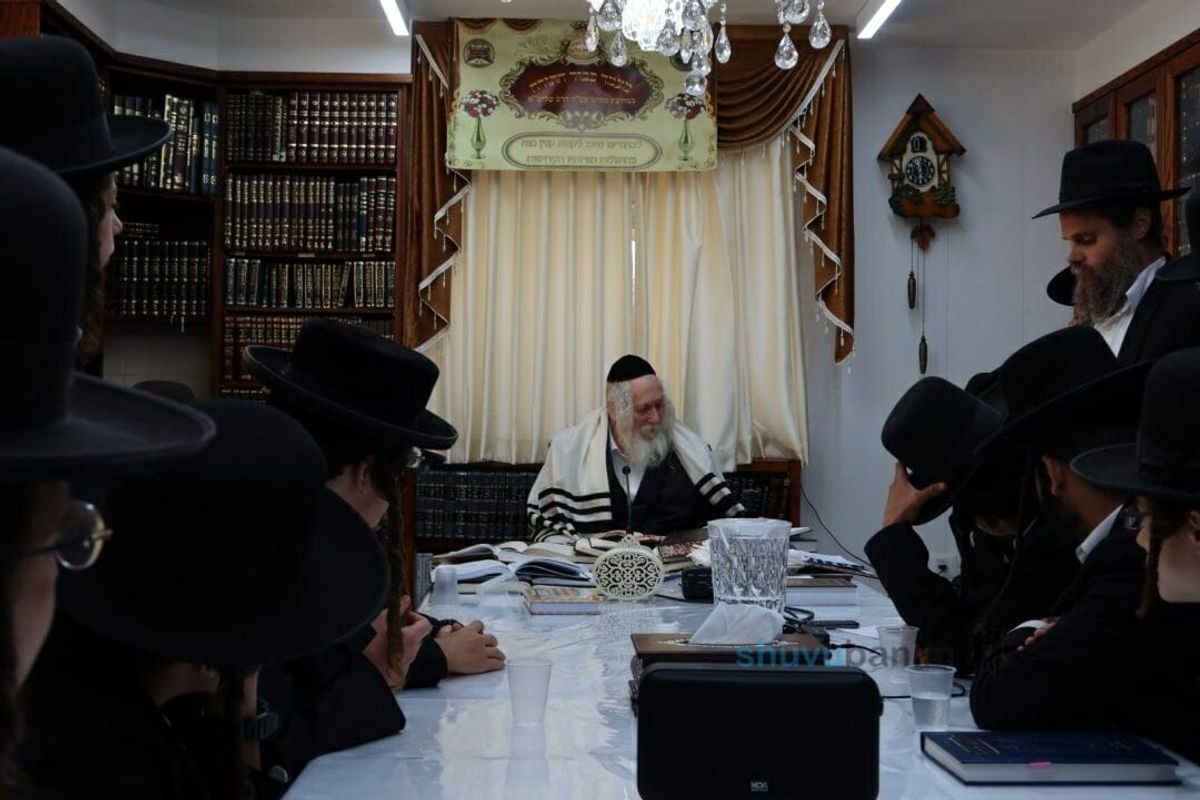
The 'Afuyim Belibo' Group for the Books of Our Rebbe - Torah 21 ○ A Fiery Lesson on the Teachings of Likutey Moharan for Young Men ○ Distribution of the New Book 'Our Holy Rebbe of Breslov'
The precious young men of the Shuvu Banim holy community merited to unite together, and with the encouragement of our teacher, the Rav, Rabbi Eliezer Berland shlit"a (may he live for many good days), they established a wonderful chaburah (study group) called 'Afuyim Belibo' (Baked in His Heart) to study the teachings of our holy Rebbe of Breslov zy"a (may his merit protect us) in depth. During the past month, the young men diligently studied Torah 21 in Likutey Moharan and were tested on it with great proficiency.
In order to provide chizuk (encouragement) to those young men who invest their free time in studying the teachings of our holy Rebbe, the precious young men entered for a lesson at the residence of our teacher, the Rav, Rabbi Berland shlit"a. Initially, the young men sang several soulful melodies until our teacher, the Rav, Rabbi Berland shlit"a, entered the living room. Then, our teacher, the Rav, Rabbi Berland shlit"a, began to deliver a fiery lesson on Torah 21, regarding the matter of "When you light the lamps..." (Numbers 8:2), explaining that he [Aaron] did not change—meaning he merited the Keter (Crown) through humility. Afterward, he spoke about the concept of Makifim (Transcendent Lights) that Rebbe Nachman discusses at the end of Torah 21, explaining that for a person to attain Makifim, he must study.
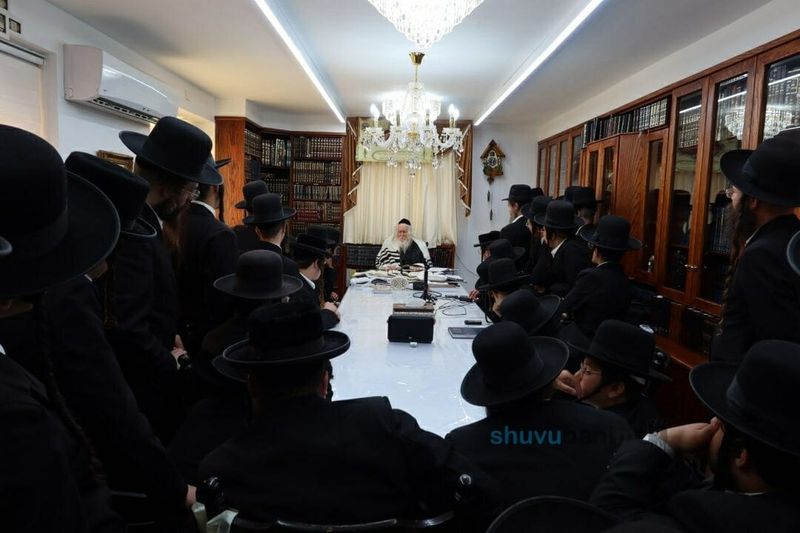
Our teacher, the Rav, Rabbi Berland shlit"a, during the lesson for the 'Afuyim Belibo' group
Afterward, he mentioned the concept of the "nose," which represents humility, and how Miriam spoke against the honor of Moshe, who represents the aspect of the seven lamps and who merited humility. Then he began to speak from Torah 46, explaining that all the lashon hara (evil speech) a person hears about the Tzaddik is because of the person's own spiritual blemishes. Before you is a short excerpt from the lesson:
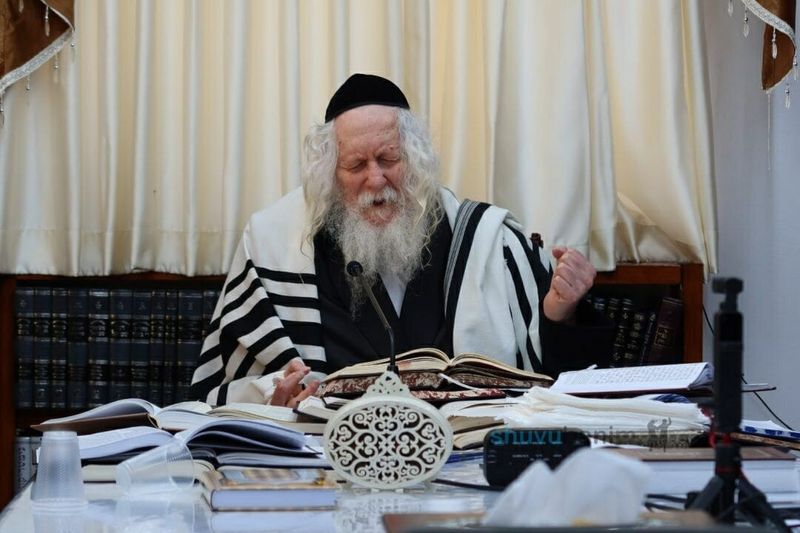
So what does our Rebbe say? Do you have a kushya (difficulty/question) regarding the Tzaddik? Start crying out to Hashem, start weeping! Do you hear talk against the Tzaddik? Go and weep: "How did I hear talk against the Tzaddik?" The Rebbe says in Torah 5, "The ear that hears the reproof of life shall abide among the wise" (Proverbs 15:31). These are your own blemishes. You hear the "reproof of life"? You hear talk against the Tzaddik? People are speaking about him? They bring you "proofs" that he murdered, that he slaughtered, that he did all sorts of things? Then start weeping over how you even heard it at all! "I answered you in the secret place of thunder; I tested you at the waters of Merivah, Selah" (Psalms 81:8). They want to cleanse you of your blemishes. You hear talk against the Tzaddik? Some lashon hara (evil speech) against the Tzaddik? This is the tikkun (rectification) of the ears.
And every kushya (difficulty) one has regarding the Tzaddik, as brought in Torah 46, is so that the person will cry out to Hashem, for the word Kushya (קשי"א) is an acronym for "Shema Y' Koli Akra" (Hear, Hashem, my voice when I call). He mentioned the terrible questions that Eliezer, the servant of Abraham, had regarding Abraham when he sent him specifically to Charan to choose a bride for Isaac. Afterward, he spoke about the virtue of utilizing time, especially during the Bein HaZmanim (inter-session) days. He continued to speak on various related matters and told stories of Tzaddikim on this subject. Then he continued to speak from Torah 21 about the concept of the "nose," which is humility, and that this is merited through bizyonos (humiliations). He began to speak about the greatness of one who accepts humiliations, and even more so, the greatness of one who seeks out humiliations for himself, for then he merits the aspect of Chani (Grace) as brought in Torah 12. Finally, he concluded with a summary of Torah 21, noting that Rashi says regarding 'Be'haalotecha (When you light) – this teaches that he did not change,' but the truth is that he did change, in that he raised the lamps to the Keter (Crown). This is only merited through humility and by accepting humiliations and rejoicing in them; in this way, a person will reach all spiritual attainments throughout all the days of his life.
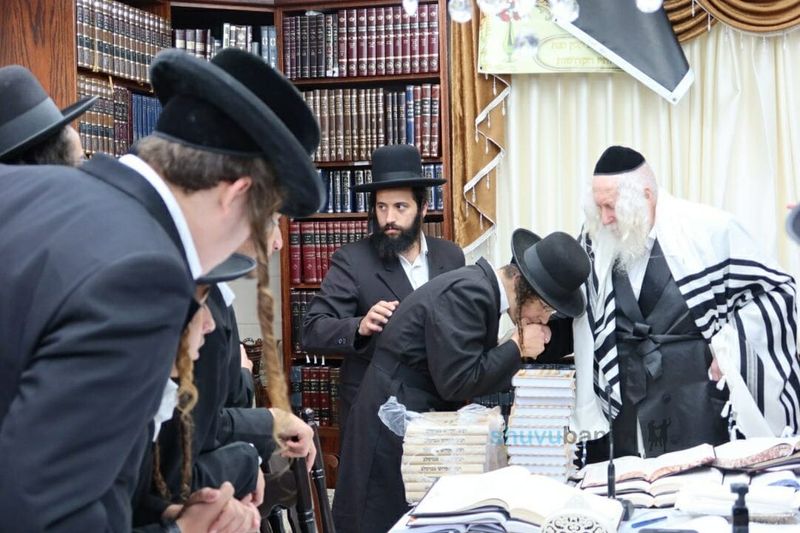
Afterward, our teacher, the Rav shlit"a, concluded the lesson with Kaddish, and the excited young men passed by to receive from his holy hand the new book published from the teachings of our teacher, the Rav, Rabbi Berland shlit"a, "Our Holy Rebbe of Breslov," regarding the true path in Breslov as he received it from his teachers.
During the distribution of the book 'Our Holy Rebbe of Breslov' to the young men
Subscribe to Our Newsletter
Receive Torah articles and inspiration directly in your inbox