
A Story of the Master of Prayer - From the Renewal Journal Tevet 5781
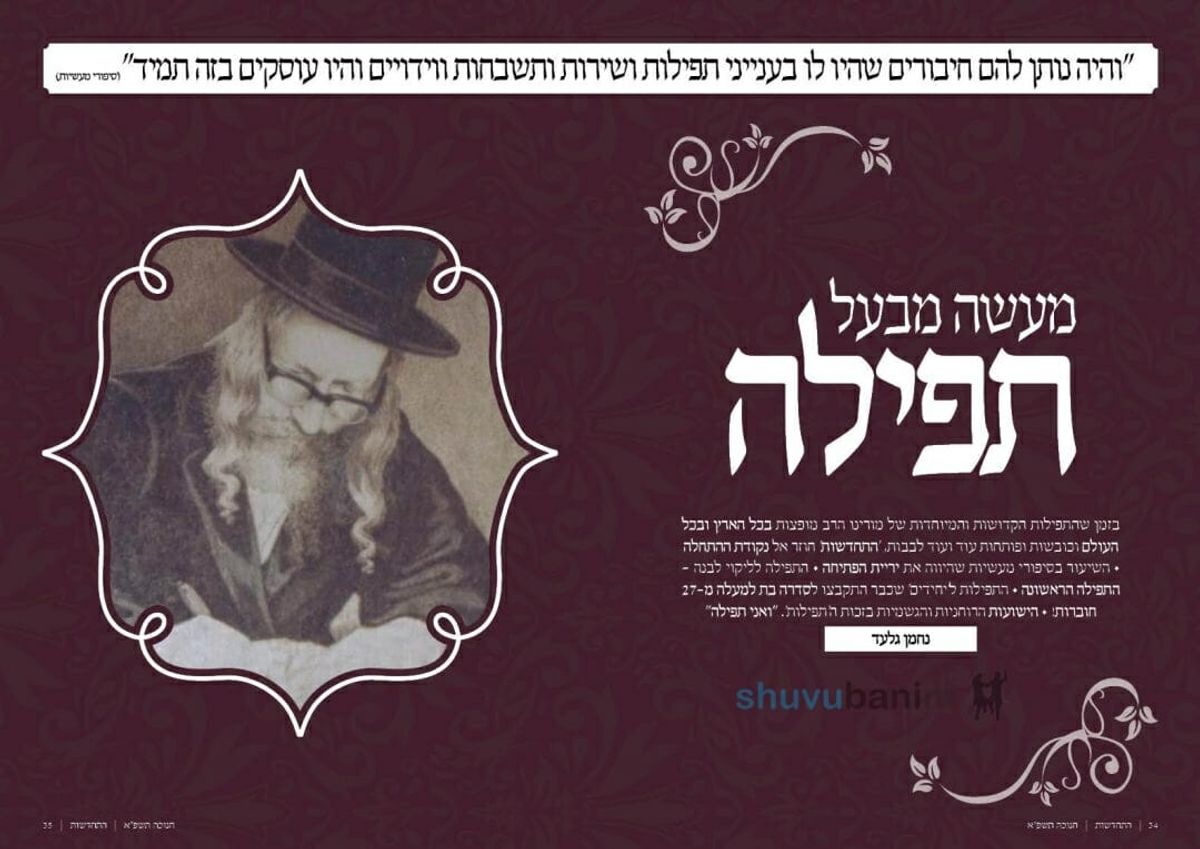
At a time when the holy and special prayers of our teacher, the Rav, are being 'snatched up' all over the country and the entire world, conquering and opening more and more hearts, 'Hitchadshut' returns to the starting point.
*The lesson on the Tales of Rebbe Nachman that served as the opening shot *The prayer for the lunar eclipse - the first prayer *The prayers for 'individuals' that have already gathered into a series of over 27 booklets! *The spiritual and physical salvations in the merit of the 'prayers'. "And I am prayer"
Shabbat morning. He curls up in his blanket; he has been awake for a while, but his heart is still asleep. A dismal week has passed for him, and the memories are not great—he was kicked out of class twice, and at home, the situation is not bright, to put it mildly. The slippery slope leading outward is already beneath his feet, and he finds no reason to shake himself out of bed. But then, a spark lights up in his eyes; last week he received a 'prayer' from the Rav. It was in the middle of the prayer, while they were singing 'Zera Chaya V'Kaya' (viable offspring). Perhaps he will receive one today, too?!
That is enough for him to get up, get organized, and walk the whole way to the 'Yeshiva' in the Old City. He pushes through the crowd, making a path for himself near the prayer stand. In the synagogue, they are already at 'Nishmat'; soon the great dance with the melody before Yishtabach will begin, and here he succeeds in standing next to the Rav. The Rav looks at him, smiles at him, and yes, gives him a folded yellow page again this week... a 'prayer'...
Years have passed; he is already a father to children. Perhaps he is not a Kollel student, but he is certainly a kosher Jew who is meticulous about the light as well as the grave, and he knows how to tell that all of this is in the merit of the 'warmth' and the attention he received from the Rav. Those prayers that the Rav wrote especially for him each week—prayers that, beyond their content, folded within them infinite love and radiated warmth that gave him the strength to overcome all the waves, and in their merit, he is who he is today.
···
'My fire will burn until the coming of Mashiach,' said our holy Rebbe, when he looked and saw the end of all generations—our dark generation—and paved paths and trails for each and every one, at any time and in any place, so that he could truly draw close to Hashem and be a truly kosher person.
And here the son asks: How, in such a dark and lowly generation, can a person connect to this holy path, when 'the wicked walk all around,' and the afflictions of the time threaten in a way that has no equal?! Who is the one who reveals the ways and paths that emerge from the 'flowing stream' and can water everyone?!
This is none other than the true student of the generation, the tzaddik of the generation who has completely nullified himself to the will of our holy Rebbe, to the fulfillment of his advice, and to their transmission to the collective and the individual. Our teacher, the Rav shlit"a, ever since he drew close to Breslov, has nullified his entire being, his essence, and his privacy, in order to draw and water from the teachings of the Rebbe, and this wonderful tzaddik, whose head reaches the heavens and to whom no secret is hidden, is also in the category of a 'ladder set on the ground.' He knows how to walk against the spirit of each and every one.
The Rav knows how to descend to us, to understand us—the trials, the difficulties, the falls, and the transitions—and the path, the holy path of Breslov, he extends to us as a lifeline through those prayers that connect heaven, earth, descent and ascent, crying and gratitude. And there is no matter, time, or subject for which there is no prayer, for our Sages have already taught us that 'Hashem does not deal harshly with His creatures,' and if we are in this generation—they do not shout at us for why we are in such darkness and confusion, but rather why we do not pray, why we do not ask and plead. For our prayer, our cry, and our supplication—for this they yearn in heaven. This is what is expected of us: to pray that we persevere in the study of Torah, that we guard our eyes, that we be saved from the afflictions of the time, that we distance ourselves from conflict.
All this and more we have in abundance and in a language that opens hearts in those awesome prayers from our teacher, the Rav shlit"a, and through those prayers, we receive perspective, a way of life, and the correct outlook on everything surrounding us. One of the greatest students of our teacher, the Rav shlit"a, and one of the great Breslov mashpi'im, Rabbi Meir Malka, defined it well: "The Rav is the father of this generation; he wrote for us and placed in our mouths the cries for our generation. The confessions and the longings, and the humility and lowliness that all these prayers contain—only someone who lives this and is immersed in this can write it" (Lehavot Esh).
···
'Rav, I want a prayer'—who does not know this sentence, the yellow pages with the legendary handwriting, black fire upon white fire, with the gematriot numbers scribbled all over the page. Burning prayers.
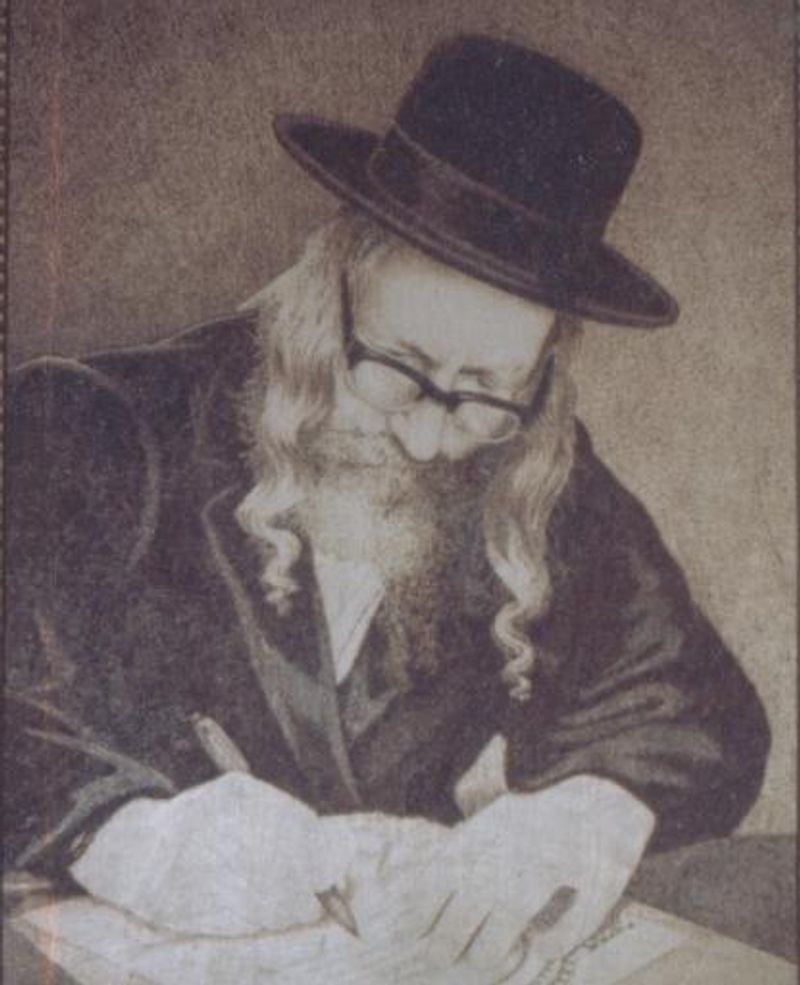
Today, these special 'prayers' have 'gone out to all the land and the world.' Dozens of booklets containing prayers for every matter and issue; and of course, 'Tefillah L'Ani' (Prayer for the Poor) - the series of prayers for the holidays, which one can see the people of the tzaddik leafing through long before the arrival of the holiday, and they merit a 'great preparation' for the approaching holiday.
We no longer know any other reality, but the veterans of the Yeshiva remember how it all began. Rabbi Moshe Shaul shlit"a, one of the veteran students of our teacher, the Rav shlit"a, whose wife tichye merited to type the first prayers, takes us back three decades.
"It started when, on one of the Sabbaths, the Rav shlit"a spoke with enthusiasm in the Tales of Rebbe Nachman about the matter of the Master of Prayer and his people who live outside the settlement, and everything they accomplish is solely through prayer. And the Rav concluded the lesson with these words: 'A person needs to pray all his life that he should be among the people of the Master of Prayer' (as told in the Tales of Rebbe Nachman, Tale 12). The lesson made a strong impression on me. After the lesson, I did hitbodedut (secluded prayer) and prayed that I, too, would merit to be among the people of the Master of Prayer.
The next day, on Sunday night, there was a lunar eclipse, and the Rav wrote a prayer about it. This was the first prayer (attached is a photo) that the Rav published, a prayer regarding the matter of the lunar eclipse. They distributed it to everyone in the Yeshiva, and afterward, we rented a bus and we all traveled to the grave of Samuel the Prophet at midnight, we did hitbodedut, and afterward, we all said the prayer together. There was a great light there.
At first, the Rav issued prayers for the public, and only after a few years did he begin to write prayers for individuals as well. At that time, the Rav shlit"a also began to write prayers for the holidays, and my wife tichye, who even before that had already been typing the lessons of the Rabbanit tlit"a, began to type the prayers of the Rav as well. The first holiday for which we merited a prayer was Chanukah. Back then, it was printed on large A4 pages, with a yellow cover. The prayers were not yet divided by letters, and they were not yet punctuated, and of course, without all the additions that exist today.
The prayers were not yet known by the name of the series 'Tefillah L'Ani,' but rather 'Prayer for Chanukah,' 'Prayer for Purim,' etc., like that for every holiday."
The prayers were received by Anash (the community) with tremendous enthusiasm. Suddenly, they saw the holidays and festivals in a tangible light that touched each and every one for his own personal service of Hashem and his spiritual state. The burning fire in the prayers ignited hearts and gave everyone a window and a view into the essence of the holiday in which they were found. At first, they still did not know the Torah scope of the prayers and how they incorporate within them from the entire Torah itself—from the Tanakh, Gemaras, Midrashim of the Sages, the holy Zohar, Poskim, books of Mussar, books of Chassidut in general, and the books of our holy Rebbe in particular. Only years later, when they were published again in the 'Tefillah L'Ani' series, the prayers with the addition of sources and notes, only then were we given a glimpse to see a portion of the scope and the inconceivable knowledge that these holy prayers contain, and we will elaborate on this further.
Rabbi Moshe Levinson shlit"a says that he once heard the Rav shlit"a express himself about the prayers he wrote for the holidays: "I hung my body on a tree, and thus, with the soul alone, I wrote these prayers; only in this way is it possible to write these prayers."
The Enormous Series - 'Tefillah L'Ani'
Alongside the distribution of the prayers for individuals, there were those who took it upon themselves to beautify and glorify the prayers for the holidays; they re-typed the prayers, punctuated them, divided them into sections, and published them bound in an elaborate cover. Afterward, the 'Har Zion' institute was established, which labored on the publication of the prayers of our teacher, the Rav shlit"a, and in it, they placed an emphasis on adding sources and notes to the prayers. "The investment and effort were enormous," says Rabbi Natan Glinsky, who was one of the extensive team that took upon itself this holy work. "The Rav, after all, wrote the prayers without books and sources, but from his mighty mind, yet we saw tremendous Divine Providence.
"Many of the important Breslov figures were amazed by the special scope and the strengthening content. My father, Rabbi Nachman Glinsky z"l, also once told me some sources for the 'Tefillah L'Ani' of Purim. At that time, there were not all the Torah databases that exist today, with which one can reach all the references in a short time and with relative ease, and therefore, special dedication to the matter was required from us. Later, more great investment was added, and then the prayers were released in the book series known to us all, 'Tefillah L'Ani,' with the magnificent brown cover, where more references were added, and other important sections, such as 'Lessons of the Prayer'—a section where they extract for practical application sublime matters regarding the essence of the holiday that emerge from the contents of the prayer, and also according to topics in the service of Hashem. There were also prayers in which the Rav added several significant additions over the years, such as in the prayer for Purim."
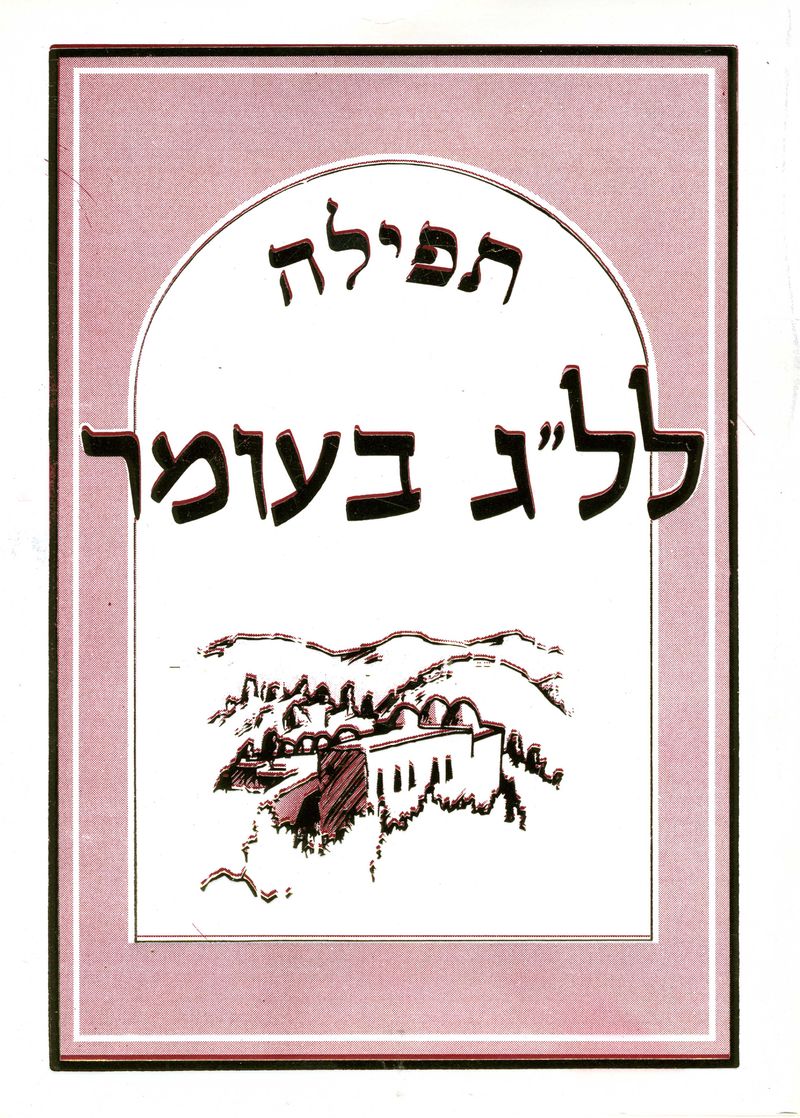
Thus we merited prayers for Passover, in which the virtues of this holy and awesome night are described, and about the days of the world from the holy Patriarchs and onward when they tried to continue this holy illumination. For Lag BaOmer—to say at the grave of Rashbi in Meron, and in it is revealed to us a little of the splendor of the soul of our master Bar Yochai. For the holiday of the Giving of the Torah, in which our teacher, the Rav shlit"a, opens the heavens for us and brings down Torah for us with thunder and lightning. In it is also revealed to the one who contemplates the prayer all the service of the giants of the generations when they wanted to continue the secret of the two tablets, from Rebecca with Jacob, through the mandrakes of Leah, and the continuation of the soul of King Mashiach through Ruth and Boaz.
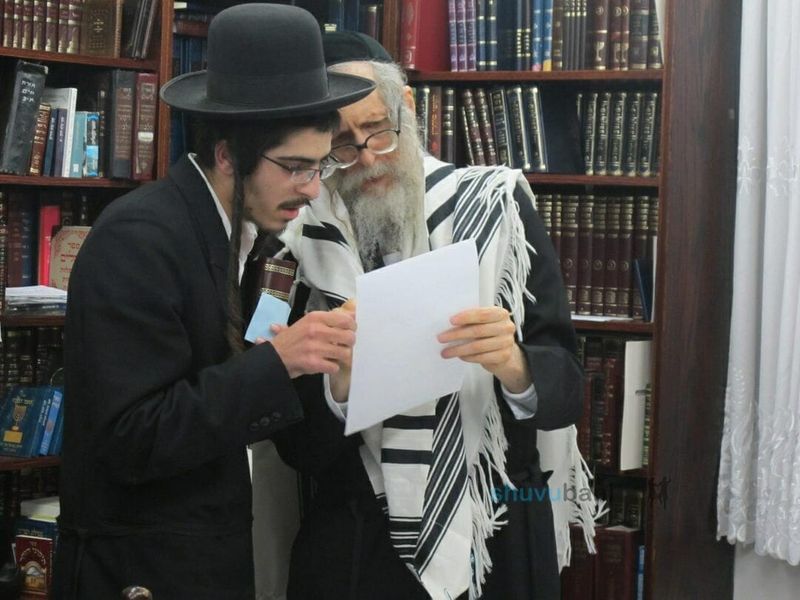
Likewise, we merited in the series tremendous prayers for the holiday of Chanukah, when the illumination of the Menorah that the prophet Zechariah saw is revealed: "I saw, and behold, a Menorah of gold, all of it, and a bowl on its top...", prayers for the New Year that begins on Tu B'Shvat, and in it are awesome prayers for Shabbat Shirah that follows, in which our teacher, the Rav, shows us how the entire creation sings to its Creator. And a prayer for Purim regarding the war of Hashem against Amalek from generation to generation through Moses and Joshua.
An interesting anecdote is that for the High Holy Days, our teacher, the Rav shlit"a, did not write prayers. Once, our teacher, the Rav shlit"a, expressed himself about this, that if he wanted to write about the holidays of Tishrei, he would have to lock himself in a room for long days—it seems he said for two weeks!—without leaving the room.
In this series, there is also the volume 'Prayer for the Grave of our Holy Rebbe.' These were prayers that the Rav shlit"a wrote over several years, and then they came and gathered them and asked the Rav for more prayers to say at the holy grave, and thus we merited this awesome prayer, which for everyone who says it at the holy grave, his heart simply opens with tremendous awakening. A prayer that gives a 'feeling' in part of the greatness of the soul of our holy Rebbe. Likewise, the volume 'Chalakka - Education of the Children' was added to this series, about bringing the child into the Talmud Torah and about his education, from the books of the holy Ari, from the prayers of Moharnat zya"a, and the prayers of our teacher, the Rav shlit"a.
Prayers for the Graves of Tzaddikim
"Among the prayers that the Rav would write for private individuals (as will be elaborated below) were also prayers for the holy places," says Rabbi Shalom Fuchs. "In those years, the road to Rachel's Tomb was closed, and our teacher, the Rav, would send Anash specifically to pray in those places and even wrote for them prayers that they would say upon arriving there. Thus, a collection of prayers was created for all the places they would go to then: the Western Wall, Hebron, Rachel's Tomb, Halhul, and the other graves nearby.
"Afterward, there was a trip of the community's women to the graves of the Ten Martyrs, and our teacher, the Rav, wrote prayers for those places as well, and we, who wanted prayers for more graves and holy places, asked our teacher, the Rav, on one of the occasions for prayers for more graves of tzaddikim. Our teacher, the Rav shlit"a, said: 'On the contrary, bring names of more places and I will write prayers for you.' And indeed, we would write to the Rav names of Tannaim and receive awesome and special prayers.
"In every prayer, the Rav brings at least one story and one statement of the Tanna or the Tzaddik, alongside words about his greatness, etc. There was a period when we merited to pass to the Rav every day two or three names of graves of tzaddikim, and receive from the Rav after about two hours special prayers rich in content and amazing scope. Thus, more and more prayers gathered, until, with the help of Heaven, we had in our hands a special collection of prayers for over sixty holy places."
"And indeed, thank God, in the month of Iyar 5763, we merited to complete the work and publish a special prayer book of two hundred pages, containing awesome and awakening prayers for the graves of the tzaddikim. The prayers were divided according to the order of the Aleph-Bet, according to the order of the places and cities where the holy graves were, with pictures at the beginning of each prayer. A must-have book for anyone who arrives at the holy places (by the way, today a limited amount remains, and at a special price for the merit of the public. Highly recommended for anyone who does not yet have the booklet to buy it. It can be obtained at the stand of Rav Shushan in the prayer hall).
Prayers for Individuals
Until now, we have written about the prayers for the holidays and other prayers that were written especially for the public, but in the last two years, we have been blessed with the new prayer series 'Leket Tefillot' (Collection of Prayers), which already today contains over twenty-seven booklets on every topic you could possibly want, and the hand is still outstretched, with the help of God. These prayers are actually prayers that the Rav wrote for individuals over the years, and we owe the merit of their publication to several dear Avreichim from Anash who, with self-sacrifice, toil, and great expense, brought them to the world (with the consent of the recipients of the prayers, and of course with the omission of the personal details that were written in them).
Several booklets contain prayers about Torah—whether in-depth, by topic, or by book, etc. Prayers for Chatzot (midnight), for hitbodedut, to merit prayer, for righteous children, for a shidduch (marriage match), for viable offspring, several booklets for prayers for healing, and many other topics.
One unique individual among those engaged in this holy work, who for years has dedicated his full energy, strength, and time for this lofty goal, is the dear Avreich R' Shalom Fuchs, with whom we sat for a special conversation about the prayers.
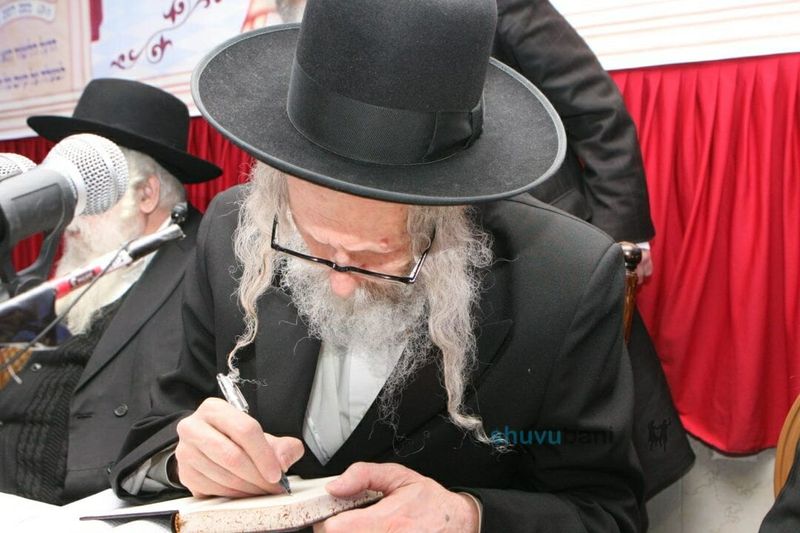
"The prayers for individuals started around the year 5756," says R' Shalom. "We were then young men in the 'Bnei HaNe'urim' group for the service of Hashem that was in the building of the Sha'arei Torah Yeshiva. There was a group of grooms there who asked the Rav for prayers for guarding the eyes, eating in holiness, and a variety of topics in the service of Hashem. The prayers that the young men received were typed on the group's computer. Long prayers full of burning fire, with pleas and cries to Hashem. In those prayers, there were still not the gematriot, etc., that we know today.
The Rav would give prayers then mainly to young men and children. Very quickly, it gained momentum, and people asked the Rav for prayers—mainly on Sabbaths, when they saw the Rav more—each one for what he needed, and in the week that followed, during the prayer on Shabbat, the Rav would bring to each one what he had asked for! The Rav would remember who asked and what he asked for. The phenomenon expanded, and in the years 5760 and 5761, I remember that we were already typing on average close to seventy prayers every week. I remember that I asked the Rav beforehand, 'Can I look at the prayers that the Rav wrote for people in order to type them?'
Our teacher, the Rav shlit"a, thought about it for a certain time and afterward approved it for me. The Rav expressed his desire that they be printed and brought to the many, and also said that everyone can adapt the prayer for himself, such as, for example, if it is a prayer written for a woman and it is also suitable for a man, one can change the language, etc. I saw then that many children would receive prayers, and in them, the Rav would really go into minute details with them on matters that concerned them, each one and his issue. It was truly amazing to see how the Rav knows every child—what he is going through and in what he needs strengthening, whether it is honoring parents, listening in class, and much more. These prayers saved many children. It was for them a special feeling that there is someone who thinks about them and they interest him. It gave them attention and granted them warmth and strength to stand in the trials and transitions of childhood.
Over the years, the matter of the 'prayers' expanded more and more, and often, almost everyone who would enter during the public reception for a blessing and salvation, the Rav, in his goodness, would give him a prayer for his personal matter. Many salvations in spirituality and physicality were received by people through these prayers. The matter became almost a permanent thing until, later on, when the Rav would arrive at any gathering, celebration, or any other place, he would be equipped with many prayers and distribute them to anyone who asked.
In the book 'Lehavot Esh,' it is told that once, at the Bar Mitzvah of one of the grandsons of our teacher, the Rav shlit"a, the Gaon Rabbi Moshe Halberstam zt"l participated in the celebration and saw the Rav shlit"a distributing 'prayer' pages to Anash. Rabbi Halberstam, who did not know what these yellow pages were and what they contained, asked the Rav what he was distributing to his students. The Rav shlit"a explained to him that these were prayers that he had written, and added: 'People see many salvations from this...'
Prayers for the Salvation of the Collective and the Individual
There were also prayers that the Rav wrote for the salvation of the entire Jewish people and even the entire world. Thus, years ago, in the midst of the first Intifada, the Rav shlit"a wrote a stirring prayer that was distributed throughout the country and was received with favor by all layers of the public.
Such is also the prayer regarding the Coronavirus that was published all over the world, translated into several languages (this too is thanks to the efforts of important and dear Avreichim, may each one be blessed by his good name) and distributed in millions of copies. This prayer was written by our teacher, the Rav shlit"a, while the virus was still the domain of the Chinese alone, and in it, our teacher, the Rav shlit"a, already wrote with clear Divine Inspiration everything that is happening with the virus. There, the Rav writes that this is a "disease that wants to eliminate all mortals" and prays for the entire world, as indeed this disease broke out all over the world.
A few months after the outbreak of the disease, researchers around the world discovered that even plants were infected with this virus, a matter that is also written in the prayer: "And You shall bless anew all the fruit of the earth, grain, wine, and oil, and all will be healed in the blink of an eye." Likewise, the great problem of some of those who fell ill with the virus was the 'gifts' that the virus left behind, and this too is mentioned there in the prayer: "And there will not remain from the disease any trace." Also, a prayer for those who were left without a livelihood following the crisis is here: "And through this, He will send blessing and success in all the work of our hands"—all this was written, as mentioned, even before the disease left the borders of China.
And I Have Cast Famine in the Land
The intensification of the subject of prayers began in the last four years. From the time that our teacher, the Rav, returned to the Holy Land and the prayers began in the prayer hall together with the tzaddik, when every day our teacher, the Rav, distributes prayers on a variety of topics that were printed on pages of various colors. Strengthening, awakening prayers that open all hearts. Here too, much of this is thanks to the self-sacrifice of several Avreichim who invest their best time in this holy work so that everything comes out in a clear, special, and eye-opening way. These prayers are also distributed throughout the country, and the demand only continues to grow, as those engaged in the holy work testify.
And essentially, each of us encounters not once and not twice people who are not connected to Breslov at all and are even far from Judaism, who carry these prayers in their pockets and contemplate them daily. It could be a bank clerk, a grocery store owner, a bus driver, and more and more... The generation is thirsty, wants to pray but does not know how, wants to cry out but does not know what. And in these prayers, he finds the necessary prayer. As Rabbi Meir Malka defined it: "The Rav literally puts in our mouth the prayer and the cry, the request and the plea that is suitable for us, and all in simplicity, in words that everyone connects to, in a style that speaks to everyone, and therefore the demand for the prayers is so great."
Prayers for the New Moon
And there are also the awesome prayers for the new moons. Prayers that the Rav shlit"a wrote every month especially for the occasion of the time of the new moon. Prayers containing an amazing collection from books of Kabbalah, Chassidut, and more... on all the matters of the month and the time of the new moon, when all of Anash say them in those sublime minutes of the time of the new moon, which is one of the things that our teacher, the Rav, has instilled in us—to utilize the auspicious and high time every month anew.
In recent years, we have merited another wonderful series of prayer books for the times of the year, and among them: 'Haggadah of Passover' with prayers for the Seder night on the entire order of the Haggadah, 'Megillat Esther' containing prayers for Purim on the entire order of the day, prayers for all the days of Chanukah according to the aspect of each and every day, prayers for the order of the signs on the nights of Rosh Hashanah and other matters of the day, 'Megillat Ruth' containing prayers for all the matters of the holiday of the Giving of the Torah and on the Book of Ruth, 'Nekudah BeHeichaleha' containing prayers for the month of Elul, 'Hu HaRav VeHaTalmid' containing prayers for the Hilula of Moharnat zya"a and the entire month of Tevet, 'Megillat Eicha' containing awesome pleas on the destruction of the Temple and on the Redemption, and the hand is still outstretched. The handiwork of those engaged in the holy work: the important Avreichim R' Michael Twito, R' Ephraim Ravie, R' Shalom Fuchs, and others.
All these are in addition to various prayer books that were released over the years, such as the high-quality book 'Siach Marom,' and other various prayer booklets. During the period of the imprisonment of our teacher, the Rav shlit"a, necessity gave birth to the booklets 'Leket Tefillot for the Healing of our Teacher, the Rav shlit"a' and 'Leket Tefillot for the Release of our Teacher, the Rav,' which were gathered from the tens of thousands of the Rav's prayers.
Endless Salvations
The spiritual salvations that these holy prayers effect are in the thousands and tens of thousands, but there are also endless physical salvations that each of us has seen, like the following story told by one of Anash: "In one of the public receptions, I entered into the holy presence of our teacher, the Rav shlit"a. After I consulted with the Rav and received his holy blessing, I asked for a prayer for my wife. I was sure that the Rav would take out a prayer and give it to me, but our teacher, the Rav, said to me: 'I will already send it to her.' A few months passed, and one day my mother tichye handed me a prayer from the Rav that she received from her friend. The prayer was regarding an easy birth and that the baby should turn. I gave the prayer to my wife, and not much time passed, and behold, we were informed of good news, and later, when we conducted an examination and discovered that it was a boy and also the fact that the baby was breech, we understood in retrospect the amazing prayer that reached us and what the Rav said to me: 'I will already send it to her.' Needless to say, thank God, the baby turned on his own, which is also a miracle and a thing that is not taken for granted..."
Or like another story I heard from someone who heard it from the person involved: His daughter reached the age of shidduchim, but the 'splitting of the Red Sea' did not happen. They heard about the prayers of the Rav and asked for a prayer for the daughter that she should find the groom quickly, and indeed, not much time passed since she said the prayer, and in a good hour, she became engaged. The great wonder was that in the prayer, the name of the groom was mentioned...
Famous is the story of Ronen Dabbah, who was imprisoned in an Indian prison without any chance of getting out of there. His relatives and friends came to our teacher, the Rav, who wrote a prayer for him. They sent him the prayer, which strengthened him greatly, and in the end, everything written in it was fulfilled one by one, as he left the prison in a miraculous way beyond the laws of nature (the full story is brought in Hitchadshut, month of Shevat 5768, and in his book 'The Escape from India').
And if we are dealing with stories of the wonders of the prayers, one of the members of the editorial staff says that in his youth, he approached our teacher, the Rav shlit"a, and asked for a prayer for a shidduch. Our teacher, the Rav shlit"a, took out a prayer and handed it to him. The young man looks, and behold, before him is a prayer to be a bride... However, he immediately understood that there was more to it, and he prayed the prayer in simplicity. A few weeks passed, and his older sister, who was before him in shidduchim, indeed became a bride, which paved the way for his own shidduch, which also arrived quickly. "Stories with the prayers of Divine Inspiration that cannot be described have happened to me many times," he concludes.
An Avreich arrives home and tells his wife in wonder that while he was with the Rav shlit"a, the Rav brought him a prayer for a Bat Mitzvah, while their daughter was not even at that age. His wife answers him: "What a miracle! After all, today is the Bat Mitzvah of the cousin, and I didn't know what to bring her. Now I have something to bring."
The Praise of the Prayers
Tzaddikim with attainment who came across these prayers knew how to appreciate them correctly. Rabbi Nachman Meoded tells of his holy teacher Rabbi Chaim Cohen zt"l, 'the Milkman,' who would not forgo saying the prayers of our teacher, the Rav shlit"a, and especially before the holidays he would be meticulous to say all the prayers, and even demand them in his sermons. Likewise, famous Admorim, leaders of large communities, are known to have the prayers of our teacher, the Rav shlit"a, constantly on their tables, and they delight in the wonderful innovations within them.
And one of the elders and kabbalists of Breslov Chassidut expressed himself upon seeing the prayers of our teacher, the Rav shlit"a, for the holidays: "Such prayers, there is no one in the generation who can write except for Rav Berland."
People of the Master of Prayer
There is nothing more appropriate to conclude this article than a quote from the Tale of the Master of Prayer in the Tales of Rebbe Nachman, in which we see a description of this great light of the prayers for every matter and issue as we have seen until now, and in general, a look at the image of 'Shuvu Banim':
"It happened once that there was a Master of Prayer who was always engaged in prayers, songs, and praises to Hashem, and he would sit outside the settlement. And his order was that sometimes he was accustomed to enter the settlement, and he would enter to some person—presumably he would enter to the lowly in status, such as the poor and the like—and he would speak to his heart about the purpose of the entire world, since in truth there is no purpose other than to engage in the service of Hashem all the days of his life, and to spend his days only in prayer to Hashem and songs and praises.
"And whoever was satisfied with him, he would take him and lead him to his place outside the settlement as mentioned, and they would engage there only in prayers, songs, and praises to Hashem, and confessions, fasts, mortifications, repentance, and the like.
"And he would give them compositions that he had on the matters of prayers, songs, praises, and confessions, and they would engage in this always until it was found even among those people whom he brought there that they were also worthy to draw people close to the service of Hashem... until an impression was made in the world, and the matter began to be publicized because suddenly some people escaped from the country and it was not known where, and likewise it happened that someone's son was lost, and the like, and for another, a groom, and it was not known where they were, until it became known that the aforementioned Master of Prayer was found..."
Every additional word is unnecessary.
And we only need to raise a prayer that it will be fulfilled soon: "And the earth shall be full of the knowledge of Hashem," "And they shall all become one band" to serve Him, may He be blessed, with the service of the heart, with prayers, songs, and praises. Amen.
Join now as a subscriber to the Hitchadshut monthly and the issue will be sent to you every month to your home
To join, click here
To view the full issue
Subscribe to Our Newsletter
Receive Torah articles and inspiration directly in your inbox