A Torah Lesson for the 'Chochma V'Daat' Yeshiva at the Residence of the Gaon and
Tzaddik Rabbi Eliezer Berland shlit"a
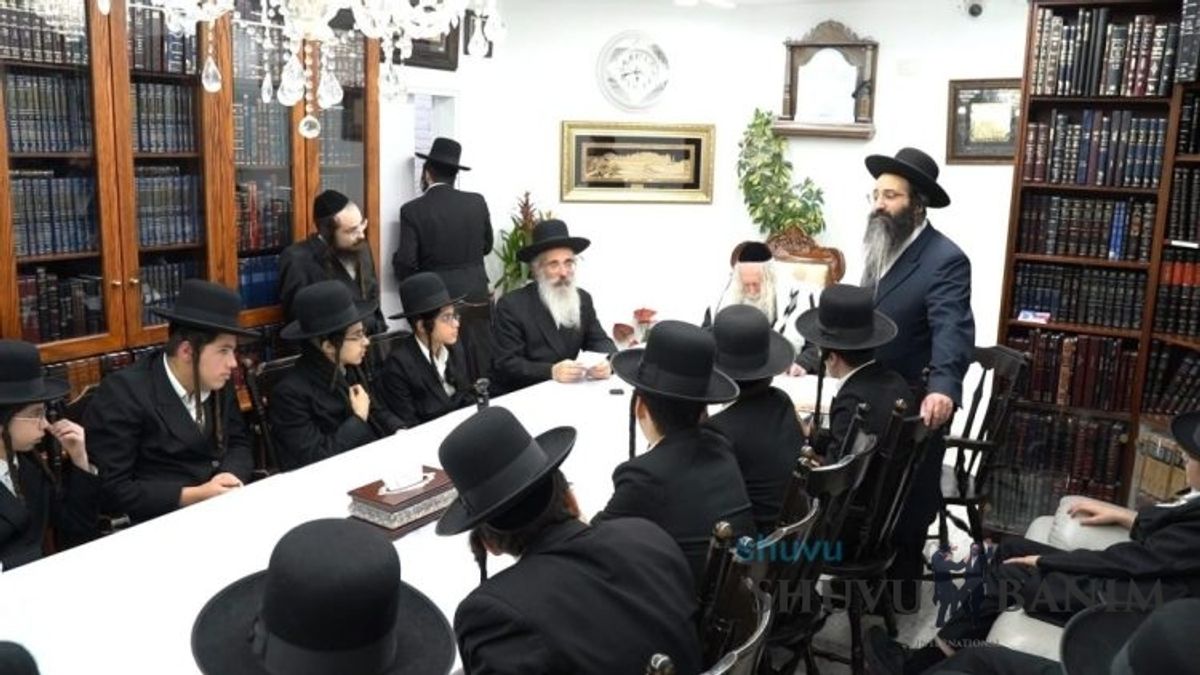
An Examination and Torah Lesson for the Students of the 'Chochma V'Daat' Yeshiva on Tractate Kiddushin at the Residence of our Teacher, the Rav, Rabbi Eliezer Berland shlit"a
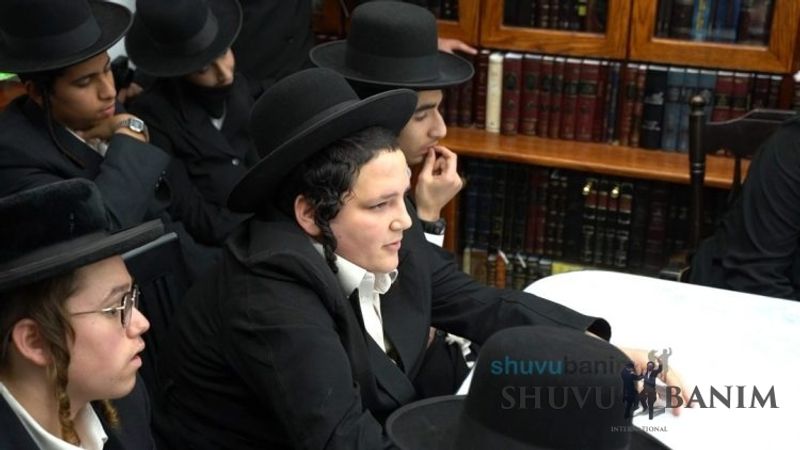
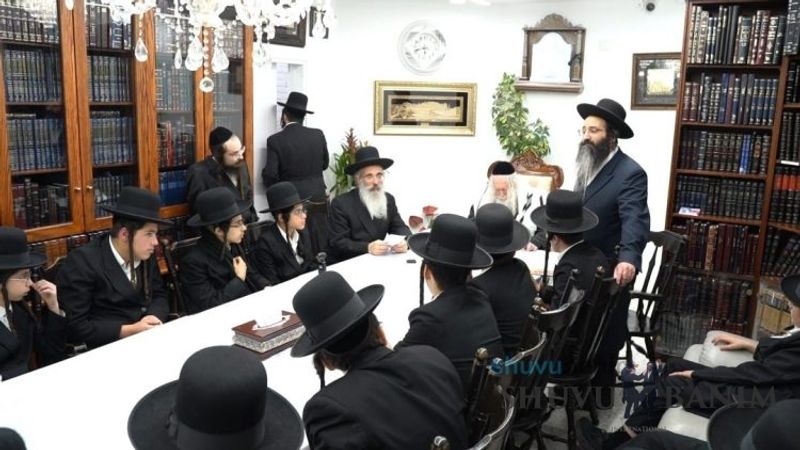
The students of the second-year class at the 'Breslov - Chochma V'Daat' Yeshiva, who labored and diligently studied Tractate Kiddushin during the Elul term (the study period before the High Holidays) and the beginning of the winter, and knew it thoroughly, merited to enter into the inner sanctum for an examination before our teacher, the Rav shlit"a (may he live long and good days), and for a "holy fire" lesson from his pure mouth last Tuesday, the 22nd of Kislev, Parshas Vayishev. Upon the Rav's entry to his residence, the Ram (Torah teacher), the Chassid Rabbi Itamar Raphael shlit"a, and the director of the Yeshiva, the Chassid Rabbi Avraham Mordechai Ashlag shlit"a, tested the precious students on what they had learned. The students answered all questions with fluent speech and even added their own insights on things they weren't asked regarding the depths of the holy Gemara (Talmudic) discussions.
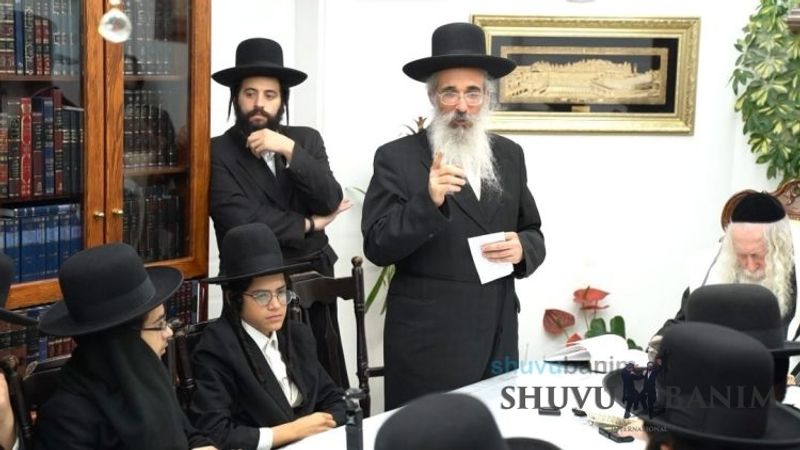
After the examination, the Rav delivered a lesson to the students. At the beginning of his words, he dealt with Tractate Yoma, primarily on page 29 of the Gemara, which discusses the question of why the miracle of Esther was written in a Megillah (scroll) while the events of Chanukah were not written. In a parenthetical note, it should be mentioned that even in the study schedule of "eight pages a day" (a specific study cycle), they are currently holding in Tractate Yoma. Afterward, he spoke about how David (King David) wanted to conquer Rome and thus prevent the destruction of the Beis HaMikdash (Holy Temple). During his words, the Rav encouraged the students in several areas, including reading Tehillim (Psalms) between the study sessions, and also to study the weekly Parsha (Torah portion) with Rashi's commentary. Afterward, he spoke about how when Eliezer went to take the shidduch (marriage match) for Rivka, he saw "and her pitcher was on her shoulder" (v'chadah al shichmah), the acronym of which spells Esau, and he did not understand how this could be. He cited the words of the 'Imrei Noam' that in the merit of being "silent" (macharish), he merited to see that Esau is merely a klipah (spiritual shell) for Yaakov, since "macharish" has the same gematria (numerical value) as Esau and Yaakov together. Likewise, the Rav encouraged the study of Likutey Moharan (the seminal work of Rebbe Nachman), but the Rav said that without Gemara, it is impossible to understand anything in Likutey Moharan. The Rav also encouraged the matter of immersing in the mikvah (ritual bath) with alacrity, and not waking up later than six in the morning, and also that a young man should go out for shidduchim (marriage matches) early and get married immediately at the age of eighteen.
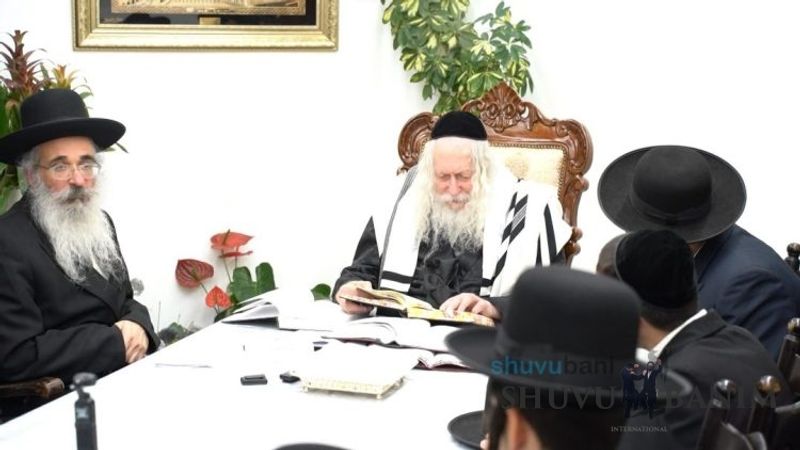
After these words, he dealt with the stories of the miracle of Chanukah and spoke of Shimon and Levi killing the people of Shechem, and brought the question of the Ramban (Nachmanides)—why Yaakov himself did not release Dinah from the hands of Shechem. Toward the end of the lesson, he returned to the matter of Tractate Yoma regarding the question of why the miracles of Chanukah were not written, and said that every letter in the Megillah of Esther was written with Ruach HaKodesh (Divine Inspiration), whereas during Chanukah there was no longer Ruach HaKodesh because it had departed in the days of Zechariah the Prophet. At the end of the lesson, he again encouraged the students to be diligent in their studies and to utilize their youth to learn as much Gemara as possible.
Subscribe to Our Newsletter
Receive Torah articles and inspiration directly in your inbox