
At Four Years Old He Prayed and Brought His Father Back to Life • The Daily Shiur from Rabbi Eliezer Berland shlit"a
"And the Nesi'im (princes) brought the shoham stones and the stones for setting, for the ephod and for the choshen (breastplate)." The twelve stones of the choshen were brought from the Garden of Eden. "Nesi'im (clouds) and wind, but no rain" (Proverbs 25:14) – the "Nesi'im" here refers to the clouds that brought the stones from the Garden of Eden. Every diamond shone like the sun.
Haman was hanged on Pesach, and a year later they hanged him again on Purim. I asked my great-grandson, where did they put him in the meantime? He told me, "In Antarctica." But now they showed me that the Persians used to make ice pits and managed to preserve ice for hundreds of years, so perhaps they put him there.
Haman the wicked is called wicked because he knew that in the end, this would turn into a holiday, and he said, "If it's going to be a holiday anyway, at least let it be just one day." But in the end, we celebrate Purim for seven days; from the 11th of Adar the Megillah is read, and during a Purim Meshulash (a three-day Purim), Purim extends until the night of the 17th of Adar.
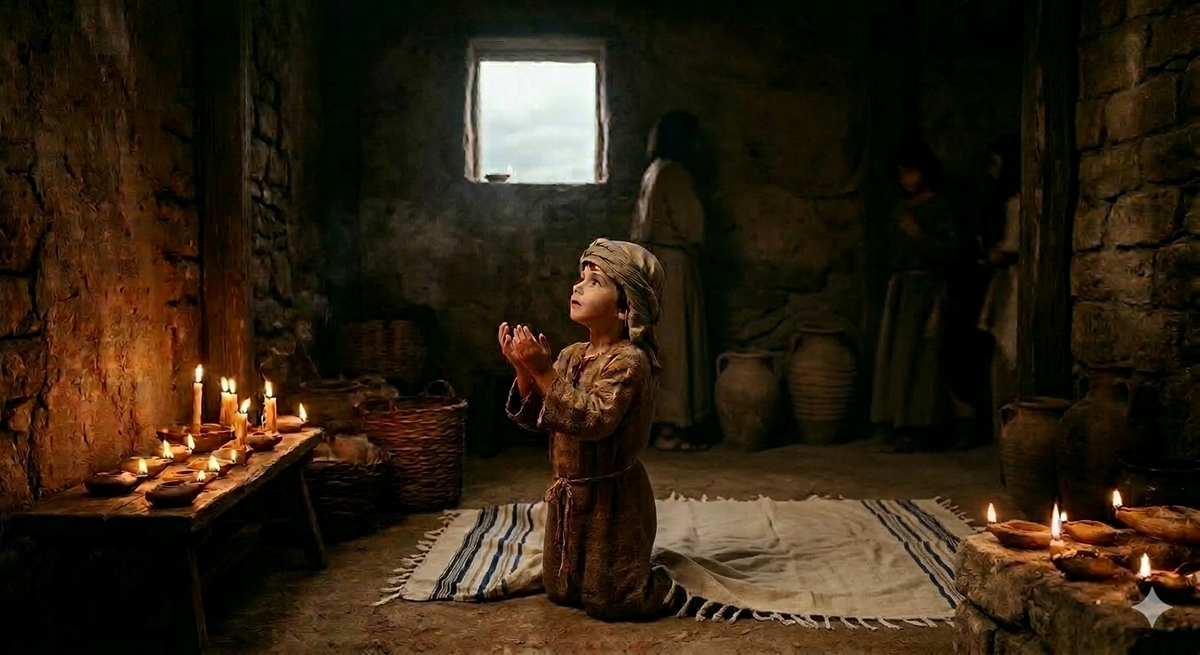
When Rabbi Yosi of Peki'in was about four years old, his father passed away. The Yenuka (holy child) began to pray, "Master of the Universe - do not take a father over his children, who will learn with me?" A miracle occurred, and in the merit of his prayer, he brought his father back to life.
Tzepho - the grandson of Esav the wicked. They called him Saturn, and he conquered Italy, and he is buried in Geneva.
We need to study the contradictions in the Tanakh. How is it that one time Shaul says, "And he loved him greatly" (1 Samuel 16:21), and another time he asks, "Whose son is this youth?" (1 Samuel 17:55)? The answer is that he was asking whether David descended from Peretz, who merits kingship, or from Zerach, who merits wealth. Doeg said to him, "Before you ask that, ask if he is even a Jew at all, because 'An Ammonite or Moabite shall not enter the congregation of Hashem.'" For Shaul had promised that whoever would kill Goliath would be given his daughter in marriage, and this is called "asking improperly" (Taanit 4a), but in the end, David arrived.
David approached Goliath with a stick. Goliath said to him, "Am I a dog?" David replied, "You are a dog, the son of a dog" - because his mother conceived him from a dog.
Subscribe to Our Newsletter
Receive Torah articles and inspiration directly in your inbox