
Classes This Week for the Residents of Brachfeld and Chatzor at the Home of
Rabbi Eliezer Berland shlit"a
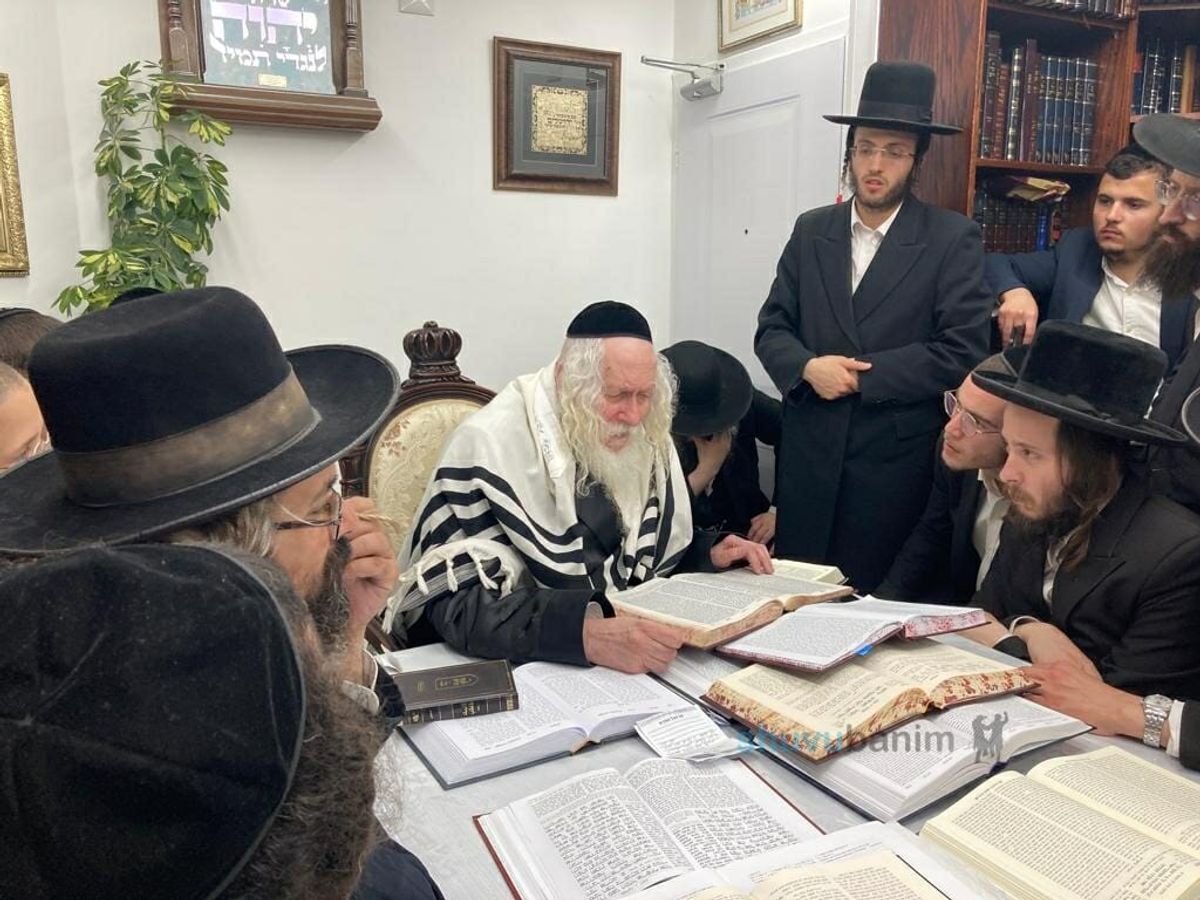
Class for the residents of Berakfeld on Monday ○ Class for the residents of Hatzor and the surrounding area in the north of the country on Wednesday ○ Summary of the classes
This week, Parshat Chukat, we were privileged to have two classes at the home of our teacher, Rav Berland shlit"a, for the residents of Berakfeld and the residents of Hatzor:
On Monday night, the 29th of Sivan, a group of Breslov chassidim, residents of Berakfeld and students of our teacher, Rav Eliezer Berland shlit"a, entered the inner sanctum for a class. At the beginning of the class, our teacher, the Rav shlit"a, spoke about the fact that our holy Rebbe Nachman urged that one must respect all tzaddikim and receive from everyone, but one must know that with the true tzaddik, it is something entirely different; with the tzaddik, one merits a face-to-face encounter. Afterward, he spoke about the virtue of the 'Well of Miriam' and how the Yalkut Shimoni says that the scoffers would mock Moshe Rabbeinu and say to him, "Bring water out from here... bring it out from there..." because they thought that Moshe simply knew the secret of where water comes out from under rocks [known as 'geysers']. But Moshe wanted to show them that the rock of Miriam is something entirely different; it brings forth water, oil, and honey.
Later in the class, our teacher, the Rav shlit"a, spoke about the obligation to study Gemara in depth, and from the study, he moved to practice. Our teacher, the Rav shlit"a, began to explain the issues of 'ye'ush shelo mida'at' (despair without knowledge) in the study of Torah, as well as the famous issue of 'mustard and bees.' At the end of the class, our teacher, the Rav shlit"a, spoke about the fact that last week was the 23rd of Sivan—the day the second letters were written—and he spoke about how Esther merited to sacrifice herself and said, "My life is in my request"—with myself, I do not care what you do to me, that will remain a question. But "my people in my petition" regarding this matter—Esther said to Ahasuerus—I will not concede to you; here I demand that you change the decree. And our teacher, the Rav shlit"a, concluded the class by singing "And Esther added and spoke before the king..." for about twenty minutes. After more than an hour, our teacher, the Rav shlit"a, concluded with Kaddish, and afterward, the participants of the class went out for the Arvit prayer.
Later in the week, on Wednesday night, the eve of Rosh Chodesh—the 1st of Tammuz—a group of those drawing close to our teacher, Rav Berland shlit"a, from the city of Hatzor and the surrounding area in the north, arrived and were privileged to enter the inner sanctum for a special class.
In the class, our teacher, the Rav shlit"a, spoke about the weekly Torah portion—Chukat—regarding the Well of Miriam. Before you is a short excerpt from the class:
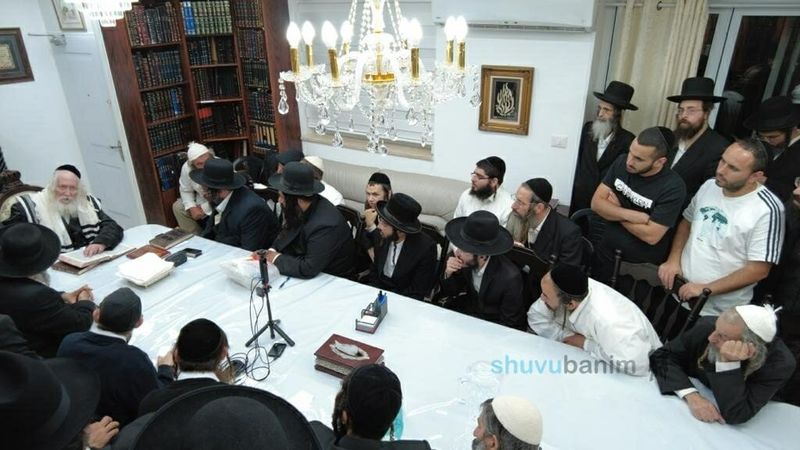
"And now, Moshe had to bring down Torah from fire. The Chiddushei HaRim explains that Moshe had to bring down Torah anew, because this generation did not hear the Ten Commandments; everyone who heard the Ten Commandments had already died, they are no more. 'And of them, there was not a man' (Bamidbar 26:64); the women remained, but the men did not remain. Because the women were all prophetesses."
And subsequently, our teacher, the Rav shlit"a, spoke about the virtue of the women of Israel, that 'in the merit of righteous women they were redeemed,' in the merit of the prayers of the women who, although they did not know how to read or write, would pray from the depths of their hearts. He also spoke about the honor of the wife and about shalom bayit (peace in the home), that if one is even slightly late, one must notify [the home] that they are late so that they do not worry at home.
At the end of the class, our teacher, the Rav shlit"a, said that the moment the Well of Miriam was struck, all the rocks in the desert were split, and all those scoffers who made fun of Moshe were washed away by those waters that burst forth in the merit of the Well of Miriam. And if Moshe had recited a song about this, he would have merited entering the Land of Israel. He concluded with the virtue of song and melodies before and after prayer.
After the class, the participants went out for the Arvit prayer of the eve of Rosh Chodesh with a large crowd, as every evening in the plaza of our Beit Midrash, the 'Prayer Hall' on Ido HaNavi Street, together with our teacher, the Rav shlit"a.
Subscribe to Our Newsletter
Receive Torah articles and inspiration directly in your inbox