
For the Yahrtzeit — Rabbi Yitzchak Sternhartz of Tulchin
son of Rabbi Nosson of Breslov (Moharnat)
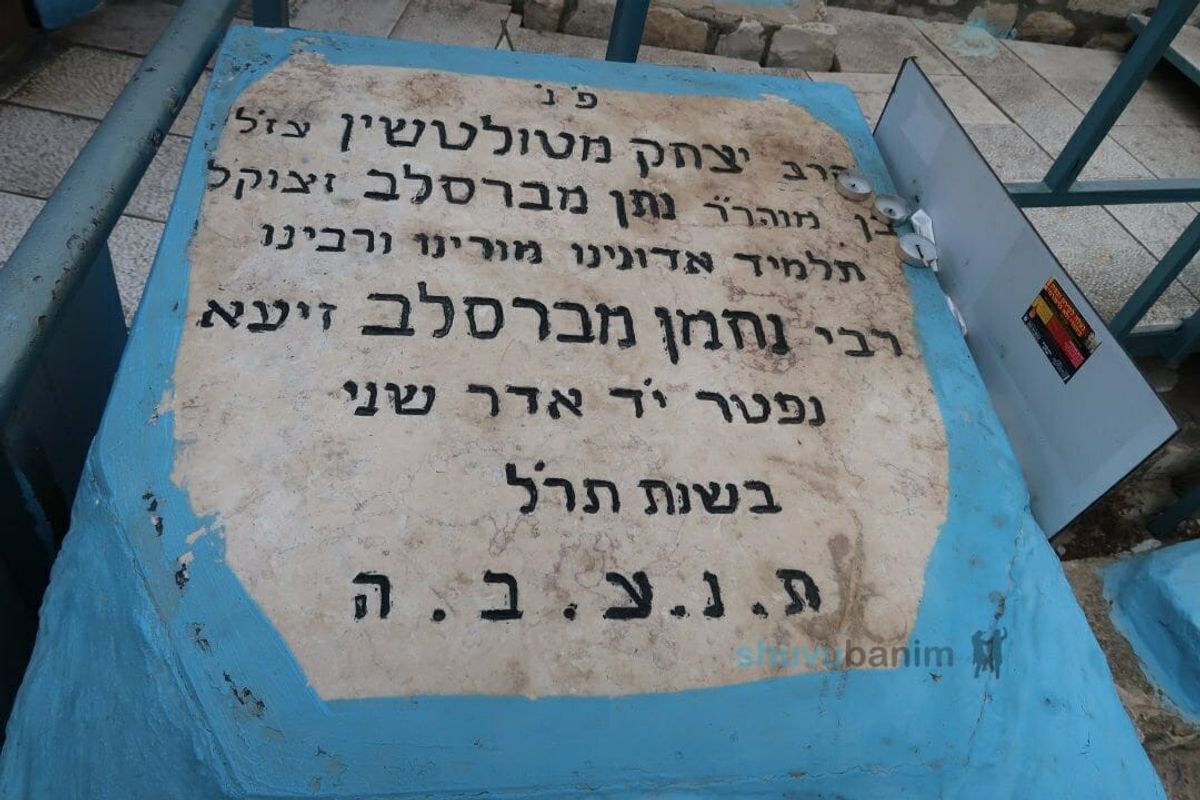
Rabbi Yitzchak Sternhartz of Tulchin, son of the Admor Rebbe Nathan of Breslov (Moharnat) >>> Life history from birth to passing >>> For the day of the Hillula, 14th of Adar II, 5630. Purim of the Unwalled Cities
His Birth
Rabbi Yitzchak, the third son of Moharnat (from his first marriage), was born on the eve of Passover, 5568, and the Brit Milah took place on the seventh day of Passover. Anash (the members of Breslov) said of him that he inherited the trait of alacrity from his father. Rabbi Yitzchak knew of the greatness of his father, Moharnat, and would consult with him.
His Marriage and Offspring
In the summer of 5583—at the age of fifteen—he married the daughter of Rabbi Elimelech of Cherkasy. Rabbi Yitzchak relied on his father-in-law's table in Cherkasy, far from his great father, Moharnat, but he maintained contact with him through letters. This union did not go well, and through the efforts of his great father, he divorced his wife in the summer of 5585.
At the beginning of 5586, he married Mrs. Chana and moved to live in Tulchin. Mrs. Chana was from a family of Mitnagdim (opponents), and for this reason, she initially made her husband's path difficult, but over the years she supported him, recognizing his greatness. From this union, four children were born to him: two sons, Rabbi David Zvi and Rabbi Michel, and two daughters.
Parnassah (Livelihood) for His Household
Rabbi Yitzchak was extremely poor and had to go out to work in order to provide parnassah (livelihood) for his household. Rabbi Yitzchak received three job offers from the Poritz (landowner) of Tulchin: A. Managing the local post office, a job that also included the local government bank branch. B. Managing the flour mill. C. Managing and supervising the logging of trees in the forests belonging to the Poritz. On the advice of his great father, he accepted the position of managing the post office. His great father told him that in this job he would be able to serve Hashem, which was not the case with the other two jobs. Even though he had to work, Rabbi Yitzchak was attached to Hashem and the ultimate goal; the people of Tulchin would say that when he walked to his work, it was not at all apparent that he was going to work.
The Difficult Controversy in the Years 5595–5598
During the difficult controversy that took place in the years 5595–5598, Rabbi Yitzchak held onto the hand of his father, Moharnat, and was counted among the five loyal students who did not leave the Admor Moharnat during these difficult years.
During this difficult controversy, the opponents worked to have Rabbi Yitzchak fired from his job at the post office. Rabbi Yosel Hozner, one of the wealthy men of Tulchin, was the manager of the post office branch, and he had once merited to see our holy Rebbe, Rebbe Nachman of Breslov, and even spent Shabbat with him, and he did not fire Rabbi Yitzchak from his job.
On Holy Shabbat
At one of the Shabbat meals, he sat leaning on the table, and his father, Moharnat, said to him: 'On Shabbat, one sits straight!'
On one of the Sabbaths, Rabbi Yitzchak felt that he had something in the pocket of his garment and accidentally carried it (in a public domain); for this reason, he sewed up all the pockets of his Shabbat garments so that he would not stumble again, Heaven forbid, in carrying by mistake.
His Aliyah to the Land of Israel and His Passing
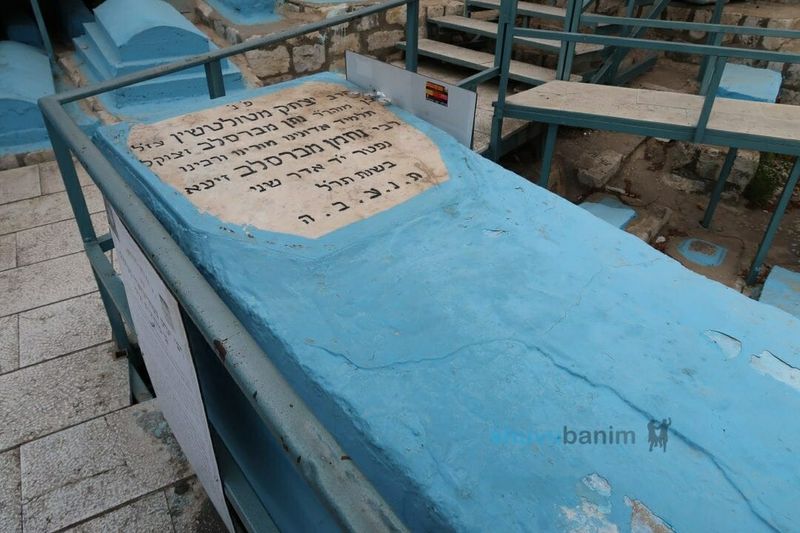
In the summer of 5628, when Rabbi Yitzchak turned sixty, he made Aliyah to the Land of Israel—as commanded by his father, Moharnat—and settled in Safed. The people of Tulchin assisted him in his Aliyah to the Land, among them Rabbi Yaakov Teitelbaum of Tulchin, who gave him a generous donation and even supported him during the years he lived in Safed. Rabbi Yitzchak did not live long in the Land of Israel and passed away about two years after his arrival in the Holy City of Safed, on Purim of the Unwalled Cities, the 14th of Adar II, in the year 5630. His burial place was dug next to the grave of the Maran Beit Yosef.
Subscribe to Our Newsletter
Receive Torah articles and inspiration directly in your inbox