
For the Yom HaHilula — The Chassid Rabbi Moshe Klein of Haifa
12 Nissan 5688 (1928)
Rabbi Moshe Klein of Haifa, one of the Breslov Chassidim • His life story • His journey to Uman to the gravesite of Rebbe Nachman of Breslov • His passing • For the day of the Hillula, 12th of Nissan, 5688 • 'There is much to speak of regarding him'
His birth and his drawing near to the Light of Lights
Rabbi Moshe was born in the city of Safed. At his birth, he appeared too small to his parents, and for this reason, they refrained from bringing him into the Covenant of Avraham Avinu. Living in the neighborhood of his parents' home were members of the Breslov Chassidim, students of the Rebbe, Moharnat, who had ascended to the Holy Land: Rabbi Meir of Teplik and Rabbi Nachman of Ribotzk. These servants of Hashem, upon seeing that their neighbors were not circumcising their son, inquired about it, and the parents told them that their son was too small and they feared that the circumcision might cause him harm.
Upon hearing their words, they turned their hearts with sound reasoning and influenced them that they had nothing to fear, adding that they would take full responsibility for it, further stating: 'He will yet live a good life!' Indeed, his parents agreed to their words and entrusted their newborn son to them, and Rabbi Meir and Rabbi Nachman brought him into the Covenant of Avraham Avinu.
When Rabbi Moshe grew up, he would visit his righteous neighbors, and in their home, a strong 'impression' of their exalted service and the light of our holy and awesome Rebbe entered his being, filling his entire essence. Thus, he merited to draw near to the Light of Lights - the light of our holy and awesome Rebbe of Breslov. Furthermore, Rabbi Moshe attributed his drawing near to the Rebbe to the letters of Rabbi Natan, son of Rabbi Yehuda, a student of the Rebbe, Moharnat, who lived in Tiberias and maintained a correspondence of encouragement with the members of the community in Safed. During the final period of Rabbi Nachman of Ribotzk's life on earth, Rabbi Moshe served him with self-sacrifice until his passing and burial.
Later in his life, Rabbi Moshe moved to live in Haifa, where he engaged in commerce and saw blessing in his labor. As his income grew, so did his charity, and in the city of Haifa, his name became known for his great care in fulfilling the mitzvah of hospitality. Everyone knew that at Rabbi Moshe’s home, they would find a listening ear and a generous hand.
I shall fly to Zion, the holy Uman, and his return to the Land of Israel
In the year 5679, Rabbi Moshe packed his belongings and left the Land of Israel—on a long journey full of hardships—to Uman to the gravesite of our holy and awesome Rebbe, and he merited to be counted among those who attended the holy Kibbutz on Rosh Hashanah of 5660.
In the month of Shvat 5660, he made his way back to the Land of Israel, together with Rabbi Simcha of Berdichev and Rabbi Shmuel Heschel Friedman, a student of Rabbi Avraham, son of Rabbi Nachman.
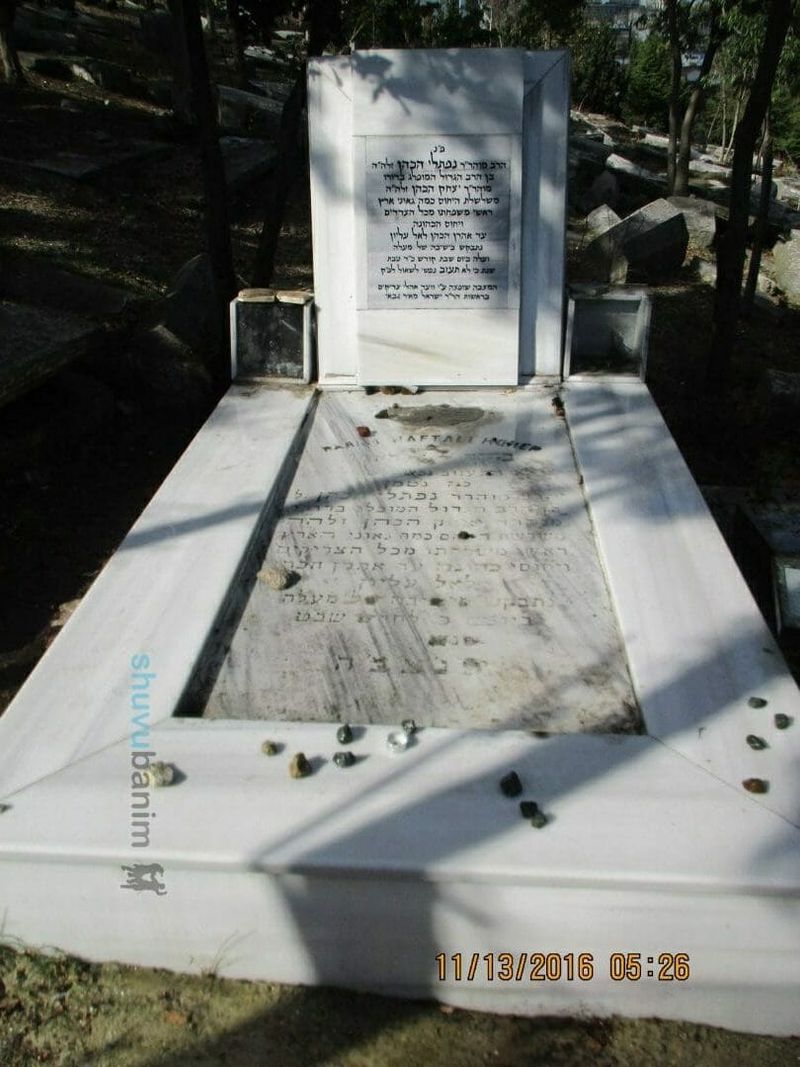
At the gravesite of the tzaddik Rabbi Naftali Katz, author of 'Semichat Chachamim'
While they were in Turkey—on the way to the Land of Israel—they went to the cemetery in the Ortaköy neighborhood and prostrated themselves at the gravesite of 'the famous righteous Rabbi, etc., our teacher Rabbi Naftali Katz, of blessed memory' (the words of Rabbi Shmuel Heschel Friedman), author of the book 'Semichat Chachamim,' who passed away on the way to the Land of Israel. As is known, even the holy Baal Shem Tov and our holy and awesome Rebbe, while in Istanbul, prostrated themselves at his holy gravesite.
It should also be noted that a few years ago, our teacher, the Rav shlit"a, sent a group of our community members to his holy gravesite on the day of his Hillula, the 24th of Tevet. They were in contact with our teacher, the Rav, who arranged for them the order of prayer at his gravesite (and there was a miraculous occurrence in this, as our teacher, the Rav shlit"a, called immediately after his grandson turned on his phone after landing in Istanbul).
Furthermore, Rabbi Moshe went together with Rabbi Shmuel Heschel to see the Ottoman Sultan and recited over him the blessing that one recites over a non-Jewish king: 'Who has shared His glory with flesh and blood.'
The holiday of Purim and the mitzvah of the day on the ship - reading the 'Ten Commandments'
They celebrated the holiday of Purim on the ship with joy and dancing after it departed from Rhodes. Rabbi Moshe had a Megillat Esther and read the Megillah there. As he was reading the Megillah, a Greek non-Jew, one of the ship's passengers, passed by and, seeing the Jews and their actions, spat on the Megillah with contempt. Rabbi Moshe could not restrain his spirit to overlook the desecration of the holy; he raised his hand and struck the Greek several slaps on the face. The Greek went to the captain and complained about the Jew who had struck him. Upon hearing of the Jew's boldness, the captain came in his fury with several sailors, seized Rabbi Moshe, and placed him in a detention cell to punish him.
The captain and the sailors asked Rabbi Moshe: 'Is it true that you struck this Greek?' Rabbi Moshe replied: 'Yes!' When they asked him again: 'Why did you strike him?' Rabbi Moshe answered them: 'This Greek disgraced and spat on the "Ten Commandments"; he mocked the Ten Commandments!' (The Ten Commandments are important and holy even in the eyes of the nations of the world).
When the captain and the sailors heard this, the story seemed different to them, but they still did not believe Rabbi Moshe and asked him: 'Can you prove this clearly?' Rabbi Moshe said to them: 'Certainly!' Rabbi Moshe opened the Megillat Esther to the place where the ten sons of Haman are written and said to them: 'Do you see? There are ten lines here with larger letters, which is not the case in the rest of the Megillah parchment; these are the Ten Commandments!' The captain and the sailors counted the lines to see that there were indeed ten lines, and upon realizing that there were indeed ten lines in large script, they said: 'Yes, yes, you spoke the truth! These are the Ten Commandments!' They added and said to him: 'Well done for striking the Greek; that is what he deserves!' The captain and the sailors seized the Greek and shouted at him for his audacity to disgrace the Ten Commandments, and they too added and struck him, and Rabbi Moshe departed for a good life and in peace.
My 'Nachman' in my home
Rabbi Shmuel Horowitz writes in his writings: 'Rabbi Moshe Klein told me that he heard from Rabbi Nachman Arvadsker that our Rebbe, of blessed memory, said: "Ich vill bleiben tzwischen eich" [I want to remain among you], which is brought in Chayei Moharan 497. There is a hint in this that they should call by the name of our Rebbe, of blessed memory, that everyone should have a "Nachman" in their home, "Yeder zeh haben a Nachman'leh" [that everyone should have a little Nachman'leh in the house].'
In Jerusalem, the Holy City, and his passing
As mentioned, Rabbi Moshe was wealthy, but nothing is permanent, and over the years, the wheel turned against him. He became a man of great debt; the creditors took all his assets, and he became destitute. This was in Elul 5687. Rabbi Shmuel Horowitz came to visit him and found him living in a courtyard of non-Jews in a small house that did not even have a window. Rabbi Moshe's suffering was so difficult and bitter that his soul almost departed from the pain and bitterness.
Seeing this, Rabbi Shmuel Horowitz spoke with members of our community from Jerusalem, and with their agreement, they brought him to Jerusalem. The members of the community supported him as best they could. In Chanukah 5688, Rabbi Shmuel Horowitz was in Meron, and upon his return to Jerusalem, he passed through Haifa and worked among his acquaintances to send Rabbi Moshe 'Maamadot'—monthly financial support to help him survive in Jerusalem.
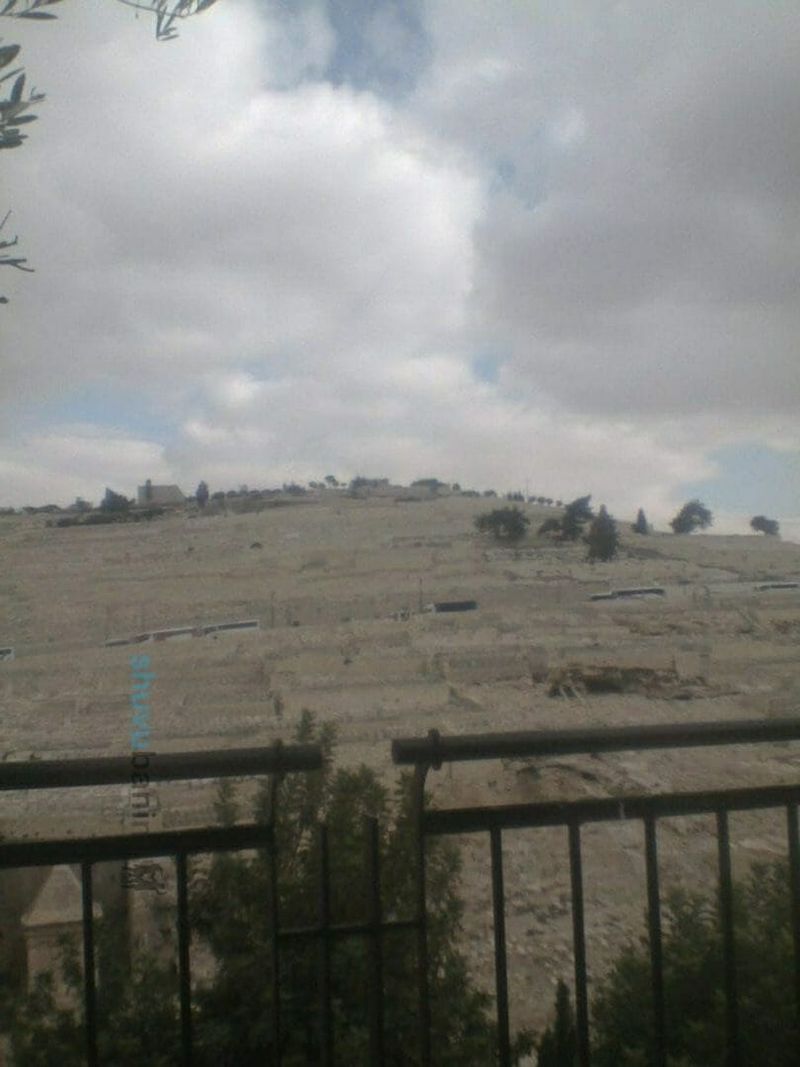
On the 12th of Nissan, 5688, Rabbi Moshe departed to his eternal home and was buried on the Mount of Olives.
When Rabbi Shmuel Horowitz mentions his name in his books, he notes several times: 'There is much to speak of regarding him'...
May his soul be bound in the bond of life.
Subscribe to Our Newsletter
Receive Torah articles and inspiration directly in your inbox