
From India to Cush - One Hundred and Twenty-Seven Provinces
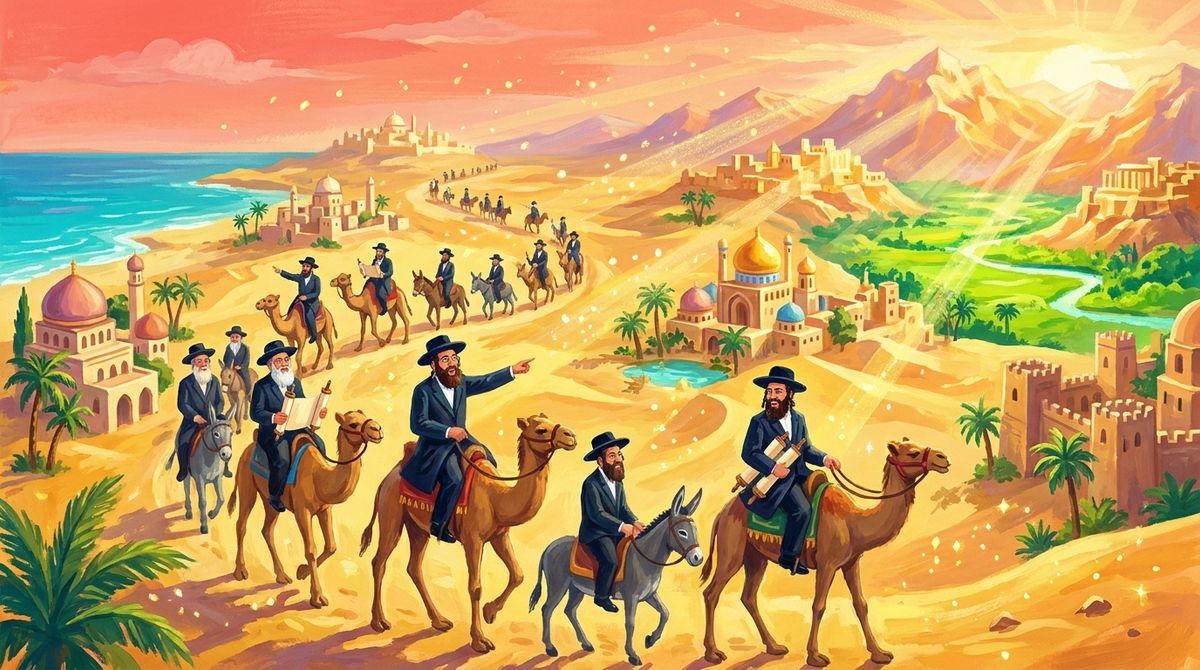
The period of exile was, and still remains, a profound mystery. It is a fundamental and central chapter in the life of the Shuvu Banim community, and an exceptionally immense and elevated subject in the life of the tzaddik, Rabbi Eliezer Berland. For years, the Rav was exiled with his students from country to country. In almost every single nation, government officials made efforts to extradite the tzaddik into their hands, generally without success. A chain of wondrous, mysterious miracles was woven into every day and every hour of this fascinating journey between countries—a journey that Breslov Chassidim refer to with a single word: "The Exile." Before you is one story out of ten thousand, regarding a distinguished delegation from the country of Zimbabwe. There, they were wise enough to understand that the water and the blessing arrived in the merit of the tzaddik. As Rashi states, "This teaches that the departure of a tzaddik from a place leaves an impression," and they felt upon their own flesh
the impression that the Rav left behind upon his departure from their country. Edited from the press of that period.
Against the backdrop of the drought being felt in the country, a special delegation from Zimbabwe recently visited the residence of Rabbi Eliezer Berland in Johannesburg and apologized for his deportation about two years prior. The delegation arrived on behalf of the ruler of Zimbabwe, Robert Mugabe, following the severe drought plaguing the nation. The delegation also included President Mugabe's niece, who holds a spiritual role (witchcraft) in the country with thousands of followers under her, and who is known for her affection toward Israel.
During the tzaddik's stay in Zimbabwe, the floodgates of heaven began to open, and abundant rains of blessing fell upon a land that had known long years of drought. In the past, when the rains would fall in their proper order,
many tourists from all over the world would visit Zimbabwe to witness the massive waterfalls flowing there.
Following consecutive years of drought, the flow of the waterfalls diminished, and tourists preferred to travel to other countries. Zimbabwe, which had begun to grow wealthy from its thriving tourism industry, suffered a massive economic blow. As mentioned, during the stay of the tzaddik, Rabbi Eliezer Berland shlit"a, in the country, tremendous rains of blessing fell. This restored the flow of the waterfalls to their glory days and brought back tourists from all over the world to visit Zimbabwe.
Years of plenty blessed the government of Zimbabwe and its residents, but they did not know how to connect this to the fact that the tzaddik had come to their land. When legal proceedings began against the continued stay of Morinu HaRav (our teacher, the Rav)
without a visa authorizing an extended stay, local law enforcement officials decided to deport the tzaddik from their country.
When the police came to arrest the tzaddik, they were explicitly told not to dare disrespect the honor of the tzaddik, but rather to treat him with dignity. "If you disrespect the tzaddik, the rain will stop immediately," one of the Rav's close associates told them. However, they persisted in their ways, humiliating the tzaddik and deporting him from their land. Indeed, with the departure of the tzaddik, the impression was evident: the rains ceased, and the flow in the waterfalls steadily diminished, until Zimbabwe's tourism industry went bankrupt and dried up completely.
Government leaders in Zimbabwe established a spiritual investigative committee to determine the cause of the drought, and thus they reached the police unit that had arrested Morinu HaRav before his deportation from their country. The officers recounted that the Rav's associates had warned them that if they harmed the tzaddik, the rains would stop—which is exactly what happened. Consequently, the ruler of Zimbabwe decided to send
a distinguished delegation to Morinu HaRav to ask for his forgiveness, so that the drought would end and the rains would return.
Similar stories occurred in Morocco in years past. When there were years of drought, the king would call upon the Jews and ask them to pray for rain. Moroccan Muslims believe to this day that righteous Jews have the power to bring down rain through their prayers. The story of the drought in Zimbabwe is moving precisely because the people of Zimbabwe, who were not familiar with Jewish communities like those in Morocco, were nevertheless wise enough to understand and believe that the rains of blessing were in the merit of the tzaddik, and that the drought was caused by his departure.
Menachem Avitan, a businessman who coordinated the meeting between the delegation members and the Rav, shared in an interview with the "Shuvu Banim" information line that
the president's niece recounted at the meeting that, "Ever since the Rav was deported from the country, there has been a very severe drought. There is no rain, and the situation is worsening day by day. They attribute this dire situation to the deportation of the Rav from the country." Menachem Avitan noted that the past year had been extremely difficult for the residents of Zimbabwe; sewage flooded the cities, and businessmen were recruited from all over the world to invest in water purification efforts in the country.
In reports by global media outlets, including The New York Times and Bloomberg News, the drought was defined as the most severe of the last generation in Zimbabwe. "After the situation in the country worsened, they realized in Zimbabwe that this likely came upon them after they deported the Jewish Rav, and now they have come to ask for forgiveness in the hope that the rain will return to the country."
The great and immense wonder is that the day after the president's niece met with Morinu HaRav—during which the Rav forgave the country and primarily focused on bestowing tremendous blessings upon the nation and the president—there began to fall
massive rains of blessing that saved the country from its enormous damages. Any further words are unnecessary.
From the book "Pele Elyon, Part 3"
Read more
Subscribe to Our Newsletter
Receive Torah articles and inspiration directly in your inbox