
How Can You Sweeten Harsh Judgments Before Troubles Come? Daily Strengthening
from the Holy Tzaddik Rabbi Eliezer Berland shlit"a
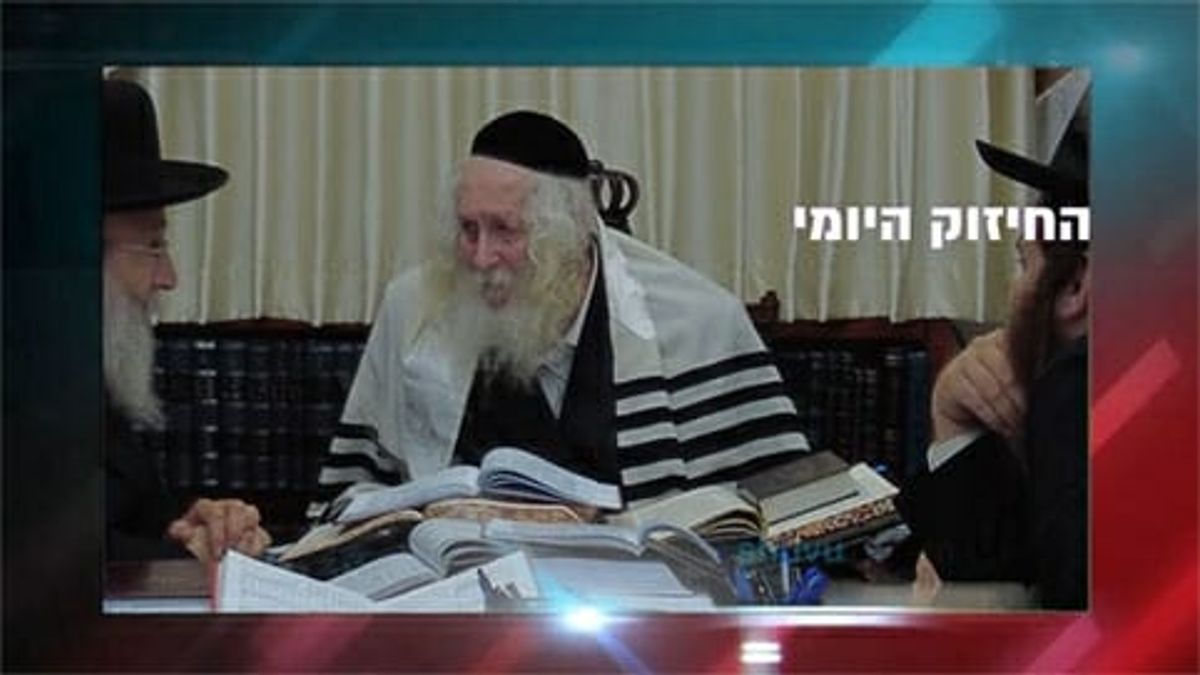
The Daily Strengthening from The Rav, the holy Tzaddik Rabbi Eliezer Berland shlit"a – “The Rebbe says there is no judgment that cannot be sweetened”
“And it will be, because you will listen to these ordinances, and you will guard and do them” (Devarim 7)
Sunday, 11 Nissan 5783 – “A person needs to live 120 years.”
These are his holy words:
We would dance for hours; we would finish the prayer at 4:00 in the afternoon.
The Rebbe says the main thing is the melodies and the dancing—the main thing is to make the heels leap (Likutey Moharan 169 on: “And it will be, because you will listen to these ordinances, and you will guard and do them,” Devarim 7).
That is why they did not eat Izevel’s feet (Izevel, daughter of Etbaal king of the Sidonians, wife of King Achav as part of the alliance forged between the kingdom of Tyre and Israel, as told in Melachim I, chapter 16, verse 31).
Izevel was a reincarnation of Kozbi (“Kozbi is Izevel,” Gilgulei Neshamot, letter 20). And they did not eat her feet (Melachim II 9:36)—nor her hands, nor her head. She would sway with her head. She knew how to move her head when she danced at weddings; she made motions with her hands, with her feet, with her whole body.
With melodies and dancing, it is possible to sweeten every judgment in the world. The Rebbe says there is no judgment that cannot be sweetened.
Rabbi Nachman of Horodenka asked the Baal Shem Tov whether it is possible to sweeten something. The Baal Shem Tov answered him: Of course it is possible to sweeten—only you don’t know how.
Of course it is possible to sweeten. A person can live 120 years; there is no decree that cannot be sweetened. In potential, a person is meant to live until 120—if he rejoices and dances, then every day he sweetens the judgment of that day.
Therefore a person must always get up before the sky turns blue. When it turns blue, they decree the judgments that will be that day—Heaven have mercy: there shouldn’t be an accident, the child shouldn’t get sick, something shouldn’t happen—suddenly a bus runs him over. Everything is decreed when the sky turns blue. So whoever gets up before the blue sweetens the judgment.
That is why in tzitzit there is a thread of techelet. Rashi says (at the end of Parashat Shelach) that the thread of techelet is called so because it “bereaves firstborns”—from the language of “end/termination” (tachlit). The Gemara says that at Rav Chisda’s there were sixty bowls of leftovers at every meal (“Rav Chisda lived ninety-two years; Rabbah lived forty. In Rav Chisda’s house there were sixty wedding feasts; in Rabbah’s house there were sixty funerals. In Rav Chisda’s house, fine flour was given to the dogs and it was not needed; in Rabbah’s house, barley bread for people—and it could not be found,” Moed Katan 28a). Rabbah lived 40 years; Rav Chisda lived 92 years.
Techelet is from the language of “tachlit” (termination), from the language of “shikul” (bereavement), from the language of “shechol” (loss)—for the thread of techelet wipes out all enemies. When a person goes with a thread of techelet, it is impossible to harm him; no one can harm him; no one can damage him.
Eight strings correspond to the eight days from 14 to 21 Nissan—from the Exodus from Egypt until they sang at the sea. A thread of techelet wipes out all haters in the world. That is why we go with a thread of techelet—and we must go before the sky turns blue. Always, always be awake earlier; then there is no decree that cannot be annulled.
Hashem said to Yeravam: Repent, and I, you, and the son of Yishai will stroll together in Gan Eden (“Rabbi Abba said: After Hashem seized Yeravam by his garment and said to him: Repent, and I, you, and the son of Yishai will stroll in Gan Eden—he said to Him: Who will be at the head? The son of Yishai at the head?” Sanhedrin 102a). Yeravam asked: Who is at the head? Meaning: at whose head is it? Because all the thoughts of teshuvah we have until the end of all generations come from King David. David is the Tzaddik who includes all the Seven Shepherds; David contains all the Seven Shepherds within him.
Therefore the Rebbe says the main thing is Torah together with melody and dance; the essence of the whole prayer is melody and dance (“He said: The world has not tasted me at all yet. If they would hear only one Torah teaching that I say with its melody and its dance, they would all be nullified in complete self-nullification—meaning the entire world, even animals and grasses and everything in the world, would all be nullified in the soul’s expiration from the tremendous, wondrous, and exceedingly great delight.” Chayei Moharan, section ‘The Greatness of His Torah,’ letter 1).
The prayer itself is ten minutes and we’re done—but we dance a bit before the prayer, a bit after it; we sing, we dance—we sing, we dance—and that elevates all the letters.
There are three kuf’s in three parashiyot—Korach, Chukat, Balak—one kuf in each. In Korach the kuf is first; in Chukat the kuf is second; and in Balak the kuf is third—because the letter kuf is appointed over Gehinnom.
The Zohar says (page 242 in Vayikra) that the letter tet is “luz”—in Jerusalem all the letters shine; on the Temple Mount there are all the letters.
Subscribe to Our Newsletter
Receive Torah articles and inspiration directly in your inbox