
Is It Permitted to Drink Tap Water on Pesach? What Do Rebbe Nachman of Breslov
and Rabbi Eliezer Berland shlit"a Say?
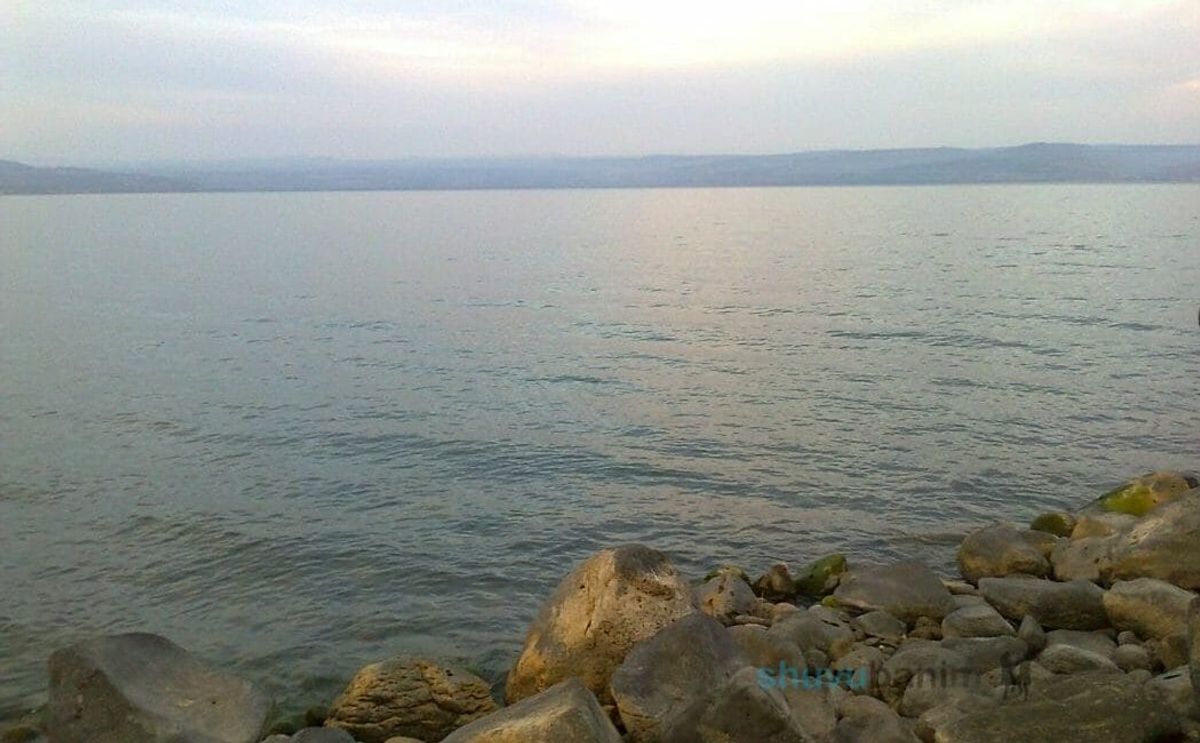
Regarding the drinking of river water, well water, and water from the Kinneret on Passover • What is the opinion of the Admor, Moreinu HaRav Nachman of Breslov, and our teacher, Rav Eliezer Berland shlit"a? • And what are the halachic sources?
The opinion of our holy Rebbe, Rebbe Nachman of Breslov
Sichot HaRan, entry 235: "Also regarding the stringencies of Passover, he would not agree at all with those who increase and are overly meticulous... And he said that he himself had once been very deeply immersed in this matter, where very, very excessive stringencies would come to his mind. And one time, he was thinking thoughts regarding the water for Passover, fearing that perhaps there was something in the water that was drawn, and if he were to prepare water for himself for all the days of Passover as some are accustomed to do, even this did not seem good to him, because it is difficult to keep the water well from Erev Passover for all the days of Passover, and no water seemed good to him except for water from a spring that flows and goes and brings new water at all times... But now he makes light of this, for there is no need to search for excessive stringencies even on Passover..."
This issue is relevant today to the drinking water, which in part comes from the Kinneret, and there are those who throw chametz into the Kinneret even during the days of Passover itself. Likewise, there are concerns regarding other water sources.
The words of our teacher, Rav Eliezer Berland shlit"a
I once asked our teacher, Rav Eliezer Berland shlit"a, about this, and he replied to me that it is permitted to drink, and he explained the reason for this: since the chametz has no influence whatsoever on the water, and it is also immediately consumed by the fish and is not considered at all, not even as a 'mashehu' (a minute amount).
And our teacher, Rav Berland shlit"a, brought proof for this from a responsum of the Gaon Rabbi Shlomo Zalman Auerbach, who was asked about the fact that there are non-Jews who pour wine used for idolatry (yayin nesekh) into the Kinneret, and since yayin nesekh forbids even in the smallest amount (b'mashehu), he replied by permitting it for this reason: that it has no significance regarding the water, and it is not even considered a 'mashehu'.
The Halachic Sources
With the help of Hashem, we will attempt to study this topic from its sources, and the words of our Rebbe (may his merit protect us) and the words of our teacher, the Rav shlit"a, will be clarified:
A. The Agur wrote in the Laws of Chametz and Matzah, section 757: The Maharil wrote that it is proper for one who uses a well on Passover that is not guarded all year round, and especially wells of non-Jews where one must fear that there might be chametz in the well, to filter the water with a clean cloth every time one draws it, end quote. And he further commanded to fix new spigots for all the barrels. End quote of the Agur. The Beit Yosef brought this at the end of section 467, [and wrote regarding this: And this matter of new spigots is an excessive stringency, end quote. And the Darkhei Moshe wrote that it is also effective to wash the old ones].
From these words of the Agur, it would seemingly appear that the water should be permitted, for if there were a prohibition here, what good would filtering the water do? They would be forbidden themselves. And in truth, the Pri Chadash there in paragraph 12 brought the words of the Agur and wrote that filtering is only effective if it is not known for certain that there is chametz there, but if it is known that there is chametz, filtering is not effective. (And see in Otzar HaPesach, p. 68, that the rabbis of the city of Karli permitted it by filtering the water when chametz fell into a well).
And the words of the Shulchan Aruch HaRav (467, paragraph 48): "One who wishes to draw water on Passover from the wells of non-Jews or from the wells of Jews who were not careful about them regarding chametz all year round, it is good to filter the water with a clean cloth every time one draws it, but according to the primary law, we do not establish a prohibition based on doubt," end quote. And in the Mishnah Berurah, in subsection 67, he wrote: "One who wishes to draw water on Passover from the wells of non-Jews or from the wells of Jews who were not careful about them regarding chametz all year round, it is proper to filter the water with a clean cloth every time one draws it," end quote. We see from this that according to everyone, this is not an obligation but only 'proper' to act this way, as per the language of the Maharil himself.
And in the Shulchan Aruch there in paragraph 13: "If one kashered a pot that had become chametz that day (ben yomo) and the chametz-water went down into the well during Passover, it is forbidden to drink its water on Passover because it became mixed," end quote. It is explained that only in a case where it is certain that they were mixed are the well waters forbidden, but the Maran did not mention forbidding ordinary well water. And in the Mishnah Berurah, he wrote in subsection 62 that a slice of bread or dough found in the water, the later authorities wrote to forbid it even in cold water, because it is the nature of a slice of bread and dough to crumble and dissolve in the water (and there are later authorities who permitted it even if the chametz was in the water on Passover, brought in the Yeshurun collection, vol. 10, p. 597, item 9).
B. Another topic discussed by the authorities regarding this was about rivers near which there are flour mills or breweries that throw their waste into the river; are the waters forbidden because of this? And in Minchat Moshe (Orach Chaim, section 15), he discussed in what manner one might permit this, and wrote: "In any case, in practice, in a place where one can suffice with well water, I would not permit in any way drawing from this river on Passover." [And from this, too, we see that for ordinary wells, there is no need to be concerned].
And regarding the rivers themselves, in the Or Torah collection, the responsum of the Gaon Rabbi Ovadia Yosef zt"l was brought (Nisan 5751, p. 446 and onwards), who discussed the waters of the Kinneret, and wrote to permit it based on what was written in the 'Sefer Yehoshua' (section 5) to permit it in a river, even when chametz is thrown into the water on Passover itself, for the reason that the Sages did not decree a prohibition for a 'mashehu' except in a place where it could come to provide flavor. This is not the case in large rivers, where even if they were to put all the chametz they have there, it would not provide flavor to the water (and in section 9 he wrote that it seems the Chavot Da'at agrees with this reason). And similar to this, he wrote in the book Yad Yehuda (Laws of Slaughter, p. 150) to permit it in river water, since the water is constantly moving, it is impossible for it to come to provide flavor.
And likewise, in the Responsa Sha'arei Deah, he wrote to permit it because the prohibition of a 'mashehu' is on the condition that the 'mashehu' has some importance to provide flavor in its place, which is not the case in a river where the water is replaced at all times. And likewise, several other authorities (brought in the Yeshurun collection, vol. 10, p. 595, in the responsum of Rabbi Nach Isaac Alboim). And the Gaon Rabbi Ovadia Yosef added a reason for permission: because the fish immediately eat the bread, and it is not 'kavush' (soaked) for 24 hours.
And in the aforementioned Yeshurun collection, he brought more reasons for permission: A. Because there are authorities who hold that in the chametz of a non-Jew, there is no prohibition of 'mashehu'. B. The Sdei Chemed wrote based on the words of the Ritba, who wrote regarding idolatry that it is not forbidden by a 'mashehu' except in detached water, and not in connected water. C. The Chelkat Yoav (Orach Chaim, section 18) wrote that in rivers, the reason of 'mashehu' does not apply (according to the commentators who forbade 'mashehu' because of 'davar she-yesh lo matirin' - a forbidden item that will eventually be permitted, but there are those who say they forbade 'mashehu' because of other reasons). And see further in Or Torah and Yeshurun for other reasons written to permit this.
(These words are not intended to serve as a halachic ruling)
Subscribe to Our Newsletter
Receive Torah articles and inspiration directly in your inbox