
It is Harder to be Attached to a Tzaddik than to be a Tzaddik Oneself
On the Importance of Drawing Close to a Tzaddik
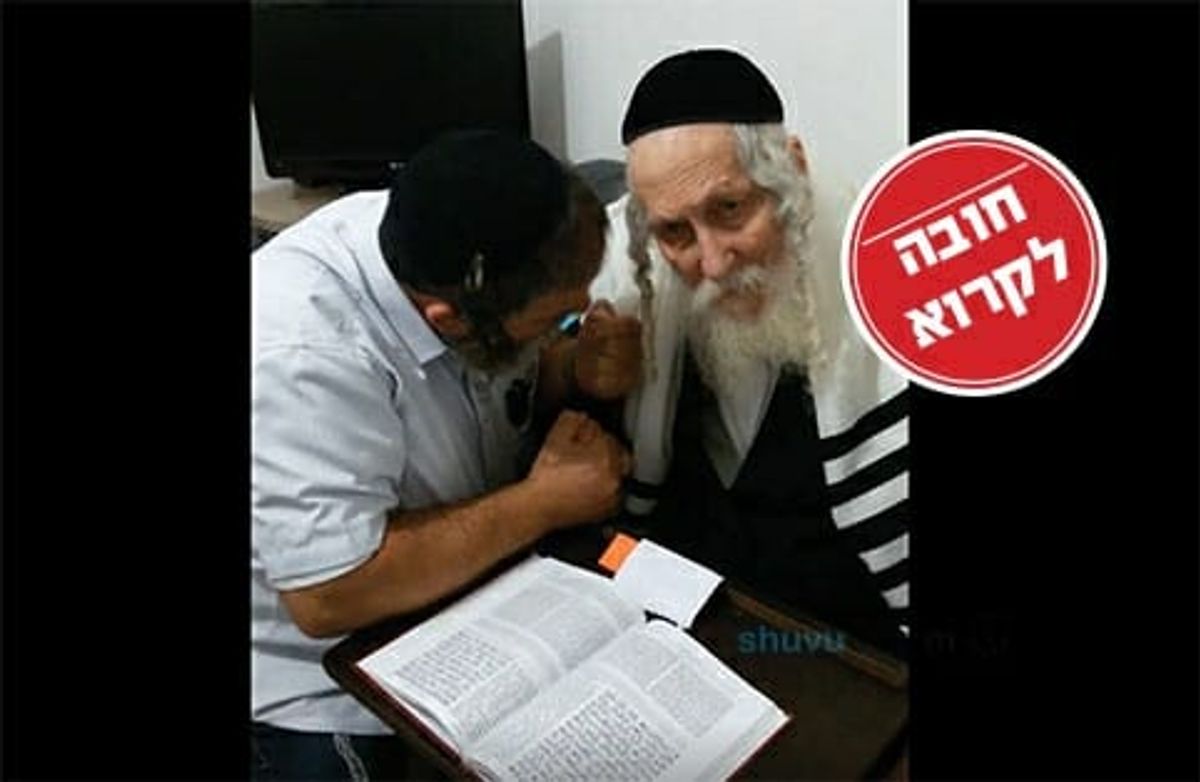
In the book 'Yalkut Ayim Rabim', the author, Rabbi Yisrael Aryeh Yitzchak, writes about the virtue of attachment (deveikut) to the true tzaddik:
"It is a very great labor to be attached to the true tzaddik, and this is harder than being a tzaddik oneself."
"It is written in the book 'Ramatayim Tzofim' (Tanna D'bei Eliyahu, Chapter 3, page 31): I heard from Rabbi Bunim of Peshischa, who asked the holy Rabbi, the 'Yid Hakadosh' (the Holy Jew) of blessed memory, who used to say, 'Whoever is connected to the pure is pure.' He asked him: 'Is Hashem a lenient one, etc.? And what kind of logic is this, that through a simple matter (a simple cause), one should attain the level of a tzaddik who derives no pleasure from this world?'"
"He replied to him: 'This is a very great labor—to be attached to the true tzaddik—and it is harder than being a tzaddik oneself, and there is no leniency here at all. And whoever has been accustomed to the true tzaddikim knows and discerns these holy words!'"
"Korach, Datan, and Aviram, and Doeg the Edomite, who were very high and exalted tzaddikim, came to all of this through a subtle thought regarding Moshe Rabbeinu."
"..., and certainly, at first, there was some aspect of a great, subtle thought regarding Moshe Rabbeinu, peace be upon him, and they came to all of this. And likewise, Doeg and Achitophel, in whom no blemish was found, Heaven forbid—and Doeg was always worried in his heart about the fear of Heaven—they stumbled through a subtle thought regarding King David, peace be upon him, the tzaddik of the world, who is Mashiach, and through this, they came to what they came to."
"And you, know that one should not have thoughts against any tzaddik, but rather attach oneself to him and to all the tzaddikim with one's heart, mind, and soul, and receive holiness even if one does not travel to him physically. And thus, one will fulfill 'And you shall love, etc.' and 'Your people are all righteous.'"
"Do not test him with trials, and do not ask him for a sign or a wonder."
"Our Sages said: 'If the Rabbi is like an angel of Hashem Tzevaot, they shall seek Torah from his mouth' (Moed Katan 17a). Rabbi Zusha of Anipoli, of blessed memory, explained: Just as you have never seen an angel in your life, and therefore you will not test him with trials and will not ask him for a sign or a wonder, so too is the matter with one's Rabbi—that one should not test him and should not question him, but rather one must believe that he is certainly a tzaddik, then they shall seek Torah from his mouth."
"When the evil inclination sees that good people are receiving rebuke from the Rabbi, it casts hatred into their eyes, so that through this, they will not accept his words."
"On the same subject, in a lesson he gave to the public, Rabbi David Abuhatzeira shlit"a spoke about the virtue of self-nullification (bittul) to the tzaddik. These are his holy words:"
"Regarding attachment and connection to the tzaddik. Rabbi Bunim of Peshischa once walked with his Rabbi, the Holy Jew, to whom he was very connected. The Holy Jew said, 'Whoever is connected to the pure is pure.'"
"Rabbi Bunim answered him: 'But the attribute of judgment has been harmed; for in order to be connected to the pure, one must ascend many, many levels, as the Baraita of Rabbi Pinchas ben Yair says: "Rabbi Pinchas ben Yair said: Torah leads to carefulness, carefulness leads to zeal, zeal leads to cleanliness, cleanliness leads to abstinence, abstinence leads to purity, purity leads to saintliness, saintliness leads to humility, humility leads to fear of sin, fear of sin leads to holiness, holiness leads to the Holy Spirit, the Holy Spirit leads to the resurrection of the dead" (Masechet Avodah Zarah 20b)."
"From here, in order to reach purity, many levels are required,' Rabbi Bunim continued to challenge."
"The Holy Jew answered him: 'To reach the level of self-nullification to the tzaddik is much more than the work of purity. In the work of purity, there are only five or six levels, but the work of self-nullification to the tzaddik is without end and without limit.'"
"The Gemara in Masechet Sukkah says: 'And Chizkiyah said in the name of Rabbi Yirmeyah in the name of Rabbi Shimon bar Yochai: I can exempt the entire world from judgment from the day I was created until now; and if my son Eliezer were with me—from the day the world was created until now; and if Yotam ben Uziyahu were with us—from the day the world was created until its end.'"
"The author of 'Toldot Adam' asks: 'If Rabbi Shimon said he could exempt, then why did he not exempt the world from judgment?'"
"The Toldot Adam, the grandson of the Holy Jew, answers: 'Because they did not nullify themselves to Rabbi Shimon bar Yochai. If there is no self-nullification to the tzaddik, the tzaddik cannot exempt you from judgment.'"
"In order to receive influence from the tzaddik, who is the conduit of abundance that channels the influences to the world, one must nullify oneself."
"Just as all the great men of the generation would come to our Rabbi, the Noam Elimelech, of blessed memory, to stay for the Sabbaths. The 'Maor VaShemesh' testifies to this: 'I am his student who served him, and I saw how he would remove the body of the weekday, hang it on the window, and on Motzaei Shabbat he would return it.' He would be refined on Shabbat; they would feel an additional soul upon the tzaddik."
"Even the maidservants of the 'Noam Elimelech' would ask for forgiveness and pardon before Shabbat, just as on the eve of Yom Kippur. When Shabbat entered the home of the Noam Elimelech, all of creation would be sanctified."
"So, one must nullify oneself to Rabbi Shimon, to the tzaddik, so that he may exempt the world from the attribute of judgment. The proof for this, the Gemara says: 'Abaye said: Many acted like Rabbi Yishmael—and it succeeded for them; like Rabbi Shimon bar Yochai—and it did not succeed for them.' It did not succeed for them because they did not nullify themselves before him."
Subscribe to Our Newsletter
Receive Torah articles and inspiration directly in your inbox