
Life Within the Torah
How Toil and Desire in Study Bring Inner Light and Rectification of the Soul - by the Gaon and Tzaddik Rabbi Eliezer Berland shlit"a
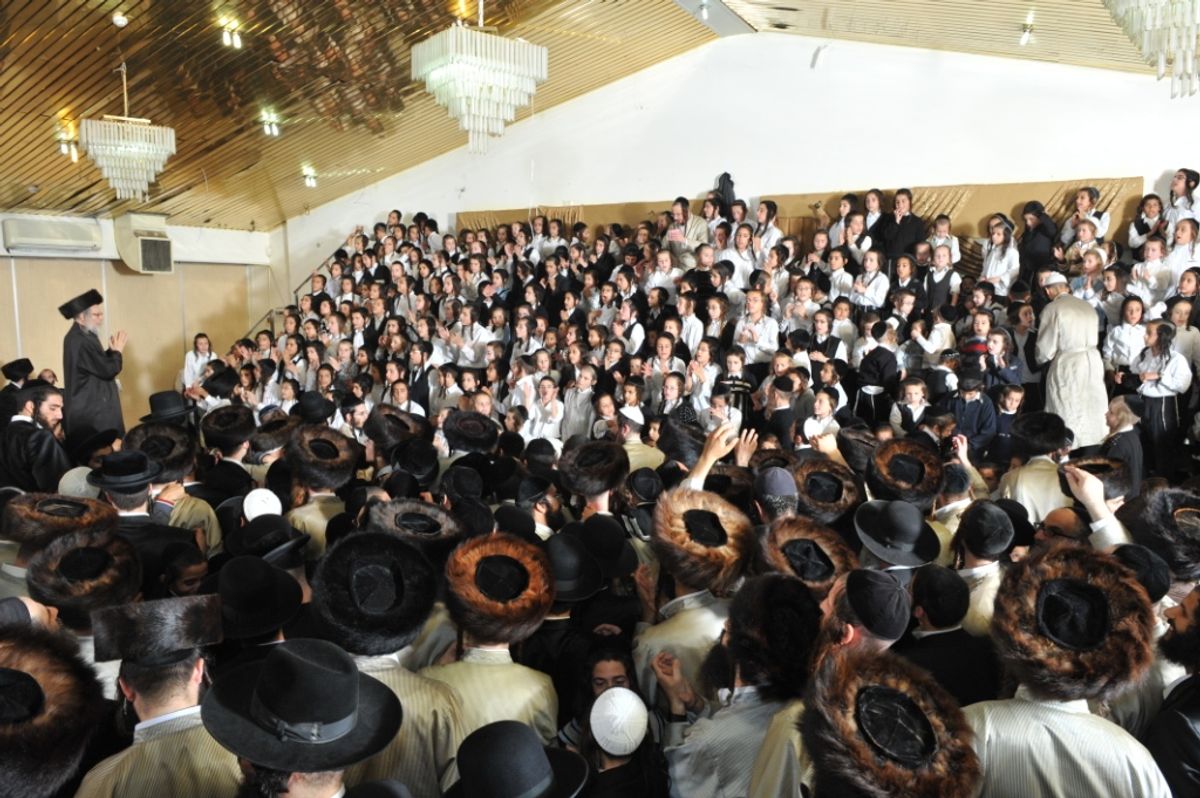
Words of the Living God regarding the virtue of studying the Holy Torah with depth and contemplation, based on Likutey Moharan Torah 101 - "When evildoers approach me"
In this essay by our Teacher, the holy Gaon and Tzaddik Rabbi Eliezer Berland shlit"a, we will discuss the status of the Torah in Jewish life, focusing on the deep connection between Torah study involving self-sacrifice and the attainment of inner light to conquer bad character traits. A central concept in this essay is that studying Torah in depth (iyun), with toil and desire, is the only way to break the "darkened faces" (Anpin Chashuchin) and reach the level of "illuminated faces" (Anpin Nehirin), which is the true light in the soul. We will also discuss the challenge of overcoming desires and bad character traits, and understand the deep spiritual root that leads a person to believe in their ability to rectify themselves and merit holiness through Torah study.
"'When evildoers approach me to eat my flesh, my tormentors and my enemies against me, they stumbled and fell' (Psalms 27:2). The matter is thus: 'For in Yah [Y-H], Hashem is the Rock of worlds' (Isaiah 26:4) – this corresponds to 'In the beginning He created' [Bereshit Bara], for through the Torah, which is called 'the beginning' [Reshit], He created worlds. For the letter Yud is the intellect of the Torah, and the letter Heh is the letters of the Torah."
Torah with Depth – Renewing the Creation of the Worlds
"For in Yah [Y-H], Hashem is the Rock of worlds": The letter Yud is the intellect within the Torah, and the letter Heh is the letters of the Torah. When a person inputs their intellect into the Torah and studies in depth (iyun), they create new worlds and all of reality changes; thus, they draw down influences in spirituality and physicality. But if a person studies Torah without the intellect of the Torah, merely reading the Torah as a simple reading, this is the name Yah without the Yud—meaning half the Name. Consequently, it effects nothing, and creation is not renewed because the soul and vitality are missing, which is the Yud of the name Yah through which creation was created. Not only is there no renewal in creation, but on the contrary, desires and bad character traits (middos) increase. For the promise "I created the Evil Inclination, I created the Torah as its spice" (Kiddushin 30a) applies only when one studies the Torah with the intellect within the letters. Every day the work is new, "For a person's inclination overpowers him every day," and human nature is such that one either ascends from level to level day by day, or conversely, descends lower and lower each day. If one studies the Torah with the intellect within the Torah, it gives strength to overcome bad character traits. But if one studies without the intellect within the Torah, but merely as a simple reading, this is not called Torah study, and consequently, all desires and bad character traits intensify. Sometimes a person does not understand why bad traits are overpowering them even though they studied Torah; it is because the study is not with the intellect of the Torah.
The expansion of the intellect in Torah must increase every day. As it is written regarding Joshua bin Nun, "And he lodged in the depth" (Joshua 8:9-13) – and our Sages expounded (Megillah 3a) that he lodged in the depth of Halacha. An angel of Hashem came to Joshua and wanted to endanger him, as it is written there that the angel said to him, "Now I have come" (Joshua 5:14). The Gemara explains that this was regarding the sin of neglecting Torah study, even though it was a time of war. Immediately, "And he lodged in the depth" – teaching that Joshua lodged in the depth of Halacha. Regarding these matters, the Gaon Rabbi Elyah Lopian zt"l explained that we learn from here that the claim of neglecting Torah was regarding the depth of Halacha, for it is certain that Joshua studied Torah even during wartime, but the laxity was in the "in-depth study (iyun) of Torah." Therefore, the angel came with a claim, and indeed it is immediately written that he lodged in the "depth of Halacha."
"And Heh is the letters of the Torah, which is the Five Books of the Torah, the aspect of the five articulations of the mouth. And this is 'For in Yah [Y-H], Hashem is the Rock of worlds'—meaning that through the Torah, which is the aspect of Y-H as mentioned above, He created all the worlds as mentioned above." Then, a person has dominion over all the worlds. As brought further in the Torah [lesson], regarding the verse "He set the boundaries of peoples according to the number of the Children of Israel" (Deuteronomy 32:8). When does He "set the boundaries of peoples"—that the nations are under the control of Israel and subservient to them? "According to the number" (l'mispar)—only when the Torah is in the aspect of sapir (sapphire) and nahir (shining), meaning Torah with intellect, with depth; then He created all the worlds and creation is renewed.
Torah in Depth – The Difference between "Adam" (Man) and "Edom"
"And it is written: 'You are Man [Adam]' (Ezekiel 34:31), and our Sages expounded (Yevamot 61a): You are called Adam (Man), and the idolaters are not called Adam." Israel are called Adam only on account of the Torah which is deep. But if the Torah is not studied with scrutiny and depth, one is not called Adam. It turns out the Jew resembles the gentile—the gentile is immersed in desires, and the Jew, to distinguish, is immersed in desires. For everyone has faith (emunah); even gentiles have faith, but faith without Torah is not called faith. "For there are seventy Illuminated Faces (Anpin Nehirin), and there are seventy Darkened Faces (Anpin Chashuchin). For there are two forces, as our Sages expounded on the verse: 'And this is the Torah that Moses placed.' If one merits – it becomes an elixir of life for him; if one does not merit – it becomes a potion of death for him. The elixir of life is Anpin Nehirin; the potion of death is Anpin Chashuchin." If one studies Torah with scrutiny and depth, it is called an elixir of life, and if not, it is called a potion of death. Two people equal in stature may sit and engage in Torah, even having good character traits etc., but the difference between them is: the one who studies Torah and descends to the depth of Halacha, to the depth of Torah – this is called an elixir of life. Whereas the second, who studies Torah but does not descend to the depth of Halacha – this is called a potion of death; this is Anpin Chashuchin! "As it is written: 'He has set me in dark places like the dead of the world'" (Lamentations 3:6). And it is stated in the Gemara in Sanhedrin (24a): "Dark places" – this refers to the Babylonian Talmud, for when one learns Gemara without understanding—not in depth and profundity—this is called darkness. "And from Anpin Chashuchin the idolaters have nourishment, and all the idolaters possess all the bad character traits." And all their nourishment is from these bad traits, and they overpower and dominate the person, and then he is not called "Adam" (Man) but "Edom."
For the root of bad character traits and imaginary desires is drawn from Edom, in the secret of the Seven Kings of Edom who died (mentioned at the end of Parashat Vayishlach), in whom the "Shattering" occurred. This concept of "shattering" applies to every person as well, for all the limbs in a person were created only to perform the will of Hashem with them, and every limb has a different mitzvah dependent on it. When one rebels against the will of Hashem, a shattering is created, for a broken vessel is useful only for lowly work, and the vessel was not formed for that purpose. When one does not study Torah in depth, he is not called "Adam," and therefore falls into bad character traits and imaginary desires and is called by the name Edom, which is the imaginative power alone, as it is written, "Pour into me, now, some of that red [adom] stuff." For the bad traits of the idolaters that dominate the person are in the secret of the Seven Kings of Edom, and 7 times Edom in Gematria equals Enosh, which is the lowest level among the four names by which man is called: Adam, Ish, Gever, Enosh. Then, every single limb of the person receives a diminished illumination, fitting for his lowly name (Pitchei Shearim, Path of Shattering of the Vessels 6). This is what our Sages said (Sanhedrin 106a): "And they journeyed from Rephidim" – that their hands weakened (rafu yadeihem) from words of Torah, and through this Amalek came. And in the continuation of their journey, when they camped "at Mount Hor at the edge of the land of Edom" (Numbers 33:37), meaning they fell to the aspect of "at the edge of the land of Edom," which is the root of imaginary desires that grasp only the "edge" of the limbs, such as the touch of the hand and taste on the tongue. Therefore Aaron passed away, and Amalek heard this report, as it is written, "And the Canaanite, the king of Arad, heard" (ibid., 40). And that which was until now "Trembling seized them... all the inhabitants of Canaan melted away" (Exodus 15:15), was reversed due to their sin and transformed from Ra'ad (trembling) to Arad (Toldot Yaakov Yosef, Parashat Mishpatim, Letter 5).
"When the Torah Appeared: Why the Nations Did Not Want It and What Makes Us 'Adam'"
"Only, each and every nation is bound to one specific trait more than all other traits. And this is 'He appeared from Mount Paran' etc., that the Holy One Blessed be He wanted to give the Torah to all the creations, and each and every one did not want to accept it, because they heard that the very trait they are bound after is forbidden by the Torah." Reb Nosson explains: Why did the nations not want to accept the Torah? After all, even Esau has "Do not murder," and Ishmael has "Do not steal." Rather, Reb Nosson explains that the nations understood and knew that "Do not steal" does not mean merely not stealing from one another and nothing more, but it means not to deceive any person, in any case or matter. Similarly, "Do not murder" includes not humiliating one's friend in public, and "It is better for a person to throw himself into a fiery furnace than to humiliate his friend in public" (Berakhot 43b). Likewise, not to get angry at another, not to speak Lashon Hara (slander) about another, not to speak gossip about another—this is what they feared; they knew it is endless. Moses indeed said "Do not murder," but included in this utterance are many details covering all interpersonal traits; therefore, they did not want to accept the Torah.
In contrast to them, the Children of Israel accepted upon themselves the yoke of Torah, and therefore they are called by the aspect of "Adam," as it is written: "'You are Adam' – You are called Adam," for when one studies Torah to its depth, the Torah sanctifies the person. Then, due to the holiness, the person cannot harm another person at all, and would even agree to be burned rather than stumble in this—"You are called Adam." This is what Tamar said, "It is better for a person etc." Tamar understood that for one who has merited to be called "Adam," this is a pleasure for him, and it is comfortable (noach) for him; it is not in his reality or essence to harm another person. For the moment one reaches the level of Adam, his two kidneys advise him and become for him like wellsprings of wisdom like flowing streams, like Abraham our Patriarch who learned the Torah from within himself.
"Torah Study as Service: How Depth in Torah Brings Human Perfection and Love of Friends"
"And it is written: 'You are Man [Adam]' (Ezekiel 34:31), and our Sages expounded (Yevamot 61a): You are called Adam, and the idolaters are not called Adam." The main service is to withstand tests, and this is the entire essence of man's coming into the world: to withstand all the tests one is tested with, whether in property, in anger, and in every single thing. And Rebbe Nachman says, if a person does not study Torah to its depth, he will not be able to withstand tests. For the entire purpose of the toil in Torah required of us today is so that we reach the level of Adam. Reb Nosson explains that ever since the Tablets were broken, the holy Gemara was given to us, which we must study with scrutiny and depth, and only through this is the clarification of Good from Evil achieved. For after the Tablets were broken, forgetfulness descended to the world, and since then began the matter of clarifying the Sugya (topic), the Kal Vachomer (a fortiori argument), and all the questions and refutations, and the fact that Halacha is forgotten and one must toil anew [see the gloss on Maimonides' introduction to the Talmud, that there were six hundred orders of Mishnah and only six orders remain]. Since then, the form of the holy Gemara was stamped, for only study with depth, scrutiny, dialectics, and logical inference contained in the study—only this creates the clarification of Good from Evil, and only this can extract the bad traits from a person. For until the Tablets were broken, they would learn the plain meanings of Torah and through them attain perceptions of Godliness. But after the incident of the Golden Calf, when the Tablets were broken, and after the incident of Peor, it became clear that there is a pollutant in the People of Israel that does not leave except through studying Torah with force, to lodge in the depth of Halacha. Only this clarifies Good from Evil, and only thus is it possible to be saved from "Do not murder" and "Do not steal" in all their aspects.
This is the meaning of Hillel the Elder's words to that convert who came to convert "on one foot" – "What is hateful to you, do not do to your friend" (Shabbat 31a). Shammai rejected him because he argued that there is no possibility to draw close to the Holy One Blessed be He without studying the entire Torah in depth. Seemingly, why did he drive him away and not reveal that same advice to him? Rather, since Hillel was humble, his conduct was with the attribute of Ahavas Yisrael (Love of Israel). Therefore, the moment he saw a rich man who had no servant to run before him, he himself ran before him for a distance of three mil! (Ketubot 67b). Hillel had Ahavas Yisrael and felt every single Jew, regardless of whether he was rich or poor, and strove to give to each one according to his needs and way of life. If the rich man was not accustomed to leaving his house without a servant, Hillel volunteered to be that rich man's servant. Therefore, specifically he, who merited to submit and lower himself beneath every single Jew and love him with heart and soul, revealed that this trait includes the entire Torah. Therefore, he said to that convert who came to convert on one foot: "What is hateful to you do not do to your friend – this is the entire Torah," and the rest is commentary, go and learn. Is this really the entire Torah? Furthermore, does not every gentile also understand the virtue of this human trait of 'Love your neighbor as yourself'? Rather, Hillel's intention in his words was this: To reach "What is hateful to you do not do to your friend" in perfection, one needs to study the entire Torah. A person cannot reach his perfection, nor avoid seeing evil in another, if he does not study the entire Torah. And in order to fulfill even the lower level of this trait—meaning not to do to another that which is hateful to oneself—one is required to study the entire Torah, day and night. Only thus is it possible to truly attain this conduct in its perfection, in its lofty levels, and also to love the other as oneself, which is the general rule of the entire Torah.
"Yaakov Avinu and the Power of Torah: How Deep Study and Devotion Bring Rectification of Character Traits"
We find this with Yaakov Avinu (Jacob our Patriarch), who did not go to Lavan's house until he first engaged in Torah extensively without sleep or slumber in the Yeshiva of Shem and Ever (Genesis Rabbah 68:11). Seemingly, this requires explanation: Was Yaakov Avinu so afraid of Lavan influencing him that he needed to toil so much in Torah study for fourteen years without sleep? Rather, the explanation is that his concern was, since he was about to be in the proximity of Lavan the Aramean, who would deceive him tenfold—and our Sages say (Genesis Rabbah 73:9) that in every single condition he deceived him a hundred times—in order not to stumble in deceit while being close to and dealing with Lavan the Aramean, and not to stumble, Heaven forbid, in hatred and resentment toward him, for this he was required to toil in Torah with scrutiny and depth without sleep. Based on this, the Midrash is explained (Genesis Rabbah 74:10): "The reproof of the patriarchs is greater than the humility of the sons." Regarding Yaakov, it is written, "And Yaakov became angry and quarreled with Lavan, and Yaakov answered and said to Lavan: What is my transgression? What is my sin, that you have hotly pursued me?" (Genesis 31:36). This was the entirety of Yaakov Avinu's anger. Whereas the "humility of the sons" refers to King David, who said to Saul when he pursued him, "After whom has the King of Israel come out? After whom are you pursuing?... After a single flea" (I Samuel 24:14). From here we see the magnitude of his humility. David said all this when he had mercy on Saul while being with him in the cave and did not harm him. At that time, David said to Jonathan, "What have I done? What is my iniquity and what is my sin before your father, that he seeks my life?" (I Samuel 20:1). King David, who was the ultimate in humility, mentioned bloodshed ("seeks my life"). Yet Yaakov Avinu, even though Lavan was about to kill him, nevertheless only said: "What is my transgression? What is my sin, that you have hotly pursued me?" After so many deceptions that Lavan deceived him every day and every hour, he did not get angry. And when it says "And he became angry etc., What is my transgression? What is my sin?"—after twenty years, he only asked, 'What did I do to you?' This was the anger of Yaakov Avinu.
To reach such a level, one needs fourteen years of studying Torah at Shem and Ever, day and night without sleep. And Yaakov Avinu, through the power of his Torah, merited to be clean of hands and pure of heart, and did not stumble in the sin of theft even in the slightest. As brought in the Midrash (ibid.), Lavan searched his vessels and found nothing—Rabbi Simon said: "'Though you have felt through all my vessels, what have you found?' (Genesis 31:37). He did not find even a needle." Afterwards, he says to him, "What is my sin? What is my transgression?" Through this, it is understood how it is possible that Yaakov Avinu was in his father-in-law's house for twenty years, with twelve children, and not a single thing belonging to others fell into his possessions. To merit the attribute of caution against theft and other traits, one needs to study Torah for fourteen years without sleeping at all, in truly awesome depth! This is what Rebbe Nachman says: "A person cannot remove his bad character traits if he does not study Torah to its depth."
Torah study is in order to be clean of bad traits, not to be famous based on falsehood. To study Torah for its own sake (Lishma), to merit humility, lowliness, to love every Jew, not to get angry at any person. Even if they cause him all the troubles in the world, it is forbidden to get angry or answer the other at all. And even when remaining silent, one must ensure that this does not anger the other, as Rebbe Nachman says (Likutey Moharan Torah 82), that if a person is silent toward another in order to anger him, he is included in the three impure husks (kelipot), may the Merciful One save us. Therefore, one needs love of friends, that even if they anger the person, he must see how to appease him, whether by silence or by speech. To be in the aspect of "A man of understanding is of a cool spirit," to seek only how to appease the other, as if he were his son, his brother, or his father. For when a father is angry at his son, the son tries in every way to appease him. Such should be the conduct with every single Jew. Only then is he considered Adam, and for this we study Torah, to reach the level of Adam—"You are called Adam." As Tamar said: "It is comfortable for a man (Adam) to throw himself into a fiery furnace and not humiliate his friend," for this level is merited only through Torah study in depth. Therefore, only the Children of Israel are called Adam, because they accepted the Torah, and the nations did not want to accept it, since they could not withstand the fulfillment of all the good traits and behaviors included in the commandments of the Torah.
"Yoke of Torah and Submission to Bad Traits: How Torah Study in Depth Prevents the Dominion of Nations over Israel"
"And whoever possesses bad character traits is subjugated under those idolaters who are bound and connected to those bad traits." When a person has a bad trait, then that nation which corresponds to that trait rules over the People of Israel. For everything depends only on the person, and on the rest of the people of the Tzaddik. As brought in the Gemara (Sanhedrin 26a), when Sennacherib came to war against Jerusalem in the time of King Hezekiah, there was a dispute between Hezekiah and Shebna. Hezekiah had 110,000 students, and Shebna had 130,000 students. Hezekiah said that one must go only with faith and trust; one must not surrender to Sennacherib in any way! Therefore, he stuck a sword at the entrance of the House of Study and said: Whoever does not engage in Torah shall be pierced by the sword! But Shebna did not agree with his words, for he feared Sennacherib, who came upon Jerusalem with two billion and six hundred thousand soldiers! And when he arrived at Jerusalem, he saw there were no warriors and no horses, everyone was sitting and engaging in Torah! Then he was filled with shame that he would become a laughingstock and mockery, that to conquer yeshiva students and those engaged in Torah he gathered the whole world. Therefore, he decided that at the very least he would conquer them in a new way, never before seen, by the spitting of each of his soldiers, and with spit alone he would cover Jerusalem! Hezekiah said before the Holy One Blessed be He: Master of the World, 130,000 students of Shebna say to surrender, and I am only with 110,000 students who say not to surrender. Master of the World, perhaps You will follow the majority? The Holy One Blessed be He said to him: "A conspiracy of the wicked is not counted." Whoever follows Shebna is wicked! For you are the true Tzaddik, and if they do not follow you, they are called a "conspiracy of the wicked." From this Gemara we learn that only those who follow the true Tzaddik and fulfill his advice are taken into account. For everything that happens in the world depends on the people of the Tzaddik. One must believe in this with complete faith, as Rabbi Yitzchak Breiter zt"l writes, that all actions done by the Tzaddik here in the world are through the power of those close to him, at the time they accept upon themselves the yoke of Torah. But if they do not accept upon themselves the yoke of Torah, they inevitably remain with bad character traits, and then those nations to whom these bad traits belong rule over us, and cause us troubles and suffering, may the Merciful One save us.
"And whoever possesses bad character traits." Anyone close to the Tzaddik, upon whom the rectification of the world depends—the moment he does not study Torah to its depth, and does not invest his entire self twenty-four hours in Torah study, immediately—"he is subjugated under those idolaters who are bound and connected to those bad traits," and the idolaters rule over us. "And this is: Whoever casts off the yoke of Torah, the yoke of government and the yoke of worldly cares (Derech Eretz) are placed upon him. This refers to subjugation in physicality—which is the aspect of the yoke of government, and also the way of worldliness, meaning the bad character traits of the idolaters." To be subjugated under the nations means that all the bad traits of the nations rule and enter the person, "which is the aspect of the yoke of Derech Eretz, for because he cast off the yoke of Torah, which is the aspect of seventy Illuminated Faces (Anpin Nehirin)." The moment a person does not study Torah to its depth, it is considered that he cast off the yoke of Torah, which is called seventy Illuminated Faces. Only when one studies with scrutiny and depth does his face shine, as it is written, "A man's wisdom lights up his face." When one merits the wisdom of the Torah, his face shines. As brought in Torah 80, "The beginning is wisdom," and all beginnings are holy, and "beginning" is the aspect of wisdom. When a person merits to speak holy words of Torah and prayer and puts all his brain, wisdom, and knowledge into the words—meaning he binds his thought well to the words—Hashem Yitbarach has great pleasure from this. But if a person does not study Torah in depth, his face does not shine, and "through this, the aspect of seventy Darkened Faces (Anpin Chashuchin) overpowers him." This is the darkness and concealment, that even if the person knows that the main thing is the service of Hashem and the whole world is vanity of vanities, if he does not engage in Torah in depth, then the Darkened Faces overpower him. This is the darkness and concealment of the light of Hashem, and all feeling and awakening in the service of Hashem disappears from him, and "the subjugation and bad traits of the idolaters" overpower him—anger, baseless hatred, bearing grudges, revenge, and all kinds of monetary injustices etc., until he can no longer concede, and love of friends is nullified from him etc. "This is the aspect of the yoke of government and the yoke of Derech Eretz as mentioned above."
"Yoke of Torah in Depth: The Way to Freedom from Bad Traits and Israel's Dominion over the Nations"
"But whoever accepts upon himself the yoke of Torah, the yoke of government and the yoke of Derech Eretz are removed from him—this refers to one who studies in depth (iyun)." Rebbe Nachman writes "Whoever accepts upon himself the yoke of Torah" – meaning one who studies in depth. Rabbi Levi Yitzchak zt"l said: The explanation of Rebbe Nachman's words in Sichot HaRan 76 regarding the practice he instructed to finish the Shas (Talmud) every year, was intended for Reb Nosson and Reb Naftali, and students of that caliber, who had already gone through the Shas several times and knew the Shas almost by heart; to them Rebbe Nachman said to learn the Shas and finish it at least every year. But a person who does not know and understand the Shas properly and merely reads it simply—this is quite simply a waste of Torah (Bitul Torah). For a person needs to study Torah in depth and understand what he is learning—one can study for breadth (bekiut), but one must strive to understand the material, the give-and-take (shakla v'tarya) of the topic. Besides breadth, where one must understand the words of Torah, one must also study in actual depth. "That he scrutinizes and understands the wisdoms of the Torah, which is the aspect of Illuminated Faces (Anpin Nehirin), the aspect of: 'A man's wisdom lights up his face.'" Then he merits illuminated faces. And "through this, the yoke of government and the yoke of Derech Eretz are removed from him." The bad character traits are nullified in the person. If not, it will not help him to finish the Shas a hundred times by reading; all the bad traits will remain in him, intensify in him, and become worse. Only when studying Torah in depth, or even in breadth but striving to understand what one learns, only through this are the yoke of government and the yoke of Derech Eretz removed from him.
"For the subjugation and their desires and bad traits are nullified from him." Only then are evil desires and blemishes of the Covenant nullified. For a person who does not study Torah in depth has no guarding of the eyes (Shemiras HaEinayim). In a generation like this, there can be no guarding of the eyes except through Torah study in depth, where the brain is immersed and surrounded by the holy Torah; then when going out to the street, one can guard the eyes. Otherwise, even if he tries to guard, the eyes will open by themselves. For the nullification of desires and bad traits—breaking them is possible only through Torah in depth. Even if a person says in his heart: "But I got up at midnight (Chatzos) and went to the field for Hisbodedus, so why did I stumble and get angry today etc.?" – the reason is because he did not study Torah in depth. For when studying Torah in depth, one feels a wondrous joy. This is what Rebbe Nachman says: If a person does not study Torah in depth – he has no guarding of the eyes, and he has no love of friends; he is full of anger. But through Torah study in depth, with Rishonim and Acharonim (early and later commentators), descending to the depth of the topic – then he will feel joy and wondrous pleasure and a special light, and he will love every person. For in truth, the People of Israel are one man and one heart, one soul and one spirit; only the desires and bad traits are the screens that interfere with feeling this. But the moment a person studies Torah in depth, the desires are nullified "and their bad traits, which are the aspect of Darkened Faces, [are nullified] through accepting the yoke of Torah which is the aspect of Illuminated Faces as mentioned above. For whatever a person grasps with his intellect is the aspect of Illuminated Faces, and what he does not grasp is the aspect of Darkened Faces. Therefore, when he merits to scrutinize the Torah until he grasps the wisdoms of the Torah, which is then the aspect of Illuminated Faces, then the traits and desires of the idolaters which grasp onto the aspect of Darkened Faces are subdued as mentioned above. And this is the aspect of:" – what was mentioned earlier – "'He set the boundaries of peoples according to the number of the Children of Israel.'" We must believe that the people of the Tzaddik, through their Torah study in the depth of Halacha, can turn the entire world around – for the benefit of Israel, for the love of Israel. And this is "'He set the boundaries of peoples according to the number of the Children of Israel.' 'According to the number' (l'mispar) is an expression of sapphire (sapir) and shining (nahir)." If the Torah is in the aspect of sapphire and shining, then the People of Israel will rule over all the nations. As our holy Rebbe brings in Torah 1, that through the Torah, the grace and importance of Israel are elevated and raised before anyone necessary, whether spiritually or physically. An Israelite needs to look at the intellect of every thing, and bind himself to the wisdom and intellect within every thing—meaning to study in depth and look at the intellect of the Torah—and then the grace of Israel is elevated. As Reb Nosson writes on the verse "For a statute for Israel is a judgment for the God of Jacob" – that the People of Israel will enact the laws for the nations, and they will act according to the laws and according to the will of Israel. "Aspect of: The brick of sapphire. Meaning: After the Illuminated Faces which are the aspect of the number of the Children of Israel" – when the Children of Israel study the Torah so it becomes sapphire and shining – "after them: 'He set the boundaries of peoples'" – then they rule over all the peoples – "who are the aspect of Darkened Faces as mentioned above."
"The Life Within the Torah: How Toil and Desire in Depth Bring Inner Light and Rectification of the Soul"
"And in every single person themselves there is the aspect of Illuminated Faces." In every Jew, there is a soul with great light, and they can attain the Illuminated Faces. "Which are the aspect of the holiness of Israel, a holy nation, who are far in their root from all bad traits and desires." The People of Israel essentially have no connection to desires and bad traits due to the holiness of the root of their souls. If a person feels they are full of bad traits, they should not think they were born this way, Heaven forbid, for their soul has no connection at all to bad traits. However, in the People of Israel there is "the grasp of the seventy nations" – these are the external forces that grasp onto them. It does not belong to them, but it sticks due to their sins, or those of their fathers, and they overpower because one does not study the Torah to its depth. "Which are the aspect of Darkened Faces, which are the aspect of desires and bad traits, all of which are from the aspect of the seventy nations, which are Darkened Faces, as it is written: 'And they mingled with the nations and learned their works' (Psalms 106:35); meaning that he is mixed with the bad traits within him, which are drawn from the nations as mentioned above. And when a person commits a transgression, Heaven forbid, then the transgression and the iniquity are engraved on his bones, as it is written: 'And their iniquities were upon their bones' (Ezekiel 32:27), and it is impossible for him to emerge from this except through the Torah, which is the aspect of Illuminated Faces." So if a person wants to atone for his transgressions, it is only through Torah study in depth. This is considered like fasting, and thus the iniquities will leave the bones and be atoned. "Which is the opposite of all desires and traits, which are the aspect of Darkened Faces, from where all transgressions are drawn, Heaven forbid." One moment that a person is in Darkened Faces – desires and bad traits already overpower him. "For a person must toil in the Torah and kill himself over it." It is not enough to study Torah; if a person does not agree and is not ready to toil over the Torah and kill himself over the Torah, this is not called Torah study. If a person does not study Torah out of toil, but out of laxity – the Gemara says in Berakhot (63b): "If you were lax in the day of trouble, your strength is narrow" (Proverbs 24:10). Whoever relaxes himself from words of Torah has no strength to stand in the day of trouble, and the "troubles" are the bad traits that overpower. "As our Sages said on the verse: 'This is the Torah, a man who dies in a tent' – The Torah is not established except in one who kills himself over it, meaning his selfhood." To kill oneself over Torah study, to kill the selfhood, meaning the imaginary personal desires which truly do not belong to the holiness of the Jewish soul, and this is through Torah study in depth, with desire and joy. Otherwise, one remains with all the bad traits, bad desires, and Darkened Faces. "Which are the aspect of bad traits and bad desires, from which come all the blemishes engraved on his bones as mentioned above. For one must toil in the Torah until he merits to understand it." To toil and kill oneself over the Torah—when it is hot, when it is cold, when hungry, when thirsty, when tired—to study Torah with self-sacrifice; thus the iniquities engraved on the bones leave. "Meaning that he should emerge from the aspect of Darkened Faces, which are the aspect of darkness and concealment of knowledge, to the aspect of Illuminated Faces which are the aspect of knowledge and perception of the Torah as mentioned above, and then he is called Adam." Only then is he called Adam (Man). Otherwise, he is not called Adam. How will he know if he is called Adam? When he sees that he does not get angry, but is always happy, loves everyone, guards his eyes etc., this is called Adam. If not, he is not called Adam. Rebbe Nachman explains: How does one merit to be a Jew? Only through Torah study in depth and with strength, with immense toil, to kill oneself over the Torah; then he is called Adam. "Aspect of: 'This is the Torah, a man (Adam)'; meaning through the Torah one is called Adam, aspect of: You are called Adam, and the idolaters are not called Adam; for the main title of Adam is merited through the Torah" – which is with strength, depth, profundity, and immense toil – "which is the aspect of Illuminated Faces, which is the opposite of all bad traits and desires, for on account of this they are called Adam, aspect of: This is the Torah, Adam. But the idolaters, who are far from the wisdoms of the Torah, from Illuminated Faces, for they are the aspect of Darkened Faces, because they are immersed in all bad traits and bad desires, therefore they are not called Adam as mentioned above." And since the idolaters are immersed in all bad traits and desires, even though they want to accept the Torah because they know it is truth, they have become so materialized in their deeds that they are not called Adam, and they do not want to leave their physicality. They are willing to accept the Torah but without the wisdom of the Torah—meaning to scrutinize the Torah—because they are afraid to leave their bad traits and desires. Therefore, they cannot accept it. And the People of Israel who accepted the Torah were also immersed in the forty-nine gates of impurity in Egypt, but through their nullification to the Tzaddik, to Moses, in the Exodus from Egypt, the Splitting of the Sea, and in the desert, upon reaching Mount Sinai, they merited that the pollutant was completely annulled from them. And all this was through their desire to accept the Torah and study it in depth and understand the wisdom of the Torah, as Rebbe Nachman explains further.
"For the main aspect of Adam is the aspect of the true intellect that one merits to grasp" – to grasp the true intellect in the topic – "meaning the wisdoms of the holy Torah. For there are three intellects: meaning simple intellect, which is the aspect of Wisdom (Chochmah), aspect of: 'You made them all with Wisdom.' And when one studies and understands, this is called Understanding (Binah). And afterwards, when one knows the Torah, this is called Knowledge (Daat), as is known." Chochmah – is the simple study; Binah – is study with understanding; and Daat – is memory. "And these three intellects are the aspect of hands to the Torah: aspect of the Great Hand, the Strong Hand, and the High Hand, through which the Torah is received." When the People of Israel left Egypt, they accepted upon themselves the Great Hand, the Strong Hand, and the High Hand, which are the three hands for the Torah, which are the three intellects of the Torah: Chochmah, Binah, Daat—meaning to study the Torah in depth, to understand and know the wisdom of the Torah. Only through them was the Torah received. "And these three intellects are the aspect of three times Y-K (Yud-Keh)" – the aspect of 'For in Yah [Y-H] Hashem is the Rock of worlds' – "For Y-K are Chochmah and Binah, which are 'two friends that do not separate,' which are included in each of the three intellects mentioned above. And three times Y-K is Gematria 'Adam'." [Note: Y-K = 15. 3 x 15 = 45. Adam (Aleph-Dalet-Mem) = 1+4+40 = 45]. Meaning, when there are three times Y-K, then one is called Adam. "It turns out that the main name Adam is the aspect of the true intellect," that one studies Torah out of immense toil, and kills himself, to understand the topic to its depth. "Meaning the wisdoms of the Torah, which is the aspect of Illuminated Faces, the aspect of distancing and breaking all bad desires and traits as mentioned above." Then the person will see that he is emerging from desires and bad traits. "And this is: 'When evildoers approach me' – this is the aspect of 'two friends' (trei re'in) that do not separate, which are the aspect of Y-K, which is the wisdom of the Torah, the aspect of Adam. They need 'to eat my flesh'" – to eat the body, to kill the body – "meaning to eat and kill my selfhood." The selfhood is the pride of the person. Rebbe Nachman explains in Torah 72 that it is impossible to nullify pride and merit humility and lowliness—from which comes the main vitality and resurrection in the future—except by seeing oneself with the Tzaddik. And one merits this only by constantly engaging in enlarging one's brain and knowledge. This is only through study in depth, and through this, one merits a quick and sharp brain, as it is written, "Have you seen a man quick in his work" (Proverbs 22:29). As the person scrutinizes, deepens, innovates, and connects the topics and the contradictions between Rashi and Tosafot and other Rishonim and commentators, to understand the opinions, to connect them and understand the simple meaning of the topic according to their method, so the person receives more lowliness and humility because he sees that he does not understand the topic well, and he continues and deepens his study, and kills himself in the study of Torah. The study must be until a person feels as if he is dead. Only through such toil in Torah is the Torah acquired, and the person receives Heavenly assistance (Siyaata Dishmaya), and his brain and knowledge illuminate, and he receives illuminated faces, as written, "A man's wisdom lights up his face."
"For the Torah is not established except in one who kills himself over it as mentioned above" – The acquisition of Torah is only through self-sacrifice in Torah study. Reb Nosson explains (Likutey Halachot, Yoreh Deah, Laws of Kashering Vessels 4:24) what is brought in the Gemara (Shabbat 89a): When Moses descended from before the Holy One Blessed be He, Satan came and said before Him: Master of the World, where is the Torah? He said to him: I gave it to the Earth. He went to the Earth. He said to it: Where is the Torah? It said to him etc. He went to the Sea, and it said to him: It is not with me. He went to the Deep (Tehom). It said to him: It is not in me, as it is said, "The deep says, 'It is not in me,' and the sea says, 'It is not with me.' Destruction and death say, 'We have heard a rumor of it with our ears'" (Job 28:14-22). He returned and said before the Holy One Blessed be He: Master of the World, I searched in the whole earth and did not find it. He said to him: Go to the son of Amram. He went to Moses and said to him: The Torah that the Holy One Blessed be He gave you, where is it? He said to him: And what am I, that the Holy One Blessed be He gave me the Torah? The Holy One Blessed be He said to Moses: Moses, you are a liar. He said before Him: Master of the World, You have a hidden treasure that You delight in every day; shall I claim credit for myself? The Holy One Blessed be He said to Moses: Since you diminished yourself, it shall be called by your name, as it is said, "Remember the Torah of Moses My servant." End quote.
Seemingly, one must understand the words of Moses our Teacher: Did he not receive the Torah?! Rather, from here we see the magnitude of his humility, that after forty days and forty nights in which he studied the Torah, he still felt that he had not learned at all, and it was completely pristine.
The explanation of the matter is that Moses our Teacher knew that Satan wanted to prosecute against the giving of the Torah. Therefore, he answered him that he had not yet handed over the Torah to the People of Israel at all, but rather it is as if it lies in the sea, and only one who is willing to invest immense toil and sacrifice his life to descend into the depths of the sea will merit receiving the Torah. For the Torah is "longer than the sea," and if so, there is no room for the Satan's prosecution that Israel is unworthy of the Torah, for "he who toils in it finds it." As it is written, "Destruction and death say, 'We have heard a rumor of it with our ears,'" and Rashi explains there: "Destruction and death say" – those who destroy and kill themselves over it said: "We have heard a rumor of it with our ears," that he who toils in it, it is established in him. For the intention is not that he should descend into the sea and the deep literally; rather, the main thing is the will and desire, that he is ready on his part to suffer self-sacrifice in Torah study, even to descend into the sea and the deep literally. But as soon as he is willing for this with a strong and true desire, immediately Hashem Yitbarach helps him to receive it properly. "And then automatically: 'My tormentors and my enemies against me, they stumbled and fell'" – for the source of the tormentors and enemies is the Evil Inclination, which clothes itself in a person because they do not study Torah in depth. "For all the tormentors and enemies, which grasp onto Darkened Faces, stumble and fall, because the aspect of Darkened Faces is nullified, and he merits Illuminated Faces, which is the wisdoms of the Torah, which is the aspect of Y-K, the aspect of 'two friends that do not separate,' for on account of this specifically Israel are called Adam as mentioned above. And then all the tormentors and enemies that grasp onto Darkened Faces, in desires and bad traits, stumble and fall, because he merited Illuminated Faces as mentioned above."
Subscribe to Our Newsletter
Receive Torah articles and inspiration directly in your inbox